



At ESA Ministerial Conference, a Possible German Competitor to Europe’s Iris2 Coexists with Germany’s Huge ESA Investment

Originally published by Space Intel Report. Read the original article here.
BREMEN, Germany — The idea that German frustrations with the European Commission’s Iris2 multi-orbit secure connectivity constellation would lead Berlin to build its own broadband satellite network for security and military use until recently seemed as ridiculous as Britain’s post-Brexit threat to build a positioning, navigation and timing constellation to compete with Europe’s Galileo.
Then came German Defense Minister Boris Pistorius’s Sept. 25 announcement that the government had set aside 35 billion euros on military space programs between now and 2030, with a broadband constellation among the priorities.
In the two months since then, German government and industry officials have said there’s at least an even chance that Germany will in fact build its own constellation, even as it remains the biggest contributor to Iris2.
As the European Union’s largest economy, Germany automatically contributes more than any of the other 26 EU members to the EU’s budget, which is where 60% of the planned 11 billion euros in Iris2 spending comes from.
But contributions to the European Space Agency (ESA) Iris2-linked budget is not run on the EU’s fixed-contribution-rate rules. Most of ESA’s programs are funded at levels that its 23 member states program by program, based on their priorities.
The Nov. 26-27 ESA ministerial conference, CM25, was the first opportunity to test Germany position on Iris2.
Germany leads Iris2 investment at the European Commission, France leads it at ESA
Final figures will not be known until Dec. 1. But the latest iteration of ESA’s Document 100, which compiles contributions, on early Nov. 27 showed that ESA’s Iris2 program continued to be supported by Germany, with financing of about 143 million euros. This is behind France, which committed 360 million euros; and also behind Spain, whose 181.5 million euros of support likely is due to the fact that satellite operator Hispasat of Spain has the principal responsibility for Iris2’s low-LEO component, to test new technologies.
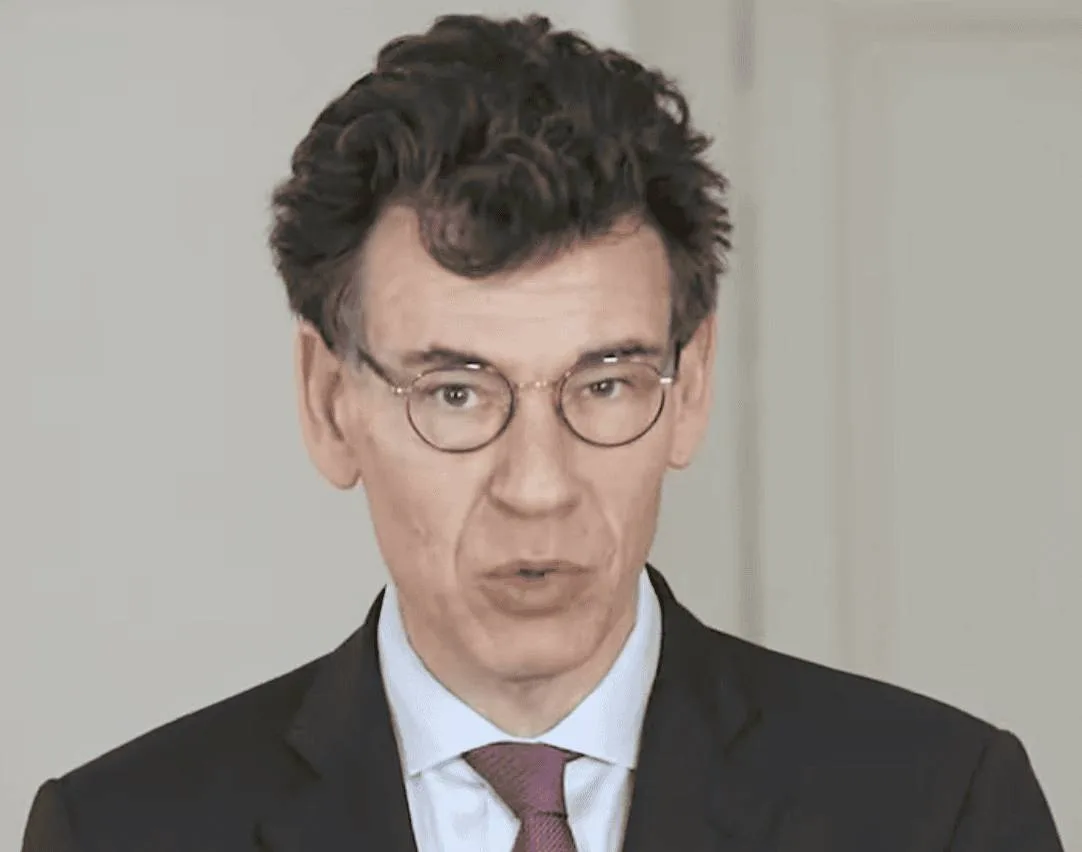
Philippe Baptiste, France’s Minister of Higher Education, Research and Space, made clear that France’s support for Iris2 has not waivered when asked about Germany’s flirtation with a parallel constellation.
“What I can tell you is that Iris2 is THE European connectivity project in low orbit,” Baptiste said at the close of CM25. “There is no alternative. It’s the only sovereign, credible project — I repeat, the ONLY sovereign, credible project — that is on the table today in Europe. The others do not correspond to these objectives.
“If tomorrow we don’t do Iris2, it means we put ourselves in the bands of international partners, which today could be our allies. Look what happens in Ukraine. If you don’t have the ability to communicate with high speed and low latency, you are putting at risk the interests of your country.”
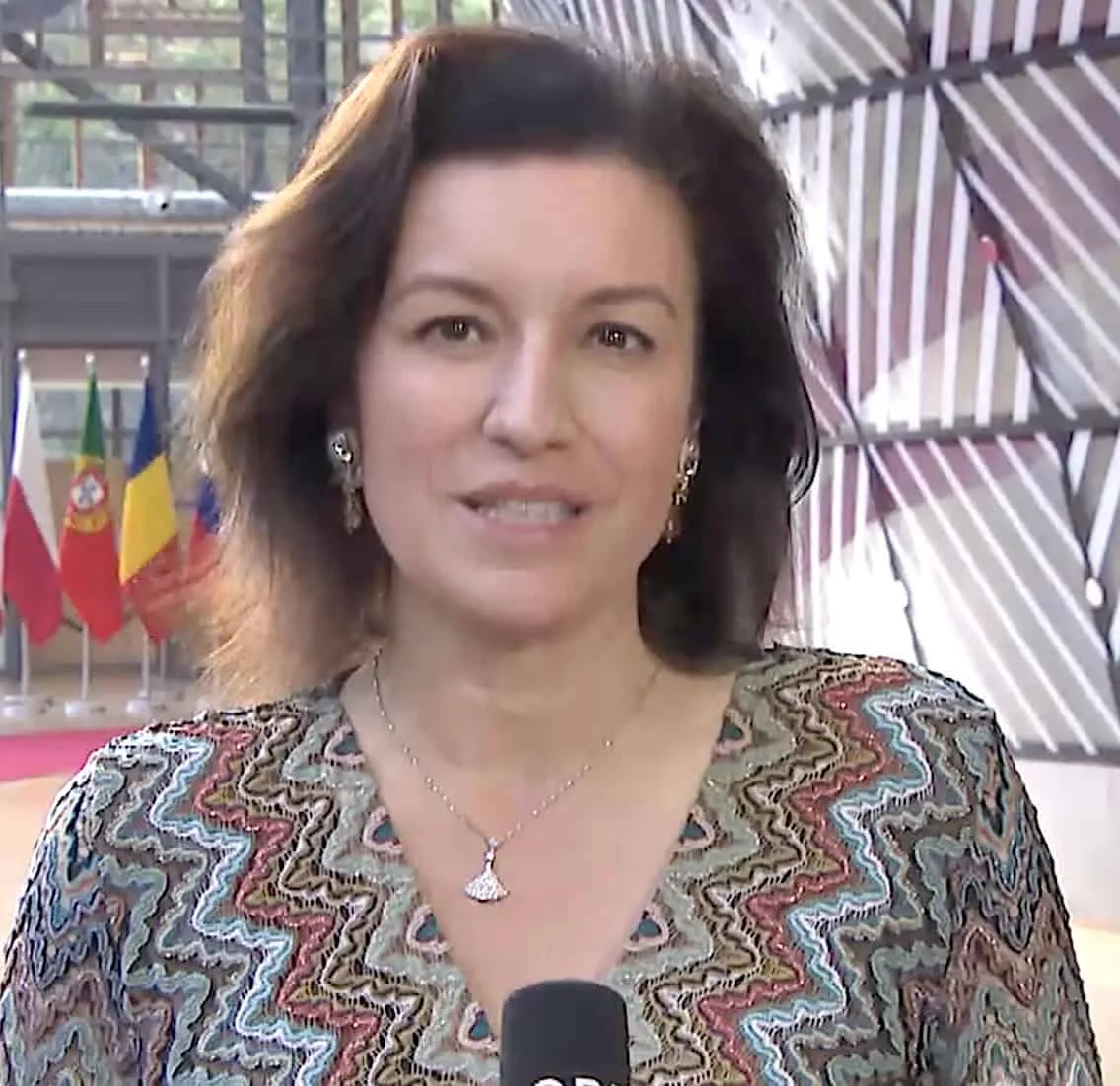
Dorothee Bär, German Federal Minister for Research, Technology and Space, dodged a question of what effect a German military constellation would have on Iris2 during a Nov. 27 press briefing. She did say her ministry and the Defense Ministry had discussed the topic prior to CM25.
Germany’s total contribution to CM25 was nearly 5.1 billion euros, 23% of the total commitments by the 22 member governments.
Minister Bär: German Defense Ministry contributed to our ESA subscriptions at CM25
“First I would say we are extremely grateful that in our Defense Ministry we’ve got a very high figure that has been cited. It shows that for the entire Federal government it’s extremely relevant that we are dealing with space. I am grateful that the Defense Ministry has actually given a figure. We’ve got civilian and military [in space applications] and we are seeing where things are brought together.
“It has been a success in regard to discussion between the two ministries. It’s making it possible for the Defense Ministry to come up with money so that all of the programs can be signed up to.
“As to Iris2, it’s something involving the European Commission and we are contributing to it.”
Not quite a ringing endorsement for Iris2 then. But her remarks suggest that the Defense Ministry contributed some some of Germany’s investment at CM25. This cross-border financing is becoming more coming in ESA’s budgets as more nations want to use space’s dual-use nature for programs with a military and civil application.
EU Defense and Space Commissioner Andrius Kubilius was at the origin of ESA’s decision to start its own technology-development program for Iris2, and a preparatory program for the Commission’s future Earth Observation Governmental Service (EOGS), a global intelligence, surveillance and reconnaissance network.
Kubilius needs ESA to develop multiple technologies related to Iris2 without waiting for his own budget to take effect in 2028. Kubilius is asking EU governments and the EU Parliament for a combined space and defense budget of up to 131 billion euros for the seven-year period. The budget does not break down space vs defense spending. Kubilius has said the package is a five-fold increase over the current budget.
Kubilius attended CM25 to punctuate the Commission’s need for ESA help in starting investment in these programs in 2026 rather than in 2028.
Thanks to ESA precursor programs, we can start now and accelerate,” Kubilus said in a briefing at the close of CM25.
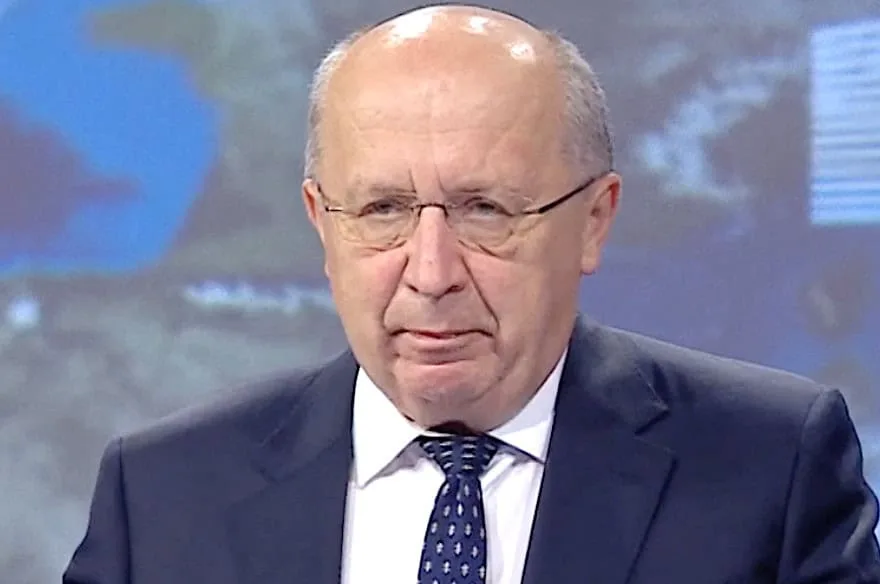
“Cooperating between ESA and EU… enables Europe to achieve more rather than less. By uniting on our strengths rather than what is lacking; by combining our capabilities rather than duplicating; by consolidating rather than deepening fragmentation; we have made the future of Europe together.
“We must keep united in space in order to use the power of the single market to strengthen the global competitiveness of our space industry,” he said. “Together we can do what no member state can do alone.”
If that sounds like a muted call for nations like Germany not to duplicate efforts under way at the Commission but rather to join them, Kubilius was more discreet when asked directly about a German constellation.
“First of all I would like to congratulate Germany on their spending on space. It is crucial when other countries follow. We are very happy that with the recent decisions made at the Commission and the Council, member countries agreed to spend money on space.
“Second, what is most important is that the system we are developing and the systems some other countries want to develop on their own should be interoperable; that we not have a situation where each of us invests in similar projects but cannot work together.
“If interoperability is guaranteed, more satellites in space won’t be a big problem. In some cases it can bring added value and that is what we are looking for.”
Originally published by Space Intel Report. Read the original article here.