



BEAD Reality Check: Where Satellite Broadband Stands in the U.S. Funding Race

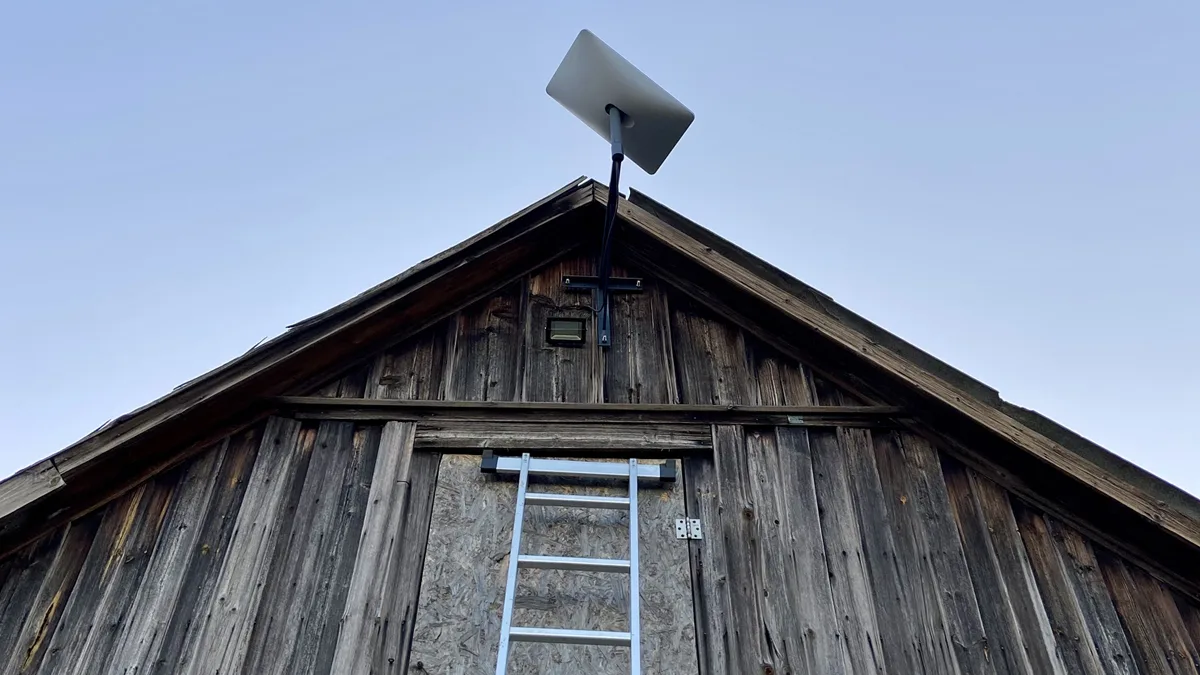
When rules for the U.S. government’s Broadband Equity, Access and Deployment (BEAD) funding program were revised last year, satellite broadband was viewed as a potential breakout winner poised to compete directly with fiber for billions in federal funding.
Now, with state plans being finalized and awards taking shape, a clearer picture has emerged: Satellite is securing a meaningful role in the U.S. broadband buildout, but one defined by cost economics and geography rather than wholesale displacement of terrestrial networks.
Satellite broadband is winning real locations and shaping state broadband strategies, but not in the sweeping, fiber-replacement role some once envisioned. Instead, BEAD is positioning satellite as a targeted, strategic layer within U.S. broadband infrastructure.
Promise Meets Reality
Satellite’s opportunity expanded sharply in mid-2025, when BEAD guidance was revised to remove explicit fiber-first bias and broaden eligibility for alternative technologies. The National Telecommunications and Information Administration emphasized that states were no longer bound by fiber-first mandates and could evaluate projects based on geography, cost and feasibility.
NTIA’s Arielle Roth, assistant secretary of commerce for communications and information, said in recent public remarks that the results are proof that the BEAD program promoted technology diversity.
“States, freed from unlawful one-size-fits-all mandates, could evaluate projects on a granular basis and select those that truly fit their needs,” Roth said. “Our results show huge diversity in state technology mixes—both within and across states—reflecting the realities of our country’s geographic, topographic, and population density differences, as well as our guiding principle of market-driven technological innovation.”
Indeed, the shift of BEAD from a fiber-first mentality made satellite more prominent, but did not upend the economics of broadband deployment.
According to projections, satellite operators—including Starlink and Project Kuiper (now called Amazon LEO)—are expected to capture only about four percent of total BEAD dollars awarded to date. Fiber, by contrast, continues to nab the vast majority of funding.
Measured by locations rather than dollars, however, satellite’s footprint looks very different. Connected Nation’s BEAD tracker shows that more than 22 percent of BEAD-eligible locations across state final proposals are slated for satellite coverage. Fiber still dominates by funding share, but satellite is touching far more addresses than its dollar totals suggest.
“We’re seeing that satellite inclusion is still fairly limited compared to fiber and fixed wireless,” said Heather Huddleston, vice president of external affairs at Connected Nation. “Still, 22.56% of locations in state BEAD Final Proposals are satellite, a clear indication that states are embracing the technology more now than ever before.”
Why Satellite Is Winning Where It Is
The data reveals a clear pattern: States are segmenting geography by cost and feasibility, then assigning technologies accordingly.
In remote or low-density regions, LEO satellite has become the preferred solution. In moderately rural areas or challenging terrain, fixed wireless often leads, sometimes supplemented by satellite. Where backbone access exists and population density supports it, fiber remains the default choice.
“Most states are prioritizing terrestrial technologies because they meet BEAD’s performance and scalability requirements more effectively and can do so affordably,” Huddleston said. “Where satellite does appear, it’s typically in very remote or hard-to-reach areas as a gap-filler rather than a primary solution.”
Montana is the most visible example of satellite’s strength under this model. The state allocated roughly two-thirds of its BEAD locations to satellite providers, reflecting both the high cost of fiber deployment and the urgency of connecting remote communities. Colorado followed a similar logic, assigning roughly half of its BEAD locations to satellite while committing only a small fraction of total funding due to satellite’s lower per-location subsidy needs.
Texas underscores satellite’s relevance even in large, diverse states. There, Starlink emerged as the single largest winner by location count, serving tens of thousands of addresses while fiber providers continued to dominate total funding dollars.
Fiber’s Enduring Hold on State Planning
Despite satellite’s growing role, fiber remains the backbone of most state BEAD strategies. Many planners continue to view fiber as the most future-proof investment, capable of scaling for decades without additional public subsidy.
Virginia illustrates this tension. The state directed more than 80 percent of its BEAD locations to fiber, allocating only a small share to satellite, even after LEO providers challenged the approach under revised federal guidance. The decision reflects a persistent belief among state officials that long-term capacity outweighs near-term cost savings.
From the perspective of the Satellite Industry Association, that confidence in fiber is understandable—but increasingly incomplete.
“Satellite companies have been selected for many more locations than under prior submissions,” said Tom Stroup, President of the Satellite Industry Association. “I would have liked to have seen even greater success given the much faster deployment and cost savings offered by satellite companies, but this will certainly result in better use of the BEAD funds than had been previously proposed by most of the states.”
Is BEAD a Turning Point or a One-Off?
Both Stroup and Huddleston view BEAD as more than a temporary windfall for satellite—but not a wholesale shift away from terrestrial networks.
“BEAD now reflects a more technology-neutral, outcomes-focused approach to connectivity, with satellite being deployed intentionally when the data shows it to be the most practical option,” Huddleston said. “BEAD is helping planners integrate satellite as one component of a balanced broadband toolkit rather than a fallback or a one-size-fits-all solution.”
Stroup went further, suggesting that satellite’s success under BEAD could reshape future policy debates. “Going forward it also may be hard to justify large national funding programs because multiple satellite companies are offering service throughout the country so there no longer are areas without access to broadband service. The bigger question may be what happens to those terrestrial systems with high overhead maintenance costs as their customer base is offered high quality service from multiple satellite companies. Will they be able to survive?”
If BEAD was once framed as a chance for satellite to capture billions, it is now better understood as a proving ground.
Satellite broadband is not replacing fiber, but it is validating its role as the fastest, most cost-effective way to reach the hardest-to-serve populations. It is filling gaps, accelerating timelines, and forcing a more pragmatic conversation about what universal connectivity really means.