



Iridium CEO on How He Approached a Possible Sale of the Company, and Why Rocket Lab Is the Best Fit

Originally published by Space Intel Report. Read the original article here.
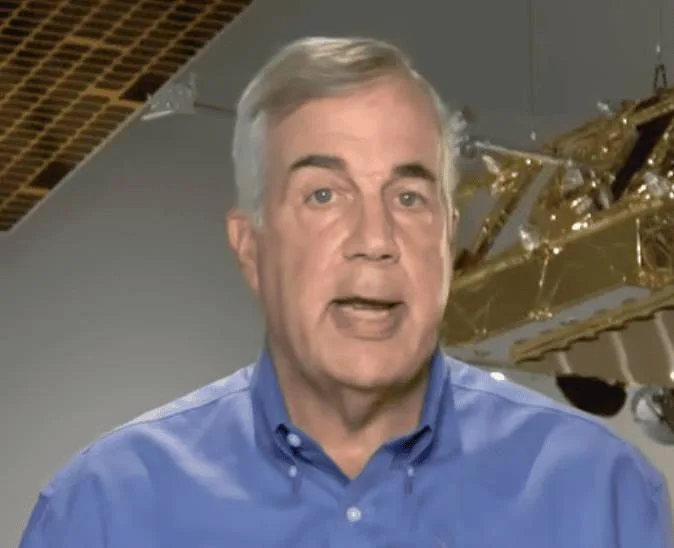
BALLYSEEDE, Ireland — Iridium Communications Chief Executive Matt Desch outlined, in a June 29 interview, how he approached the possible sale of the company and why he and the Iridium board agreed Rocket Lab was the best choice.
Was Iridium soliciting offers and then settled on Rocket Lab as the best of the bunch?
Did we put ourselves up for sale? No. We did not ever put ourselves up for sale. We knew there was interest in us in the industry. We hired bankers. We reached out to all the people who may be interested, there were multiple interests. That’s about all we can say at this point.
But once we kind of got into it, Rocket Lab was the best. There’s a proxy that’s filed in about a month or so and all that information comes out then.
You have told shareholders before that you were responding to interest in the market.
A lot of people are focused on our spectrum and interest in L-band spectrum is part of that. But my interest is the long-term health and security of the Iridium business — our partners, our customers, our employees — and what’s best for the important work we do.
As I think about the opportunities for that, I think about Aireon and aviation safety and IoT and national security missions and next-generation PNT.
The only way you can really be successful in all these applications — I mean, the business cases don’t work on a lot of things. To have the chance to be able to launch something quickly, even experiments in space, without having to go through all the cost and time and location to do it, which may not work from a business case perspective — Rocket Lab is a great chance to be vertically integrated and to be a platform for future innovation — a win-win.
Rocket Lab CEO Peter Beck, in today’s investor presentation, did not stress one future Iridium business over another.
He loves applications that can be successful. He’s not just about launching rockets and satellites. He wants applications. He’s all about real growth and real business. I don’t oversell things to get a valuation, I’m just trying to build a business and I think he is, too.
He’s got to get Neutron [Rocket Lab’s larger rocket, expected in 2027] off and that kind of stuff. But he’s not sitting around talking about data centers in space. He’ll be more pragmatic about this kind of stuff. He was exciting about Aireon, about PNT and the kinds of applications that make sense and where we have an advantage over others.
Beck said: “We are not just going to acquire this business.We are going to apply the Rocket Lab magic to it. We are going to absorb it, optimize it and scale it into something really, truly fantastic.” He’s speaking of the new business areas Iridium has already started — D2D, PNT, aviation safety — correct?
We have a business plan. We are not going to generate all those profits and cash flows that [Rocket Lab] likes if we don’t continue to do the things we are doing. He is all for that. When he talks about scaling, he’s thinking about what other things can be done with Rocket Lab satellites and rockets — Electron or Neutron — that we can try together. There are not too many vertically integrated companies that can do everything.
What about the Iridium management team, including you? Do you intend to stay with the company?
I hope so. I am planning to. There is not much overlap, so we really have to keep working. This is fun stuff and we want to be part of Rocket Lab.
You have said your current constellation is fit to continue operations until the mid-2030s, correct? So no need to launch before then.
At least until then. Officially it’s the mid-2030s but we likely can go a bit longer given that we have not had any significant problem with our network and we still have 14 spares in space. I don’t have immediate launch needs and this really isn’t about that.
I will say that one of the things I’ve always had to deal with is investors who would say: ‘I like this but eventually you’re going to have to spend a lot of money to put the next network up.’
This significantly reduces that. But this transaction had nothing to do with that. It’s just a nice outcome that we can plan on satellites and rockets at a fraction of what we would have had before.
I don’t think our partners and customers had to worry about that before, but some investors were saying, ‘You have a lot of cash flow but if you have to put it all back into the network, that’s not great.’ Now we don’t really have to.
Originally published by Space Intel Report. Read the original article here.