



Norway’s Kongsberg, Germany’s Helsing & Hensoldt Plan Intelligence, Surveillance & Reconnaissance Constellation by 2029

Originally published by Space Intel Report. Read the original article here.
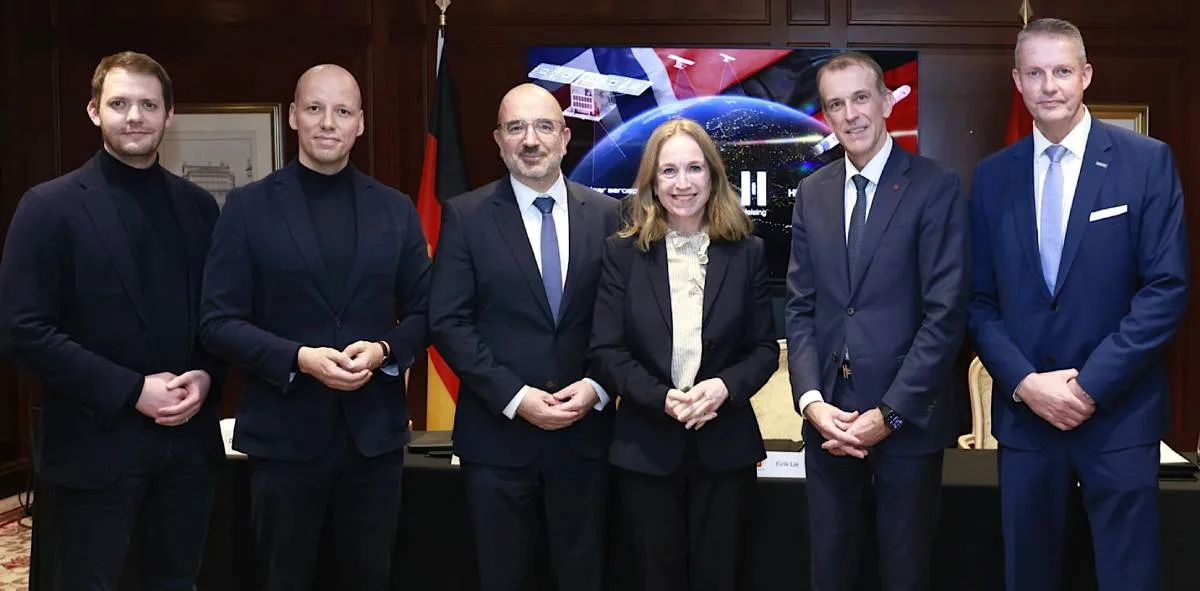
LA PLATA, Maryland — Norway’s Kongsberg Defence & Aerospace and German defense-tech company Helsing have signed an agreement to develop a constellation of intelligence, surveillance and reconnaissance (ISR) satellites that they aim to deploy in 2029 using Kongsberg’s NanoAvionics satellite builder and Germany’s Hensoldt as provider of satellite sensors.
It is the second German-Norwegian tie-up in space in recent months, following September’s letter of intent between German defense manufacturer Rheinmetall and Norway’s Andoya Space to develop Norway’s Andoya Spaceport for civil and military space launches.
Germany’s two startup launch service providers, Isar Aerospace and Rocket Factory Augsburg (RFA), have contracted with Andoya Space to develop launch sites there.
The Kongsberg-Helsing agreement said Isar is “the preferred launch provider for this Norwegian-German initiative.”
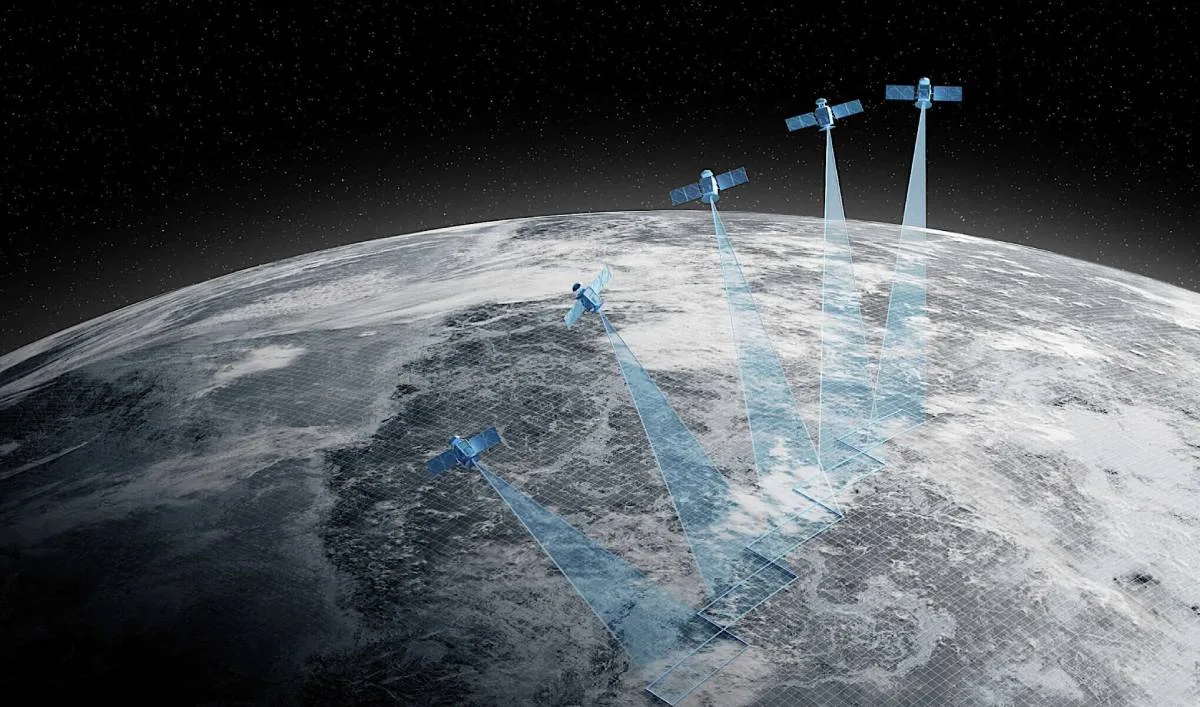
The Commission of the 27-nation European Union is designing what it calls an Earth Observation Governmental Service (EOGS) that would provide global, rapid-response information from an ISR fleet. The 23-nation European Space Agency (ESA) is responsible for early development of EOGS but has struggled to win full support for its program.
One issue slowing the ESA effort is the Commission’s delay in providing ESA with a detailed list of user requirements for EOGS, designed to serve military and security customers. The Commission now expects its member governments to agree on such a list of specifications by early next year.
Kongsberg and Helsing said their constellation will include SAR radar, high-resolution optical and radio-frequency surveillance capacity. “Helsing has proven on-board AI algorithms deployed in orbit for data analysis,” the two companies said in a Dec. 10 statement.
The radar, optical and electronic-warfare instruments for the constellation will be provided by Hensoldt. Kongsberg Satellite Services (KSat)’s extensive global network of satellite ground stations will be part of the network to communicate with the satellites.
“This comprehensive approach, from sensor and satellite production to launch, will include establishing local production facilities in Germany to create a self-reliant European defense capability,” the companies said.
Helsing Co-CEO Gundbert Scherf said the war in Ukraine “demonstrates that most reliable targeting begins in space.
“Space-based ISR is the most reliable, all-weather source for persistent intelligence, as we have demonstrated with our satellite data analysis algorithms already being used in Ukraine. With Kongsberg, we will provide crucial integrated space defense systems to ensure Europe wins the fight for sovereignty.”
Hensoldt CEO Oliver Dörre said:
“By combining Norway’s satellite expertise with Hensoldt’s advanced SAR, electro-optical and electronic-intelligence sensors, we can build a resilient space architecture that gives Europe the information advantage it needs. We are proud to contribute our technology to this joint German-Norwegian effort.”
Eirik Lie, president of Kongsberg Defence & Aerospace, said:
“Sovereign monitoring, intelligence and targeting are fundamental to credible deterrence. Communication, oversight and connectivity are key to operate defense assets effectively, and Europe needs full control over these capabilities. By combining our strengths, [Germany and Norway] can field the required sovereign capabilities by 2029.”
Kongsberg on Dec. 11 provided the following response to Space Intel Report questions:
How firm is this “teaming agreement?” Is it equivalent to a contractual agreement?
This is the initial step in formalizing our collaboration and represents a firm agreement to fulfill the cooperation. We have a clear, mutual understanding of the next steps, and our legal, commercial, and technical teams are working behind the scenes to complete them.
Is this group is positioning itself for a future EU Earth Observation Governmental Service (EOGS)? Germany and Norway subscribed to ESA’s EOGS preparatory program at last month’s ministerial conference.
The partnership is not specifically designed for the EU Earth Observation Governmental Service (EOGS), but they align with the type of programs we aim to support. Our primary focus is on military-grade space-based ISR and targeting systems for defense programs.
At the same time, the group’s capabilities could complement EOGS by providing dedicated defense-grade reconnaissance systems. We will continue to monitor the evolution of EOGS closely and assess opportunities for integration where it strengthens European security and sovereignty.
The ISR constellation you are designing will include SAR, optical and RF sensing payloads. Will Kongsberg NanoAvionics be responsible only for the satellite bus, or also part of the payload?
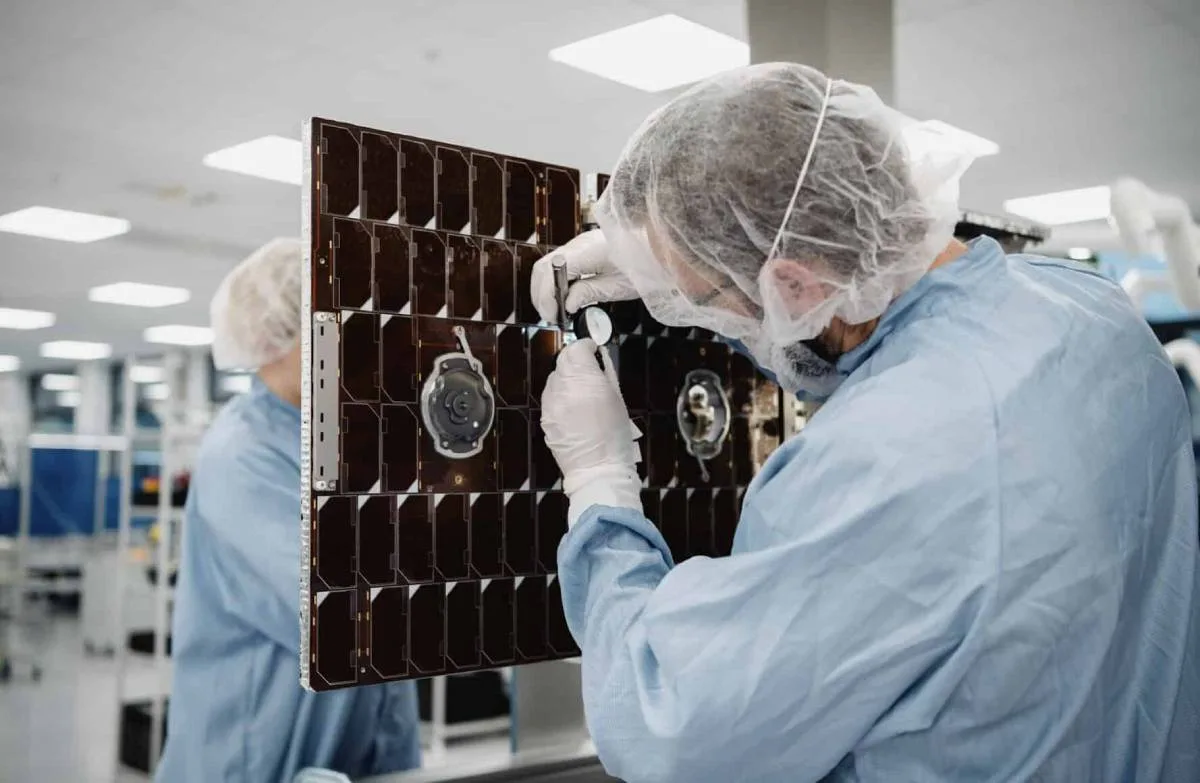
The constellation will include SAR, electro-optical, and RF sensing payloads. However, it is an open architecture where we can integrate other capabilities. Hensoldt is a key partner for sensor systems, and we will integrate other sensors based on mission requirements and customer needs. NanoAvionics will deliver the satellite platforms and key subsystems, leveraging its market leadership for LEO missions.
You refer to an “interconnected comms layer” for the constellation. Is this to be RF or optical comms?
Different solutions for different communication links: optical for inter-satellite connectivity, RF for ground communications…
Are you open to investment from other EU nations in this?
We are not looking for investors. Our focus is on supplying systems of systems and delivering sovereign solutions to individual governments as well as shared systems and capabilities between governments. We are looking into both.
You plan deployment in 2029 — not much time. What does the contracting schedule look like? When will a formal contract be signed for the satellites?
This cannot be disclosed at this point due to sensitivity, but we suggest catching up every few months for updates.
What is your estimate of the size of the constellation and its cost to the shareholders?
We cannot disclose that.
Originally published by Space Intel Report. Read the original article here.