



Rethinking Satellite Operations: More Autonomy Key to Fewer Collisions

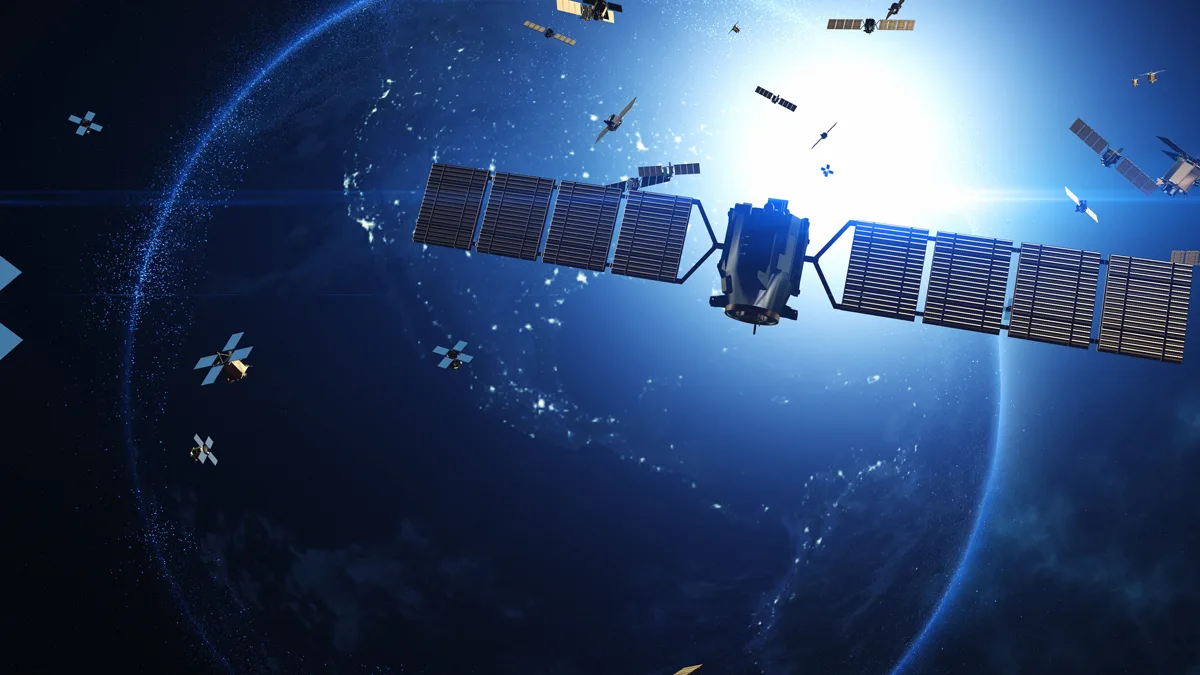
Low Earth orbit success is no longer defined by access, but by risk management.
The rapid expansion of the LEO satellite population is escalating the risk of collisions in orbit and resulting debris, tightening operational margins and creating a more precarious environment.
The pressure is beginning to prompt changes in how collision avoidance is managed. For example, SpaceX recently announced its Stargaze space situational awareness program, which uses automated tracking and conjunction assessment to support collision avoidance across large satellite constellations.
The program underscores the expanding role of autonomous systems to monitor large numbers of satellites and respond to potential collisions in real time, an approach that is increasingly critical to managing traffic in crowded orbit.
In the past decade, the growth of satellite constellations has been staggering, and in turn, so has the risk of collisions in orbit, David Zamora, chairman and executive director of the Space Data Association, told Constellations.
“We are seeing a huge increase in the number of satellites launched, especially in LEO with new mega constellations emerging. This is coupled with an increase in space debris,” Zamora said. “Therefore, the need for robust space situational awareness (SSA) capabilities is growing year on year. Collision risk is the segment of SSA that is expected to see most growth.”
Managing Risk, Data with Automation
The growing congestion in space has made traditional methods of collision avoidance increasingly difficult and inefficient, Zamora said. Satellite operators are now tasked with managing risks across vast constellations, necessitating precise, real-time data to make critical decisions, he said.
Orbital debris is projected to cost the space industry between $25.8 billion and $42.3 billion over the next decade, according to the Jan. 26 report by the World Economic Forum the Centre for Space Futures, “Clear Orbit, Secure Future: A Call to Action on Space Debris.”
Technological innovation plays a central role in debris mitigation, particularly through smarter satellite system design and automated collision avoidance, according to the report.
While satellite operators navigate the growing complexities of SSA, automation is playing an increasingly vital role in managing the vast amounts of data required to assess collision risks and ensure safe operations in orbit, Zamora said, echoing the report.
“Satellite operators face a complex landscape of risks, and operators need the right insights to make smart, timely decisions about their satellites,” he said. However, achieving this is not straightforward because inconsistent data across multiple sources often leads to conflicting predictions, forcing operators to make difficult decisions about which data to trust, Zamora noted.
“Collision avoidance maneuvers are costly: they consume limited fuel and can disrupt service. Operators need data that are not only precise but trustworthy and consistent,” he said.
Traditional Systems Lag Behind
As satellite constellations scale into the tens of thousands, collision avoidance is increasingly straining traditional operational models, Shashank Narayan, vice president of software engineering at Synopsys, told Constellations.
The challenge is no longer limited to tracking debris but extends to whether existing decision-making frameworks can respond fast enough at scale, Narayan said. “What we’re seeing is a trend of space missions being reimagined and reengineered,” he said.
That reengineering is being driven in part by the limits of human-in-the-loop operations. As conjunctions become more frequent, manual review and coordination are proving difficult to sustain, Narayan said.
At the same time, the cadence of operations is accelerating. Response timelines that once stretched over hours or days are being compressed dramatically as constellation density increases, Narayan noted. “We cannot afford these sorts of timescales anymore,” he said.
“Orbit estimation and control problems are moving from human-in-the-loop,” Narayan said, reflecting a broader transition toward more automated, scalable operational architectures.
Coordination Begins Before Launch
Collision risk is a growing concern and a “threat to the viability of the majority of satellites over the long term,” Alessio Bonucci, associate director for the aerospace and defense practice of Boston Consulting Group, told Constellations.
And yet, there has not been a strong push from either regulators or commercial operators toward proactively mitigating this threat, since the majority of operators are not managing megaconstellations, Bonucci said.
“The only one that is really sizeable from this perspective is Starlink, and Starlink is doing a really good job of [managing collision risk],” he said. “They have a good AI system on their own satellites that basically manage this mostly without any human intervention, otherwise it would also be impossible for them to do so.”
Even in that case, the workload is rising at a quicker pace than fleet size, with avoidance maneuvers increasing significantly over a short period of time, Bonucci noted.
The more difficult phase begins when multiple large constellations operate within the same orbital regimes, Bonucci said. At that point, collision risk is no longer something a single operator can manage in isolation, he said. “Once all of this is put into place and into orbit, that’s when the risk will become mature.”
Managing that environment depends on coordination being designed into the operational systems from the outset, because “It’s quite critical that it’s embedded into the system before they launch into orbit,” Bonucci said.