



SES Raises Concerns Over Airbus-Thales-Leonardo Space Merger and Announces Plans To Build Its Own Satellites

Originally published by Space Intel Report. Read the original article here.
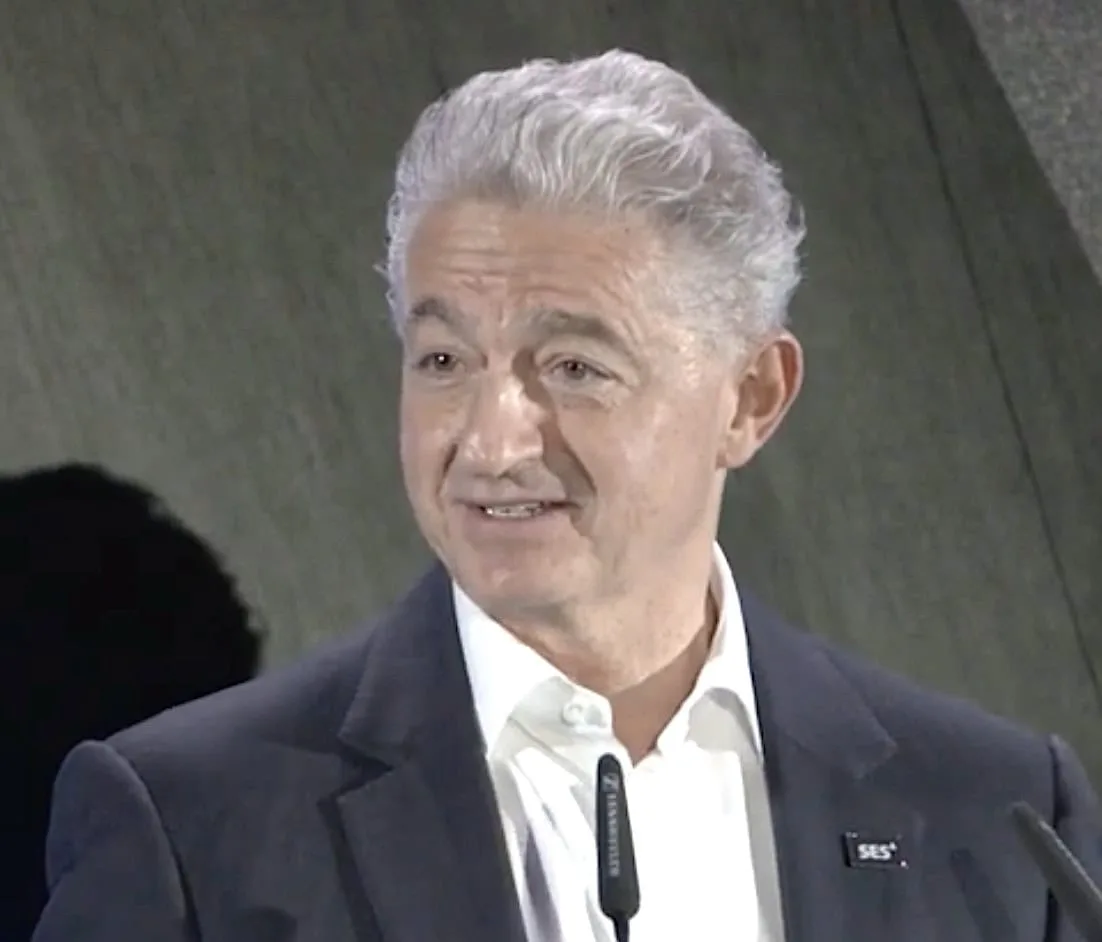
BRUSSELS— Breaking a remarkable silence among European satellite operators and government satellite customers, SES Chief Executive Adel Al-Saleh questioned whether the space-division merger of Airbus, Thales and Leonardo would solve the problems of the industry.
And in a development that may or may not be related to the merger, Al-Saleh announced that SES would break with its past and build its own satellite manufacturing facility as part of a multi-owner campus in Kockelscheuer, Luxembourg. The site will be inaugurated in March. Al-Saleh disclosed the plans during a Jan. 19 event hosted by Luxembourg’s Fedil industry association.
“The supply chain we have used for some time is struggling to change,” Al-Saleh said in a Jan. 20 interview with RTL radio. “There is new competition coming in and new space technologies are emerging. For us to evolve as SES, we must take control of some parts of the supply chain.
“We need to start manufacturing and engineering things ourselves. We’ll still use our partners around the world, but it’s important to take control of certain parts of the supply chain in order to be successful. This includes taking control of IP, and developing and manufacturing things ourselves.”
The Airbus-Thales-Leonardo space merger is expected to close by mid-2027 if it receives regulatory approval. Chief among the regulatory analysis will be the effect on competition in space hardware production of the merger of three of Europe’s four biggest prime contractors merge.
OHB SE of Germany would become the lone large system integrator to compete with the merged entity. OHB Chief Executive Marco R. Fuchs has said OHB would ask that the three companies divest some of their capabilities or at least make binding commitments that companies like OHB, which purchases many components from Thales Alenia Space, would not see this supply source be shut down.
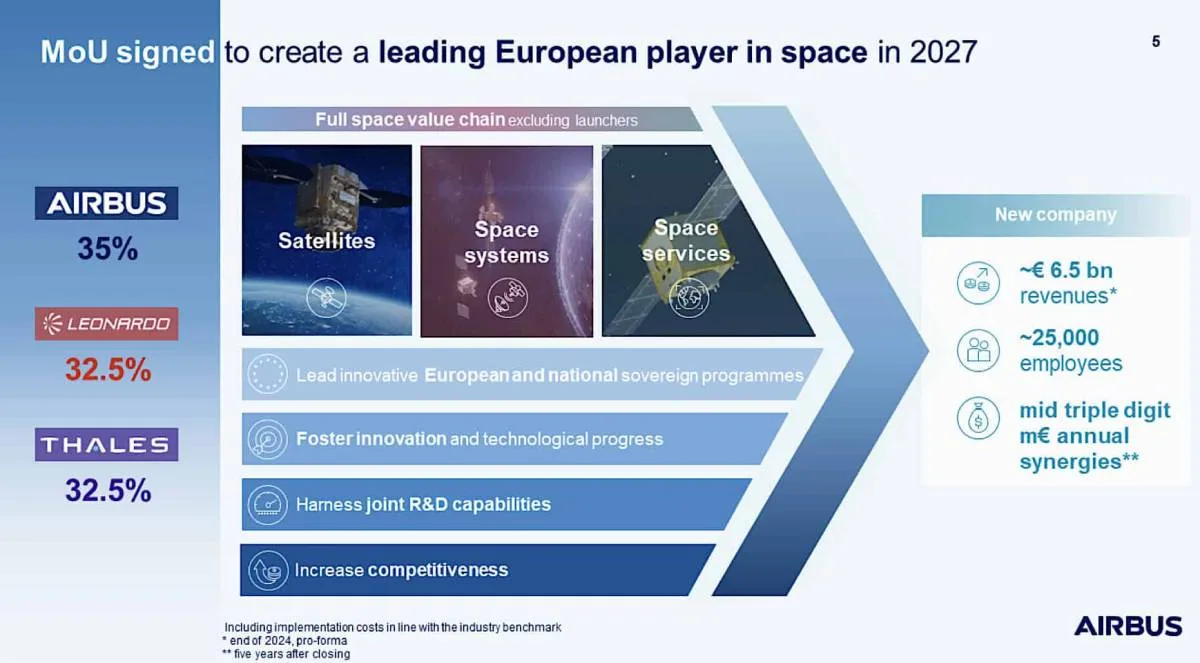
European government agencies — the European Space Agency (ESA), the European Commission, the French arms procurement agency, DGA; and the French, Italian, Spanish and other national agencies have been silent in their reaction to the merger. This may be in part because the French government has been so enthusiastic about it, muting contrary views.
That is why Al-Saleh’s statement, made here Jan. 27 at the 18th European Space Conference, stand out. There’s nothing unusual about a large satellite buyer questioning whether the merger of its largest satellite providers is in the best interests of the customers. But if you’re the only one saying it, it resonates.
Europe’s second-largest satellite operator, Eutelsat of Paris, is now 29% owned by the French government and is loathe to say anything negative about the merger.
“Look, I’m concerned,” Al-Saleh said when asked about the merger. “We have our largest partners coming together. All these partners have challenges today in terms of speed and cost-effectiveness and innovation.
“If this combination makes them stronger, faster and more agile, then great. But we just got finished integrating Intelsat. It’s a big feat, but it’s a very difficult project.
‘We depend on these suppliers, We have six GEO satellites on order – big ones’
“To view it fundamentally, we have an issue of competitiveness, speed and also cost, and we have to fix that. I’m rooting for them, hoping this is going to be the path for the Europeans to get stronger, so let’s see.
“We have a huge dependency with these companies. We have six GEO [orbit] satellites on order — big ones. We’re hoping that this [merger] is going to make it right and they will be faster, more agile, more flexible to compete with New Space.”
Does the history of mergers, especially three-party mergers where governments are the largest customers, show much evidence for the merged entity being “faster, more agile and cost-effective” than its predecessors?
Other things are going on at SES that might explain its decision to scrap 40-plus years of history as a satellite operator “to become a space solutions company,” in Al-Saleh’s words.
First, SES has tentatively committed to investing around $2 billion in Europe’s Iris2 multi-orbit secure communications constellation. While Iris2’s first generation architecture and prime contractor lineup seems set, a second generation will be coming along in short order, and SES may want to play a role in that.
Second, SES is eyeing entry into the direct-to-device (D2D) space through its investment in Lynk Global, which recently merged with another struggling D2D player, Omnispace. SES is seen as the financier of the constellation that Lynk and Omnispace want to build. Building part of the satellite hardware may give SES more confidence in the business.
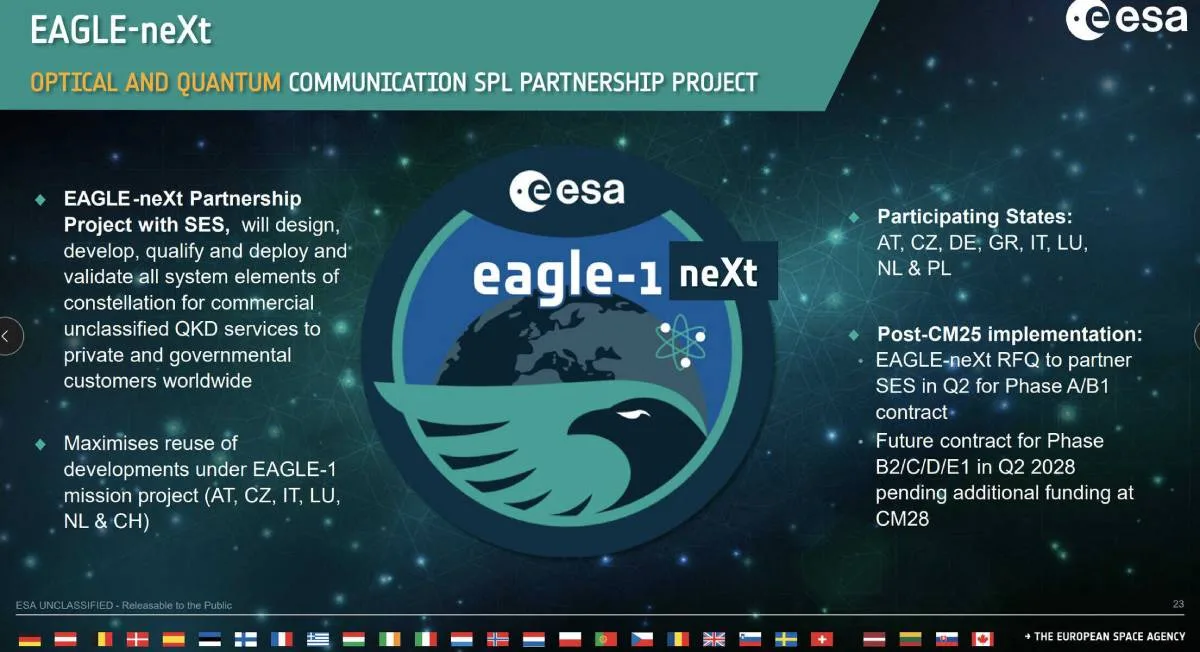
Third, SES is under contract to ESA to co-invest in a D2D project, called Selyce, which foresees an eventual constellation; and in the Eagle-neXt optical and quantum communication project, which is designing a quantum key distribution (QKD) constellation for unclassified serves to corporate and government customers. Here too, this likely will result in new intellectual property that, under ESA rules, will be SES’s to keep.
Originally published by Space Intel Report. Read the original article here.