Transcript:
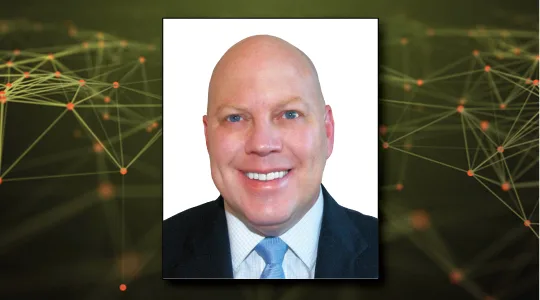
John Gilroy: Welcome to Constellations, the podcast from Kratos. My name is John Gilroy, and I’ll be your moderator today. Our guest today is Kirk Pysher, president at International Launch Services, or ILS. Kirk, how are you?
Kirk Pysher: I’m doing great. Thanks for having us.
John Gilroy: Well, I went to LinkedIn and saw your background, a whole lot of stuff there. Give us maybe a little nutshell of your background, please.
Kirk Pysher: Actually, my background was originally in civil engineering, so I started my life building nuclear power plants in Georgia, California, Pennsylvania, and then went off to grad school at Penn State and discovered rocket science, and ended up at Boeing, or I should say McDonnell Douglas in those days, in 1987, working on the Delta Star programs.
John Gilroy: It looks like you have a background in high-risk activity, is what it sounds like to me.
Kirk Pysher: Yes, it looks that way.
John Gilroy: Well, I imagine being involved in International Launch, there’s a lot of risk involved there, isn’t there?
Kirk Pysher: Yes, there is. Every launch is a lot of risk.
John Gilroy: Great, great, great. There’s been a decline in the commercial GEO market. How do you see the U.S. government market for launches trending in the next few years?
Kirk Pysher: Well, it’s interesting. ILS specifically does not really target government launches. We’re strictly a commercial launch service company, and we do however service commercial customers that have hosted payloads for the U.S. government or for other governments. For instance, Telesat had a wide area augmentation system on one of their satellites that was used for the FAA, and Intelsat had a UHF payload on one of their satellites that was used by the Australian Defence Services. We launch those types of satellites, but those types of hosted payloads are I would say an exception, not a general type of rule. But in general, I think we’re seeing an overall cost consciousness across the space sector. The U.S. government will continue to launch their defense satellites, but I think a lot of the communication imaging type of satellites, where they rely on the commercial marketplace, they’re going to be looking for the other alternatives just as the satellite operators are, to reduce the overall costs of those services. I think we’re going to see some changes in the marketplace, where they might focus a little bit less on GEO and maybe on some of the LEO and NEO type of orbits.
John Gilroy: Yeah, I see that trend as well. I’m in the classroom all the time, many of my students are interested in geospatial activities, and with NASA and so many people interested, it seems like there’s going to be opening up to many more commercial applications within the commercial part of the federal government.
Kirk Pysher: The best way to reduce your cost is to find a sharing opportunity, and the U.S. government tagging on to commercial payloads is a way to reduce costs.
John Gilroy: There’s a lot of topics we’ve involved in this podcast, talk about new space a lot. We had a fellow who talked about Made in Space, a guy named Andrew Rush. So, from the perspective of new space, how big a market opportunity are small sat launches for ILS?
Kirk Pysher: Well, you know that class, that small sat, micro sat to the constellation, the 500 or I should say 1,000 kilogram and less satellite, is potentially huge. For ILS, we have the capability to launch everything from a micro satellite to a heavy high- throughput satellite, over six tons. We’re looking at that marketplace as an emerging market, and we’re trying to ensure that we have the capability to service that market. Now, the way we service it is more on a ride share type of basis, or more of an integrator type of thing, where someone will put together a bunch of these small payloads and have a dedicated launch, or they’ll tag on to one of our primary satellites, which may be going to GEO, and they’ll get a ride, which will be a very cost-effective method for them and for the primary payload. They get a reduced price for their launch service, which benefits everybody. We’re using our Proton M. We can drop somebody off on LEO and then head off to GEO using the restartable Breeze M upper stage of the Proton vehicle and so we provide a very optimized and cost-efficient solution for that marketplace.
John Gilroy: You know since I drove to Ohio last year and I would see the big trucks. They were LTL, less than load. It almost sounds like it’s a truck, and you have less than load, you can negotiate that space so smaller companies can take advantage of it.
Kirk Pysher: Yes, that’s exactly what it is. We’re trying to optimize the overall performance of our Proton vehicle. In fact, we have recently developed what we call the Proton Medium vehicle, which is a variant of the robust Proton M heavy lift vehicle. And that is targeted more towards the medium class satellite, and there’s still some extra performance on there where we can throw on a couple 500 kilogram satellites and provide again a cost-effective solution for the small guy, and a cost-effective solution for the primary guy on a reliable launch vehicle.
John Gilroy: All kinds of competition in this area of new space. There are emerging small satellite launchers. Do you think they’re going to compete effectively with you, or what do you think their competition is going to be?
Kirk Pysher: Well, I think their competition is a little bit different than ours. Maybe niche isn’t the right word, but I believe there’s a niche market for the small satellite launchers. I still believe that the most cost-effective and reliable solution for the small sat is to get a ride on a flight-proven vehicle, and share the cost with someone else. I think a lot of the launch integrators that put together a bunch of these small satellites onto a single payload will provide the most cost- effective solution for the guys that want to get to space. Now, there are going to be those opportunities, especially when we get into the constellation market, where they’re going to need to replace a satellite in a certain plane at a specific time. The ride share opportunity probably isn’t going to be the most optimal solution for them, so then they’ll be looking for some of the small launchers to be able to go and place that small satellite at the right time in that right plane. I think that’s where their niche will be most effective for them.
John Gilroy: The competition is going to be just vicious in the next five years, I think. I’ll just throw out Jeff Bezos. My wife went to Whole Foods back at Thanksgiving, and because she was partnered with Amazon Prime, she got a discount on the turkey. That’s who you’re coming up again, Kirk. You’re not coming up against some Joe Six-Pack in the street, this guy’s worth 100 billion dollars. This is going to force you to become, maybe be more aggressive in terms of pricing and launches and customer acquisition, isn’t it?
Kirk Pysher: It’s interesting, there’s a lot of new players in the market today. We’ll see how Jeff’s rocket comes out. It’s still on paper.
John Gilroy: First name basis, that’s good to know.
Kirk Pysher: It’s still on paper, and we’ll see how it actually turns out and how it competes. It’s a rather big rocket, and so not quite sure exactly what they’re going after. But we believe that our Proton vehicle, along with the variants, the Proton Medium and the Proton Light, will eventually be the right solution, because we can address the large satellite class, the medium and the small.
John Gilroy: In the NFL, it’s awful hard to predict a game on the weekend, even harder to predict out five years from now who’s going to be in the Super Bowl. But I’m going to ask you. Take a look at the launch services providers that are out there. What do you think is going to happen in the next four or five years? Thinning out, or who do you think is going to win?
Kirk Pysher: Well, I think a lot depends on that non-GEO marketplace and the small sat marketplace. If we just strictly look at GEO, we’re looking at this year, I think we’ll be lucky to see 11 new satellite orders. It’s going to be hard-pressed for multiple launch service providers to survive on just 11 GEO launches. As the constellation programs come to front, OneWeb comes out, we’re going to see a lot more need for launch services in that next five, six year time frame. What’s also interesting is that in that same time frame, almost every single launch service provider out there today is going to have a new rocket. The only heritage performing vehicle that will be during that time will be Proton.
John Gilroy: Well, then we’ve got to bring up the word “reliability,” don’t we? I think many people realize the insurance business goes hand in hand with these satellite launches. They have a whole room full of actuaries taking a look at each one of these rocket launches. You can’t tell me they aren’t, and so reliability becomes more and more important in the pitch by Jeff Bezos or by Elon Musk or whoever, doesn’t it?
Kirk Pysher: Yes, it does. Reliability plays a huge role in of course the cost of insurance, which is part of the overall business plan that the operators have to look at before placing a launch service. I’ve talked to a number of underwriters who are extremely nervous, in that 2020-22 time frame with the new vehicles coming online, the Vulcan from ULA, Aireon 6 coming online, the BFR from SpaceX and of course the New Glenn vehicle. They all say historically those first few launches always have failures associated with it.
John Gilroy: I tell you what, there’s a lot of high-level executives at insurance companies that they’re expecting their annual bonus to be a certain level, and things happen to these situations. It happens to the automobile industry. It happens in this world too, doesn’t it?
Kirk Pysher: Well yeah, the launch service insurance market today is rather an interesting situation, where basically the overall premiums that they’re collecting would not cover a loss of let’s say an Aireon 5 vehicle with two satellites on. The premiums they’re collecting today aren’t sufficient to cover any significant loss, so they have some challenges.
John Gilroy: I was doing some research on you and your company, and I went to Google and YouTube and I learned all kinds of new things. There are all kinds of new ways to put stuff in space. There are all kinds of new ways. People are using 747 airplanes. There’s this guy by the name of Paul Allen of Microsoft fame, and he has this thing called the Stratolaunch. He’s got this plane that the wing span is as wide as a football field, and he’s going to launch satellites from this plane, too. There’s so many new competitors out there for you.
Kirk Pysher: Well, you know it’s interesting and I hear a lot about these new revolutionary launch concepts, right?
John Gilroy: Yeah.
Kirk Pysher: The fact of the matter is, we look back in 1990, Orbital Sciences launched Pegasus off of the wing of a B-52. So it’s not a new concept, it’s just someone out trying to reinvent the wheel that’s already been created. So I think what we’re seeing here is possibly this indication of a generation gap between old space and new space, where a lot of the people coming into the industry don’t realize that a lot of these concepts are old concepts. We’re still all using the rocket equation. The first indications of it were in 1860, and we’re all still using that same equation to generate propulsion, to put payloads into space. So yes, there are a lot of people out there thinking about how to make money in space, and we’re definitely going to have to see not just GEO market, but the non-GEO market and the small sat market come into play in order for everybody to survive in the launch services business.
John Gilroy: Here’s some fun facts for you. I’m sure you’ll think about these a little bit. In 2016, about 60% of the 220 satellites launched weighed less than 500 kilograms. It’s a trend towards smaller and smaller. We talked about that earlier. The way you’re adjusting to it is through ride shares. Any other way you’re adjusting to this shrinking of the satellites?
Kirk Pysher: Well again, we’ve developed the Proton variants, the medium vehicle again for 3,500 to 5,000 kilogram performance, and then we have the light vehicle for that less than 3,500 kilogram payload class. And again, we have the most efficient way for us to address that is through the ride share approach, or through a dedicated launch with an integrator of the small sats. We also have the Angara 1.2 vehicle, which launches out of the Plesetsk Cosmodrome in northern Russia. That’s targeted for LEO class satellites in the 3,000 kilogram range. Again, ride share opportunities, we’re not the guy for a dedicated 500 kilogram launch. We would not be cost effective for that.
John Gilroy: Here’s the part of the podcast where I give a quote and you name who said that, okay? You ready for the quote?
Kirk Pysher: All right.
John Gilroy: “It is frequently more expensive to launch a small satellite than build it.” Who said that?
Kirk Pysher: That was myself.
John Gilroy: Oh, so you came up with that quote. That’s really true? It’s more expensive to launch a small satellite than to build it, wow, I’d lose that on “Jeopardy.”
Kirk Pysher: Yeah, it’s the biggest challenge that the small sat guys have. I think OneWeb was estimating it was a million dollars per satellite to build. I think that’s roughly where it was, and to find a launch service that can launch that, those number of satellites, to get it below one million dollars, it’s tough. Our Proton Medium, I think could do it.
John Gilroy: I’ve talked to satellite manufacturers. I keep thinking that a factory can pop up satellites, no problem at all, one, two, three, but I never thought this was that expensive just to put it near there. Is there a way for small sat operators to make it more attractive? I guess that’s with your ride share option, huh?
Kirk Pysher: Yeah, ride share is the most attractive way for the operators today to reduce costs. In fact, I had a conversation with one of the operators not too long ago where he asked me, “What new technology is on the horizon that would substantially reduce the cost of a launch?” I told him the reality is, again we’re all still using that rocket equation, chemical propulsion or solid propellant propulsion, to get you into space. There is no new technology that is going to significantly reduce the cost of launch. The only way to do that, I can reduce your cost of launch by 50% right away if you build a satellite that we can launch with someone else and share the cost. That’s the most cost effective way to do it, and it’s true. That’s the market trend that we’re seeing today.
John Gilroy: Yeah, but it sure looks cool when you see pictures in magazines of these small satellites, doesn’t it? People get to thinking that, “Well, this is going to be so simple and easy.” Well, nothing’s easy once you put it in space, is it?
Kirk Pysher: Well no, it’s not. It was interesting in, what is it, the Lunar XPRIZE was to develop a small satellite that would go onto the moon, take a photo, then bounce up, come back down on the moon and take another photo. Penn State was involved in that, and I was working with them a little bit with respect to that, and their biggest challenge was finding some way to launch that cost effectively.
John Gilroy: Wow, yeah.
Kirk Pysher: That’s the biggest challenge that all the small sats have, is to find that cost effective launch solution.
John Gilroy: When I think of cool things, I think of satellites and I think of these small videos we’re starting to see where they’re recovering first stages and all kinds of landing, and landing in the middle of the ocean, just impossible equations that take a whole room full of civil engineers to figure out that equation. When do you think that’s going to become the norm and is that going to have any impact on pricing?
Kirk Pysher: Well again, here’s another interesting concept.
John Gilroy: A fun fact.
Kirk Pysher: Which is part of that generation gap; reusability of engines is not new. Primarily, we look at the space shuttle and the RS-25 was reused, refurbished, reused. We look back at the Zenit launch vehicle, back in the 80s, it was designed originally to be used as part of the Russian Buran program, where the first stage of the Zenit would be the boosters, and the engines would be reused seven times. Reusability of the engine, in fact back in the early 90s I worked on a program called Advance Launch System, which was the predecessor of EELV, where we’re designing some concept to separate the main engine from the launch vehicle. Covers would come out and cover the nozzles, and parachutes would open and we’d recover that engine. But when you look at the cost and the extra mass that you’re putting on there to accomplish that, and not giving the payload the full performance, there’s a tradeoff there. And then you have to look at, how do you ensure that the vehicle or that the reliability once the vehicle has been used? We can go back to 2016, when we had, there was an Atlas launch where the RD-180 engine shut down six seconds early. That engine went through a full test firing before it was put on the vehicle, yet in its second full firing, it had an issue. 2007, there was a sea launch failure of a Zenit, where again the RD-171 main engine went through a full flight profile test firing. And yet, on its next test firing, it failed. There’s no second chance when we ignite those engines. There’s no way to do an emergency landing and recover the vehicle. How do you ensure that reliability at 100%? That’s when the space shuttle was originally designed, the reusability aspect on paper looked good, but in practice, in practical sense, it was very costly.
John Gilroy: It goes back to that word we used early, liability, doesn’t it?
Kirk Pysher: Yes.
John Gilroy: And insurance, and cost, and what’s the real cost when all is said and done?
Kirk Pysher: So reusability, I think we’re still yet to determine how cost effective that will eventually be, in the ability to reduce cost.
John Gilroy: But you know, go to YouTube, type in “Elon Musk,” you see the rockets landing in the middle of the ocean, because Elon’s a genius, right?
Kirk Pysher: The brilliance of SpaceX, you have to give them credit, 100%, 110%, is that they have made space sexy again.
John Gilroy: Well, it’s marketing, huh?
Kirk Pysher: Right, they have made space sexy again, and they have attracted a lot of young people to come back into space and close that generation gap. You’ve got to love that, and you’ve got to give them credit for that.
John Gilroy: No doubt about it. In fact, we did an interview with a guy named Andrew Rush from Made in Space, a young man, and a lot of other people getting very interested in this whole concept of rockets and space and satellites and going to Mars. He talks about 3D printing. Any application for the area of 3D printing in manufacturing some of these space systems?
Kirk Pysher: Well, of course there is. I’ve seen it, in the U.S. market where the cost to manufacture complex equipment is very high. In fact, if we look back at the RD- 180, originally the RD-180, built by Energomash in Russia, was to be actually built in the U.S. Now, if you take that engine and you bring it to the U.S. and you try to build it in the exact same way that the Russians built it, it would be cost prohibitive. Touch labor here is so costly to build that engine. However, if you build that engine in Russia, it’s still cost competitive using the touch labor. So we at Khrunichev are looking at ways to reduce our overall costs, and we are looking at efficient means to manufacture various components, and we are procuring tools from Europe that will help reduce the overall costs to manufacture and streamline it. Right now, 3D printing is not one of those, and I’m not sure it will be in the near future.
John Gilroy: I’ve been involved in the world of software for many years, and I heard this phrase years ago and it stuck with me. The word was platform agnostic. I don’t care what it runs on, platform agnostic. Has that been your experience when you tell people that we’re going to take your satellite, and we’re going to send it over Russia and send it from way on the other side of the world? Are manufacturers or people platform agnostic when it comes to your product?
Kirk Pysher: Well, typically the way it works is an operator will put out a proposal and that particular satellite has to be able to be integrated on various platforms. They design it to be able to launch them on whatever platform.
John Gilroy: That’s the way you get economies of scale, and you can actually get the price down then, can’t you?
Kirk Pysher: Correct, as long as you maintain compatibility with all three of the primary launch service providers today.
John Gilroy: These launches are so expensive, you can project out pretty well in the next four or five years where it’s going to go. Are there any disruptive technologies you can see that are going to come in and maybe change some plans in the next few years?
Kirk Pysher: Disruptive technology?
John Gilroy: Yeah, something you can’t predict?
Kirk Pysher: No, I’m not sure-
John Gilroy: I mean, in technology, I never know what to predict.
Kirk Pysher: It’s hard to predict, but I think we look back historically, again we’re all still using the rocket equation to get to space. I don’t see any real disruptive technology that’s going to significantly reduce the price other than find an opportunity for ride share.
John Gilroy: So what we’re going to have to do is really sharpen our pencils and take a look at reliability, take a look at what the actual return on investment, what the cost is for getting something in space, and it’s going to be very interesting in the next few years with so many new developments, aren’t there?
Kirk Pysher: Yes, it’ll be interesting to see how it all plays out.
John Gilroy: Well Kirk, unfortunately we’re running out of time here. I’d like to thank our guest Kirk Pysher, president at International Launch Services.
Kirk Pysher: Thank you very much, John. We appreciate coming and talking to you.