
Podcast Episode #8: December 18, 2017
Hypersonics, Torpor and the Valley of Death
Listen as Caleb takes you on a tour of the near-term future of space and beyond.


Space is a Network.
Constellations is Your Connection.


Transcript:
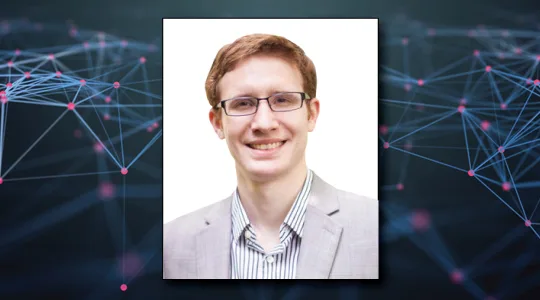
John Gilroy: Welcome to Constellations, a podcast from Kratos. My name is John Gilroy and I will be your moderator today. Our guest today is Caleb Williams, Space Systems Analyst at SpaceWorks. Caleb, how are you?
Caleb Williams: I’m doing well, John. Glad to be here today. Thanks for having me on the show.
John Gilroy: Good. Why don’t you just give us a quick thumbnail sketch of your background before we begin the discussion.
Caleb Williams: Yeah, John. So my background has really been on the market side of space. I’ve been doing this for a better part of about five years now. I got my start work in some various space startups in the Atlanta area and out on the West Coast, as well as some up near you in DC, and trying to help them understand the market that is emerging within new space, as we call it. And how to better serve those customers and tap into those markets. I did that for a number of years before coming to SpaceWorks. And then I’ve been at SpaceWorks for a little over a year now where I do very similar things, looking at the competitive landscape and the market for space technologies and emerging projects and helping to get our customers on board with new technologies and how they can leverage those to really solve business problems and bring all of the exciting exploration initiatives to fruition.
John Gilroy: A proud graduate of Indiana University, no doubt?
Caleb Williams: That I am. That I am. Go Hoosiers.
John Gilroy: Yeah, I knew that. Let’s start off with just an idea of the company. New space can mean many different things. Give us maybe four or five things of the initiatives that you have there at SpaceWorks.
Caleb Williams: Yeah. SpaceWorks is really an entire family of companies. So our parent company, SpaceWorks, is focused primarily on systems analysis and engineering, advanced concept development, business case analysis, market assessment. We focus really on those early stage projects, and helping our customers envision what those could be in the future, both from a technical perspective as well as a business perspective. We develop a whole suite of tools that we use to help our customers understand that. They’re also available through our SpaceWorks software brand, as well as a number of other things. We have three subsidiary companies, which all focus on hardware. Generation Orbit is our launch vehicle subsidiary, and they work primarily with hypersonic vehicles and small satellite launch. As well as Terminal Velocity Aerospace, which focuses on re-entry devices and capsules, as well as thermal protection systems. Then Blink Astro is our newest addition to the family, and they are a modular spacecraft and small satellite company, focusing heavily on the Internet of Things market.
John Gilroy: All their pitch would be 30 to 40 minutes. There’s a lot of stuff working at SpaceWorks.
Caleb Williams: Pretty much. We like to keep ourselves busy here. And like I said, we’ve separated out into several different hardware companies while the parent then stays with more of the over-arching systems and engineering analysis type things.
John Gilroy: So does SpaceWorks actually build launch systems?
Caleb Williams: We do. Our subsidiary Generation Orbit handles all of our launch side hardware and they’re working heavily right now with hypersonic tests as in maturing hypersonic technology with the eventual goal of having our Go Launcher family, which would air launch small satellites directly into orbit.
John Gilroy: Wow. All kinds of applications here. Do you focus on launches of particular satellites like SmallSats?
Caleb Williams: At SpaceWorks, we actively monitor global satellite activity across all mass classes. We focus on everything from the very small guys all the way through the large GEO SatCom providers. Since 2011, we published a SmallSat forecast and that’s been a major driver of growth for our company in terms of outreach. I think something like several thousand people download that every year. And that segment and that report is really dealing with satellites that are less than 50 kilograms. We’re talking the size of a desktop computer. Something like that. We like to focus on that segment from a market perspective because we’ve just seen a lot of growth. In 2017, alone, there were two dates in November, we have seen almost 150 per cent growth over last year’s SmallSat launches. And when you look back to 2011, when we started watching this sector, it’s almost a ten times increase. So, part of the reason we like to look at that area is just because there’s a lot of growth that’s happening there. We expect several thousand more small satellites to be launched in the next five years or so. So, in terms of our analysis group, we watch all satellites and we definitely think that the smaller segment is one most interesting at the time. And in terms of our launch vehicle subsidiary, they are also targeting the small satellites section for very similar reasons. We’re seeing companies in this area that are launching in the order of almost 50 satellites. Some of them have reached 50 satellites in a single year. So, we think that that portion of the market is one that’s most susceptible to some of these disruptive business models that are coming into play in the new space industry and we very much want to be a part of that.
John Gilroy: This is amazing. In 2011, you were in the business of projecting future satellites. Think about years ago when you were in college. I would never guess that number of satellites and projecting even more in the future.
Caleb Williams: Exactly. It’s been a very recent phenomenon. Like I said, as far back as only five years ago, we’re talking less than 50 satellites launching in a whole year. And again, in 2017, we’re talking about a company like Planet, launch over 50 by themselves.
John Gilroy: There are thousands of satellites here. With the thousands of these new LEO satellites and hundreds more of the HTS satellites what do you think are the biggest challenges to launch for the future?
Caleb Williams: That’s a great question and it’s one that we address for our clients quite often. You know, like I said, we’ve been tracking this industry about ten years now, maybe a little more and historically speaking, reliability and the cadence of launch has really been a major challenge in this area. But, the last year or two, we’re starting to see some of that dissipate and you’re finding as these small satellite launch vehicles come online and as ride-share opportunities come online, that that bottleneck is starting to go away. So, in terms of the biggest challenges going forward, what we’re seeing is that it’s really a value change issue. It’s coming down to the customers. For any of these guys who are planning to launch their thousands of satellites in these big constellations, they really need to know where their customers are and how they’re helping them to make money. At some point, venture capital money runs out, investment money dries up and you actually have to have a profitable business model. And it’s really on these satellite operators to prove that they can make this work in the long run. SatCom has always really been pretty much the major driver of the commercial space market. And you ask any of these exigent players, Intelsat or Iridium or things like that, and I think any of them will tell you, it’s not the easiest market to be in. Cash doesn’t grow on trees. There’s a lot of competition from terrestrial fiber that’s really put a lot of downward pricing pressure on these guys. Not to mention with the high troupes of satellites going up they’ve really drastically changed the business model for all of these guys. Some of the new kids on the block, the OneWeb’s, the SpaceX, the SmallSat, the Sky and Space Global kind of guys come on line, the challenge for them is going to be finding enough paying customers that they can actually create a profitable business model that allows them to launch these large constellations and to replenish those constellations. Because that’s the unique thing about the LEO satellites, is unlike the GEO market, where you’re launching a satellite for maybe 15 years. These guys are talking about replacing a constellation of 200 satellites maybe every three, four years. The big challenge that they are going to face is they are really going to have to find a way to deliver value to their customers so that they can sustain their business. And that all feeds back then into the launch vehicle market like I mentioned initially, which is that they’re reliant on the satellite operators. So if the satellite operators can’t make enough money to support reliable launches for the launch providers then all of sudden, some of them start to go out of business. And then you end up with the same problem that we had a few years prior, which is where you don’t have enough satellite launchers online to support the constellation. So it’s very chicken and egg in that sense, that we are seeing a lot of excitement in the area. We are seeing the launch providers come online and remove that bottleneck, but the question becomes how many of these constellations can the market support and will they then be able to support the launch market as well.
John Gilroy: My follow up question will be the shortage of launch vehicles but what’s important is making the profit and business model. You can go out and buy a brand new bus, but if there’s nobody getting on the bus, then it’s a waste of time. It kind of goes back and forth with this business, doesn’t it?
Caleb Williams: Exactly. That’s really what we’re seeing at the moment, is that even though some of these smaller launch vehicles have not quite come online yet as number, 2018, will be a very exciting year for a lot of launch companies. But no, for the time being, these small satellites are going to the other providers and things like that. So, they’re finding ways to get to space. It’s just now a question of, now that they’re in space, are they going to generate enough money to keep doing that. Because like I said, as the venture capital money starts to go away, once these guys have completed their later funding rounds, again at some point, their investors will be looking for a return and they just really have to be able to deliver on that promise to keep the industry going.
John Gilroy: Caleb, this morning I sat down for an hour and talked with an executive of a large company. We talked about auditing and duplicate services on web servers and that was a pretty boring conversation. I would like to talk to you about space travel and space tourism, putting people on Mars, Virgin Galactic. So what do you think the big steps are in this type of exploration?
Caleb Williams: Certainly. Human exploration has always been a core part of who we are here at SpaceWorks. We were involved in the early 2000’s, right when the Ansari X Prize and things like that were first starting to come up. I mean, we were there and we have seen it over the last 17 years and we can proudly say that 17 years later, we’re still there and we’re still helping to be part of that dream. So in terms of space tourism, I think that the lower price point of launch is certainly facilitating a lot more activity in that area than what we saw in the early 2000s. And that’s been a major driver of this resurgence of space tourism that we’ve seen. We worked with companies like Bigelow or NanoRacks. And actually we’re doing to help develop in-orbit destinations. Bigelow has a module on the International Space Station and NanoRacks is working to develop airlocks and things like that. All of that has made it so that now we actually are going beyond even just the Virgin Galactic sub-orbital type flights. And we’re looking at how do you actually get humans into space that are not official trained astronauts, they’d be the first private astronauts. How do you get them up there and of course what do they do once they get up there. So that’s very, very exciting and I think that growth in those areas add a lot of potential to really be the catalyst that finally makes orbital tourism go. Beyond the tourism side of things, in terms of the more grandiose space exploration topic, we definitely see resource extraction and resource utilization as the major challenges that need to be addressed going forward. So, this is getting outside of just the space stations in orbit and trying to get to say the Moon, or Mars, or some other destination. We don’t believe it’s feasible to make everything on Earth, send it all to space and then send it all off to another celestial body. That’s just not going to work as well. We think that we need to be developing tools and platforms more so than specific things. We have these tools and platforms that empower our astronauts to really take advantage of whatever environment they’re in. If they’re on Mars, they need to have a way that they can actually use the Martian environment to their advantage. Technology’s like added manufacturing, 3-D printing, laser mining, micro wavelength. All of those kinds of things are really going to contribute to helping the astronauts overcome the challenges we can’t predict. I like to think at least that 60 years, 50 years after Apollo, that we’re not naive enough to think that we can predict every challenge that astronauts are going to face. So rather than trying to do that, we would rather give them solutions so that when a challenge does come up on a mission to Mars, or returning to the Moon, they can address that in real time. Beyond that, we also see the actual travel aspect as being a little bit of a challenge still. There’s been a lot of strides in propulsion systems and things like that, but a lot of other aspects of the actual journey to another planet have not really been explored yet. So, in one area at SpaceWorks that we’ve been, in particularly excited about and putting a significant amount of work into recently is a technology called Torpor. Torpor is essentially the ability to put astronauts up into a form of stasis, so that we could put them to sleep for anywhere from one to two weeks at a time for their journey to Mars.
John Gilroy: I’m in a classroom in Georgetown a lot. Whenever I got on some slides, immediately go right to sleep. So what you want to do is get them onboard a space ship and Gilroy will get up there and put his slide collection up there and they’ll sleep for years with those slides. Is this five years down the road? Twenty years? Are your grandchildren going to be doing this? What kind of a prediction, if you’re in the business of predicting things, when are these going to take place?
Caleb Williams: Well, so honestly John, it’s not as far as you think. This process has a lot of heritage from the medical community. They’ve been using this for a while now to essentially put patients to sleep for a long operation. So if they’re doing open heart surgery, they would use this medically induced hypothermia. They basically cool down the human body temperature to put him into a stasis type state. So, we have been working heavily with members of the medical community to help mature this technology and as recently as the last couple of months, we’ve been able to make really, really great strides in that area. I spoke with our primary investigator on that product before our phone call because I said, all right, you’ve got to give me a realistic answer on this thing. And he said, firmly believe that we can start testing of the long duration stasis on humans within two years. So, we’re not talking about my children, we’re not talking about my grandchildren, we’re talking about the astronauts who were recently selected in the most recent NASA class could theoretically actually be using this technology to get to Mars.
John Gilroy: Well, something’s happening today right here in the Washington, DC, area. There’s this gentleman with the name of Elon Musk; he’s digging this tunnel between Washington and Baltimore. It has to do with some sort of transport systems that he’s trying to figure out, maybe go up and down the East Coast. I don’t understand it. But there’s another word that applies too, similar to this, is called hypersonic transport, so what is that?
Caleb Williams: So, hypersonics is something that again, we are also very interested in. And really, what it is, is it’s mostly referring to speed. So it’s referring to flight above Mach-5 and specifically that flight in the upper atmosphere. So, you can think of it really as high-speed traveling. You’ve heard the Concorde Jet, it’s like that, only faster is really what it is. We’re seeing a huge resurgence and interest around hypersonic flight right now, both from the government and commercial sector. But the thing is, hypersonics is just a really hard problem to solve. You’ve got to solve the problem of first, speeding up to that fast. Then you have to solve the problem of slowing down from that speed. You have to deal with the massive heat loads that are going to accompany going at that speed in the atmosphere. Then you also have to figure out the problem of what’s that last mile … if you think about it like an airport now, sometimes it’s easier to drive if it’s maybe only two hours away because you spend an hour at the airport. There’s similar problems with hypersonic flight. And then finally, even if you solve all of those problems, all those technical challenges and all of those implementation challenges, you still have to deal with the fact that there’s just this massive, giant sound every time it takes off. Anytime it actually goes supersonic or hypersonic, you’re going to get this giant boom. Oddly enough, folks don’t really like it when they’re going about their daily business and they hear a giant smack that goes through the entire sky. That being said, we firmly believe that air-based, hypersonic transport is very important and we find it difficult to swallow when the Concorde stopped flying some ten or twenty years ago, that was the first time in history that humans got slower. Up until then, we had always been massively increasing, an almost exponential trajectory of how much faster as a species we were getting. We don’t really think it’s the right direction that we’re now slowing down, so we’re very excited about this resurgence in hypersonic flight. When hypersonic transport does finally come into fruition, we very much think it’s going to radically change the way that people are able to be transported, particularly intercontinental. We also think that that is coming. It’s hard to say even though as you mentioned, I’m in the business of predictions, it’s hard to say how far out these technologies are, but there is progress being made. A lot of the work that our subsidiary, Generation Orbit, does right now is not as much on the launcher side, but it’s maturing a lot of these hypersonic technologies so that eventually they will actually be able to be implemented into transports that are suitable for humans and cargo and things of that nature.
John Gilroy: Well, Caleb, I’ll make a prediction here. If you got to SpaceWorks’ website, that picture of the hypersonic, atmospheric flight, it does look pretty cool doesn’t it? That’s a great picture.
Caleb Williams: It does look pretty cool. We have a studios group here who does all the artwork and they are absolutely fantastic.
John Gilroy: At your website you talk about something called Fast Forward. So, what’s that all about?
Caleb Williams: Fast Forward is a group that was started here about ten years ago, at this point. It’s all volunteer effort. A whole bunch of very passionate people within the space industry who are very passionate about hypersonics got together and said, we need some way to share these ideas with each other to keep this going. It’s very pre-competitive. It’s not really focused on developing business models around it. It’s really just engineers who get together once a month, once every other month and they just discuss these ideas related to high speed transport, hypersonics, point to point and tries to help everyone understand what the impact of that is and just gain support from the grander community for those technologies.
John Gilroy: So it’s passengers or cargo, isn’t it?
Caleb Williams: Passengers or cargo, yes.
John Gilroy: That’s interesting. I go to conferences all the time and they talk about artificial intelligence and machine learning and the complexity that you handle at SpaceWorks, you must be applying some of these technologies to some of your systems.
Caleb Williams: So, certainly we are very bullish also on IOT and AI to the extent that we use them in our own systems, I probably can’t go too much into detail about them. But I can certainly say that it’s an area that we’re interested in. Our newest subsidiary, Blink Astro, is actually a satellite Internet of Things company. We’re very interested in leveraging the advancements in AI, as well as the advancements in Internet of Things technology within our own projects as well as for our customers. One of the interesting things that we started to look into recently was this idea that you can build a digital twin, so to speak. Which is that if you collect enough data on a vehicle or something of that nature, and then you bring that back and you develop a model around that, you could actually then simulate things in it. So, you could put an AI algorithm in there that’s based on real data, from a real vehicle. You could put a shock to the system of some kind. Take an airplane for example, it could be a bird hitting it. And then the simulation will actually allow you to test how the AI would react to that. If a bird comes into the path and you have an autonomous vehicle, the simulation will help you figure out how the AI in a real system would react. So, we certainly see both as being very growing areas and we’d like to continue to leverage those, like I said, both for ourselves as well as for our customers.
John Gilroy: Many, many topics during this podcast. We talked about hypersonic atmosphere, we talked about SmallSats, so what are the biggest challenges you see here for some of these things actually coming to fruition? Is it lack of funding? Is it a technological hurdle? Is it ROI and the business problems involved with some of these technologies? Is it just technology for the sake of technology? What are the biggest challenges for you?
Caleb Williams: All of the above, probably-
John Gilroy: And then some.
Caleb Williams: Yeah, right. Specifically though, I think it’s broken into two categories. For the government funded projects, many of these are early stage technology development. Things like Torpor, hypersonics to an extent. And really what those come down to, is applying the research we’ve developed over the last ten or twenty years. We’ve seen some radical improvement over the last half a century in computing power, in medical research and materials research. But, really, what we need to do now is take that out of the lab setting and implement it in real life type projects. Unfortunately, that’s a lot easier said than done. In fact there’s even a name for this with technology development projects, which is called the ‘valley of death’. And the valley of death refers to technologies that are moving from what we call a technology readiness level four to level seven. Which basically means from a lab setting to an actual prototype system. There have been numerous studies done within NASA as well as other government agencies that have shown that this is really where most of the technology projects tend to fail. You can get them in a lab, you can make them work, you can get a lot of excitement, but actually developing that into a system that you can use with that first initial prototype system is really where many of them struggle. So, leveraging those advancements that we’ve made then into finished products is going to be major catalyst to really getting all these exciting things we’ve been talking about off the ground. SpaceX is a great example of taking all those lessons learned from previous technology development projects, and previous rocket launches, and everything we learned about landing with the Space Shuttle Orbiter, and all those things, and effectively integrating those into a new system that really just completely changed the industry. So, we need to do more things like that, where we’re taking all of these historical lessons learned and all the major advancements we’ve made in the academics field over the last ten or twenty years and applying them to wide projects so to speak. So that’s one aspect of it, is getting through that valley of death. The other aspect of it, for some of our more established technologies. And these are a lot of the ones that we see the west coast start-ups scene taking advantage of. For them, their biggest challenge is going to be commercialization. Within the space industry, we very often think, this is the greatest drill ever made, everyone in the world will want to buy it. And we forget the fact that the customer doesn’t care how awesome the drill is, they just want a hole in their wall. So, understanding our customers I think will be something that really separates those successful new space start-ups from the unsuccessful ones. If these companies are able to empower the downstream portion, the guys who not are buying the imagery, or the data, or whatever, from these space type companies, but what is being developed on top of that, the predictive analytics, the artificial intelligence that they’re able to develop out of the data they’ve collected; those types of things. If you are able to empower those, then you are going to be one of the space companies that will succeed. If not, I think you definitely will struggle. That kind of two-pronged approached with being able to advance technologies out of the lab and once they finally are out of the lab, using them to effectively solve customer problems are really going to be the two major challenges that either stand in the way of getting these technologies to fruition or that really empower them to take off in a way that we’ve never seen before.
John Gilroy: I was at an event two days ago and met some people from Indonesia. It makes sense that people from Indonesia are interested in satellite communications, they’re pretty far from a lot of things. But why Atlanta? Why would SpaceWorks even come out of that? You should be in Austin, shouldn’t you? Or somewhere else?
Caleb Williams: We get that question a lot. We’re based in Atlanta heavily due to our founder had ties at Georgia Tech and we find that Atlanta has just a great business climate. I’m involved with a number of other things in the state of Georgia with pushing forward our space industry and we were voted the number one state for aerospace, the number one state for business in general, several times over the last few years. We firmly believe that Georgia is well situated to capitalize on some of the current momentum within the space market. Big drivers of that is our proximity to Georgia Tech, the constant flow of extremely brilliant graduates coming out of there as well as a number of other attractive features about our state. We’re one of the logistics hubs of the entire nation and we definitely see that as being very powerful for a lot of the space companies. We’re in very close proximity to a number of areas of space; Huntsville is off one corner, we’ve got Wallops up off the other corner, we’ve got the Cape down directly south of us. We very much believe that Georgia is the state to be getting to if you are interested in space and we’ve been working on a number of initiatives throughout the state to make it more appealing. Actually one of them is the space port we’re currently working on in Camden County. There’s definitely a lot of reasons to be in Atlanta though a NASA center is not one of them.
John Gilroy: That’s a good way to end this interview Caleb, because we’re running out of time here. I’d like to thank our guest, Caleb Williams, Space Systems Analyst at SpaceWorks Enterprises Incorporated. Thank you Caleb.
Caleb Williams: Thanks John.
