Transcript:
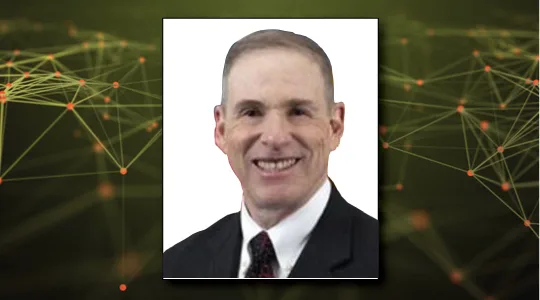
John Gilroy: Welcome to Constellations, the podcast from Kratos. My name is John Gilroy, and I’ll be your moderator today. Our guest today is Doug Loverro, independent consultant at Loverro Consulting LLC. Doug, how are you?
Doug Loverro: Doing great John. How are you today?
John Gilroy: Well, I did my research on you, and you’ve got all kinds of Bachelor’s degrees, and Master’s degrees, experience here, and high levels in the federal government. Just give us maybe a 30-second overview of your background, before we get into this interview.
Doug Loverro: Sure, no thanks John. First, let me say, it’s great to be here. I really do appreciate being invited in. My background has been in all sides of the space business, for at least the last 30 years. I had the privilege of managing the GPS program for the United States of America. I’ve managed many national intelligence programs. I was in charge of policy at the Pentagon. But more than that, I’ve gotten to meet a whole bunch of my partners in industry, a whole bunch of young folks who are interested in space, and to really work within this whole national infrastructure, and the international infrastructure, on how space affects life on earth.
John Gilroy: If you’re listening to this, you can go to YouTube and type in your name, and there are some really good videos on there. There is a one-hour video of you talking to a group. It was very interactive, and I learned a whole lot from it. The key word that I think about is policy, and your interest in policy. From your perspective, a pretty wide background here, what are the most important issues in space policy?
Doug Loverro: We have been operating in space as a nation, as a world, for well over 50 years. The interesting thing is, during most of that time, space was mostly unregulated, and mostly inhabited by two main competitors, the Soviet Union, and the United States. We never had the need to develop a policy for how others might operate, as long as the two superpowers kept out of each other’s way, all was good. Now we have, of course, 67 nations many, many private companies operating in space, for both national security, civil, and commercial benefit. We need ways to guide that interaction, because it’s a shared commons, and we have no rules to govern how we operate in that shared commons.
John Gilroy: I keep thinking of a parking lot. Years ago there were two cars in the parking. Now all of a sudden, you can’t find a space. You’re bumping into people, going back and forth, issues today that didn’t exist 10, 15 years ago.
Doug Loverro: That’s right. No, you’re exactly right. I mean in fact, the parking is a great analogy. Any parking lot you go in today, there’s lines in that parking lot. It tells you which way to park. I don’t believe that Henry Ford had that problem. He could park anywhere he wanted to, and face any direction he wanted to, when he drove into that parking lot. But today, if you didn’t have that order, you wouldn’t be able to find a place to park. It’s not you are trying to get in somebody else’s way, or you’re trying to tell somebody else where to do it. But that order allows us then to do what we really want to do, which is to turn space into a vibrant economic reality for the nation.
John Gilroy: Some of the newer cars out there, when you backup, you get to see the little TV camera. You can see what’s behind you, so you are aware of what’s going on around you. This has applications in the world of space as well. Back in the day, where there were two satellites out there, Telstar, and who knows what, but today you have to be aware of what is around you in space. Don’t you?
Doug Loverro: That’s absolutely correct. It’s not that space is actually physically crowded, but when things do go bump in the night in space, the results of that bump stay around for eons. So we need to be very careful.
John Gilroy: I guess the term is Space Situational Awareness. Is that the term that’s used in the industry here?
Doug Loverro: Right. It’s a great term that we coined to mean, knowing where things are, and where they’re going.
John Gilroy: Now that would be different from traffic management, like I alluded to earlier, so two different concepts.
Doug Loverro: Traffic management is, I guess would be called a superset of Space Situational Awareness. Space Situational Awareness is just that. It’s monitoring. It’s understanding where things are, where they’re going, nominally where they came from. Space traffic management is to then try to go ahead and direct that, and to try to go ahead and guide that activity, to prevent accidents, and to again, to make it a safe place for economic activity to occur.
John Gilroy: You talked about commercial space, and defense space needs. All of a sudden, in addition to the Soviet Union, you’ll have organizations out there that have nothing to do with the United States or the Soviet Union, huh?
Doug Loverro: That’s correct. As I said, there are 67 actors in space right now. More are being added every day, most of them signatory to the 50-year-old space treaty, the Outer Space Treaty. Those folks, they operate on their own, with very little coordination. The most coordination we have is in the radiofrequency realm, to make sure that we don’t step on somebody else’s broadcast. But even that only accounts for a small subset of the kind of interactions that these satellites might have.
John Gilroy: We talked about different players out there in space. We talked about Space Situational Awareness. The nitty-gritty from a professional’s perspective, maybe some from the Pentagon’s, does that need something different from a commercial organization?
Doug Loverro: Not really. We may do it for different reasons. We have air traffic controllers in the DoD. We have air traffic controllers in the civil society. They’re both doing fundamentally the same thing, tracking objects in the air, figuring out where they’re going, whether or not there is a hazard to their flight plan, and those kind of things. Same thing in space, the only difference is, the Defense air traffic controllers are doing it, either so they can direct their own traffic home, or shoot the other guy down and the civil guys are just trying to make sure everybody can fly through safely.
John Gilroy: My next-door neighbor Wayne, he works with the FAA. He’s done it for many years. He puts on workshops, an eight hour workshop on how to delay, how to delay someone from landing. I imagine some concepts can be applied to space as well, huh?
Doug Loverro: It is, except we’re governed by different physics in space. Air traffic is governed by Bernoulli, we like to say. That gives us the ability to maneuver at will and in rapid fashion. You could easily see flight controller saying, “Hey aircraft 259, please go ahead and maneuver and take heading 152, to avoid collision with traffic at 500 feet.” That’s a typical statement. Such a statement would be meaningless for an orbiting satellite, because in general, orbiting satellites are dictated, their paths are dictated by Kepler, who happens to operate without regard to where you might want to go. It’s going to be where gravity takes you. Now there is maneuverability, but it’s not like Luke Skywalker. It’s not an X-wing fighter that will go ahead and bank, and turn. It’s a very slow, deliberate process. It takes many, many hours to go ahead and establish the maneuver, and to execute a maneuver.
John Gilroy: I expect a guy with a Master’s degree in physics could talk about Bernoulli, Bernoulli Box and Kepler, Johannes, we call him around my house. Let’s bring this down more to common level. When I’ve done my research on SSA, it seems like there are traditional ways to do it, maybe with looking through a telescope, or the old-fashioned radar. There are other ways to do it now, aren’t there?
Doug Loverro: Yeah, there are many ways to do SSA. Space Situational Awareness doesn’t mean just looking at something, or just sending a radar return. For example, one of the things that is done, and in fact is done by Kratos, is they detect and track where satellites are by their emissions. By their communication emissions, by their RF emissions, you can tell where something is. You simply measure the time that a signal arrives, know when the signal is sent, and by comparing the two, you can know how far the satellite is away. In fact, we all do this every day, with our GPS receivers. That’s all a GPS receiver is, is a fancy little receiver that measures when a signal left the satellite, and when it arrived at your receiver. By doing so, you can triangulate your position, with respect to the satellite.
John Gilroy: Earlier, we made this silly analogy of the parking lot, and traffic, and a lot of cars. If the cars themselves can be congested, then the more cars, the more RF signals would be congested as well. So there would be congestion with that RF signal I would imagine.
Doug Loverro: Absolutely. In fact, the reason that I mention this, RF regulation is the one area where we do have international agreements, is because the congestion in the RF is the first level of congestion that you see. Two satellites might be over the United States. Both of them want to transmit a radio signal, or a television signal to users. We have to make sure that one of those signals doesn’t block out the other signal. So there are registrations, conventions that are international from the island of Tonga to the United States of America and everywhere in between. People have registered their rights to broadcast a certain frequency from a certain spot in the geosynchronous belt.
John Gilroy: That is determined by lottery or is that an international group? Who determines that?
Doug Loverro: It’s an international group. The International Telecommunications Union. Actually, it was the first international body, started in these kind of pursuits, back in, I think 1847, if I’m not mistaken. We weren’t flying in space in 1847. But we did have RF emissions then, they were called telegraphs. It was actually the International Telegraph Union, way back then. Then it became the International Telecommunications Union. They were just coordinating to make sure that if your Morse code was going through, it didn’t step on somebody else’s Morse code. We didn’t want people intercepting, or jamming the signal from a ship in the middle of the Atlantic, trying to go ahead and be rescued. So we had to go ahead and figure out a way to try to coordinate that traffic.
John Gilroy: I imagine back then Jules Verne was thinking about going to the moon, wasn’t he? He was writing about it as well.
Doug Loverro: Absolutely.
John Gilroy: We have slots, I guess, for RF frequencies. Is that right?
Doug Loverro: That’s correct. Some people don’t understand how these slots work. They think they’re physical slots in space. They are locations from where you can go ahead and generate certain RF energy. A person may think, “Well, you can’t come within so many degrees, or so many miles, or so many, if I use the Hans Solo measurement, parsecs, of my slot.” No. It’s, you can’t come into my RF basket. But if you’re in a different frequency, you could be, in theory, we don’t do this in practice, but in theory, you could be 10 feet away, as long as you’re not transmitting at the same RF. Now we wouldn’t do that, because the risk of collision is too high. But that’s not really regulated. In fact, today the United States, and other nations go ahead and reserve the right to get as close as they want to, to other satellites. As long as they don’t step on their frequencies, that’s something that’s allowed to be done.
John Gilroy: Is the current way the global community manages these satellites, is this done well? Is there opportunity for growth? Or are you satisfied with the way it’s going now?
Doug Loverro: Well, from an RF interference basis, I think it’s done well. The system has served us well. We have a thriving satellite telecommunications industry. Anybody in the industry will tell you it’s not fast enough. Of course, nothing that’s ever regulated is ever fast enough for industry. I understand that, but there is a lot of coordination to be done. Certainly, it could be done better. The problem is that only is one aspect of how things can happen in space. We don’t have anybody who is actually doing the same kind of interference monitoring for physical space in space. That’s sort of redundant, but physical occupation of space. For example, as many of your listeners I’m sure know, we have several companies who are proposing to put up 1,000 satellite constellations in low altitude orbit. Now, it’s unlikely that they all will decide to put them up in that same 10 kilometer thick shell, 1,100 kilometers from the earth-
John Gilroy: No parking spaces.
Doug Loverro: Right, but there’s nothing that says they can’t. There’s nobody to tell them where to go. If I could take your analogy, the parking lot, just a little bit further John, there’s a really interesting video that I would ask your listeners, if they’re interested, they should look up. It’s called 1904 Traffic In San Francisco. It’s a hilarious view of how automobiles, pedestrians, and horses interact on the streets of San Francisco. It’s literally a 15-minute movie of going down the streets, and seeing people jump out of the way of horses-
John Gilroy: I think I’ve seen that.
Doug Loverro: It’s fantastic. It’s what space is like today. Now, it’s not as crowded as that, let’s be clear. But it was completely unregulated. Nobody had rules for who had precedence, how do you get out of other people’s way. Did you have turn signals? There were no rules to regulate traffic. Quite frankly, if you’re only moving at five miles an hour, not such a big thing. But when you’re moving at 65 miles an hour, 70 miles an hour, you better have some rules, are you going to have a lot of collisions. The same thing is true in space. When you only have a few countries in there with a few objects, all that are really run by their governments, you don’t really need a lot of rules to do this. But when you’ve got a panoply of users and participants there, who are sending up thousands of satellites, some rules, it’s not for the government’s benefit, it’s for those players’ benefit. It’s for all of those people’s benefit, so they don’t need to worry about collision. The problem with collisions in space is, they affect everybody. In fact, used this analogy in a congressional hearing that I was in several months ago. The reason we started the FAA, for those are you who are interested, it was really back based upon a collision that happened over the Grand Canyon. I can’t remember the exact date, but it was the early 1950s. Two planes collided, and a lot of people were killed and so the U.S. government changed a fairly low level organization called the Commercial Aviation Administration, into the Federal Aviation Administration, who was then given the authority to regulate air traffic, because we had citizens killed. But the fact of the matter is, is as bad as it was that those citizens were killed, all the pieces of that debris fell to the ground, and they didn’t interfere with anybody’s else’s use of the air. If a collision in space happens, they stay up there, as I already said, for hundreds of years, eons or more. They will interfere with everybody else’s use of space, so you really need somebody to go ahead and guide that, before we clutter up this very important and very fragile system.
John Gilroy: You brought up the year 1904. I just finished McCullough’s book on the Wright brothers. The Wright brothers, there was just planes going everywhere, I mean nothing, not many out there. What happened that transformed, and it went from a defense application, to a commercial application, some regulation. I see parallels with the space, in fact, you talk about it. Space, it started off as a defense application. Now commercial, and more regulation. Same thing with the Internet, defense and regulation. This gets to be a concern when there’s multiple satellite out there. Let’s go back to RF data. RF data has a role in controlling some of these crazy 1,000 satellites out there, huh?
Doug Loverro: I have an old friend. He liked to say that there are only two things that keep satellites in orbit, gravity and RF emissions. An object that cannot communicate with the earth might just as well be a dead rock, or maybe a Tesla roadster, because at this point, it’s completely unguided, and there’s no way to go ahead and tell it to go left or right, or to do something that you’d want it to do. The ability to communicate to satellites is the only method of going ahead and extracting economic, or security, or civil benefit from it. So the importance of not interfering with the RF link is critical.
John Gilroy: One of my heroes up on Capitol Hill, believe it or not, is Chairman Will Hurd. Really smart guy, likable guy, and I got an email from him this morning. He has a set of hearings talking about artificial intelligence. I think about 1,000 satellites, and some constellations, all these RF signals bouncing off here, bouncing off there, a little bit of regulations, I mean this is to the point where there’s going to be so much information out there, you may have to use artificial intelligence to make sense of all these RF signals.
Doug Loverro: Very, very possible. I don’t think that we really know what it’s going to look like 100 years from now, 1,000 years from now. 1,000 years is probably too far for anybody to think about, but 100 is certainly within our reckoning. If we go into this environment without those rules of the road, then the likelihood that we’ll find this to be beneficial to all of us is low. If we can come up with some right minded rules of the road, I think that we’ll all benefit from that. Regulation tends to sometime take on a dirty word. People think of regulation as inhibiting economic success. I disagree. In fact, I think regulation is what leads to economic success. Truly well-regulated industries tend to go ahead and be able to exercise their economic destiny, far better than an unregulated industry. An unregulated industry doesn’t know the rules. For example, we have an unregulated industry right now, which is mining of the sea beds. There’s a lot of material under the sea beds, but there’s no regulation governing who owns it, and how you extract it, and what the rules are. So no companies are willing to invest in it, because the rules don’t exist. They’re not going to go ahead and invest in it, if the rules don’t exist. They want that. They want those rules to be there.
John Gilroy: It’s almost like 1904, Gold Rush in California. Anyone could take whatever they wanted. Someone tried to say, “No, this is a parcel of land that belongs to Doug Loverro, and doesn’t belong to Claude.” So they wanted that, didn’t that?
Doug Loverro: Well in fact, I think that’s a perfect analogy. The one I would use is the Homestead Act. The West wasn’t born when the Homestead Act was signed. The West and all that land had been there previously. But who is going to go out west with unknown rights of whatever I settle on. The Homestead Act said, if you go out there, and you fence off … I don’t remember the Homestead Act, but we all learned it in sixth grade. If you fence off 10 acres and you farm it, and you make it economically viable, it’s yours. Well suddenly, that simple regulation, that simple law created a land rush for the West. That land had been there previously, but it wasn’t in the economic benefit of people to go there, because they didn’t know the next day some cattle rancher would go ahead and run cattle all over his crops, because there was no protection. Those kind of things that allow economic success.
John Gilroy: You walk out the door, you pick up a newspaper, Elon Musk puts a car in space. All the sudden, Doug Loverro puts who knows what, a bicycle in space, and everyone is going everywhere. This does not bode well for the future, understanding what’s up there, and why it’s up there, as entertaining as it is though.
Doug Loverro: It is very entertaining. I will tell you, I, as much as anybody else, was entertained by Elon’s fantastic success. We should not go ahead and undersell the success that he had. The great thing about space is it’s not easy to get to yet. I’m sure in another 50 years it will be more in reach of many people. But it’s not easy to get yet, so the people that get there, get there with a certain amount of respect, and a certain recognition that they have a responsibility. But literally, I think it’s less than a century away, within the next half century, we will be seeing many private concerns sending small rockets to space on a routine basis. They may not have the respect of somebody like Mr. Musk, who invested billions of his own dollars. He’s not going to put that money at risk by polluting the environment. Nor are other nations. But when you don’t have to pay for that, when you only have to pay $100,000 to go ahead and get your widget into orbit, you may not have the same respect as somebody who had to work to get there. The word respect is poor, because it makes it seem like somebody else doesn’t care, but you probably aren’t going to take as much care, if you didn’t have to put in as much effort.
John Gilroy: Well, here we are in Washington, DC. I’d be remiss if I didn’t throw out an acronym, it’s part of the job here. I want to talk about the National Space Defense Center. You think about all the things in space, cars, little red roadsters, and what not out there, and there seems to be a lot of stuff out there. It looks like the National Space Defense Center has started running around the clock here. Now is that because of the cars in space, or is that because of what?
Doug Loverro: The National Space Defense Center, which was previously called the Joint Interagency Combined Space Operations Center. You can tell why we changed the name. It’s focused more on the problem of defending things in space. In fact, it’s right in the word defense. Originally, the function that we think about in terms of space traffic management was really done by the Joint Space Operations Center, the so called JSpOC, out in Vandenberg. But the JSpOC was focused, really on that Space Situational Awareness, and monitoring things in space, and not actively defending US needs and U.S. assets in space. The National Space Defense Center on the other hand, recognizes that while most folks who are going to space these days are going there with altruistic, and economic reasons, some are going there for national security reasons, who may have views opposing the United States of America. That is a center to go ahead and deal with that problem, of people who might be actively go ahead and deny your use of space, rather than simply track the stuff that is up there, that is not well-regulated right now.
John Gilroy: My dad taught me to drive defensively. Expect the next person, and keep your eye out all the time. The situation in space now, you have to, I guess, orbit defensively. But you have to be aware there could be, let’s use the word, an adversary out there, that may have ill intent. How is that for discreetly phrasing things.
Doug Loverro: Yeah, you’re absolutely right. Let’s be clear, the United States and the Soviet Union, back in the ’60s, and every nation since then have primarily focused on space, first from a national security perspective. Then from a civil space perspective, and lastly, from an economic perspective. That hierarchy of needs, if you will, existed from the very beginning. The hierarchy of economic needs is now starting to come higher, but that doesn’t mean that the national security needs aren’t still there. Our soldiers, U.S. soldiers, sailors, Marines, and airmen, our allies, really couldn’t operate without space today. That makes space a target, because if I’m using GPS to guide a bomb to your city, then you probably don’t like GPS. You’d like to find a way to deny that access to me. That’s a natural thing. I have no preconceived notion that that’s not a valid thing for a nation to do. We need to be wise enough to recognize they will do it.
John Gilroy: When I was up on Capitol Hill talking to Chairman Hurd, he wanted a national cyber core, where somebody could get out of high school, and learn cyber security. Maybe somebody from your perspective might look at something like a space warrior core. It’d be a lot cooler, wouldn’t it? You’d get more recruits I’d think.
Doug Loverro: Well, I actually know there’s going to be one, because I saw these historical tapes. They were called Star Trek.
John Gilroy: These are historical records technically.
Doug Loverro: Right, exactly. In every domain we got into ever, we have eventually gone ahead and created a professional military core, who understands that domain, so we can protect it for the benefit of the nation, and for the world. I expect that will probably be the case for space, whether or not we need to create a space core, or just a subunit within the Air Force, or if you believe Star Trek, the Navy. That is a space specialist, that is to be determined, but I think it’s absolutely unambiguous that at some point, we will have a professional core of military people who are focused on space.
John Gilroy: Looking down the road, get your little crystal ball out, five, eight years down the road, where do you see this whole idea of Space Situational Awareness playing out, and RF frequency, and how is this for a phrase, adversarial relationships? It sounds like divorce court.
Doug Loverro: Sure, sure. Well I’ll tell you, first of all, I think opportunity for many players to enter into this area is just fantastic. There are commercial SSA companies springing up left and right, to meet the need that is going to exist, to go ahead and try to figure out how this traffic exists in space. It can’t just be radar. It can’t just be visual. It’s got to go ahead and be signals related. It’s got to be related to new capabilities we may ask satellites to put on. For example, we may ask them to give us aides to tracking, just like an aircraft has a transponder on it that beeps its location, so that it’s easy to track, we may ask satellites to go ahead and do that, so we can get better tracks on them. But I think the future is incredible. I think we are going to see the 1,000 satellite constellations. Back in the 1990s, there was a vision that maybe we have something called Teledesic. It would have 1,000 satellites. I don’t think any of us believed that it would really happen. But as I look at it today,it is absolute certainty there will be constellations of satellites that number in the thousands. There will be all sorts of economic activity, up to and including, probably not within 5 to 10 years, but in 20 years, mining in space. I was down in Jamestown just this past weekend and I remember we were talking about the first explorers who came over to the New World, looking for success. Their economic dreams were failing constantly, until they found tobacco. They didn’t know they were going to find tobacco. They just came here for some economic success. People are going to figure out a way to exploit space for economic reasons. That is going to go ahead and attract an entire new generation of people into space. I think it’s wonderful, so I’m looking forward to it.
John Gilroy: What amazed me in Jamestown is the size of those boats. They were so small. You think about the aircraft out there, it’s the same, I mean, that’s really the start of the country, those little teeny, tiny postage stamp boats?
Doug Loverro: Exactly, rights. It’s incredible. They had no idea what they were doing back then. They had no idea what is now only 400 years later, what would come out of those three small boats.
John Gilroy: Back to the future for us, huh?
Doug Loverro: It’s an exciting time.
John Gilroy: Well Doug, unfortunately we are running out of time. I’d like to thank our guest, Doug Loverro, independent consultant at Loverro Consulting LLC. Thank you Doug.
Doug Loverro: Thank you very much John. It’s been a pleasure.