Transcript:
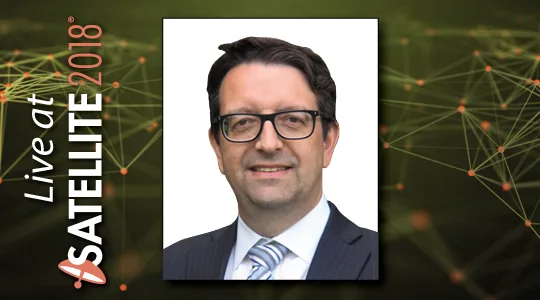
John Gilroy: Welcome to Constellations, the podcast from Kratos. My name is John Gilroy and I’ll be your moderator today. Our guest today is Anthony Baker, CEO Global Satellite Vu. About 20 minutes ago, I got on my phone and I typed in “Most popular shows on the BBC,” because I knew you’d be coming on the air and most popular show in the BBC is Planet II, talking about the planet.
Anthony Baker: Yeah. Blue Planet, yes.
John Gilroy: Blue Planet, right, and so I said, “What’s this got to do with Anthony here?” It dawned on me the press release I have in front of me is “Plastics pollution pirates, Satellite Vu prepares to tackle humanity’s global challenges”, one of these challenges involve the planet itself and pollution, so what a great opening for our discussion today, isn’t it?
Anthony Baker: No, that’s brilliant because actually it was an inspiration to me. I think the program is going worldwide, it’s being shown here in America and they’re pushing it around. One of the things that David Attenborough, the narrator says, just to paraphrase him is that, “We now, the human race has the ability to comprehend the problems we’re generating. Both with plastics, with carbon, but we’re also in a position to do something about it. We can fix it, and this plastic pollution issue is something we can fix.”
John Gilroy: Never before have we had such an awareness of what we are doing to the planet and never before had we had the power to do something about it. Yeah, it’s a great quote. Tell us about your company first.
Anthony Baker: We are a start-up company. We’ve been in existence a couple of years and we’ve been looking at different fields of observation. Initially, we were acting as consultants. My previous career was in the Middle East so I was trying to use those contacts to help nations use this new technology, the new space technology. We were acting as project managers to help people have some place in space to launch satellites.
John Gilroy: Well, the name of this podcast is Constellations. We are sitting here at the floor of Satellite 2018, so we’ve got Constellations and satellites, so I’ve got to ask you the satellite question here is that, what’s the difference between traditional Earth observation services and the ones that’ll be delivered with these new satellite constellations?
Anthony Baker: The whole thing about new space is the agility of the design and of the companies, the size of the satellites, the price of the satellites, so we’re looking at completely different era satellites. In the old days, although there were very high resolution satellites, they were very large, they took a couple of years to build, they cost hundreds of millions of dollars. Now we’re looking at satellites that take six to 12 months to build, they weigh a few kilograms, sometimes they keep us at just a few kilograms. The ones we’re looking at are around 100 kilogram look, yet they perform almost as well so they perform at one meter resolution versus the best is around 25 centimeter resolution.
John Gilroy: Yesterday, we did a podcast with a gentleman, he had a degree in economics and philosophy. In contrast to your degree, you have a Master’s degree in satellite communications. It all kind of fuses together here, you know? The economics have changed for satellite observation and now people are looking at the philosophy of taking care of their planet, so it’s all coming together with Satellite Vu, isn’t it?
Anthony Baker: No, I think that’s a very big role in environmental uses of satellite imagery. It has been one of the traditional ones so in the US, NASA’s had Landsat for many years. In Europe, they have a sentinel program where you can actually download the data for free but the resolutions tend to be quite large, but it’s free, it’s available on a weekly basis but in order to expand the market, there needs to be something else. It needs to be a lot cheaper, it needs to touch more businesses and this is one of the challenges we’re looking at.
John Gilroy: We’re going from free and weekly to organizations that want more current information.
Anthony Baker: Exactly, so probably the most pioneering company in the industry at the moment is Planet, so they have small shoebox-type satellites, cube sats, and they’re offering a service of once a day but traditionally and even with the Planet, especially with their newer launches, the satellites go over the same time in the day. Traditionally, the morning, the air is slightly clearer, there’s a nice shadow, so most satellites go over any one place. They’re sun synchronist at about 10:30 in the morning. If you’re looking at the pattern of life, if you’re looking at economic activity, it occurs all day and all night, so you need remote- sensing capability that addresses that. This is what we’ve been looking at, but also a number of other companies are looking at that. There’s a second aspect, is if you’re capturing images every hour, you need to deliver it very quickly.
John Gilroy: While you’re trying to provide consistent, reliable, and frequent images to the end user.
Anthony Baker: Exactly.
John Gilroy: When I went to your LinkedIn corporate profile, two words popped out at me, data analytics, you know. Two weeks ago I was at the Tablo Software Conference, they talked about data visualization and data analytics, so how does this all fit in with the services you offer?
Anthony Baker: With more and more constellations going out and collecting imagery faster and faster, you can’t use the old models. You can’t use gray beard men who look at photographs and say, “We’ve seen this before.”
John Gilroy: Gray beard, watch it, buddy.
Anthony Baker: That’s why I don’t grow a beard. It would be gray. We need machines to help us process this in a timely way and into concentrate the information. To extract the information out of the pictures, we need machine-learning and automating and the human element still needs to be in there. To me, I think we’re collecting billions of pixels from thousands of locations and then processing them into trends. We can look at the activity of car parks or airports or delivery sites and we can look at trends. What’s the meaningful information, what the insight is, is when there are sudden changes in that trend and then we can alert an analytics expert, “You need to take a look at this. Something’s happening,” so I don’t think the machines are going to be taken over like some people suspect.
John Gilroy: I started writing down the number of pixels and locations and changes, this is almost a classic definition of big data, isn’t it? I mean, an incredible amount of information to understand.
Anthony Baker: Exactly. This is big data problem.
John Gilroy: What is activity-based intelligence?
Anthony Baker: It’s looking at the pattern of life so we are trying to determine what the economic activity is by looking at stationary pictures. There are videos coming along and that some constellations will belong to video images but you need to convert that into something that end users understand. Particularly, if you’re looking at the stock market or commodity brokers, they want to be able to determine what’s going on, on the ground and give it some economic value. We feel that we can help out in this role.
John Gilroy: I went to YouTube early this morning and typed in your company name and I saw some videos with an underwater situation that was disgusting. If the listeners want to go and find it, I mean, it’s not a pleasant sight, it’s the incredible pollution off of I think it was Australia somewhere or something that had these fish in the bottom and they were eating the plastic, it was terrible.
Anthony Baker: It’s such a big impact. There was an article actually quite recently last week in The Economist, and they’re saying that the value of plastic pollution or the destruction value is $139 billion a year. It’s a big problem and the fishing industry is about a $50 billion industry and pirates also is about a $10 billion problem we have.
John Gilroy: We have all kinds of pieces of plastic floating around the world. We’ve got boats, we’ve got ships, we have constellations of satellites collecting this information. It sure seems like, and this is a term that’s overused perhaps, but artificial intelligence is going to have to be applied to that information in order to make some sense of it to make business decisions based on the information. Artificial intelligence, does that apply to you then?
Anthony Baker: Yes, so this is how we’re going to address the big data problem. We train machines to identify features in the images and from there, we can create statistics about what’s there. The challenge in the future is whether we can predict things from that. Currently, we’re indexing the world and I think Planet said that and I think this is what’s kind of the current trend is indexing the world.
John Gilroy: Yeah, same problem in cyber security, the leap from analytics to predictive analytics and that’s the leap and that’s the tricky part.
Anthony Baker: It is. Everyone says that space is hard. Artificial intelligence is also hard.
John Gilroy: Oh, we know that.
Anthony Baker: It’s not even easy to train a machine to identify buildings or cars and things like that. You have to, the training models are very intensive and there’s been some progress you can see on popular application with faces but when you start looking at a photograph, which has been taken through telescope at 600 kilometers away, it’s a little bit tricky. Things tend to look similar.
John Gilroy: We were teasing earlier about a gray beard and age, but your company’s certainly not a gray beard, only been around two years. What I’m trying to think of is new applications so what new applications do you have available for government and commercial organizations that weren’t available before 2016, two years ago?
Anthony Baker: I think the big change is addressing dynamic events. If you’re only taking a picture once a day at max and it used to be once every three or four days, what we can do now, if we’re taking pictures on a regular basis throughout the day, and the response time is very short, we can look at unfolding events, we can look at flooding, we can look at hurricanes. We can look at deliveries and this is what’s new. It’s almost real-time surveillance and that’s a key differentiator of this new technology.
John Gilroy: Well, a lot of the different companies available at this rate, they talk about value. There’s a value for this and a value for that, so I got to ask you the value question too. What value does Earth observation services deliver to a typical customer? What’s the value what you provide?
Anthony Baker: It’s another layer of information. I don’t think there’s a single killer application and some of the value we’re adding is fusion of our data with other known data, whether it’s mobile phones, social media, some propriety information that a company might have, and trying to generate a new insight. How’s it helping them? It helps them make better decisions, which can be very cost-saving, et cetera.
John Gilroy: Walked around the show floor yesterday, talked to a bunch of start-up companies, and I started to scratch my head wondering who’s going to be around in the next four or five years. What’s going to happen in the next six to 10 years? How do you see your Earth observation and your artificial intelligence capability impacting the satellite industry in the next five to 10 years? Let’s look out there, the 2020s, wow.
Anthony Baker: We’re a start up so we’ve looked at the technology, so what’s going to happen in the next five to 10 years? It’s very much akin to your iPhone, one in the replacement cycle. Every 18 months, there’s a new technology and at some point, that will flatten out. The key parts of the technology are really the sensor, the camera just like in your iPhone. It gets better and better every iteration. Also, like an iPhone, the applications, you get more and more apps and more and more sophistication. You get virtual reality and artificial intelligence apps coming along. We decided that the most important part to invest is either in the sensor or in the applications or both. I predict in the next five to 10 years, that’s the bit that will improve. Today, we announced looking at infrared because we think it shares a worthwhile application in plastics, but then there’s also some big commercial applications as well. Other companies are looking at the radio spectrum. Other people are looking at what they call hyper-spectral and hyper-spectral is you know in optical, we got red, green, blue wavelengths. Hyper-spectral, you’re talking about 100 different wavelengths higher frequencies than visible and optical. What will change? There will be more different bands where every band will be looked at. The frequency, we see the Planet, mapping the world once a day. We have plans to look at once an hour. I think Black Sky had a similar ambition. We can imagine with more and more constellations that there will be almost persistent imagery of every place on the Earth in the next five to 10 years. Then we have all spectrums everywhere persistent, you really have a big data issue. You can imagine that people like Google and other analytics companies, we work with Space Know, where we’re indexing everything about what they see there. We’ll have an index on everything in the world but I think then the question is, what are we going to do with all this information? I think that’s the real unknown.
John Gilroy: Another aspect of your company is this five-word catchphrase that I see repeated frequently when people talk about you, “Every nation, a space nation.” This isn’t one ring true to them all or one company has all this information, you want this federated or distributed to a wide variety of countries, is that right?
Anthony Baker: That’s right. Certainly at the beginning, we felt that if you only have to spend $10 million to get a satellite into orbit, plus the Earth station versus $200 million. $10 million is actually affordable by everybody. With Earth observation, people want their own point of view, they want to see the information first- hand and not necessarily buy it from a reseller. Every nation can probably afford that and save on buying the information from a developed country.
John Gilroy: These constellations, so who’s launching these constellations, your company or the customers or where’s it all fit in?
Anthony Baker: When we started, we didn’t have very much capital, so we were trying to help developing nations invest and we would be the program managers and we would help them resell that data elsewhere. We wanted them to be the constellation owners. When we look at the plastic issue, we feel like that we should own that at least in the first generation because we want to direct it in the right place, we want to help commercialize the data and so it’s necessary that we raise the capital and develop a product.
John Gilroy: Here we are at Satellite 2018 Washington DC, a walk around the floor here between podcasts and I talk to start-ups and it dawned on me, you’re a start up too. Just a couple years. From a growth perspective, how do you plan and growing and adapt to this changing market in the next three or four years? I just see constant press releases on new products and new technology, it’s a tough, to put it in nautical terms, it’s a storm ahead trying to figure out which direction to go to.
Anthony Baker: That’s absolutely right. You need to find your niche and I think all niches are not really sustainable. Planet has launched a satellite so it can take images once a day. Other people are already duplicating that. If we launch an infrared sensor, other people could copy that. How do you stay ahead? I think the answer is on the analytics and getting close to your customer. Finding analytics that meet the customer need. Not just indexing but find the customer’s problem and find where the value ad is, and in that, it’s a difficult task and so that’s the barrier of entry to other people. I know in London for example, in the insurance community there, there some remote-sensing companies, which are really embedded and they know exactly what insurance companies want. It’s hard to break into that market. Coming with a pile of data, that doesn’t help the insurance companies. It doesn’t give them the insight. They don’t have the expertise or want a pile of data or images, they want answers to their questions. I don’t even know exactly what their questions are. I would have to drill in and figure that out.
John Gilroy: About three years ago, I was going a radio interview and someone tossed out the term artificial intelligence and I turned to them and said, “I don’t care if it’s artificial. The intelligence is the hard part. The analytical building’s really the hard part where you have to have a human being with a wide bracket apply mathematical analysis and maybe different types of understanding to the human beings,” and that’s the differentiator I think, is just the analytical. That’s what the insurance companies prove, isn’t it?
Anthony Baker: Absolutely, yeah. Just like Kratos or anybody, you need to understand what your customer’s problem is to solve it. It’s hard work, especially if it’s not space- related for us. Finding the application is key.
John Gilroy: My daughter is about to buy a car, and she’s looking for funding to make that vision a reality. I turn to you and I say, “Well, you’re running this company, you must look for funding to make your company a reality as well.” Tell us about maybe the start -who are listening to this so you can give them some advice on the pitfalls and some of the strengths of finding this funding.
Anthony Baker: Yeah, I guess I’m more from the old school, you need to make revenues, so we’ve been trying-
John Gilroy: Oh, come on now. Another Tom Cruise, show me the money, huh?
Anthony Baker: Yeah, so we’ve been trying at every juncture to make revenue, so we started off with consulting and then we’ve been actively looking at grants from Europe, typically a European space agency to try and kick start some of the technology but the purpose would be to bring things to market to make money. It’s not a pure science project that we’re investigating. Likewise with the plastics, this is not a charitable purpose. It has a very good cause but it’s the secondary application, the dual use, which will keep us sustainable so we can help keep the planet sustainable. My focus is always on what’s the application, how are we going to make money out of our next step?
John Gilroy: In your press release, I see plastics, pollution, and pirates, well, we haven’t talked about pirates yet. So you have application for pirates as well?
Anthony Baker: Yeah, we’re not talking about Johnny Depp here, Jack Sparrow.
John Gilroy: Although, you can do the accent or something like that.
Anthony Baker: Maybe. Maybe later.
John Gilroy: Yeah, after five o’clock we’ll try the Johnny Depp accent.
Anthony Baker: Exactly. The pirates thing, there’s quite a lot of technology now on AIS, automated information system, I think is the acronym, so every ship over a certain size has to have a beacon on it and that can be received by satellites. Companies like Spya and exactEarth are doing that, so they can keep track of every large ship. The interesting thing is when they switch, when the AIS beacon goes off, so it could be deliberate or it could be accidental. If it’s deliberate, that ship is doing something wrong probably. You want to be able to trace that. There’s a number of methods. Ours is not unique and you can use synthetic- aperture radar, SAR, or you can use infrared. The ship propeller pulls up cold water and so we see the heat differential. We can see the wake of ships. From that, we can determine speed and its direction. When the AIS goes off, the next thing you want is a visual on that ship to find out what’s going on, where it’s going, and so you can alert the Coast Guard to do something about it. It’s pirates. It’s trafficking people, arms. It’s illegal fishing. That’s why it’s a big problem and that’s why there should be business there to help minimize this problem.
John Gilroy: You’ve had executive-level positions in some pretty big companies over like SES. Has that helped you with this kind of start-up flexible dynamic company or has it given you abilities to see markets that people don’t normally see?
Anthony Baker: Yeah, I’ve always had interesting roles, so in AsiaSat, it was a small company, in more small-medium start up mode I guess. I was actually in New Skies, which was a spin-off from Intelsat, then SES acquired us. It was very much at the early stage. At Es’hailSat, I was I think employee number four, the first executive there and so in the five years I was there, we built it up to 88 people, two satellites and run by the locals. It’s a profitable company. It’s not a state- sponsored company. It’s a profitable company. I’ve always had that experience and I hope to replicate that success at this company.
John Gilroy: Yeah, and the goal is to tackle humanity’s global challenges. I mean you’ve got a good skill set to that, don’t you?
Anthony Baker: I think every company can do some good. We want to be sustainable but we want to do some good things on the way.
John Gilroy: Well Anthony, unfortunately, we’re running out of time here. I’d like to thank our guest, Anthony Baker, CEO Global Satellite Vu.