Transcript:
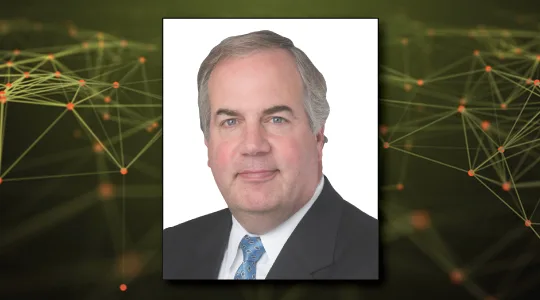
John Gilroy: Welcome to Constellations, the podcast from Kratos. My name is John Gilroy, and I’ll be your moderator today. Our guest today is Matt Desch, CEO of Iridium. Matt, how are you today?
Matt Desch: Super, John. Thanks for having me.
John Gilroy: Well, I did my homework. I went to YouTube, typed in your name, all kinds of hours of public speaking, and great videos on you. So, I found out that you and I are both from the great state of Ohio.
Matt Desch: O-H.
John Gilroy: Yeah, yeah. Well loved at Ohio State University. What a place to be well-known at.
Matt Desch: Yeah. No. It’s a great state to be from. I think I’ve been everywhere but Ohio in recent years, but it’s always great to get back there.
John Gilroy: Good, good, good. We’re not talking about Ohio today. We’re talk about satellites and some innovations from Iridium. People know some of these topics. I’m going to just come right into this and talk about IoT, Internet of Things. There’s been lots of discussion, in Ohio, in here, in Texas, and California, everywhere, about the rapid growth of the Internet of Things. There are some people that estimate, and this is crazy, there will be 5.8 million machine to machine and IoT connections in satellite in four or five years, in 2023. How’s that going to impact your business? What role does satellite play from IoT?
Matt Desch: Well, it’s our fastest growing business. A lot of people think of Iridium as a satellite phone, but in fact, more than half of our subscribers are really connecting devices to machines, to things, vehicles, and what not. It’s the perfect thing to do that. You mentioned just the satellite side of IoT, which is millions of devices, but really the total addressable market for Internet of Things is billions. Pretty much everything is being connected. The problem is only 10% of the earth’s surface is covered by cellular, or 3G, 4G, 5G WiFi, that sort of thing. The other 90% is water, air, mountains, poles, and a lot of things in between all the cell phone connections. So, the thing is our packages want to go between those things; shipping containers, trucks, boats, airplanes. They’re all things that really enterprises, governments, and businesses want to connect too as well, and keep track of. They want to improve the efficiency of those assets, and so, really satellite is the way to go. That’s the way to make connections to things when it’s off the grid.
John Gilroy: You know, you watch movies, you watch TV; you figure everyone has got a cellphone. Everything’s instantly collected. It’s not true, is that? There are big, big gaps in the world without any cell coverage.
Matt Desch: There is. Even in the U.S. You think we’re one hundred percent covered, but if you drove coast to coast you’d probably covered. But, as soon as you get off the roadways out in the West, you’re not going to get a cell phone signal and I’m sure people know that to be true too. That’s not a real problem because people aren’t needing to connect there, but your packages might be going through there, the Fed Ex truck might go through there, or an oil and gas pipeline, or some other energy resource, or a shipping container might go through there and it’s important to know the status of that all the time.
John Gilroy: What’s interesting about technology is that the IoT devices are communicating to other IoT devices machine to machine communications. Do they fit together? How does it fit with the whole Iridium story?
Matt Desch: The term, machine to machine, or M to M. as it’s called, is sort of an older term. We’ve all kind of moved to the Internet of Things IoT. It’s a more encompassing measure. Actually, if you go back it started with SCADA, Supervisor Recontrol and Data Acquisition was I think the full acronym. But it was really the kind of proprietary systems that people used to connect power plants, and energy, and waste water plants, and control the gates, and monitor the power and that sort of thing. Those things have now expanded and broadened really to the extent that almost everything really wants to be connected with everything, and it really is for efficiency. It’s for cost savings. It’s for asset management. It’s for safety and improving the quality and information given to customers about when things are going to actually arrive. You wanted to know when your package was in this country or in this state. Now you want to know exactly where the truck is, and has it delivered it, what’s the exact status of that package, and was there a picture taken of it? That sort of thing. That’s good if you’re always in cover, but there are a lot of applications where there isn’t coverage and you need a connection. That’s where satellite comes in.
John Gilroy: Especially for situations within control. I read on your website that you work with Wal-Mart of all places, and can control a lot of different devices and control traffic that way.
Matt Desch: Well, our partners work with Wal-Mart. They, of course, are a big user of telematics or Internet of Things technology. A company like that, of that size really wants to have the most efficient operations possible and the only way to get efficiency is to have the information and control of everything. They’re a big user of telematics and satellite is an important component of that for them.
John Gilroy: Well, this is a competitive world we have here in Virginia and all around the United States, so how do you compete effectively against cellular and WiFi and some things that may be more affordable in your service?
Matt Desch: Actually, we don’t compete. I mean, we all view ourselves as complementary to those. A lot of our partners, and we have a couple hundred of them right now that are building us into trucks, and trains, and containers, and what not …
John Gilroy: Ships? Yeah.
Matt Desch: Ships, airplanes, all those things. A lot of times they have a cell phone connection or they have a WiFi connection and they use that if they can because that’s really the cheapest way to get the data across. The problem is if you’re trying to track a large truck and you want to make sure that the driver is operating in the speed limit; if it works only where there’s cell phone coverage, the driver quickly knows when they’re out of cell phone coverage and your control system doesn’t work anymore. These days they’re putting on systems to check if there’s a cell phone connection coming from the cab because you don’t want your driver to be texting and driving, spill a load and it’s a couple hundred thousand dollars of cleanup potentially. It’s worth having to spend a few tens of dollars a month tracking that truck out of cell phone coverage, or tracking that package, or tracking that pipeline or whatever it might be. We’re really the perfect thing to do it. You know, maybe people don’t appreciate it, but our network is the only network that covers one hundred percent of the surface of the earth. There are other satellite systems that cover regions, cover parts of the world, cover it up to say into Mid-Canada. But packages, trucks, trains, boats, they don’t seem to want to stay in those zones, they want to go everywhere. With our system, there are no compromises so it’s why a lot of IoT applications have been attracted to our network because they know if you’re a piece of heavy equipment machinery and you’re going to ship it out of Peoria, you don’t know what country it’s going to show up into. What you’d like to know is it will be trackable no matter which one it does? That’s what we offer.
John Gilroy: As you were speaking I wrote down two words: industrial strength. It seems like if I’m calling my sister, telling them I’m going to arrive in L.A., it’s one thing, but if there’s a package that has to arrive in Seattle and it’s important for construction or some kind of a power center, I mean really, lives depend on it. In fact, all kinds of budget depend on it, too.
Matt Desch: It has to be real time. It can’t be something that an hour later you get an idea where it is. The applications that are particularly attracted to our network are the ones that have to operate and know where things are every second because that’s what you can do with our network. It is one hundred percent of the planet, one hundred percent of the time. So no matter where it is, you can get a quick two-way connection to a device. I mean, if a machine is overheating you don’t want to find out about it 30 minutes later to be able to turn it off. You want to see the temperature spiking and you want to send a command to shut it down. That’s what you can do through our network.
John Gilroy: Yeah, notification’s important. You used a term earlier, SCADA, S-C-A-D-A. What differences are there in SCADA and IoT, from your perspective?
Matt Desch: From a general perspective, SCADA was sort of the original term for industrial control systems, and people still use that term. IoT is more of a broader term these days. It really encompasses both consumer and industrial strengths of applications. It’s usually built around more standards though it’s not completely standards-based yet. It’s a much more all-encompassing acronym and one that I think we’re just sort of using really interchangeably for almost everything.
John Gilroy: Yeah, because people know that term from industrial controls and just apply it.
Matt Desch: Sure.
John Gilroy: Where do you see the growth in the market for satellite based IoT? Where are your opportunities?
Matt Desch: Well, in particular for satellite, because we’re operating typically off the grid, really important applications that operate outside cellphone connection. So heavy equipment, transportation, oil and gas, other kinds of machinery controls in remote environments, scientific research. Certainly, the whole maritime area is going to be outside of terrestrial coverage; so buoys, and fishing gear, and systems that monitor underwater temperatures and do measurements. In fact, there’s this new application right now that’s been called the Oceans of Things. It’s sort of a play on the Internet of Things, where free standing buoys that are a couple hundred dollars a piece will be floating all over the Earth’s oceans taking temperature, and salinity, and current measurements to try to understand the oceans better, to help with all kinds of things; weather planning, etc. That’s an IoT application, too. There’s certainly a lot of potential for many of those other important applications. I’d say some of the biggest one these days are connected vehicles of all types. Autonomous controls right now are going. The Holy Grail is cars, but cars for the most part stay within cell phone coverage, but trucks don’t, machines don’t, airplanes don’t, and all those things are looking to become autonomous. The other big area that we’re starting to see applications for is in drones, autonomous vehicles. We know the really big ones and we see the ones that carry cameras, but there’s sort of a middle level of drones coming that are about delivering. Delivering medicines to remote villages. I’m not so sure about bringing the six pack of beer to your front door, but they’re coming too. The Ubers and others want to have vehicles that can take us between here and D.C., which is, unfortunately, at this time a day about an hour drive, but should be only be about a eight minute flight. You can see why there’d be a lot of desire if you could make it safe to have that, but you need things to track those. You want to know where they are, how they’re performing, what they’re doing; satellites are great for that.
John Gilroy: Yeah, it just dawned on me that if you are watching Netflix and you lose your connection it’s no big deal, but if you’re in an autonomous vehicle and you lose your location that could be a problem, couldn’t it?
Matt Desch: It’s critical, and there needs to be resilience. Even if there’s one kind of technology, that’s why we’re not really so much competitive but really complementary to some of these other technologies. You want to have multiple technologies. You want to have backups no matter what happens. That’s always been sort of the core of our system. We’ve started out really being a backup to cellular, where even today when the lights go out, when the hurricanes come, when the earthquakes happen, the only thing that really you can depend upon is something coming from space because the ground towers have dropped down. So really critical applications. One of the applicants I know was tracking nuclear material traveling across the country. You don’t want to lose that. You want to have 100% knowledge of where that nuclear material is at all time and not have dead zones where you wonder if it comes out the other side of the mountain. Again, satellite is a great technology for that.
John Gilroy: YouTube has got a great video with you talking at Tech Titans down in Texas. I guess you lived there for a while. There’s a great phrase and I wrote it down, it’s so good. You said, “We were Leo before Leo was cool.”
Matt Desch: Well, that’s right. A lot of people are entering the market. When I joined Iridium about 12 years ago, we were the first real Leo and the first sort of successful Leo. But there hadn’t been any others built and because we were such a big audacious project, it failed initially because it was too big. Unfortunately, we were kind of the second incarnation. Everyone thought maybe it was a problem with Leo. Now, there’s lots of investment flooding in to make lots of new satellite systems. They’re all looking to operate in Leo because it’s close to the earth, the physics are good, you can make smaller antennas, you can cover things more broadly, but it’s expensive. It’ll be interesting to see if all those projects come. They’re really not competitive with us, so we wish them well. We just know that they’ve got a lot of work to do to get their systems up and successful.
John Gilroy: You’re like the old veteran linebacker on the professional football team and you’ve been to a couple Super Bowls, you’ve seen all this before, and a lot of this Leo is new for these start ups.
Matt Desch: Well, it is. It looks a lot easier than it is. We’re often called a 30 year overnight success story. Everybody is amazed with how well we’re growing and how we’re thriving. But it’s difficult when on the first network they spent five billion dollars to build without the first customer. So satellite networks are expensive to build and you don’t know for sure if they’ll be used. We’re in our second generation now. We’re just completing our three billion dollar build. We’ve grown tremendously. We were quite profitable today. That’s all really taken a lot of time to get there to build the distribution, to build all the partnerships, to have our technology embedded in other people’s products and services so that we can continue to grow. That just takes a long time. It’s hard when you have a capex intensive business like a satellite system.
John Gilroy: About a month ago, we were downtown and the Consolations Podcast interviewed Kay Sears from Lockheed Martin.
Matt Desch: She’s a good friend.
John Gilroy: Yeah, and she was talking about her relationship with startups. It’s a very interesting conversation we had. I think you must have that relationship with new start ups too who want to partner with you and work with you on different projects.
Matt Desch: We do. In fact, when we got into the Internet of Things business, the first companies that sort of started with us were usually very small mom and pop shops who were willing to kind of create a science project to do something that was very complicated, but needed a lot of R&D expertise. They built a system with moving points on a map and with systems embedded into control devices out there, whatever they might be. Now, a lot of that’s been built now over and over again, many times. Putting points on a map isn’t the hard thing. That’s been done thousands of times. Now it’s being moved to bigger and bigger and bigger companies. It’s interesting because some of those companies don’t want to spend lots of R&D and work to get it, they just want it to work. They’re bigger operations, but they also want standards, they want simplicity, they want to get into business without a lot of problems. We’ve gone from sort of an R&D start up, entrepreneurial sort of, IoT world to bigger and bigger companies who want standards and simple implementations.
John Gilroy: We talked about companies that you may or may not compete with. I’m trying to think, maybe you compete with Leo’s versus Geo’s. From a perspective of handling IoT, would you compete with Geo’s in that area or is that just a different world completely?
Matt Desch: Leo, which stands for Lower Earth Orbit, is sort of an altitude in space where we’re about five hundred miles up. Geo’s are 22,000 miles out at the equator. That’s an architecture to build from. Geo is a fast way to get into business. To put three giant satellites out there equally spaced around the planet and you’re kind of in business. Leo is a much more expensive architecture because it takes more satellites, and in our case, all interconnected in space; but it’s also a much more effective way because the physics are better because you’re closer earth, your antennas are smaller and cheaper, and you can cover the whole planet if you’re interconnected the way we are. Those are two architectures I would say you can do it either way. It’s just a different approach. What’s probably more creates the competition is what spectrum we happen to use, what applications we’re going after that, sort of thing. That’s where we sort of find ourselves competing.
John Gilroy: What role does HTS play from an IoT perspective in this whole story?
Matt Desch: HTS, what you mean is High Throughput Systems, that’s sort of the next generation of these geostationary satellites, broadband satellites. That’s a term used for broadband satellites. Really, HTS doesn’t really apply to IoT as much. IoT, for the most part, isn’t a lot of data. You’re talking about a location, a temperature, a pressure, an altitude, a speed, the engine monitoring status of your exhaust system. It’s not a lot of data. It’s not an issue of an individual application needing to send much, it just needs to be reliable, quick, and fast, and it has to work anywhere. Our network is perfect for that. The broadband players are going to get into IoT, but they’re going to build an expensive kind of distribution hub and it will be the distributor for other technologies; things like LoRa or SigFox or ZigBee, these are standards for sort of unlicensed technologies over a small geographic area. They’ll play a role in IoT, but it’s a very specialized kind of IoT. Iridium’s more, what I would call, mobile applications to individual devices. We’re something that can scale down to that container, to that car, to that truck; where that doesn’t really kind of work for a High Throughput Broadband connection. That’s more for a local region, a whole farm, that sort of thing.
John Gilroy: Well, there may not be a lot of data from IoT devices, but it could be important data and the whole idea of analytics is constantly coming up. I mean, digital analytics and companies like Tableau have these huge conferences in town where people talk about visualizing and understanding it. So, is analytics an important part of this?
Matt Desch: Analytics is very important. I mean, all this data that goes into a database. You’ve got all these sensors around the world that we enable. We make the connections to the sensors and the two-way devices, and somewhere it’s going into a big database. That’s not much help to you unless you can analyze that and understand it and do more. Now, we don’t do that today, but there’s a lot of room for companies to take that data and to make that company more efficient, make that transportation or you know logistics company, or package container area understand why things are going awry, where the problems in the chain are. Analytics is a big part of the whole IoT sphere.
John Gilroy: I mentioned satellite 2018 earlier as I was walking around the show floor, I saw antennas there that four or five years ago I wouldn’t have dreamed of. What about this new breed of smaller and flat panel antennas? Would it have any impact on discussion at all?
Matt Desch: Those are primarily applied to these Ka and Ku band broadband systems because most of their antennas are many thousands of dollars. If they can make them cheaper, it’ll make them better. Still, they’ll only get it down to say, you know, maybe a couple hundred dollars to a thousand dollars, which is good if you’re distributing broadband for IoT. In our case, our antennas are already a couple dollars apiece. I mean, that’s the beauty of a Lower Earth Orbiting system and since we can scale down to a few dollars, even in the most sophisticated applications tens of dollars, we’re already down to a very low cost application for individual things that need to be monitored or tracked.
John Gilroy: We really can spread out the message all through the world in nooks and crannies that are unthinkable now.
Matt Desch: Exactly.
John Gilroy: Matt, unfortunately, we are running out of time. I’d like to thank our guest, Matt Desch, who is the CEO at Iridium.