Transcript:
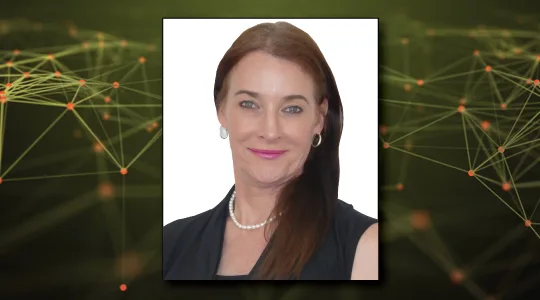
John Gilroy: Welcome to Constellations, the podcast from Kratos. My name is John Gilroy and I’ll be your moderator today. Our guest is Susan Bull, Senior Consultant at COMSYS. Today we’ll be discussing the present and future state of satellite communications. We’ll be refocusing on how technology and market pressures in the satellite industry are rapidly changing, and how that is affecting operators and service providers in the ecosystem. As part of the conversation, there will be an emphasis on the latest technology trends in the industry, from HTS to VSAT, and how they will impact and shape the future of the industry. With us today is an expert in the satellite industry, that will bring her unique and insightful experience to play when discussing these topics. Susan Bull is a world renowned consultant with over 30 years of expertise in the industry. She is a Senior Consultant with COMSYS, and specializes in all aspects of the VSAT market, and advises clients worldwide. Her insights will help us shed light on where the satellite industry is today, and where it’s going in the future. Susan, how are you?
Susan Bull: I’m fine, thank you, and I’m not sure my insights will provide the true solution.
John Gilroy: Well listen, I’ve been wrestling with this interview for about six months, because you’re in Brazil, you’re in America, you’re here and there, so people all over the world really want to know what you have to say, so you must have some insights, Susan.
Susan Bull: Oh yes, but the more insights you get, the more complicated it gets.
John Gilroy: Oh, I’ll bet, I’ll bet. Well let’s start off with something pretty simple for you. HTS. You know the pricing for satellite capacity has been dropping. Do you see that trend continuing, leveling off, or becoming application specific in the future?
Susan Bull: I personally see it continuing, and I think the pricing is going to get much lower over time. I think apart from anything else, it has to for several reasons, not the least because obviously when we look at the equivalent in the terrestrial world, you can clearly see the bandwidth is not important, and the terrestrial operators have been through this very difficult situation, and now we have to go through exactly the same thing. So I think we need to look at the experiences that have already happened, and see the reality in all this. It’s going to become more a question of service, and application, and content, and everything else that goes with that. And bandwidth is essentially becoming valueless. So, ultimately I don’t believe that will kill satellite operators. I just think that they’ll just have to see things in a different light.
John Gilroy: Well you know, I’ll use a sports analogy here, because that’s what I tend to do. In sports like soccer, baseball, what happens is there’s always new techniques and people adapt and change with it, and I think in the marketing world and with Google and Amazon web services, people are adapting to that. And I agree, I think the people in the satellite community have to look at what’s going on, and find out what their strengths are, and adapt to this new change.
Susan Bull: Yes, and I think as you look at the satellite industry, you can clearly see the major operators, most of the major operators, and many of the smaller ones, have already got to that stage. Quite honestly, and they’ll probably hate me for saying this, but I think they were dumb as hell because they did what so many companies did over the years, like Nokia and Kodak and the like. They just wanted to keep their old business. But now, the reality has finally come through to them, and they’re making major changes in their business model and the way they’re approaching things.
John Gilroy: Well speaking of changes, with all this more bandwidth coming up, what capabilities do you think will emerge, that will spur the use of all this capacity and drive market growth? Will it be geo information or what do you think’s going to spur the growth?
Susan Bull: So I can ask you a very simple question. How much bandwidth were you using on your mobile phone 10 years ago? And how much bandwidth are you using today? Most of the time, you don’t even know, but it’s way more, way more. And that’s generally the case across every part of the business, every part of the world. The simple fact is, that there is demand for bandwidth, but the bandwidth has to be at a price that people can handle. And in some cases, as in the cases of most providers like Google and Netflix and so on, they don’t actually charge for the bandwidth. That’s not the issue. The issue is content, and so going forward, I think that satellite has many unique things to bring to the telecoms business. I think that it’s possible, the way that our technology is evolving, that ultimately some of the major Telcos may turn out to look like complete idiots, because they did not look at the satellite industry and what potential it could bring to the business. They should be with us on this. And so ultimately, I don’t think it’s a question of demand. I think it’s a question of how you actually sell the bandwidth, and what you can actually provide the bandwidth, and what kind of cost you can provide that bandwidth for.
John Gilroy: When I was just thinking about 10 years ago I never … You know, when I was preparing for this interview, I was thinking about show me the money, from that movie with Tom Cruise, show me … what was the name of that movie? I got out my phone and typed in. Then it dawned on me that it’s almost a habit. It’s not like going to the library or having a reference book or something. I pick up the phone, because I expect it to always be there, and I get the quote, “Show me the money” from Tom Cruise, and the movie is Jerry McGuire. And I think it’s just focusing on here is, is the satellite operators and all the people in the industry have to focus on a new way to show them the money. And it’s going to affect everyone differently. It’s going to affect satellite operators, service providers, and telecom operators. All in different ways, won’t it?
Susan Bull: Oh yes, absolutely. There’s so many ways in which things are going to change, and I think in many ways for the positive. There are certain, without question, there are major risks out there, for many of satellite operators, VSAT service providers, VSAT manufacturers, and the satellite manufacturers themselves. So there’s an awful lot of things that could happen that may well put people out of business, but at the same time, some people may just explode in terms of their capabilities and their revenues.
John Gilroy: Speaking of exploding, I’m in Washington, DC, I teach at one of the local schools, and I kind of get a feel every year of what the students are interested in. When that video of the SpaceX that landed on the ocean, on the ship in the ocean, that got a lot of my students interested in the space technology. And so I think what’s going to happen is, with all this change, with all these new technologies out there, some companies are going to win, some companies are going to lose, but I see an influx of talent coming into this industry that just wasn’t there, talk about 10 years ago. Wasn’t there 10 years ago. Now it’s there today.
Susan Bull: Yes, in many ways you’re right, but go back 20 years and you know the industry’s much younger in many ways, so yes we’ve got resurgence of capability in the business, I believe. And an enormous amount could happen.
John Gilroy: Will it be something like addressing issues with a maritime industry, with ships on the sea? Do you think it will be with a Wi-Fi access on airplanes? Do you think this is going to be an area where the people can adapt more quickly here in the few years ahead?
Susan Bull: I mean quite frankly, I’m a little bit skeptical about some areas like the aero market for example. I think it looks great. It’s been growing extensively. But I think the risks associated with it are huge, and let’s face it, no one’s really making any great money on that, other than the equipment providers. The passengers on most aircraft, they expect to get that service for free, and so it’s going to have to be incorporated I think, in over time, it’s going to have to be incorporated as part of the ticket that people pay, and they’re not going to expect to pay huge amounts of money on all of that. We’re going to have to deliver more bandwidth there as well, and of course as soon as you sign up one international airline, you have to cover the world with capacity. And I think these are massive challenges. I think it will continue to grow, and ultimately it will be the usual kind of thing. Every airline is going to have to take up this kind of service, because they’re going to be seen as old and dumb, and not worth traveling on if they don’t have it. Of course, us old folk, we’d rather get on a plane and be disconnected from everyone without no excuse. But ultimately, the market will grow, but I think it’s going to be extremely challenging. On the maritime side of the market, I think there’s a lot of potential in that market, continuing potential. And yes there will be challenges, and yes business models are beginning to change on that side of it. But I don’t think mobility is just it. Personally, I think connecting the world is going to be a big part of it. I think the LEOs are definitely going to play a big part in all that side of it, although some of the projects out there, I can be a bit skeptical about. And it’s not just about the projects out there. It could also be about the funding. It could be about the design of the system. It could be about whether the technology is there and ready to be built right now, and then, of course we’re also going to have the question of the antennas and the ground segment, which I know you probably want to talk about a little bit later. But putting all this together, we already have technology which gives us ubiquitous and universal coverage all over the place. We’re not like fiber or cellular where we’re stuck in certain particular areas of the world. And that brings a great deal to it, but we do have our downside, and I think some of these systems coming in will make a huge difference. I mean one question that you could potentially ask is, if an Apple X iPhone, or iPhone X costs a thousand dollars, how is it that you can have a VSAT system capable of being installed pretty much anywhere in the world, and it can cost less than 300 dollars? How does that make sense in many ways. So there is an awful lot that can change.
John Gilroy: Let’s, let me take up your little comment there, and go from 40,000 feet down to the ground station here. So, the big splash is the satellite is going up there, the rocket, the SpaceX always giving big splashes, but mostly I’m talking about ground station. So what change is going to have to happen to ground station to keep up with this development out in space?
Susan Bull: Well there’s no question that there are changes on the ground segment side of it, I think first and foremost, we are going to need, and I don’t like calling them flat panels, because they’re more than flat panels. I give them a much more complicated acronym, because they’re flat panels, yes, but they’re conformable. They have to be conformable. They have to be electronically steerable. They have to be reliable, easily installed, all of these things. And there are many companies, many, many companies working on very innovative technology to bring this to the table. If we look back, almost 20 years ago, when companies like Teledesic and Apto 11:30, and these kinds of companies were trying to put up their systems. And they had lots of plans for it, and they looked like they had the funding, and no one was really questioning whether the satellite technology was capable of that, but none of these projects ever happened. And the reason behind all that was because of the antennas. They simply could not get the antennas in place. They did not have the antenna technology, and they couldn’t do it at a price point that was realistic. Now, as we move forward, there is real potential for that side of it. Now yes, lots of stuff has got to actually be delivered, but the fact of the matter is, that I believe, I really believe that’s coming. If it doesn’t come, then I think the LEO systems are going to be in a deep hole, and they won’t find their way out of it. If it does come, I think it will be massive. It’s not just the fact that these antenna systems are going to have to be able to jump from satellite to satellite on the LEO side. I believe that the LEO systems are also going to be challenged in terms of the bandwidth, and from that side of things, I think the GEOs will play a big role in that, and the antennas are going to have to be able to decide what is the best way to transmit or receive that data. Whether it’s via GEO or via LEO, or a mirror, or whatever. So they’re going to have to be intensely intelligent to be able to do all of that stuff. And very efficient to be able to do it, and low cost. Not only that but also, I think and I know several people, I’m not technically smart in any way. But I know lots of people who are technically smart, and they ultimately believe that these systems, VSAT systems as a whole, including the antenna, will have to end up a bit like a smart phone. Like you walk into a shop, you buy it, you walk out. The only thing you really have to do is charge it, oh and put in your password. And ultimately if we do all that kind of stuff with it, I think that’s going to be one more game-changing step.
John Gilroy: When people look at ground stations in this technology, the amount of information coming in, a lot of them talk about moving to the cloud. And if you look at Microsoft moved to the cloud, Amazon Web Services moved to the cloud, Google moved to the cloud. What role does cloud play in enabling this technology for ground stations?
Susan Bull: Well I think the cloud is an important part of moving ahead. I think the VSAT operators, VSAT manufacturers have already taken this in, and they’re already working on things like that. And there are plenty of examples, that as you look through the likes of Hughes, ViaSat, Newtech, iDirect, and so on and so forth. You know they are thinking in those kind of terms, and when you start thinking about what kind of functionality they are placing in their modems, what kind of decisions can be made within those modems, and how they handle the data. And the whole thing about SDWAN coming through to all of this, it’s all cloud based. And so yes, I think that is a fundamental part of the future development of VSAT platforms, and that’s already been taken into account. I think as a general rule, the VSAT manufacturers have actually been very innovative over the years, and they continue to be so. And yes, it’s high technology risks that they’re taking, but they are pushing forward on all this side, so yes I think it’s going to be changing.
John Gilroy: You mentioned software defined WAN, SDWAN, and from my perspective what it looks like is that the fact that it’s software defined means that people can adapt and changed quicker than they could in the past. And they can maybe respond to some of these market conditions than they can in the past. And maybe what we’ll see is less technology change, and more change in just the way these SDWANs handle the different signals that come in, and especially with mobility, and this need for end to end connectivity. Do you think that’s one area of innovation in the future, the whole idea of soft defined WANs?
Susan Bull: Yes, yes I do. I think it’s a big thing, and I think when you look at one of the market leaders, Hughes, that’s just one of the things they’ve been doing in the enterprise side of their business. And they recognized from quite an early stage, that the enterprise side of the business in the US which at one time was absolutely massive, and satellite and VSAT was delivering service to the largest majority of enterprise customers out there, enterprise sites. That all changed with fiber and cellular type systems, but Hughes took that on. They kept the VSAT as part of it. They recognized that in some areas, the terrestrial world had not pulled through everything, and that actually satellite had to deal with issues the terrestrial network didn’t think it had to deal with. And so they actually introduced some of their technologies that they’d invented for all this VSAT industry had invented for the satellite world. They introduced that to the terrestrial world. And they’ve been very successful going forward with that. And they have the capability of jumping, as do other people. They have the capability of jumping between whichever connection makes the most sense, and is the most reliable, and gives the right bandwidth, at any particular point in time. And all this is software defined.
John Gilroy: Yeah, flexibility is just amazing, you never thought about 10 or 15 years ago. I’m thinking about VSAT now, and new technology. Everyone knows about 5G. Two different worlds, do you think they’ll work together, do you think they’ll compete? Or where do you put 5Gs compared to the VSAT?
Susan Bull: Yes, I think they’ll work together. I think ultimately the way forward is going to be integration between the Telco world and the satellite world. I think if we have one big criticism of the satellite world, is that we can be our own worst enemies. That satellite operators and everyone, satellite VSAT manufacturers, they fight against each other all the time. But going forward, also we can look out and say that so many Telcos have this satellite, and just consider it to be in worthless part of their business. Most of them have got rid of it over the years. There was a one point in time they used to rely on it totally for anything that was reliable and long distance. I think that’s all going to change, and that Telco is going to have to realize that satellite is going to be a critical part of it, and the satellite world needs to understand that they need to be more integrated with the terrestrial world. I think in many instances, that’s already happening. The satellite industry, the VSAT industry, has definitely seen cellular backhaul as being one of the critical ways to continue growth in the industry. And when you start thinking about things like local village Wi-Fi networks, and those kind of things, we know that so many people, and not just people, small businesses and so on, their number one connection is their actual phone. And they already have that phone, and even when you look around Africa, vast majority of the population has phones, even if they don’t have coverage. So ultimately, if we can provide some form of communication to a wireless device, a cellular device, then that again is going to connect up an incredible amount of customers. So ultimately, do I see integration? Do I see a positive on both sides of it? Yes, I do. I’m not necessarily saying it has to be 5G, and for sure there are battles going on between the cellular world and 5G, and the satellite world, but equally there is potential for both.
John Gilroy: Couple weeks back, we had the President of the Satellite Industry Association on the podcast, and he was talking about in the next few years, the projected number of VSATs out there, I mean, all kinds of satellites are going to be in the sky by the end of the year. It just seems like this could exacerbate some of the issues with VSAT interference. Do you see issues with that in the future, or where do you see that whole problem heading?
Susan Bull: Well I’m not, I’m not necessarily a technical or frequency expert, or for that matter regulatory from that side. But do I see we will have frequency issues? I think everywhere there will be frequency issues. Going forward, these frequency issues will have to be resolved, and I think after I was talking to somebody about this not so long ago. When you look at something like WiMAX, go back quite a few years, and WiMax was the big thing everybody talked about, wasn’t it? It was going to be the game changing thing. It was going to be the thing that was going to destroy the cable industry. And yet, when was the last time you heard anyone mention the term WiMAX? And one of the reasons we don’t mention the term WiMAX anymore is because it isn’t out there pretty much anymore. And one of the reasons behind that was because of the interference it caused to the satellite business.
John Gilroy: I’m going to just drop one quick question at the end here, and this has got to do with interference again, and so how can the industry really address these challenges with interference? Is it regulations, is it public/private partnerships, where do you see the solution for some of these interference issues?
Susan Bull: Oh, I don’t see, I don’t see. That’s not a good question for me. I think this is incredibly complex. It’s also down to a whole bunch of things I don’t have a great deal of like of, regulations, different government type approaches to things, the desperate need for frequency, money. You know that’s become a big part of it. In some ways, I think the term, the whole frequency and interference thing, will be influenced significantly by how much money people can make out of it.
John Gilroy: Yeah, well it’s done that in many, many different areas. Well thank you very much for your insights here. Unfortunately, Susan, we’re running out of time here. I’d like to thank our guest Susan Bull, Senior Consultant at COMSYS.