Transcript:
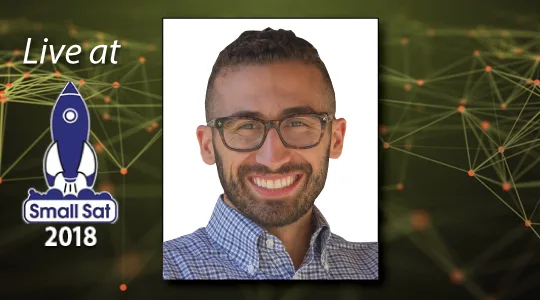
John Gilroy: Welcome to Constellations, the podcast from Kratos. My name is John Gilroy, and I’ll be your moderator. Today, we’re recording the podcast from the floor of the 32nd Annual Small Sat Show in Logan, Utah. Today in the Constellations podcast, we’ll talk about the evolution of the satellite industry from very large, traditional geo satellites to miniaturized small sats. We’ll also talk about developments in the industry such as SARs―synthetic aperture radio―and how this exciting technology has the potential to be very disruptive in the satellite industry. Finally, we’ll discuss the flood of investment into this small sat area and what it takes to successfully launch a small sat company. Our guest today is Payam Banazadeh, founder and CEO of Capella Space. Based in Silicon Valley, Capella Space is building the largest constellation of commercial SAR satellites. The objective is to provide hourly monitoring services of anywhere in the globe. It’s quite a goal, hourly monitoring services of anywhere in the globe. Payam was selected to be in the prestigious Forbes 30 under 30 list in 2017, and Capella Space has been recognized by the New York Times, Bloomberg, Inc. Magazine as one of the top 25 disruptive companies in the world. Welcome, Payam. How are you?
Payam Banazadeh: Thanks. Good to be here. I’m doing great. It’s good to be back at this conference. I’ve been coming for a long time, and I remember I came as a student back in the day, and I was camping by the lake because I couldn’t afford getting a place to stay, and now it’s this 3,000 people big show. It’s crazy.
John Gilroy: You’re so young. You could almost be a student, a graduate student here or something. You’re one of the really successful young people at this conference, aren’t you?
Payam Banazadeh: There are so many. I mean, this industry has grown so much, and a lot of it is because of young people, and it’s exciting to see that for sure.
John Gilroy: What changes have you seen in the conference just since you started going?
Payam Banazadeh: It’s become a lot more commercialized. I think, back in the day, it used to be heavy focus on students and student projects, and now it’s a lot of businesses happening, which is fine. I mean, that’s expected. It shows a lot of growth in our industry specifically about small sats, and it’s very, very exciting to see that. I remember six years ago, when I graduated undergrad and I was thinking about grad school, my mom was pushing me really hard to switch away from aerospace and do petroleum because she was really concerned about me finding a job, and now it’s completely changed, right? I mean, the aerospace industry is one of the hottest industries to be in. Investors are flowing money in. There are many companies to work at. It used to be either NASA or SpaceX, and now I can’t even count how many different companies you can go work if you want to get into aerospace.
John Gilroy: If you’re listening to this podcast, you can sense the feel as we are broadcasting from the field. There are all kinds of excitement here. There are 3,000 people here. The NASA booth is filled with all kinds of people interacting, going outside, having lunch and having one-on-one conversations about many topics we’re going to bring up here.
Payam Banazadeh: Yeah. There’s an ecosystem. I think that’s the most exciting. There’s an ecosystem of private companies doing all different aspects of space, right? We, as a private company, are essentially building every little component that’s going into our satellite and sending it to space. If you thought about that 10 years ago, that was just something you wouldn’t think about actually. You wouldn’t think about doing that because it was craziness. You had to be a government organization to have access to the capital and the knowledge in order to do that, and now you don’t need to.
John Gilroy: We’ll talk about evolution. What about the evolution of the satellite industry from large geo satellites to miniature small sats? It seems like this is a theme of the conference here. We just had Pat Patterson, and that’s what we talked about. What do you think the motivations are behind all this? Is it just cheaper, better, faster? Why?
Payam Banazadeh: I mean, not always cheaper is better and faster, but I think the biggest difference in the small sat community and the bigger satellites … and, by the way, let me make it very clear, we need the big satellites. The things that you can do with the big satellites, for the most part, you really can’t do with small satellites, and small satellites are great for certain applications but they’re not great for everything. I think the biggest difference really is the change of mentality. With small sats, they are not doing things traditionally where everything has to be proven, everything has flight heritage, everything has to work 100% of the time, and when you release yourself from that, from those limitations, you’ve got a lot of things to play with. You can now use the technology that exists outside of aerospace, inside of aerospace, and those bring a lot of new capabilities. The form factors are completely different. We’re flying our first GPU in space. GPUs have been in space before, but have never actually commercially been used, operationally been used for satellite imagery, and we’re flying a GPU and, you know what, it might work, it might not work, but that’s fine. We’re going to learn a whole bunch. The satellites are cheap enough that you can have this continuous learning as you’re putting things up in continuous iteration. Whereas, big satellites, you can’t really do that because it’s a billion-dollar satellite. It better work.
John Gilroy: Let’s say I walk in my classroom tomorrow and I bring you in and I say, “So give us a real quick 30-second outline here on how small sats are different from traditional? Smaller we know, more flexible, easier to get up. The harder you get up, more limited, do they last longer.” What’s a good description of the small sat for a novice?
Payam Banazadeh: The definition of small sat is also, depending on who you talk to, they have a different definition of what small sats are, but, typically, they’re short lifetime so three years is usually the sweet spot for very small satellites. There are usually no redundant systems, so you’ve got single string. Everything, there’s only one of them, so a critical component on your satellite fails, your satellite has failed, whereas, bigger satellite, you make sure that critical components are dual, redundant and you’ve got a backup system, and that really makes the system very complex, obviously much cheaper and, as a result of the form factor and the cost, you can launch a lot more of them as opposed to maybe one or two and three, and that really opens up new capabilities and allows you to do things completely different.
John Gilroy: I walked around the conference area. I see these guys. I see the Navy guys. I see Air Force guys. I see Army guys. I see all kinds of military folks. Why would the military send their DoD folks into this conference? They have these big satellites that do a lot of things. Why would they even consider something that seems flimsy compared to one of the DoD satellites up there?
Payam Banazadeh: Yeah, for a different purpose. Believe it or not, there are huge gaps of capabilities, right? If you only have a couple of these big satellites, you can’t cover the entire globe continuously. I mean, there are these significant gaps of coverage that you have in your exquisite systems, and what you don’t want to do with those exquisite systems are to look for things, to spend those very valuable time that you’ve got on these few highly valuable exquisite satellites to look for things, so the capability, the gap that small satellites, and specifically Capella, that could potentially fill is to make the uses of those exquisite satellites a little more efficient, right? If I can tell you where to focus your very valuable, very high performance satellite and then you can do that instead of looking for things, that’s a much bigger advantage, and you can utilize your assets much better. The other thing is resiliency, right? If you’ve got 500 small satellites and if something happens and some of them fail for whatever reason, whether it was a targeted attack or complete randomness, then you’re not out of assets. You still have a lot more assets to rely on.
John Gilroy: I have to tell you, I have a 26-year-old daughter, no interest on small sat, but the word exquisite, all of a sudden, she wants to listen to this podcast. Exquisite. Is that a term that’s used in the industry to describe a certain type of a satellite?
Payam Banazadeh: Yeah, exquisite, those are multibillion-dollar satellites that you spend five years building them. You spend five years planning them, and then they got to work for 10 years, and they do some really, really beautiful things, but they cost a lot and they’re really, really big. They’re usually the size of a school bus.
John Gilroy: Wow.
Payam Banazadeh: Definitely not small.
John Gilroy: Let’s, from the general topic of small satellites, go more specific here and talk about synthetic aperture radio. Is that S-A-R or SAR? How do you pronounce that?
Payam Banazadeh: It’s Synthetic Aperture Radar, not radio. People call it SAR.
John Gilroy: What exactly is SAR, and how does it apply to your company?
Payam Banazadeh: There are types of imaging really. If I were to dumb it down, there’s the passive imaging and there’s active imaging. Passive imaging is optical imaging and works just like your phone. Your phone is doing optical imaging. It’s waiting for the light to get to the lens. Satellites that have optical payloads work just like your phone. It’s just a much bigger lens, and they’re waiting for the light to get to those lenses to then form an image, and the difficulties with that is, if there’s no light, there’s no picture, so you can’t really do proper imaging at nighttime. Just like how if you’d take your phone into a dark room, the images are not going to look really pretty. The other challenge is, if you’re looking at a place and it’s cloudy, the light is coming from the clouds and not from what’s underneath the cloud, so you only see the clouds, so you’ve got cloud coverage, you’ve got night coverage and, because of those things, you’re limited to beautiful weather and sunny days. Believe it or not, that’s a small portion of any given time. I mean, half the Earth is nighttime, half the Earth on average is covered with clouds, and you combine those two. 75% of Earth at any given time, it’s either night or cloudy or a combination of the two, so no matter how many of these optical satellites you’ve got orbiting around Earth, 75% of Earth is invisible to you. Now, there is this other type of imaging. It’s an active imaging system as opposed to passive, and the way that works is, instead of you waiting for the light to get to you, you’re actually actively sending signals, and these signals and the frequency that we use them and expand, clouds are transparent, so they go through the clouds, so you don’t really actually see the clouds at all, and because you’re providing your own source of energy, it’s as if you’re carrying a flashlight. You’re not dependent on the sun being out. You’re not dependent on the perfect weather, and you can do imaging all the time. Now, there are differences between the end product and how the images look like. For example, SAR is a black-and-white image. Whereas, optical, obviously, you see colors. It’s a coherent system, so you can do interferometry. You can see changes on the surface to very, very precise accuracy, to a millimeter, and so if things are changing on the surface of the Earth, you can see that to a millimeter accuracy, which is quite remarkable. SAR has been around for a long time. Spy satellites use SAR because you can see through clouds. You can see at nighttime. It’s highly reliable, and the military has been using SAR to detect footprints, believe it or not, to detect tunnels. The detection of tunnels is a big thing because, as you’re digging tunnels, the surface of the Earth is changing a little bit by a couple of millimeters, and you can detect that using SAR, so it’s a very, very powerful tool. These exquisite satellites that we talked about, they do SAR. They’re billion- dollar assets, and they’re usually a thousand kilograms, so the really, really big satellites use SAR, and what Capella is trying to do is miniaturizing that to a less than 50-kilogram satellite while maintaining a lot of the performance on those.
John Gilroy: This morning, I got up, went to YouTube, typed in your name, pretty easy to spell, P-A-Y-A-M, and I saw a video of you at Stanford …
Payam Banazadeh: Oh, my God, I got to take that off.
John Gilroy: … with some colleagues, and you explained it very well.
Payam Banazadeh: That is so embarrassing.
John Gilroy: I mean, this is all verbally, but when you explained the 50/50 on a whiteboard, it made perfect sense to me.
Payam Banazadeh: Yeah.
John Gilroy: It’s actually very powerful. I thought it was a real good summary of what you do.
Payam Banazadeh: What was a class project video.
John Gilroy: It’s still up there.
Payam Banazadeh: It’s from many years ago. I got to take it off.
John Gilroy: No, I think it’s crystal clear because it actually showed, all the startups here, the frustration involved with a startup, and there was plenty of frustration. It was a brilliant idea, aggressive, articulate group of young people, and you hit blockage, blockade, blockade. You keep pushing through, but I think that’s more of a testimony to a determination than a disruption.
Payam Banazadeh: Yeah. Glad you found that useful.
John Gilroy: Yeah, I did.
Payam Banazadeh: I got a B in that class, so I guess the professor didn’t really like it that much.
John Gilroy: S-A-R, the radar, so, in addition to military uses, what other uses does it have?
Payam Banazadeh: It’s been around commercially since 2007, and there are actually really no commercial SAR satellites up in space right now, truly commercial. All the satellites that are up there were funded by the government, and then there were some sort of private-public partnership to take some of those capacities and commercialize it, and so it’s a very new industry right now. It’s been only 10 years old, heavily still focused on government uses, but we are seeing a lot of potential for commercial applications. The fact that you can see through clouds and at nighttime gives you an inherent reliability, right? You can go to a customer now and you can sign a service level agreement. You can sign an SLA and guarantee that you’ll be able to monitor whatever they’re interested to monitor at a certain time no matter if the weather is going to get cloudy or the sun is going to disappear for whatever reason, and that’s a big thing. A lot of the commercial customers have been frustrated by a lack of reliability from space.
John Gilroy: That’s why you claim, any hour, anywhere.
Payam Banazadeh: Any hour, anywhere, and we can guarantee it, and that’s a big deal, and so we see a lot of commercial applications on monitoring hotspots around the world, lots of big infrastructures and people are flying helicopters and sending crews in the middle of nowhere. It’s costly. It’s inefficient, and it doesn’t happen often, so a lot of the companies, the commercial companies that we’re working with, are interested in changing that process and, instead of finding things in their infrastructure that has gone wrong after it’s gone wrong, potentially do a preventive damage assessment, right? If you can look at these infrastructures on an hourly basis or better, as things are developing, you can potentially alert them to prevent some of these damages that could be done to their infrastructure, so we see a lot of potential there, insurance, agriculture, energy, finance. There’s a whole bunch of markets that we’re interested in, and I’m happy to get into those use cases as well.
John Gilroy: I want to get back to the use cases, but I want to get, more importantly, your LinkedIn status update from yesterday. I saw that, and you’re involved with the NASA project. Tell us about that. I mean, you might as well brag while you’re on the podcast.
Payam Banazadeh: I mean, I was just a small …
John Gilroy: It’s worth bragging about.
Payam Banazadeh: … part of the team. I mean-
John Gilroy: What part of it?
Payam Banazadeh: Yeah, I worked at JPL for a while after graduation and before going to Stanford, and one of the projects I worked on was the Curiosity Rover. I was a very small team member of the folks that-
John Gilroy: Whatever one it was, yeah, it was amazing that you were a part it.
Payam Banazadeh: It’s a complex system of systems. I mean, if you read what JPL and then the entire NASA crew, with a lot of help of other partners, have been able to accomplish, it’s truly remarkable. Sending a thousand-kilogram rover …
John Gilroy: I know.
Payam Banazadeh: … to another planet after eight months of journey at 13,000-mile per hour, entering the atmosphere and spending seven minutes to then land this 900- kilogram rover perfectly on the surface on our planet is crazy.
John Gilroy: Use that story for your venture capitalists.
Payam Banazadeh: Yeah, right.
John Gilroy: That’s the story to use. We talked about launching stuff to Mars. Let’s talk about launching a company, and you have experienced this in Silicon Valley, so what does it take to launch a successful company. Is it to be a good storyteller like that? Is it a creative idea? In Silicon Valley, everyone’s got a creative idea. If you go to Starbucks, you get 30 creative ideas, and they go nowhere, so what’s the secret?
Payam Banazadeh: Oh, man, if I could take that in one sentence, I mean, I wouldn’t be talking to you. It’s a million-dollar question. Yeah. I think it takes a lot of different things to come in at the same time, a lot of good luck, a lot of right timing, definitely a lot of good storytelling, but, more importantly, a business that makes sense and a business that makes sense. When we started Capella, we wanted to do this hourly monitoring. The way we came up about the idea, I don’t know if you remember, but there was a Malaysian plane that went missing. It took off from Malaysia. It was going to China. A 777, so a massive plane, 285 passengers, and it just went missing, and I remember I was watching CNN for an entire week. People were trying to find this plane, and I thought it was pretty disappointing. I thought we had failed as homo sapiens if this 777 with 280 fellow human beings go missing and we can’t even find that big plane on this one planet we call home, and so that was an inception point of trying to figure out what are we doing to monitor our own planet from space. There’s a whole bunch we do, but there are there these huge gap that we thought we needed to change that, and so it started as an idea. Then we moved and thought around the technical difficulties of monitoring our planet on an hourly basis, and when we thought we had a good story there, then the question of “so what” came about. Okay, so what? Let’s imagine we did this. Who’s going to pay for this, and do people actually care about this? Is there going to be a sustainable business around this? We took a whole bunch of classes that was around market discovery. It was customer discovery. We interviewed more than 200 customers of all sorts from all different organizations, commercial and government, in a span of 10 weeks and, at the end of that class, we convinced ourselves that if we could do this, it would be a game-changing capability and a lot of people would value this and then, after that, it was trying to tell that story to investors and showing them that we’ve got some unique technology that is valuable and showing that there is a business case around it and there is a team that could actually execute on that strategy and build it. That was tough work. That never ends. I’m still doing that after two and a half years of running the company, and I think I’ll be doing that for another many, many years to come.
John Gilroy: When you sit down with an investor, they ask for your elevator pitch. We all know that.
Payam Banazadeh: Yeah.
John Gilroy: What I found is, in San Francisco, in Silicon Valley, if you go up to Salesforce, their pitch is, “Yeah, we help customers succeed.” If you go to Cisco, they say, “Yeah, we’re in the communications business.”
Payam Banazadeh: Yeah.
John Gilroy: Do you make routers? “Oh, no, we’re in the communications business,” and so what you have said is that you’re a company that happens to build satellites.
Payam Banazadeh: Yeah.
John Gilroy: You’re a communication company, so how do you position the company, a communications company that happens to build satellites, software? What do you position it?
Payam Banazadeh: Yeah, we are really building an infrastructure in space to collect valuable and unique data about the things that we do here on Earth, and the phase one of the company is building that infrastructure because that doesn’t exist, and that’s collecting the proprietary dataset that Capella is going to gather, and then the next phase is trying to commercialize that, and there are a lot of customers around that don’t really care about that data, all right? They don’t care about satellites. They don’t know what SAR is. They should know what SAR is. They’ve got some pressing questions and some problems, and they’re just trying to solve those problems, so if you go to some oil company or some insurance company and say, “I’ve got some SAR images. Do you want some SAR images?”
John Gilroy: No way.
Payam Banazadeh: They don’t even know what you’re talking about, and they don’t care. The end product are not satellites, not data, and it’s not images, and the end products are specific solutions for specific customers that have a problem, and we’re working with a lot of partners to make that happen, so we’re collecting the data. We’re working with a lot of people that have the knowledge of taking that data to the next level and turning it into information, and that’s the exciting part I think.
John Gilroy: If you talked to startups and you try to figure out … If someone comes up to you and says, “Hey, Payam, give me some advice,” and, “Should I focus on funding? Should I focus on the corporate culture? Should I focus on operations? What about focusing on customers? What about market-based versus technology- based?” I think, even the customer focus category, that’s the place to focus I’d say.
Payam Banazadeh: If you don’t have customers, you don’t have a business, right? If you don’t have a business, it doesn’t matter how amazing of a technology you have. I think the aerospace industry, a lot of the aerospace companies are run by aerospace technologists, and the problem with that is you end up developing things that are just cool engineering projects without any customer that’s willing to pay for that, and so flipping that and saying, okay, always asking so what and who cares and what is the end goal with developing this beautiful, amazing technology should be the first question, and, obviously, you got to have the technology to support that, so that’s there, and if you can’t raise the money to support all of that, then that’s a problem as well, so a little bit of all with the first question always being who actually cares about this and what’s the business model.
John Gilroy: We’re going to transport you magically from Logan, Utah, back to your Stanford classroom. You’re the guest speaker, and the professor says, “Give us some opportunities for my students in the satellite area.” Where is the growth area for a new space? What kind of information would you provide for students from growth areas for a new space?
Payam Banazadeh: For new space?
John Gilroy: Yeah.
Payam Banazadeh: Oh, man, that’s a tough question. Are you trying to start a company?
John Gilroy: No. There may be listeners who are in the same position you were three years ago, who wonder where’s the gap? Where is this thing? What should I attack? What do I go after?
Payam Banazadeh: There are so many gaps. I mean, we talked to some of the customers, and they’re telling us things that completely blow my mind. Some of these providers of imagery, if you buy more than a certain numbers of images where it’s more than a few gigabytes, they literally mail you a hard drive, right? That’s how old a lot of these processes are, and so what that means is there’s a lot of opportunities involved in this entire ecosystem to take things to the next level and bring aerospace out of this 20th century environment to using the cloud and using all the new processes. Those have been around for a long time, and a lot of people have been using it, and so I guess what I would tell your audience is look into the entire process, an entire supply chain, all the way from production of little parts that go into space to the delivery of data back to customers and find opportunities and places where people really haven’t evolved, and those are clear opportunities for another business.
John Gilroy: About a month ago, we did a podcast with an executive at Lockheed Martin, and I asked her about partnering with companies like yours, aggressive, dynamic, original, fresh-thinking, and a larger company, and so do you think there’s opportunities between small companies like yours and the big behemoth? We don’t have to name names. Is there opportunities there, or should you just break out on your own, or from my listener’s perspective, have you tried that and failed, or what’s been your experience?
Payam Banazadeh: Absolutely. Partnerships are such an important piece of this industry right now. This is a small community. I mean, as you can tell, there are only 3,000 people here, and that’s it. That is the small satellite community. The reality is the aerospace industry hasn’t actually proven yet that there is a viable commercial business model for a lot of the products, and so we’re still in the hypothesis phases and, unless we all partnered together, competition makes very little sense, and so I’m a big fan of partnerships with bigger companies who’ve been around, who have a lot of infrastructure, have a lot of knowledge and have a lot of expertise and so, yeah, we’re always looking for those partnerships.
John Gilroy: Mutually beneficial, I would think.
Payam Banazadeh: Absolutely.
John Gilroy: We’re going to end with our future question, so you’re a relatively young man. You can look into the future, so are your children going to be raised in Mars? I mean, what’s going to happen here in the next 10 years? It’s changed so much in the past five years. Maybe the Mars question isn’t out of date.
Payam Banazadeh: Yeah. I tell my friends one of the things that I’m super bummed about is there will be a day where you will drive to a local station around you within five miles of wherever you live, you get on a shuttle, you go to the moon, you grab a beer and, if you want, you come back that night or, if you want, you stay there for the night, and you have your beer with the view of Earth. That will happen. I’m not sure if it will happen in my lifetime, and I’m bummed about that, but that will happen.
John Gilroy: That’s an interesting prediction about the future. Payam, unfortunately, we are running out of time. I’d like to thank my guest, Payam Banazadeh, CEO and founder of Capella Space.