Transcript:
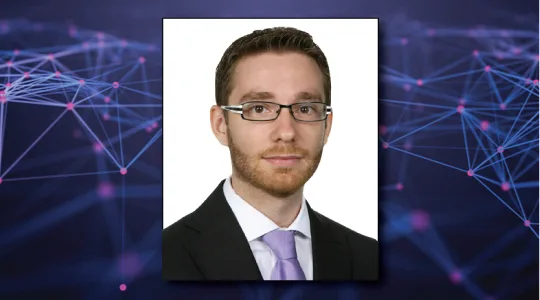
John Gilroy: Welcome to Constellations, the podcast from Kratos. My name is John Gilroy, and I will be your moderator today. During this episode, we’ll talk about new developments and strategies in the ground segment market and some of the findings from the recently released NSR report on the Commercial Satellite Ground Segment. This is a market that’s projected to grow to $15.7 billion by 2027 and is viewed as a key growth enabler for the satellite industry. And we got a fantastic guest today, we’re so lucky we have him. We have Lluc Palerm Serra. He’s a senior analyst at NSR, Northern Sky Research who is the author of the report and has a wealth of knowledge in this area. Lluc joined NSR as an analyst in 2015 and his primary areas of focus are satellite broadband and ground segment. He covers key growth areas such as new markets unlocked by HTS, opportunities opened by innovations in ground segments, how SatCom integrates into telecom ecosystem, enterprise VSAT, and consumer broadband or cellular backhaul. This is a guy that doesn’t sleep. He does a whole lot. I’m really looking forward to having a conversation with Lluc today. Lluc, how are you?
Lluc Palerm-Serra: Good thanks. Thank you very much for inviting me to participate in your podcast.
John Gilroy: Great, well let’s jump right in here. In your report, you mention that the ground segment is the key enabler in the return to growth for the satellite industry. Why is this so?
Lluc Palerm-Serra: Well, thank you for asking that. The industry is in a very transformative time. We see that with the satellite operators, on service providers and we’re trying to look into new segments to capture growth and we see ground segment as one of the key elements to unlock growth in the industry. If we look for example into mobility, for example the ground connectivity and antennas are going to be very important to capture growth on that vertical, to unlock opportunities there. If we look into other applications like cellular backhaul of course ground segment is going to have a major role there. How the industry is able to integrate with terrestrial tools that will deliver for equipment vendors for ground segment. Then consumer broadband for sure is how we keep pace with all the expectations from end users but at the same time keep costs affordable and of course constellations. We hear a lot of about the space segments how they plan wonderful satellite that will cover the entire Earth, but we think one of the most difficult element will be on the ground. So how they develop the terminal but also how they coordinate all those satellites from their point of view.
John Gilroy: You know I think I may have sold you a little short here because in addition to the commercial satellite ground segment report, you’ve also written the VSAT and broadband satellite markets report and the wireless backhaul via satellite report as well. So wow you’ve been doing a lot of writing here for an engineer haven’t you?
Lluc Palerm-Serra: Right, right so I specialize mostly on all those fixed broadband markets and for sure with the ground segment as being one of the key enablers for those segments to grow.
John Gilroy: You know Lluc in the terrestrial telecommunications segment, there has been a transition towards advanced networking capabilities such as SDN, Software- defined Networks and NFV Network Functions Virtualization. How do you see these capabilities impacting the satellite industry?
Lluc Palerm-Serra: Well that’s a very interesting question. You know satellites are very flexible because of their own nature so in general terms what the industry might have liked about doing these kinds of architectures because timelines are sometimes a bit longer than on the terrestrial side. But that’s a very interesting move because a lot of capabilities that you hear a lot about- beam hopping, beam-forming, detailed payload- are on core of the future growth for the industry. And that needs to be designed in tandem from ground segment and space segment. So we see those kinds of tradition being important for the industry for example to lower the cost per Gigabyte and for opening new applications like integrating with general telecom ecosystem.
John Gilroy: I teach a course over at Georgetown University, had my first class last week and the students said what’s the textbooks going to be. And I said things are changing so fast we don’t have a textbook I’ll give you current things but that is the situation with software defined networks. In the commercial world it’s like don’t even print anything it’s changing so quickly it’s so dynamic and cost is going down. Storage is going down. There’s all kinds of new players and the same is true for the Network Functions Virtualization. No wonder you need that report to just keep up with what’s going on.
Lluc Palerm-Serra: Right, right it’s sometimes hard to be updated with all the things going on in the industry and going on with those technologies, that is definitely right.
John Gilroy: Boy it’s so fast. However let’s talk about satellite operators. So what are the hurdles involved for satellite operators in taking advantage of stuff like SDN and Network Functions Virtualization?
Lluc Palerm-Serra: Right so it’s what I was saying before. This is an industry that needs to invest a lot of topics and timelines are very long. So developing those kinds of technologies sometimes pay a lot of time and the industry is somehow risk adverse. And changing the mindset of the industry is going to take time but we see that changing and hopefully the pace of change will soon be faster than all those technologies then if you look into that type of network that satellites are serving, they are very, rather huge so you might have a satellite that is serving five different service providers with 75 different customer profiles serving each of them with a different platform. So the commonality with all those kinds of customers and building and developing those kinds of technologies sometimes are difficult. And then that also needs to limit the scale of the industry and different customers. Those kinds of applications make sense when they are applied into large networks and given the limited size of the typical satellite network it’s sometimes difficult to implement.
John Gilroy: You know, let’s say there are a thousand satellites out there and even in a world of a thousand satellites these dynamic changes in software defined networks we would be hard to keep up. But what were doing is we’re putting a little square on top of them, oh by the way Lluc you get a thousand networks and by the way those are going to double or triple in the next few years. So, just the quantity of satellites out there this throws another variable into the equation that makes it really hard to understand.
Lluc Palerm-Serra: Right, right and each vendor uses different technology and sometimes it’s very difficult to find commonalities so all that makes it difficult to add up those virtualization technologies.
John Gilroy: It’s one of the issues with the satellite operators in the past all the satellite operators needed was to be concerned with building out ground segment infrastructure to manage a relatively small number of satellites. So where are the challenges here? When they orchestrate hundreds of satellites and potentially thousands of spot beams, not only are there more satellites but there’s spot beams within each one, it’s like I want to run out of the room!
Lluc Palerm-Serra: Right, right it’s just grown exponentially the complexity of satellite networks and of course the first and most important challenge will be controlling cost so our networks get more complex because we grow and we see an interesting trend here so topics for space segment per megabyte delivered is going down quite rapidly but that is not going so fast on the terrestrial side. So, we need to improve on that first as an industry. As I said before the virtualization is going to avoid a lot of those costs to climb very far. I don’t think technologies like automation will help in controlling those costs.
John Gilroy: I was just thinking that in the commercial world one of the advantages of a software defined network is that you can reduce costs by managing segments, managing networks from one location and efficiently for example updating servers, updating routers very careful. You have increased complexity, but also increased power with software defined networks to manage those systems.
Lluc Palerm-Serra: Right, of course. We found those HTS satellites a number of gateways and the number of entry points of the network is growing quite rapidly having powerful network management systems is going to be key to controlling those costs.
John Gilroy: Oh wow, I am a lot older than you and I’ve seen the evolution of this business and it’s really fascinating how it’s evolved. I think there’s been an evolution in the general requirement for ground segments with the ability to handle increased throughputs and manage greater network management needs. Let’s talk about these new requirements and how they have changed the business model for operators. So what are the operators looking at with this new world out there?
Lluc Palerm-Serra: On one hand you have operator models and on the other hand you have the new technologies coming to the market. The truth is that today while we’re shifting from satellites to networks, this is giving ground segment a totally new run in the industry. Ground segments is now part of the technology discussions for satellite operators and you know with the transition from megahertz to megabytes stuttering, those satellite operators are more and more integrating ground segments under the umbrella. With those satellite operators getting closer to end users the way we measure success in the industry we need to change as well. We used to measure the success of satellite with feed rate and in the HTS world that is totally outdated.
John Gilroy: Yeah
Lluc Palerm-Serra: The same throughput with powerful platform that can allocate bandwidth faster into different terminals can have a much better service to the end user. For example being able to ramp up the throughput faster can have a benefit, so it’s not so much about throughput but the time you need to wait to get your content. So now all those kinds of metrics all those kinds of performances are where ground segments need to improve.
John Gilroy: Yeah, I’ll say. Most of my listeners here, they know about VM ware and they know about server virtualization it’s been around for 10 years and I think many listeners know about software defined networks. That’s just taking virtualization and applying it to the network. But I don’t think many of them are very comfortable with this term NFV, Network Functions Virtualization. This takes virtualization to the next level doesn’t it? Maybe you can define that concept for some of our listeners.
Lluc Palerm-Serra: It’s essentially, Network Functions Virtualization brings a lot of flexibility into how the networks are built and being able to redesign all those networks on the go.
John Gilroy: Yeah, do it dynamically. That’s what’s so fascinating. Lluc, thousands of people from all over the world have listened to this podcast. If you are listening when new episodes are available simply go to Google and type in Constellations Podcast, click on Kratos and give us your email and we’ll let you know when we have guests like Lluc Palerm Serra on. Wow, what a good perspective you have here. We know this changes the networking itself but let’s put another variable in there, there’s higher throughput’s too. We’ve got more satellites, increased types of virtualization available and we have higher throughputs too another variable to the equation, is that right Lluc?
Lluc Palerm-Serra: You have HTS you’ll soon have video constellations, that means only new complexities to the industry but also new opportunities for the industry.
John Gilroy: Now you’re based in Spain, based in Barcelona is that where you are based Lluc?
Lluc Palerm-Serra: Well, I am based in Ibiza.
John Gilroy: I was just thinking of Spain and the big cities, I’ve been to Madrid. When I think about traffic manipulation I think about Madrid rush hour and I think about traffic manipulation applied to our world. This is another situation where you have higher throughput’s, different types of networks and you have some sophisticated traffic that must be manipulated in a complex environment. That fits into the discussion here doesn’t it?
Lluc Palerm-Serra: Yeah, traffic manipulation I think that the next biggest step of the industry is how we deal with traffic that goes through the satellite because the industry has done a very good job in improving throughput and improving the physical layer of the link. But there is still a lot of room for improving how the industry optimizes the links itself. How we integrate better with the rest of the network, how we optimize video that goes through the satellite. How we develop new technologies like stream multicast- all those aspects of traffic manipulation should improve the prospects for the industry.
John Gilroy: When you look at commercial networks they talk about enterprise architects when they architect and it’s a verb, they architect the network. Let’s just talk about ground segment architecture and I want to ask you about three concepts that are involved with ground segment architecture. I want to ask about FPA’s, VHTS’ and this whole concept of Non-Geo’s. How are FPA’s, which are function point analysis, how is that impacting the ground segment architecture from your perspective?
Lluc Palerm-Serra: FPA’s, as I mentioned before FPA’s we believe are going to be one the key technologies to unlock gloating in the industry. On one side you have the mobility segment starting to get cheap terminals. FPA’s will be one of those technologies that will open the SatCom market to new vertical. On the other side for sure having a cheap FPA will be critical for Non-Geo Constellations to reach mass markets. We really want to penetrate vertical like VSA to even consumer broadband, having cheap FPA’s will be critical.
John Gilroy: Yeah, we had the folks on from Kymeta they told us a lot of those things. Now, about a year ago when I was doing podcasts we were talking about HTS and I thought that was twenty times normal throughput, now we’re in 2019 and we’re talking about VHTS another concept to worry about very high throughput, is that right?
Lluc Palerm-Serra: It’s only another magnitude more throughput. Of course, another magnitude more complexities in managing the network.
John Gilroy: It’s just getting more and more complicated. What about the role of Non-Geo satellites in this whole? Does this throw another curve ball in? Another factor we have to worry about?
Lluc Palerm-Serra: Well of course, the Non-Geo beams offer a lot of new attributes to which the industry like low latency and truly global coverage but there are challenges as well. There is a lot of talk about space segments again, we think that probably ground segment is overlooked a lot from the Non-Geo point of view. Aspects like having a cheap terminal or being able to orchestrate all those satellites are going to be key.
John Gilroy: The internet because it’s profiled everywhere has brought a lot of new business models, online business Amazon, software has a service, infrastructure has a service. I guess if you’re a satellite operator and look at this market with all these dynamic changes in here you’d have to look at several aspects of it and see how it will impact your business model. What about this concept of infrastructure as a service, IAAS. How is that going to impact the business of a satellite operator?
Lluc Palerm-Serra: Sure, we see that being implemented today quite a lot. A lot of equipment vendors are trying to move from purely hardware sales to going more and more into services and that has to do with being closer to the satellite operator. That already happened on a terrestrial level a couple of years ago and we see that going now on satellite as well. So that’s also pushing vendors into adopting more risk and sharing efforts with satellite operators in commercializing capacity or even co-investing in those payments.
John Gilroy: I think that’s a key phrase there, the word R-I-S-K, risk it’s a four letter word. So there must be new models for sharing risk involved in this as well.
Lluc Palerm-Serra: Yes, for sure. We see now vendors, service providers and satellite operators dealing in payload offers to go after end users and we even see satellite hunters trying to partner with end user like mobile operators and be revenue sharing models. Risk is critical and being able to manage that will be very important to capture those opportunities in the industry,
John Gilroy: And when you see people, kind of working together maybe consolidating services there could be I don’t know. Is there going to be fewer and larger deals do you foresee that in the future? Because of all those consolidations?
Lluc Palerm-Serra: Yes, because of the nature of the technology you see many operators now selecting just one platform for their entire HTS payload. Winning those deals will be critical for vendors to be successful. You mentioned consolidation, that’s probably the next step for equipment vendors as there will be fewer deals it’s going to be harder to capture those deals.
John Gilroy: Creative partnerships may see those coming in a few years. That’s what I see coming in next 3 to 5 years, creative partnerships with dynamic technology that we don’t even think of now. Where do you see Lluc, where do you see the ground segment market going in the next 3 to 5 years?
Lluc Palerm-Serra: I will see those things that we have discussed today consolidating, FPA’s we really hope that FPA will come down in price and they will be open to a lot of markets like consumer broadband for Non-Geo or mobility applications. Also, probably that we mention a lot about VSAT platforms and how they need to continue expanding performances. Perhaps not so much on the physical layer about focusing on how they optimize the traffic that goes through the link. And of course we mention constellation, we mentioned mobility all those kinds of networks need very powerful management systems. That’s for sure one of the key elements for the future, being able to operate those networks at very low cost. A fact you just mentioned, the industry is generally trending toward fewer deals so we will probably see some consolidation in the coming years.
John Gilroy: You know, in America here there’s this thing called the Superbowl and everyone tries to get crystal balls to predict what the score is, everyone goes to each other’s houses and kind of celebrate it’s a big deal here. Crystal balls can be applied to your world as well. Let’s go down the road, um let’s go 8, 10 years from now you go down even further. Do you think 8 or 10 years from now the satellite ground segment will look anything like it is today? It could be completely transformed.
Lluc Palerm-Serra: I agree with you, it’s going to be completely transformed. It’s actually increasingly difficult to make the difference between space segment and ground segment maybe 10 years from now we won’t even be doing this differentiation any more. It’s a bit of a prediction but I wouldn’t be surprised if we see a greater level integration between those active in the space segment and the ground segment.
John Gilroy: We’ll have to standby and keep an eye on what’s going on because it changes so quickly. Well Lluc unfortunately we are running out of time, I would like to thank our guest Lluc Palerm-Serra, thank you very much Lluc.
Lluc Palerm-Serra: Thank you very much.