Transcript:
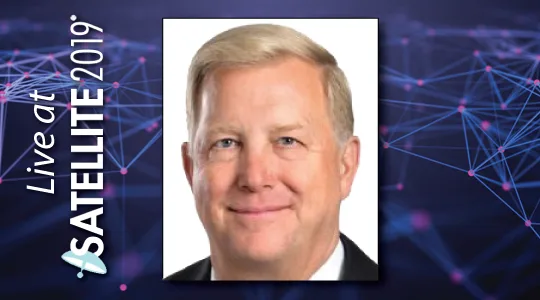
John Gilroy: Welcome to Constellation the podcast from Kratos. My name is John Gilroy, and I will be your moderator. Our guest today is Brigadier General Pete F. Hoene, United States Air Force Retired, President and CEO of SES Government Solutions. Pete, how are you?
Pete Hoene: Great, John. Thank you for allowing me to be here today.
John Gilroy: Boy, what a boatload of experience you have. 30 years in the Air Force, two Master’s degrees, all kinds of experience. You must have some great insight.
Pete Hoene: Well, I have a lot of scars to show from my experience, that’s for sure.
John Gilroy: If you want to study boxing, you want to someone who’s gotten beat up a little bit. And that’s what I like, been beat up and knocked around, and here’s the lessons we’ve learned. Maybe we’ll title this podcast, Lessons Learned by Pete, huh?
Pete Hoene: Well, I’m a former ice hockey player, both at the collegiate and minor league pro level, so I’ve been there and done that.
John Gilroy: Yeah, well that’s good. Okay, let’s get started, jump right in here. The Space Enterprise Vision authored by then US Strategic Commands General Hyten and US Air Force Space Command’s General Raymond concluded that the commercial satellite communication was a key component of US national security in space. Late this year, Commercial SATCOM operators were taken aback when Congress authorized $600 million for the Air Force to expand the wide band Global SATCOM Constellation from 10 to 12 satellites. Seems like a mixed message here, huh?
Pete Hoene: Well, what I would say is that Congress was concerned that we weren’t moving fast enough to try to get the wide band analysis of alternatives in place and look for commercial alternatives to buy more WGS satellites. So, my view is, they authorized the funding as a safety net to be able to fill the gap between what we have today and when we’re going to be able to provide commercial alternatives to WGS in the future. I don’t see this as an issue. I actually see WGS and commercial alternatives as complementary, and we’re working through that overall roadmap right now, with Air Force Space Command.
John Gilroy: It’s always difficult for a human being to see both sides of an issue, and I think because of your background in the Air Force, you can see both sides of this issue. And maybe one side is, “Well, what’s the funding going to be in the next three to five years?” I mean, it’s gone up and down, and what you have to do is, you have to protect your assets for today and plan on some changes in the future, because we know there’s going to be changes.
Pete Hoene: Yes, absolutely. One of the things I think has been really helpful is General Raymond and the Air Force Space Command staff leading the charge on an integrated satellite communications architecture.
Pete Hoene: Now, this is both military satellite communications and commercial satellite communications. And they’re pulling them together to be able to operate seamlessly across the different boundaries. We’re not there yet, in terms of doing that efficiently and seamlessly, but this architecture is certainly the right step and will help us in the long run.
John Gilroy: More on the theme of mixed messages, here, at a London conference a few months back, the interim director at the Air Force Space and Missile Systems Center said, “The DOD is hesitant to commit to commercial satellite services because they’re not compatible with most of the terminals, antennas, and modems that the military owns.” Same message you hear? Or what’s the difference with this?
Pete Hoene: Well, I think it needs to be put in context. I think the individual you are talking about was the acting director of the MilSatCom Program Office, Tom Beck. And what I think what he was trying to say is, we currently have military satellite communications that are very purpose built and with terminals that support an existing user base. We also have a wide variety of commercial SATCOM users out there for the Department of Defense. And what he is trying to see is how those two come together in the long run, which is really part of the architecture I mentioned that General Raymond is leading, earlier.
John Gilroy: Well, here we are at Satellite 2019, all kinds of folks and all kinds of excitement in the air here. Let’s talk about another satellite conference back in October, one of these panel discussions. They brought up some topics, and they stated that the government must rely on commercial, again, commercial support, to maintain a leadership position in space. They pointed out that while the government uses commercial air to transport troops, ATT lines for communications, there is a reluctance to embrace commercial support in space. Do you agree with that? And why do you think they’re so hesitant?
Pete Hoene: I don’t agree with that. I mentioned that this whole integrated SATCOM architecture is well underway. What I would say, that the Space and Missile Systems Center is part of … the individual you talked about works for the Space and Missile Systems Center … and his organization has sponsored pilot programs and pathfinder programs. Both of them are really, breaking new ground.
Pete Hoene: Pilot program, as an example, we were part of a team with Kratos RT Logic for a flexible modem interface. And the concept allows military satellite communications and commercial satellite communications to roam between one another with the appropriate developments that would be required, but do that at the network level, as opposed to the terminal level.
Pete Hoene: The other thing that I think that both the Space Missile Systems Center and General Raymond’s integrated architecture is trying to do is look at this from, if you just look at the global owner/operators for geosynchronous commercial satellite communications, there’s well over 150 satellites at geosynchronous orbit.
Pete Hoene: This provides a much more distributed, disaggregated architecture that complicates the enemy’s targeting calculus. If they were to try to jam one, or two, or even a few, there’s still well over 150 available to go ahead and take advantage of. And then complementing that, the WGS constellation to be able to continue to support the war-fighting missions that they have.
John Gilroy: I saw a Tweet this morning, and it’s an overworked phrase in this area, and they talk about funding and acquisition. I want to make that transition to funding and acquisition. This panel that we mentioned earlier said that 90% of the values of SATCOM leases were on price only, and that there’s a lack of understanding of other key attributes such as delivery, quality, design, and ongoing support. And they should be part of the evaluation process. Is the acquisition process a barrier to commercial/military cooperation in space?
Pete Hoene: Well, it’s a great point. Most recently, there was a big decision made by the Department of Defense and they transitioned the commercial satellite procurement, to Air Force Space Command from DISA. So, where DISA was doing a great job for many years in the transactional basis supporting various users out in the field, that mission now has transferred over to Air Force Space Command.
Pete Hoene: And, as I already mentioned, that General Raymond leading the charge on this integrated architecture is also looking at, and his team, Lieutenant General DD Thompson and Cleric Rayson are looking at innovative acquisition models that purchase commercial SATCOM in a different way. Some of the pathfinders that came out of SMC did that using, for example, procurement dollar as opposed to OCO or O&M dollars.
Pete Hoene: The pilot number two that I talked about using the flexible modem interface in all these other efforts are really trying to encourage more creativity, more innovation. Trying buy SATCOM as it’s vital infrastructure as opposed to a commodity. And that’s were I think we were headed with low price technically acceptable contracts and pushing those across the board in the past at the DISA level.
Pete Hoene: We’re not taking that to the next level at Air Force Space Command and looking at much more of a best value trade off and trying to buy and treat commercial SATCOM as vital infrastructure and not a commodity.
John Gilroy: When I think of the air force in the world of IT they have an innovation acquisition called ATO and I think they have a lead in to a lot of new and creative things to bring in technology. I thought about that when I was doing some research as far as servers go.
John Gilroy: Now, let’s talk about hosted payloads a little. A recent GIA report concluded that the DOD’s limited use of commercially hosted payloads was attributable to the challenge of matching government payloads to commercial satellites and the DOD’s limited information on cost and benefits of hosted payloads.
John Gilroy: Do you appear to be bullish on the hosted payloads or is the disconnect right there at sharing and hosting?
Pete Hoene: Well, I’m bullish on hosted payloads. SES government solutions has had a strong track record with hosted payloads. We had a national security hosted payload called CHIRP, Commercially Hosted IR Payload several years back. It demonstrated almost 100 percent of the objectives of the air force’s need for that hosted payload and it was at a fraction of the cost of a free flyer where they would have had to pay launch, the satellite, and so on, but because it was on one our SES satellites it ended up being really a very, very small portion of the overall bill for them to pay and demonstrating all the objectives.
Pete Hoene: We’ve also had two other recent hosted payloads. One is for the FAA and it’s a wide area augmentation service GPS to improve both vertical and horizontal separation of aircraft in a very congested US airspace and a NASA hosted payload called GOLD. That’s an acronym. That’s is another one of the ones that we put on contract in about the 2015 timeframe and they were launched and on orbit within less than three years.
Pete Hoene: For the right application, I think hosted payloads make a lot of sense because the end user, in this case the US government, ends up getting a lot of bang for their buck. They get a very significant discount in terms of the launch profile and they get the capabilities that they need.
John Gilroy: Let’s move on from SATCOM and hosted payloads to maybe a more strategic conversation. In a recent speech Air Force General David Goldfein stated that we’ll be fighting from space in a matter of years. How do you see commercial satellite operators and manufacturers helping DOD prepare for this eventuality? It seems like it may be resist that transition of commercial, if there’s actually going to be fighting taking place in space.
Pete Hoene: Well, that’s a great point. I mentioned earlier that there are well over 150 satellites from the commercial owner/operators in the geosynchronous orbit. And as part of that and some of the seamless continuum that General Hyten when he was Air Force Space command and now is a Strategic Command commander looked at, how do I transition when WGS gets jammed to a commercial satellite?
Pete Hoene: They’re putting the processes in place right now with this new Air Force Space Command leadership of the commercial SATCOM Center, but let’s just say there are over 150 satellites at geo that provides a much more distributed, disaggregated capability that basically complicates the enemy’s targeting calculous.
Pete Hoene: With that as the backdrop, there are other satellites that are non GEO. For example, we have a medium Earth orbit capability called O3b. That medium Earth orbit capability is orbiting around the equator several times during a day and it really has an inherent jam resistance.
Pete Hoene: Any potential jammer would have to be within the beam tracking the satellite and be able to disclose it’s presence by going ahead and creating the jamming scenario.
Pete Hoene: It creates a scenario of a much more resilient architecture when you add in the over 150 satellites at GEO, the MEO capabilities that we’re talking about, and in the advent of LEO systems that are going to be coming onboard in the next three to four years, they’ll also add to a multilayered, multi-orbit, constellation of capabilities that the Department of Defense can rely on in time of war.
John Gilroy: Here we are at SATELLITE 2019. Yesterday we had this guy named Mike Pence gave a little talk. And I think if you Google Mike Pence the word Space Force kind of pops up.
Pete Hoene: Sure.
John Gilroy: It’s right there. What’s the role of commercial organizations with a Space Force?
Pete Hoene: Well, I don’t want to go into the organizational construct. It’s clear that this administration wants to pursue a Space Force and many of the department leaders are trying to go through the process of figuring out how to make that happen.
Pete Hoene: We’re first going through the reincarnation of US Space Command and you may know that General Jay Raymond was nominated to be dual hatted as the Air Force Space Command commander and US Space Command commander. I think that’s natural evolution and I think it’s a great move.
Pete Hoene: The Space Force will take a little bit longer to probably shake out, but what it shows is a recognition of the importance of space and the potential for space to be a battleground so that we may have to fight in space.
Pete Hoene: So, what does commercial bring to that equation? Well, I already mentioned the geosynchronous satellites, the medium earth orbit satellites, and there are many different LEO, Low Earth Orbit, satellite constellations being developed. It gives us diversity, it gives us much more distributed and disaggregated architectures, and it gives us the ability to shift from one to another in a very rapid manner. In summary, it provides us with resilience.
Pete Hoene: That’s where I think the whole US space force will be looking at is being able to protect the ultimate high ground, space, and be able to enable our freedom of action and deny the enemy their freedom of action in the case of hostilities in space.
John Gilroy: The UK government and Airbus have a fully managed proprietary military satellite system. Is that comparable to what we can have here or do you see anything similar in the Americas for this type of arrangement?
Pete Hoene: Well, I’m not sure. Space I think is a different medium. It is not necessarily comparable to a land or a sea potential conflict like you’re talking about where we had a World War I, World War II, and so on. I think that it’s going to be a much more sophisticated challenge and a much more nuanced battleground, if you will.
Pete Hoene: However, I think by going ahead and doing the things that we’ve already talked about in terms of the distributed disaggregated architecture and having multiple different orbits that we can use to support our military missions that that’s going to provide us with a significant advantage in any form of hostility in space.
John Gilroy: You know, Pete, thousands of people from all over the world, Japan, India, all kinds of people have listened to this podcast. If you are listening now and would like to get alerts when new episodes are available, simply go to Google, type in Constellations podcast, click on Kratos, and sign up. I think you can go to Alexa and say, “Alexa, play Constellations podcast” and you’ll get that as well.
John Gilroy: Let’s delve deep into this area of managed services. When I think of hybrid systems and the federal government, I think of the cloud, and proprietary systems, and public systems, and hybrid systems. I think that SES is a major provider of managed satellite services.
John Gilroy: I’ve also read that the DOD hasn’t fully embraced the concept of managed services as they want more pricing flexibility and they don’t want to be locked in or committed to a single vendor. How does the SES kind of describe this issue and is it an issue at all?
Pete Hoene: Well, first of all, the US government and certainly the Department of Defense has used managed services for many years. We support a Trojan network for Army INSCOM and that’s really been a managed service for many, many, years. It’s even gotten more so over the last few years.
Pete Hoene: Additionally, when we’re going further down in the value chain to provide US government customers everything from remote terminal to satellite capacity to gateways and then back hauling data through fiber networks into a Department of Defense interface network that ends up being much more of a managed service.
Pete Hoene: We call what we used to do in the old days as bandwidth only is P0 and we’re going much more into the P1, P1.5, and P2, which is much more of a managed service offering. We’re proud to be able to offer those managed services.
Pete Hoene: In fact, our MEO constellation of O3b is in general supporting all the different cocoms is a managed service capability that we’re providing. We’re not only doing that today. We have a next generation medium earth orbit capability called O3b Empower that’s going to be 10 times the throughput of today’s capability and is really going to take us to the next level in terms of war fighting support.
John Gilroy: Then if you had to compare GEO and LEO, this MEO really gives a while lot of advantages that people may not have realized earlier. Is that right?
Pete Hoene: That’s exactly right. MEO is very unique orbit. It’s less congested and contested geosynchronous are for sure. Very little interface, adjacent satellite interference at MEO. And with LEO coming onboard many different constellations there’s definitely going to be a congestion and potentially contested environment in those orbits.
Pete Hoene: With MEO we have fiber like latency. Instead of geosynchronous where you’ve 500 to 550 milliseconds of latency, we’re at about 125 to 130 milliseconds of latency, which is fiber like, and so we’ve actually coined our O3b services as “fiber in the sky”.
Pete Hoene: And so, very high throughput, very low latency at MEO. LEO will provide low latency for sure. It will not quite have the same amount of throughput that we’re able to achieve with our O3b MEO services.
John Gilroy: Fiber in the sky. Well, that brings up an interesting topic here. Optical, you know? If you claim to deliver fiber like speeds to remote locations there are some optical satellite communications companies that are making the same claim, so what do see in the future for optical?
Pete Hoene: Well, quite frankly, I’m excited to see these innovations. We’ve been talking to a number of providers that are out there and I’m excited about the opportunity to partner with them both at the terrestrial level and at the space level.
Pete Hoene: When you look at some of these innovations, it’s going to not only improve our interaction and throughput on ground based all the way to the space space. What it’s also going to do is improve our security and our ability to fight through a potential jamming scenario.
Pete Hoene: What I see is very real merit for the optical capabilities that are being developed to support in general, like LEO fiber or optical cross links. And so, those optical cross links will then be able to support various customers and download data to different parts in the globe.
Pete Hoene: Where I see the real merit is taking that kind of capability and using it where we have a remote terminal with a O3b and then getting that data back at the same speed of fiber to a end unit where they can exploit the data.
John Gilroy: You know, you articulated the MEO position very well and you kind of touched on LEO a little bit, but I guess in the future LEO satellites might be integrated in this design, you think?
Pete Hoene: Well, I think one of the things that everyone is trying to think through is how do we go ahead and develop and maintain multiple different LEO constellations. And I’m certainly no the expert in this nor am I the one to judge that, but you hear about LeoSat, SpaceX, Telesat, and OneWeb. And so, they’re all looking at hundreds, large number of hundreds, into thousands of different satellites, so we’ll have to see how this all plays out.
Pete Hoene: Most of these companies are well funded and I suspect that some of them will be successful, but we’re not sure about, I’m certainly not sure about, how many will be successful. We’ll just have to see how we interact, but I think it does bring a set of capabilities to the US government that they can say, “Okay, we now want these LEO services, we want these MEO services, and we want these GEO services,” and they can pick and choose then from a menu of options that give them the most resilience and most reliability.
John Gilroy: Well, Pete, we know you’re a hockey player, but I’m going to give you a football question here. This is a two minute drill.
Pete Hoene: Okay.
John Gilroy: Just a two minute drill. I’m going to toss this out there. For the last half hour we’ve touched on these different topics of commercial and military interests and gone back and forth and looked at different aspects of them. What about the old five year year question? So five years from now, where do you see this all playing out?
Pete Hoene: Well, one thing I would say is that the US government leaders and certainly some of the various strategic leaders like General Hyten and General Raymond have shown a very real interest in leveraging the significant innovation and developments from commercial owner/operators.
Pete Hoene: Now this is not just commercial SATCOM it’s also remote sensing and other capabilities. So, I see more and more interest in leveraging commercial capabilities and I’m really excited about that particularly with our Empower Constellation coming onboard in two and a half years and the incredible capabilities it’s going to bring to the table as a terabyte constellation that is really going to take our MEO services to the next level. And then we’re going to be able to provide GEO and MEO and other owner/operators are going to be able to provide LEO services as well. And I think that’s all going to take place in the next few years.
John Gilroy: The next five years looks like Empower is going to be very powerful.
Pete Hoene: Yes, it does.
John Gilroy: Well, that’s great.
John Gilroy: Peter, unfortunately, here we’re running out of time. I’d like to thank our guest Brigadier General Pete F. Hoene, United States Air Force, President and CEO of SES Government Solutions.