Transcript:
John Gilroy: Welcome to Constellations, the podcast from Kratos. My name is John Gilroy, and I’ll be your moderator today. Today’s episode will be focused on innovation in space. We will more specifically discuss navigation with gyros and without GPS, and investigate the operations Dream Chaser could support outside of the International Space Station.
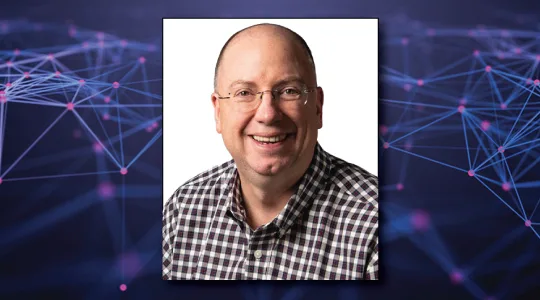
John Gilroy: To talk about this, we have Dr. Seamus Tuohy on the podcast. Dr. Tuohy is Principal Director of Space Systems for Draper, responsible for the capture and management of Draper’s civil and commercial space programs. Dr. Tuohy has been with Draper for over 23 years and is considered an expert on rendezvous and proximity operations, including work with the International Space Station, Cygnus, Dream Chaser, and other advanced systems for science and commercial missions.
John Gilroy: Dr. Tuohy, your CEO has said that it’s important that innovation people understand business and business people must understand technology. In many companies, there’s a problem that companies really don’t know how to manage innovation. Yesterday I was speaking with James Whitehurst, the CEO at Red Hat. He just wrote a book on innovation. So what’s the magic sauce? How does Draper do it?
Seamus Tuohy: Draper is an interesting organization, that we’re actually a nonprofit specializing in developing capabilities that go into enabling people to do new things and better things. And so part of the innovation is not only identifying the proper market to put your stuff in, that somebody wants to buy your capability or use it, but also showing them how it enables their systems to work better. So it’s not enough just to have technology.
Seamus Tuohy: And we actually separate those two words that seem to be the same, but they’re not. A technology is all the smarts that you put into something, but capability is something that enables you to do something new. In our case we try to help organizations, whether it’s a government organization or a commercial organization, to do new things that they haven’t done before, whether it’s going to the moon or delivering people or delivering cargo to the space station and returning cargo from the space station. So any time you do something new and you need an innovative capability, we then try to identify the technologies that would go into producing that capability.
John Gilroy: You’re in downtown Boston. You could swing a Red Sox hat and probably hit some PhDs from Harvard or from MIT, all kinds of smart people. But you’re known for being creative and original and finding out new solutions. So is it agile software development or always open to new ideas? How do you manage that innovation?
Seamus Tuohy: Well, actually it goes back to a founder, Charles Stark Draper, who’s credited with being the person who first could make practical use of gyroscopes and accelerometers to navigate. And from that foundation, it kind of informs everything we do to this day. We like to tell people we build things that work, which is really the big part of what we do. It’s knowing that the technology you’re going to develop and knowing that the technology going to put into something will work and enabling that to work to solve a particular problem. A lot of things that may go into attempts at things, they may not end up being very practical. We pride ourselves on being able to apply technology to develop capabilities that enable new practical things to work.
John Gilroy: So Draper’s a nonprofit, and it’s noted for developing state of the art guidance, navigation, and control systems. What’s changed in that area since the time of years ago with the Apollo missions?
Seamus Tuohy: The big thing that’s changed is that a lot of what we do on Earth relies on GPS. And when we develop systems, we either predated GPS or we also do work that doesn’t rely on that. And so a lot of the navigation that has progressed since the Apollo days have really leveraged GPS to a great extent, and beautiful systems. Could you have imagined years ago that you’d be able to, without any directions, to be able to go anywhere you want in your car and be given directions? All that comes through GPS. When you go to the moon, you don’t have GPS and so you still have to develop navigation technologies that do not rely on GPS that rely on sensing your environment, either by sensing your rotations and accelerations, or by looking at features of the thing you’re trying to get to, to navigate.
Seamus Tuohy: So what’s changed since Apollo is that on the Apollo mission, a lot of the navigation, the terminal navigation, this is when the vehicles were about to land on the moon, a lot of it was done by the astronauts themselves. They would look out the window and identify features, and they would pick landing sites to go to. As you got closer, the astronauts would then look at, is there a hazard, a boulder or a crater, that I don’t want to land into?
Seamus Tuohy: And they would redirect to go to a different landing site. What’s changed now is we can use sensors to do that. And the technology we have been developing recently is to look at how you would automate that process. Not so much to replace the astronauts, but to allow them to make better decisions, more informed decisions. It’d be safer, more reliable. So it’s cameras, it’s LiDARs, it’s radars that sense the environment of the moon, use it to navigate, and use it to land safely.
John Gilroy: Well, everyone over the summer watched the specials on Apollo and they saw them landing, but they didn’t realize how much a burden those astronauts really had, and manually complicated, trying to figure out where they’re going to land. That’s incredible.
Seamus Tuohy: A lot of people think of like, it was a very manual landing system. It was actually highly, highly automated. The flight computer that Draper built for Apollo could have landed the vehicle by itself. However, it wouldn’t have been able to do it precisely because it didn’t have the sensing ability and it wouldn’t have been able to avoid hazards because it didn’t have the sensing ability. So what’s actually changed is the load that we put on the astronauts to find a safe place to land and to pick it out and to recognize where they were, to read the map and the terrain to say, “That’s where I want to go.” That’s what we’re trying to change.
John Gilroy: Let’s go from Apollo to Space Systems Loral. I think you folks are helping them, the SSL folks, by developing technologies that can service government-owned satellites. Can you talk about that a little?
Seamus Tuohy: Sure. Draper has had a long history in doing space-based servicing, whether it was the support we gave to the Space Shuttle program when it serviced the Hubble Space Telescope, and programs we did with the Department of Defense, DARPA, in looking at how you would do it autonomously, so without the astronauts, in a program called Orbital Express. And so in all these programs, Draper’s expertise in robotics and autonomy, and particularly in rendezvous and docking that was pioneered by Draper for the Apollo program have come to be applied to these systems.
Seamus Tuohy: So the hardest thing about servicing a spacecraft is actually getting to the spacecraft and getting attached to the spacecraft so that you can work on it. If you’re a mechanic working on a car, since you’re in gravity, you have a firm foothold that when you turn a wrench you’re not going to turn. In space, that’s not so much true. If you attach a wrench to a bolt, you need to make sure that you’re attached to something else so that you don’t just spin around while you’re trying to turn the bolt. You actually are able to loosen the bolt.
Seamus Tuohy: And so we’ve been involved in all these programs for decades now in developing autonomous means to get to resident space objects, means to approach them safely and to dock with them safely, and also to operate on them safely without doing damage. And part of that involves when you have two objects attached in space, one object is going to control the other object and you want to make sure that you don’t do anything that will damage the other spacecraft. So you have to completely change your control system so that not only are you controlling your vehicle, but you’re controlling the vehicle you’re attached to. So it’s a specialty that Draper has.
John Gilroy: Well, this is a very complex problem, obviously, the way you described it. Do you think the whole business of servicing satellites will happen in the next two or three years? Do you think it’ll be improved?
Seamus Tuohy: It should because it’s kind of crazy the way we build spacecraft now, in that you spend all this money to build a spacecraft and then when it runs out of fuel or it has a part that breaks you throw it away. It’s kind of like if I went down to the auto dealership and bought a car, drove it off the lot, and when it ran out of gas, I left it and bought another one. Or it’s kind of like if an airline were to buy an aircraft and they get it fully fueled and they start flying it around and when it runs out of fuel, they just leave it and buy another one. But that’s what we do with spacecraft nowadays.
Seamus Tuohy: When we launch them, we launch them fully fueled, fully ready to go. We have primary systems, even backup systems, but when we run out of fuel or when one of the systems breaks and it’s no longer operational, we leave it in space as junk. So it really makes sense that you’d want to refuel systems to make them go longer or to repair even minor things that may cause you to lose your mission.
Seamus Tuohy: For example, a lot of satellites depend on solar power. And so they have to have these really large solar panels that collect enough light to provide electricity for the spacecraft. But because they’re launched on a launch vehicle, they launch folded up. And so sometimes on satellites, when they try to unfold them, they get stuck. Either a bad mechanism or a bad wire, and really all it would take is for somebody just to tap it, and then the spring would then fully deploy the spacecraft.
Seamus Tuohy: And so the difference between having a fully operational, highly profitable spacecraft or a total loss in an insurance claim is the ability for someone to go up and just tap the solar panel. So it really makes sense to have that capability to do that. A lot more space systems will be able to operate a lot longer and to make people a lot more money or provide a lot more information to scientists or to our national security systems.
John Gilroy: From what I’ve read as far as detecting things in space, the Draper engineers have developed a solid state gyroscope that’s highly advanced. I think it’s called the interferometric fiber optic gyro. That’s pretty impressive, huh? Called the IFOG.
Seamus Tuohy: It is, yeah.
John Gilroy: Is this the key to understanding all these precision in space?
Seamus Tuohy: For every problem, there’s a particular tool, right? And so we pride ourselves in developing gyroscopes. Initially, to get a very accurate gyroscope, they were mechanical devices, and mechanical devices with moving parts. It’s kind of like Swiss watches. And so even though they were very precise, performed very well, moving parts or mechanical parts, eventually there’s wear and tear and they’ll wear out. The beauty of a fiber optic gyro is that it doesn’t have moving parts.
Seamus Tuohy: We actually utilize fiber coming from the cable broadcast industry. They lay fiber to carry TV signals, and we use that to measure the differences in how light is transported in the fiber based on when the vehicle rotates. It’s a scientific phenomenon, but the value of it is that we can get very precise measurements of the vehicle moving without having to have moving parts. And so it’s something that once you build it, you put it in the box, it’s going to last a very long time. And in particular, like we talked about before about spacecraft, we tend to launch them and leave them alone. So it’s a big breakthrough when you have these parts that don’t wear out.
John Gilroy: Earlier I mentioned Red Hat, and they, of course, operate in a virtual world, virtual servers, and virtual environments all the time. I think that much of the modeling and simulation to complete the design of this IFOG occurred in virtual space. Tell us more about that, and then how does it work?
Seamus Tuohy: Modeling and simulation is critical to developing space systems because we don’t go to space very often. So it’s not like when you build a car or an aircraft that you can … If I’m building a car I could take it out on the road and test it a little bit and then bring it back in and fix it, put it out, bring it back in. Spacecraft, once you launch it, it has to operate, has to operate the first time you turn it on.
Seamus Tuohy: So the reason you depend heavily on modeling and simulation is you’re trying to predict everything that could go wrong with a spacecraft, you try to predict the environment that the spacecraft is going to operate in, and you try to make sure that it’s going to work the first time you need it to work. There are no second chances in a spacecraft. So if you’ve ever had a situation where you go out in the morning and you try to turn your car on and it doesn’t start because you have a dead battery, we can’t have that in space. So modeling and simulation’s critical to understanding the environment that a spacecraft will be in and the systems that we develop. How does it operate in that environment?
John Gilroy: You know, Seamus, thousands of people from all over the world have listened to this podcast. If you are listening and would like to get alerts when new episodes are available, go to Google, type in Constellations podcast. You’ll wind up at the Kratos site, and just give us your email and send you new and better interviews and all kinds of interviews about all kinds of topics.
John Gilroy: When you think of GPS, I think it’s our typical go-to tool for navigation. But it does have some strategic weaknesses. So how can autonomous vehicles navigate without relying on GPS?
Seamus Tuohy: Before we had GPS, if I wanted to give someone directions of how to get someplace, I would use landmarks and features. I would say, “Go down this street, take a right. I don’t know the name of the street, but there’s a Dunkin Donuts on the corner. Take a right, take another left.” And so you would use the information you had available to you to describe to people where they can go. And that’s what we used to do. Ships used to navigate without GPS. People used to navigate without GPS. And so going back to that, the stars are still there, features are still there. The question is how you can develop sensors in software that can automatically determine the features, sense them, make sense of where they are, and to provide a position update.
Seamus Tuohy: We use an optical camera and look out on a scene, and then we move a little bit and take another picture and we compare the scenes to see how things have moved over that period of time, and that provides us velocity. Or what we’ll say is, instead of trying to determine where we are latitude and longitude, we might say land 10 feet from this feature that you can see in a radar image.
Seamus Tuohy: So we go back to what we used to do before GPS, which is using features in our environment that you can measure and sense and using software and algorithms and machine learning to make sense of those features to determine where you are. So what’s changed is that instead of just relying on your eyes or seat of the pants, we have sensors that can gather the information. We have computers that can process the information much quicker than we can, and so we can provide much more precise estimates of our position even without GPS.
John Gilroy: Draper has also patented a design for an astronaut space suit called a “take me home” button. What the heck is that all about? You want to cancel the mission, or what?
Seamus Tuohy: So when astronauts go outside of the space station, they’re in an environment which is very hostile to them. They’re enclosed in a spacecraft, which is a space suit. What you always worry about, though, is the astronauts becoming either disoriented or some problem presenting themselves. The most important thing for them to do is to get back to the airlock so they can get back inside the space station to recover where the environment is much more supportive. So the take me home button would be something where there’s a navigation system that is continually sensing where the astronaut is related to where the airlock is. So it always knows the path home. It always knows the best way for the astronaut to get back to safety.
Seamus Tuohy: So it provides an ability that if an astronaut gets in trouble, gets in distress, or gets disoriented without having to worry about, do they remember where they are, do they remember how to get back or having to get commands from the ground to find themselves to place themselves, they can hit the button and they’ll get an indication of where they need to go back to the airlock. It’s almost like you wish you could have your kids have it when they go out and play, that you don’t want them to get lost. You wish you could have something that would tell them, “If you ever are concerned about where you are, hit this button. It’ll tell you how to get home.”
John Gilroy: You’ve got a PhD, you’ve got some patents, you’re involved in this industry. You must be looking at what’s going to happen the next few years. Where do you see the future of space going?
Seamus Tuohy: There are two really exciting things in space. One is, you could almost call it the privatization of earth orbiting space, that there are a lot of spacecraft going up that are smaller and more distributed across the earth and can do a lot of interesting things in terms of communication. For example, creating an internet that’s in space and have internet smart devices that are in space. On Earth, we tend to refer to our smart devices as belonging to an internet of things. You have a smart fridge, a smart thermostat in your home.
Seamus Tuohy: Well, imagine having smart internet of things in space, and it’s called space IOT or space internet of things. And it will completely revolutionize how we utilize space and how space benefits people on earth. Right now, people can barely function without having space systems. I mean, people don’t realize this, but you would not be able to buy gas using a credit card unless you had space systems. The GPS timing is what is used for transaction management to buy gas. So as the space IOT things come on line, we’re going to find ways to make our life better on Earth with more information, better information, more insightful information, more information that’ll help us live our lives better.
Seamus Tuohy: The second thing is the continued exploration of the moon. It’s our nearest neighbor, it’s the most easily accessible place off of earth, and we’ve barely begun to understand how it could impact our lives and what we do. And so the programs that NASA has, and programs that private entrepreneurs have, to go to the moon is very exciting. Think of a day in which people go to work at the moon, people live their lives off-planet on the moon. Since the station started having a crew, we’ve always had people in space who are not living on the surface of the earth.
Seamus Tuohy: So people born in the last couple of decades, people under the age of 30, have never known a time in which we did not have people in space. Think of the next generation where they may not know a time in which we didn’t have people living and working and utilizing the moon. It’s just amazing to think about the things that are going to come in the next decade if the plans work out that our life and our understanding of how we do things will completely change, either through a utilization of low earth orbit with the space internet of things, or actually living and working on another planet, planetary body, the moon.
John Gilroy: Earlier we talked about innovation, and you’re ground zero for innovation there. So what new technologies are on the horizon that will help make this possible space community thrive?
Seamus Tuohy: We think the biggest thing is autonomy and using autonomy to make things that are safer, more reliable, and more routine. One of the things about going off to the moon is that there is not an infrastructure there like you would have on earth, so you have to kind of bring along your infrastructure. There are no airports, there are no bus depots, so whatever we do there has to kind of be brought with us.
Seamus Tuohy: And so before you start bringing thousands of people, autonomy is how you will achieve these great advancements. It’s being able to have a very few people go but they can do many things because they are dealing with systems that are autonomous, that add to their safety, add to their reliability, and also to convince more people to go it has to be something which is routine. And I think that through these autonomous systems, machine learning, and other technologies like that, we will make travel to the moon and work on the moon to be safe and routine.
John Gilroy: Dr. Tuohy, you are a recognized expert on rendezvous and proximity operations, and you’ve had a key role in all of Draper’s successive rendezvous programs including the shuttle and Dream Chaser. Dream Chaser has been built to support missions to the International Space Station. Well, if you look at NASA’s 2019 budget, it looks like the Space Station is funded to 2025. So after 2025, the Space Station experiment, what are some venues that Dream Chaser could support?
Seamus Tuohy: Dream Chaser’s a very capable vehicle. When it flies, it’ll be one of the most, if not the most, capable vehicles ever developed, primarily because it can come back and it can return things. So after the lifetime of Space Station, where will we put our experiments or things we want to send up to space that actually come back? Dream Chaser will be one of those, and so one of the challenges of space is that if I want to do something in space but I want to benefit from it on earth, I launch it and it never comes back.
Seamus Tuohy: Dream Chaser, when you launch it, it will come back and it’ll come back safely and it will land at an airport. It’ll land on a runway next to the laboratory where you want to put your experiments. You don’t have to go gather it out in the middle of the ocean, so it comes back like an airplane. So things that you would design that you want to do in space, but you want to get those things back, it’s essential that Dream Chaser would exist.
Seamus Tuohy: And in particular countries that aren’t currently spacefaring nations, it provides a great environment for them to put things into space because everything else is supplied. The launch is supplied, the vehicle’s supplied, the pressure vessel. So when you’re put into Dream Chaser, it’s like being put into a ready-made laboratory with the added benefit that you get to recover it when it’s done, you get to fix it or maybe do it again and repeat and keep flying it over and over again.
Seamus Tuohy: There will also, we hope by that time, be other locations, other destinations in space which will need supplies brought to other space stations, whether it’s another government space station to replace Space Station if the U.S. decided to do that, or through a private enterprise, low earth orbit. We’ll transition to that. You can imagine a day in which there are things like hotels in space or tourist destinations in space, and they will need to be resupplied by systems and also have systems come back, so your luggage isn’t lost, for example. So if stuff goes up to these space stations, they’ll have to be brought back, and Dream Chaser can do that.
John Gilroy: I’m sure many of our listeners can’t wait for the next chapter in the adventure of Dream Chaser. It’s going to be very exciting in the next four or five years here. Well, Dr. Tuohy, unfortunately we are running out of time. I’d like to thank our guest, Dr. Seamus Tuohy, Principal Director for Space Systems for Draper.