Transcript:
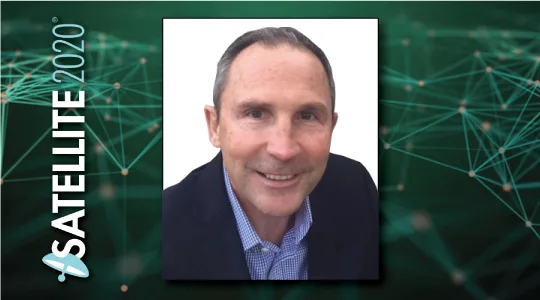
John Gilroy: Welcome to Constellations the podcast from Kratos. My name is John Gilroy and I’ll be your moderator. Our guest today is Dan White, EVP, America’s region for Satellite Ground Network Services, Swedish Space Corporation. Well here we are on the floor of Satellite 2020 looking around going from booth to booth, see what’s going on. In this particular interview, we’re going to discuss the future of networked antennas and global satellite constellations, and what a great guest we have for that. Dan has a bachelor’s degree and a master’s degree in electrical engineering and on top of that, 30 years’ experience in engineering and program management within the aerospace industry. Dan has been with the Swedish Space Corporation since 2017 and we told you his role. He’s EVP, America’s region for Satellite Ground Network Services for Swedish Space Corporation. He is responsible for sustaining and growing the customer base within North and South American markets. Dan, you having fun at the show?
Dan White: Absolutely having a great time. Great show.
John Gilroy: With the North and South- that’s a pretty big area.
Dan White: Yes it is.
John Gilroy: Pole to pole.
Dan White: Well we have a few people helping us obviously, but there’s a lot of activity in the U.S. And then Canada is obviously evolving as well as Latin America.
John Gilroy: Yeah. Well the way I understand it, I think the Swedish Space Corporation designs ground communication network solutions that support aircraft on lunar missions. It seems that SSC has been involved with lunar missions since the Apollo program back in the 60s. Can you talk about this journey a little bit?
Dan White: Sure. So we started supporting Apollo from our site in Santiago and we were a backup communication to the module all the way to the moon and during its orbit and return. And so, the Apollo mission ended in the seventies, so we continued supporting various agencies around the world with science missions and research missions to the moon. And most recently we did the SpaceIL mission, which is a commercial mission that went all the way to the moon about a year ago and unfortunately crashed upon landing. So that being said, for maybe 50 or 60 years, we’ve been supporting various levels of lunar activity with our ground network around the world
John Gilroy: From a retrospective here looking back, so what’s changed since the sixties?
Dan White: Well, I would think what we’re seeing today is the technology is certainly changed. And then the desire for data, just like you have on your phone, 10 or 15 years ago, you didn’t know all of the information that you could put on your phone and all the applications you could use on your phone. So now people are seeing when they get into LEO and GEO and to lunar, the demands for data and information are much, much greater, which is driving data rates. So where it was kilobits per second in the sixties and seventies it’s megabits per second now in some of the requirements we’re seeing. And so again, SSC is well positioned for that. We have lots of large assets around the world at our sites, up to 13 meter antennas that can provide both TT and C communication and mission data communication at the lunar surface.
John Gilroy: So we’ve got the need for speed, we got the desire for data.
Dan White: That’s exactly right. And we try to solve both of those.
John Gilroy: They’re both pretty hard problems. So you look around the trade show, a lot of different companies here. What kind of a company would be looking for lunar communication services? Commercial and business applications so far?
Dan White: I think today it’s mostly the institutional organizations looking for science. Some research, certainly the NASA and ISA are now participating in the gateway program. And so you can see this as a stepping stone for the work that we’re going to do on our way to Mars. But I think all of that will lead to commercial opportunities where commercial organizations will be needed to supply goods and services, maybe shuttle people to and from, maybe there’s opportunities to do tourism to the moon surface and back. So I think in the next five years we’ll be establishing the gateways and then in the five years beyond that, more commercial opportunities.
John Gilroy: Well back in high school I learned Roman history and they talked about cisalpine region from ancient Rome. Now there’s something called the cislunar orbit. Is that something that’s out there? What the heck is that anyway?
Dan White: The cislunar I think that’s just beyond the lunar orbit.
John Gilroy: Beyond the lunar orbit.
Dan White: And so we’re doing missions at the Lagrange points as well. And again, those require the big large apertures so you can support the data rates required.
John Gilroy: Your company is currently developing technology for a new flight ticket service for sub orbital space flights.
Dan White: Yes.
John Gilroy: Can you tell me how this would work and why someone would be interested in using this service?
Dan White: Sure. That’s our sub orbital express program. What we’ve done is basically taking the payload capacity of a rocket and tried to partition that into smaller units and, and call it smaller pods that can be distributed to different places on orbit. And so we try to sell that to basically fill up the entire payload capacity with more than one customer to provide flexibility. We believe that the whole goal of the launch industry should be to provide flexibility for people that need to get to space in an economical manner. And so we’re trying to divide up the 800 kilograms of payload into smaller chunks so people can share missions.
John Gilroy: And I think you walk around the show, you see small, sat vendors, different types of satellites coming out there. I mean, you really have to be more flexible. This is the word I think from the 1960s… This word is flexibility. It’s like back in the sixties we did it this way and this way it works. Now it’s 10 hours, 10 different flavors.
Dan White: Yes. Yeah. I think flexibility is the key. We’re trying to be as agile and flexible as we can, both on the satellite ground side supporting lunar as well as our suborbital express where we’re going to provide launch capability within the next couple of years.
John Gilroy: Now, one of the biggest industries facing most of the people at the show is launch. So how can industry make them more affordable and readily accessible by others?
Dan White: Well it’s really about, as you said, flexibility, agility and cost. We’re seeing lots of efforts with new rocket launchers coming in. They’re much more competitively priced. I think they’re targeting a lower payload capacity and we’re not building rockets to launch 6,000 kilogram payloads anymore. We’re talking 300 and 400 kilogram payloads. You’re seeing lots of success in that with companies like Firefly, Electron, Rocket Labs and so I really think it’s about cost, access to orbit and the flexibility of companies to develop that service.
John Gilroy: Everyone can take and say, yeah, we’re flexible, we’re agile, we can adapt and change and look at situations and change the next two or three weeks. But there’s always challenges in that area. And so what are the challenges here for the ground stations? How can they be relevant in the future?
Dan White: Well, I think we really have to pursue higher data rates. As we talked about on the moon, we’re seeing higher data rate requirements everywhere we look and it’s really the need for information. Once you get in space and you have an asset in space, you spent a lot of money and risk to get it in space. You want to get as much information to the ground as quickly and economically as possible. So we’re looking at higher frequencies, we’re looking at different technologies, things like optical, different modulation characteristics to basically put more data in the data stream.
John Gilroy: Obviously the company’s based in Sweden. Is there any particular advantage they have to being that far North or having the government? There’s got to be some advantages in that.
Dan White: Sure. The Esrange Space Center, which is our flagship site. That was the original site of Swedish Space Corporation back in the early sixties.
John Gilroy: Oh it’s hashtag E-S-R-A-N-G-E, that’s what the hashtag is.
Dan White: Yeah. That’s what the hashtag… #Esrange. And so because it is polar, if you’re launching a sounding rockets into a sub orbital polar orbit, that’s a great location from which to do it. That then transitioned to ground communications. And if you are trying to track a polar satellite, having a site above the Arctic Circle allows you to catch every orbit as that satellite goes around the world. And so there might be 16 orbits and we can see, you know about 15 each day, which is very economical if you’re trying to maximize the amount of time contacting the satellite.
John Gilroy: I went to your Twitter feed @SSCSpace and I saw #Esrange and I saw it, didn’t know what that was.
Dan White: Yeah.
John Gilroy: I also saw #assetstospace. Now it makes sense what you said in the last 10 minutes and it all puts it together, isn’t it?
Dan White: Yes, exactly. We’re trying to work our social media.
John Gilroy: There’s some method to the madness here, huh?
Dan White: We hope so.
John Gilroy: Dan, thousands of people from all over the world have listened to this podcast. You can go to Google and type in Constellations podcast, get to our show notes page here. You can get transcripts for all 71 interviews. Also, you can sign up for free email notifications for future podcast. Listen to folks like Dan talk about satellites and everything else. So Dan, how do you think ground stations should adapt for payloads?
Dan White: I think that we have to really go back to the higher data rate. We have geographic locations around the world. I think we have that fairly well covered. We can capture most satellites most of the time satisfying our customer needs. It’s really the desire to get more data down on a given pass. And the only way to do that is with higher modulations, higher frequencies or different technologies. And so we’re pursuing all three at this time.
John Gilroy: All three. That’s hard to do, isn’t it?
Dan White: Yes.
John Gilroy: So what kind of requirements should ground stations anticipate here in the next few years?
Dan White: I think you can see that they’re going to want both RF and optical capabilities. Optical can allow you to get more data to the ground. The RF is a good backup in case there’s a cloud in the way and the optical telescope can’t see the satellite. I think it’s flexibility and agility. We need to be able to address our customer’s needs when they put new satellites in space, we want to be able to, I’ll say onboard those satellites to our network in a very easy way. It can’t take weeks or months. It needs to take days to hours or days to get into the network. So we’re looking at sort of common standards to integrate into our network. We’re looking at common schedulers to make access to the capacity easy. And then we’re looking for technologies that drive higher data rates so we can get more data to the ground quicker.
John Gilroy: In United States trucks always have a LTL less than load. It’s almost like you have a 53 foot truck here and you’re trying to be absolutely flexible and use all that you have to fill up that truck, but you’re trying to fill up the payload.
Dan White: We have 1,440 minutes in a day and so that’s all an antenna can look to a satellite and so we’re trying to make sure that as many minutes as possible are full on that antenna. So you have to know where the satellites are. They’re obviously they’re in an orbit and so you can only see one satellite at one time. To that end, I guess I would talk about, we’re also looking for multi beam antennas to be more flexible so that a given aperture can connect with more than one satellite at a given time, which again will help get more data to the ground quicker.
John Gilroy: Yeah, 1,440 optimizing them, I think most people are trying to optimize them in their own life.
Dan White: Exactly.
John Gilroy: That’s all I know. Let’s talk more about optical here. So do you see it becoming more relevant?
Dan White: Yes, absolutely. It’s… You can generate a higher data rates with optical, the technology, it’s being developed. I wouldn’t say it’s 100% mature yet, but we have a partnership with a Bridge Comm to install three of their optical terminals at our sites around the world. And then we would basically offer up an RF solution and an optical solution to those customers to again, maximize the amount of data and the reliability of that data coming down from space.
John Gilroy: Again, optimizing like the mathematician, say optimizing those numbers and giving choices and options for them.
Dan White: Maximum efficiency to fill the capacity is really our goal in life.
John Gilroy: Well we just touched on optical. What about phased array antennas?
Dan White: Well, phased array antennas, I guess I would look at more multi beam tracking antennas that it’s not mechanical tracking but electronic tracking antennas. Absolutely we’re looking at those because if you only have so much real estate, you want to try to get as many satellite beams out of that given aperture as you possibly can. And so the phased array fits into that need. The challenge today is the cost and performance that you’re getting out of phased arrays. So we’re working with some antenna manufacturers today to see what might be available, where their roadmaps are going and how that might fit into complimenting some of our parabolic antennas that we have in the field.
John Gilroy: Let’s talk about complimenting optical networks. Go back to those, I mean, how do you go about doing that anyway?
Dan White: Well, so we would basically at the same site you’d have an optical ground station and you’d have an RF ground station and both of those would be connected into our network. They’d both be scheduled into the network and they would both basically track the satellite. And if a cloud came in the way the optical wouldn’t work, so you’d be getting less data down, you’d switch over to the RF, still maintain a data stream, albeit at a lower rate and again, maximizing the amount of data transfer during a given pass. And so we would basically just integrate optical and RF into our network.
John Gilroy: Now I’m in the world of software development and they talk about software maturity models and after a certain point in software, this is what happens. And when I look at your company, I was at your website this morning, it talks about the world of advanced space services. We don’t get advanced unless you’ve been there a few decades. It can understand what’s going on and really many of these topics we talked about, these are the big leagues. I mean this is really high dollar value, high volume and optimizing this at a very high level.
Dan White: It is rocket science.
John Gilroy: It certainly is. It’s advanced and it’s difficult. So speaking of difficulties and advanced difficulties, where do you see the future of satellite systems?
Dan White: I think that you’re going to see more and more sort of earth observation space situational awareness. I think as you get more and more objects in space, people will want to know where are those objects, what are those objects doing? I think as climate change happens on earth, we’re going to want to monitor and look at mitigating some of those changes. And so you can do that from space much easier than anywhere else. I think telecommunications is certainly important. You’re seeing the mega constellations like SpaceX and OneWeb and Starlink and Amazon that try to provide ubiquitous communication across the globe. And then ultimately we’re going to be going beyond the moon and we’re going to be going to Mars. And so everything that we do day to day on Earth is going to have to happen on that trip to Mars. So there’s going to have to be space systems that support that. And that could be docking, in-service refueling. Maybe it’s even people transfer. Maybe it’s taxing, who knows. But I think it’s continuing to evolve. It’s a fascinating industry.
John Gilroy: Let’s go from Mars back down to geo here.
Dan White: Yeah.
John Gilroy: So how do you see the future of tracking objects that are out past geo?
Dan White: Well, we don’t do too much of that, but I think that people will always want to know what’s going on sort of inside the geo belt and as we now go closer and closer to the moon, we’ll want to know what’s going on closer and closer to the moon. So technologies exist with both radar and optical where you can track those objects. That’s not really our business line right now. Although we are investigating tracking some objects in the LEO regime because there’s so many satellites being launched in LEO in the next decade. We think that there’s a concern there with the amount of debris that it potentially creates.
John Gilroy: I used to write down the number. I can’t write down the number anymore.
Dan White: Tens of thousands, tens of thousands.
John Gilroy: Many. This is one of the things where you have well-respected experts come up with a number, another comes up with another number, and you go, well, it’s going to be many, huh?
Dan White: Like to go to current events, it’s like coronavirus. Today, there’s 500 tomorrow, there’ll be 700.
John Gilroy: Who knows? Nobody knows. Well, Dan, unfortunately we are running out of time. I’d like to thank our guest, Dan White, EVP America’s region for Satellite Ground Network Services at Swedish Space.
Dan White: Thank you, John.