Transcript:
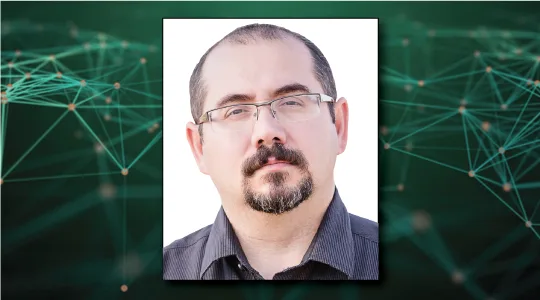
John Gilroy: Welcome to Constellations, the podcast from Kratos. My name is John Gilroy, and I’ll be your moderator. Today we’re going to take a different look at satellites in technology and see how they’re impacting agribusiness. With us is Wade Barnes, co-founder and CEO of Farmers Edge, a company focused on precision agriculture. The term itself has been around a while, but today we have the perfect storm of satellites and technology to put the accuracy down to a centimeter into the hands of farmers. The phrase “doing more with less” is certainly bandied about in the national world. However, there’s a limited amount of arable land and consistent increase in mouths to feed. Now, Wade, I’ve heard all kinds of terms to describe the business you’re in. I’ve heard it called precision farming, precision agriculture, digital farming. What’s the right term? And how is it different from regular farming?
Wade Barnes: Well, I mean, I think there’s a progression. So from what we would call conventional farming, there was a movement towards precision, which was the use of GPS technology, which essentially help drive the tractor straighter in the field. And then people started to use precision technology to more precisely place fertilizer and seeds. And the by-product of that was a whole bunch of information and data. So there was yield maps and soils information. And then there was a progression towards digital. And so Monsanto acquired a company here a few years back called Climate Corp that was essentially ran by a bunch of ex-Google guys that were creating kind of a derivative crop insurance using farm data. And so now you’ve seen a path of these byproducts that come from precision ag, this huge amount of data set to utilize that information to really zone in and help farmers make decisions.
Wade Barnes: And it’s sort of the big data revolution in agriculture. So I would say Farmers Edge has sort of essentially gone through that same progression. We were a precision agriculture company that helped farmers utilize the precision technology that was embedded in their farm equipment. And then we evolved, though I would call a digital company and so a digital agriculture. And I think at times in the marketplace the difference between precision and digital gets a little bit skewed. So we would consider ourselves a digital company. We know John Deere is really focused on the digital space. Bayer/Monsanto is really focused on the digital space and we are too, and those are our kind of main competitors in the marketplace. And so we enjoy taking on these big heavyweights in ag, but we have a little more level playing field when we take them on the field of digital ag.
John Gilroy: Well, let’s make a transition here, go from the farm to the food itself, and people who eat the food. By 2050, some estimates are that there’s going to be nine billion people in the world. And this is going to force farmers to grow enough to feed two billion, more people. So what has to happen to enable that increased food production?
Wade Barnes: Well, I think there’s two fold issues that are happening. One, an increase in the need for food production, but an increase with being grown under sustainable practices. And the demand from the consumer to have a better understanding where his food comes from. And so digital fits into this. And so one, it helps farmers make better decisions. And sometimes those decisions are using pesticides and fertilizers and GMO technology, but using them in a really, I would say, environmentally friendly way to get the most out of it. The second part is putting traceability in, that at the end of the day, consumers want to know. If you’re an organic consumer, you’re going to want to make sure that you have a really clear understanding of the type of products have been used on that food.
Wade Barnes: And I think there’s also a really good story to be had for farmers, because I think farmers at the end of the day are actually a lot of times sort of painted with a bad brush on the environmental side of things. And farmers actually do a really good job of being environmental stewards because it’s good business for a grower to be a good environmental story. It’s not good business to waste fertilizer and put too much on. And so when you’re able to utilize technology to create this traceability and transparency, a consumer feels better and the farmer does. So I think in order to feed people in a sustainable and responsible way, I think technology is going to play huge role going forward.
John Gilroy: And I think one factor that is really important and more and more important in the world to come is water. And so satellite technology can assist farmers by using precision methods to use the correct amount of water for their crop. Can’t it?
Wade Barnes: Yeah. I mean, we’re doing that right now, and there’s multiple different ways, but one ensuring through technology that the right variety meets the right parts of the field. But if you look at specifically when it comes to water and irrigation through satellite imagery, we’re able to identify which sprinklers on a pivot irrigation system that is being more efficient. Because we can pick these subtle differences up in the field, and this might be 30 centimeters different.
John Gilroy: Well, 30 centimeters. That’s amazing that satellite imagery can go down to that small level.
Wade Barnes: One of the real interesting parts from space is to be able to see these really sort of fine details that then suddenly a grower can go out and make a difference. And again, it’s saving the grower water, which is economically smart for him to do that, but it’s also increasing his yields because the other side of it, if he’s not putting enough water on he’s reducing his yield and he’s not making good use of the other inputs. So it’s a really important thing, and that’s one of the progressions that we’ve seen in satellites. I’ve been in this business for a long time and we tried to utilize satellites in the early stages to help make in-season agronomic decisions. And with Landsat, it was a really difficult because of cloud cover. So farmers, agronomists they went away from that and there was a focus towards drones, but then people realized that drones are really expensive.
Wade Barnes: Even though they don’t seem that expensive, that it might be $2,000 for a drone. It’s the cost of having to operate that drone and put teams out there. And again you’re very reactionary to it because you have to know there’s a problem in a field to go out with the drone. As these microsatellites have come in and where you can get data almost every day. That has just changed the landscape for making kind of in-season decisions with technology. And that’s really been a big part of what we’ve been doing. We incorporate this type of satellite data inside our tool set that uses soil moisture probes, and data collection and farm equipment and weather stations. But it’s a critical component to giving a grower a true vision of what’s happening in his field on a daily basis.
John Gilroy: Wade, the way you understand it is that precision agriculture includes satellite, earth observation, artificial intelligence, big data, all kinds of things. So what are the challenges that farmers face when trying to integrate these technologies into what someone may call traditional farming?
Wade Barnes: Well, the big challenge I think is that you’ve got, I’ll call it, more traditional precision ag, if a grower owns a tractor or combine. A lot of this precision technology is inside that equipment. So call it, the hardware element is very available to a farmer. The difficulty is taking it from a hardware perspective and actually implementing a strategy. And so you’ve had this huge influx from Silicon Valley, lots of different startup companies trying to utilize information and data to help farmers make decisions. The issue that you have is that farmers will probably make 40 to 50 key decisions throughout the growing season. And what he doesn’t need is an app that helps them make that one individual decision. He doesn’t want 40 apps. He wants one place for his data to go, that can do an analysis that then helps him to make that decision and then be connected into his business partners.
Wade Barnes: And so the big challenge that a grower has is which technology do I pick to use? Which one’s going to have some longevity? And how do I incorporate it successfully onto my farm to get a payback? And that’s been a challenge because it’s a really noisy space. And everybody’s coming out with a shiny app that says, “Well use mine, and it’ll be better on this than that.” And so growers have to find a way to cut through this noise, pick the right digital partner and be committed to the technology. And then also be able to ensure that the technology partner you pick and showcase, what the payoff actually is. So you understand there is a return.
John Gilroy: Let’s go from apps to satellites. And when you think about satellites and earth observation satellite, revisit times and ground sample distance were once drawbacks with respect to satellite imagery, for most of these agricultural projects. Have the newer earth observation satellites mitigated these issues to the point where satellite imagery is a key tool for precision farming?
Wade Barnes: Night and day difference. I mean, I would say it’s kind of funny because five years ago, satellite was a bad word. The problem you have with a satellite, when you’re a farmer and you’re able to utilize and have an image of your field that showcases a production problem. It’s game changing for you. I’m a farmer, I’ve had that experience. Then what happens is the farmer wants to use it more, but then you had the frequency issues that would come with previous satellites and cloud cover. And so growers got quite frustrated by that. And they looked for different places to go, whether it be onboard sensors or drones.
Wade Barnes: With the introduction of kind of new wave of satellite technology and with the high-frequency and essentially the more bands. All of a sudden now, I would say the industry, including farmers and industry people are seeing the opportunity again. Taken awhile because I think it’s scarred agriculture for a while. I would say the other part that’s been difficult for ag in satellites is that satellite companies are a little bit addicted to government contracts. And agriculture is, call it, a much more lower-cost sort of sector. And for a farmer I mean he only has so much margin. And so they’re also needed to be a way of higher frequency, better product, but also at lower costs. And I think that the new constellations that have gone up it’s really sort of achieved that. And I think we’ve really seen I would say a change that’s going to create a much more significant adoption towards satellites.
John Gilroy: I want to delve into this whole idea of the decision-making. So farmers have to make decisions. They get satellite imagery, artificial intelligence, weather information. How do you juggle all those three together? And how does your company help them make those decisions?
Wade Barnes: Well, I mean, so part of it is as obviously satellite plays a part with the other sensors that we have, but I mean, the best way that I give an example of that is that we have change detection that’s built into our platform. I’ll use an insect, there’s an insect that we call cutworms that when the crop is really small will come up and chew off the plant. And they start to eat the plant sort of in a circle. And then on a large field say in the Northern U.S. or Canada, that field will be as much as four or 500 acres. And so an agronomist can’t really cover all that ground to find where these cutworms are. And so two things will happen. Either, a grower will make a decision to spray insecticide and spray every single acre just in case. Or he’ll wait and hopefully scout and find areas of infection.
Wade Barnes: And then once he knows he has an infection, he’ll spray every acre, even though 5% of the fields are infected. And really what satellite … This high-frequency satellite imagery connected to a digital platform that’s utilizing machine learning, what it does is it starts to send alerts out to the grower that you’ve got the right type of weather conditions conducive to an insect outbreak or a disease outbreak. When the satellite flies over there taking a picture and then showcasing to the grower where these areas of infection are and guiding him to go out and spray it.
Wade Barnes: And that’s a significant change for a farmer because the farmer is generally protecting himself and he’s having to spend a lot of money and spray lots of acres just in case. And what you’re able to do is pinpoint with really, really strong accuracy, where there is a problem and allow a grower to react to it. Historically with satellite imagery, you were looking at a problem that you had, and then you would think about the plan for it for next year. Whereas these high-frequency constellations, you have a tool now that allows you to react and do something about it in the field that three years ago, we just didn’t have.
John Gilroy: Now earlier you mentioned constellations of satellites, and there certainly is a growing number of EO satellites and they’re generating massive amounts of data. And at one time collecting the data was the challenge but now I guess the challenge is analyzing the data and using it to make decisions. So who does this analysis? And more importantly, who owns the data?
Wade Barnes: Well with the partnerships that we have, and we’ve built our own IP to do a lot about work now. I mean, we’re a little more tech-focused now that some of these satellite companies obviously are more than willing to build that IP and work with customers. We like to internalize that IP and protect that. So I think it’s really sort of user-dependent. And then I guess every satellite company thinks about their data sets and the ownership of it in a different way, I guess. I mean, our view is that when it comes to farmers’ data, they own their data. We own generally the derivative product that’s created from it.
Wade Barnes: But data ownership at a farm level is becoming a hot topic. Whether it be from satellite pictures to equipment information, to soil data, because I think people are starting to understand that data can create a significant amount of value. And people certainly don’t want it to fall into the wrong hands. So that’s a topic that I think continues to heat up. And certainly digital companies like ourselves need to be pretty pure on which side of the fence you’re on data ownership.
John Gilroy: Wade, thousands of people from all over the world have listened to this podcast. If you’re listening now, you can go to Google and type in Constellations Podcast, and you can get to our show notes page. There, you can get transcripts from all 77 interviews. Just like a book also, you can sign up for free email notifications for future podcasts and great guests like you. Earlier in the interview, you said that five years ago, satellites was a bad word for farmers. What about five years from now? What kind of changes do you see happening in the world of technology for satellites and farmers?
Wade Barnes: Well, I just think that when you see agriculture and the progressions that happen. So I’ll use a good example. When GPS technology came in, kind of mainstream at a farm, and I knew farmers that had planted their crops without GPS for 20 years. And the moment they started to utilize GPS, when the GPS quit working for whatever reason it was they would literally stop their planter and wait for it to get fixed, because it became such an embedded part of their management system. And I think that this is where you’re going to see components like satellite imagery will be very similar. Once a grower relies on that dataset to essentially monitor and protect this crop. One, his expectations go up. So what was great yesterday needs to be better tomorrow. And for the companies that are, that are building newer constellation, more frequency, better sensors. That market will evolve.
Wade Barnes: But what I think, you’ll see is you’ll never see growers go backwards. And once you utilize technology to enhance your business or your life, you don’t go backwards. So I think the table is set for satellite to make a big impact in production agriculture. I think the challenge will be pushed out to satellite companies to continuously bring better products to the market at lower price points.
John Gilroy: So Wade, you mentioned about technology evolving. So how is this evolution is going to impact crop production and quality?
Wade Barnes: Well, I think as technology gets better, and I think when we talk about technology, I’m talking about AI, better data analytics. I would say better decision-making. You’re going to see increase in production and you’ll see increase in production in the form of lowering costs. You will also see the ability for food companies or consumers to get, I would, say much more pinpoint accuracy about the quality of what they want and how they want to produce. And because they’ve never had such connectivity to the primary producer. So I think you’re going to see a lot more direct consumer, food company contact to the primary producers than you’ve ever seen before. Which I think is really exciting.
Wade Barnes: And I think it’s part of the digital disruption. Technology’s enabled the consumer to get closer to the manufacturer and there’s just more pressure on the middle people. So I think the middleman will need to evolve as well, but the more confidence that consumer has in the food system, the better it is for everyone. And I think technology is going to enable that, which I think is really exciting for everyone.
John Gilroy: Wade, you just gave us some insights on the technology’s impact on crop production. Are there other aspects of agribusiness where technology can reduce costs or maybe speed time to market?
Wade Barnes: Oh, absolutely. I mean, if you think about what satellites can do for logistics about understanding whether ships are being loaded in certain ports, ships en route to different destinations, train … I think the world I live in is around production ag, but all the business that surrounds production agriculture, of how they get products to market, how they manufacture a process commodities into real food products. I mean the same impact by these high-frequency satellite constellations are going to impact those businesses as well. So I can’t imagine that big companies like Cargill and ADM, aren’t making really good use of that type of technology.
John Gilroy: Wade, now earlier you mentioned the cost of using drones in agriculture, but making this transition to artificial intelligence, big data that can also represent a significant investment. So what kind of return are farmers getting on this investment? Is it enough to justify it?
Wade Barnes: Well, I think it’s about management, so issues the farmers … I always say that there’s a bit of a fallacy in the discussion around agriculture. People believe that we’re running out of farmland. And to be honest with you, we’re not really running out of farmland, but we’re running out of is farming talent. People that truly know, understand how to go out and grow crops. And so what happens is that you have consolidation into agriculture, a smaller farmer gets bigger. And what happens is, as a farmer gets bigger he spreads his knowledge, his management systems across more acres. And as they get bigger and bigger, that becomes more difficult. And so suddenly as you use data and AI to make those critical decisions. Well, suddenly now you don’t need as many key managers because you can scale technology and you can’t scale people in the same way.
Wade Barnes: And so I think that as we go forward, that’s going to be a crucial component. And when you have it, that’s a huge return on investment. Because if you talk to anybody in business, you’d say, “What’s the price? What’s the value of the best managers?” And they’re priceless and there’s not enough of them. But what you’ll find is, is that that through data and AI and predictive modeling, and that you’re going to be able to scale your top managers dramatically. And who knows someday, maybe even you might even see AI or robots managing themselves. So, but I think that component is just starting to touch ag. And I think there’s a huge opportunity in that space. Now, the big problem in order to drive AI decision, you need good data and agriculture’s pretty data-sparse.
Wade Barnes: And so it takes some work to go out and implement technologies at a farm level, whether it be satellite or sensors in order to generate that data that feeds the AI algorithm that drives those decision support tools. But in the next few years, I guarantee you that you’re going to see a lot of big tech get more focused on ag. You’re going to hear a lot more about companies, I think, like Google or SAP or Microsoft, that’s going to focus in on agriculture because agriculture is quietly such a dominant player economically around the global space. So I think you’re going to see huge strides in that sector.
John Gilroy: Earlier in the interview Wade, you talked about big companies like Cargill and Deere, and I think they’re pursuing digital farming. So can this technology put in the hands of smaller farmers, be an equalizer? Can help them compete with the larger agribusinesses?
Wade Barnes: Oh, look, I think that if you look at the digital space in ag, there’s a few companies that have adopted really quickly to digital and made huge investments. One of them being Deere and the other one being Bayer. There’s a lot of other companies that haven’t embraced it. They paid probably lip service to digital in order to make their shareholders feel comfortable. But I think there’s a big shakeup coming. And I think that the titans of agriculture that you see today may not be the titans of agriculture you see the tomorrow. And I think you may see people that you haven’t heard of before suddenly become dominant in certain spaces of the agricultural sector, because they’ve embraced technology faster and utilized it to beat out their competition. And what do they say? That “It’s better to be quick and big right now.”
Wade Barnes: And I think there’s some companies that are probably pretty vulnerable and the problem with the digital space is that it’s very difficult to be late and catch up. And when you’ve been disrupted, you can’t fix it. And I kind of use the analogy of a ship that gets hit by a torpedo. Once a torpedo rips through your hull, you can’t fix that. And it’s just a matter of time before you’re going to sink. And I think that agriculture might be having their Amazon moment right now at the very beginning stages of it. And I think you may some casualties in the next five years that would surprise people.
John Gilroy: Embracing technology is always difficult for everyone. What do you think are the biggest challenges for adoption of this new technology? What are the challenges embracing this technology?
Wade Barnes: So the biggest challenge is what’s in between, I think, CEO’s ears in agricultural companies, is the ag spaces. Agriculture has been generally built by bricks and mortar. It’s an asset space and I think that as data moves in and technology, it makes companies that have been really successful by having big grain elevators or ports or chemical manufacturing, or seed distribution, they’re not as important. And I think that people believe that their bricks and mortar investment will protect them and in the digital age, it won’t. And now the companies that I think could be really successful are the ones that make the transition to the digital world, but utilize their bricks and mortars assets to enhance their solution. And so that would be my view. I think culturally in ag, people struggle with the idea that they can be disrupted and that’s a big risk for them.
John Gilroy: Some people talk about going from bricks and mortar to bricks and clicks. So maybe that’s the future here.
Wade Barnes: Absolutely.
John Gilroy: Crystal ball time here. We talked about five years ago and five years in the future. So what do you think precision ag is going to look like in the next five years?
Wade Barnes: Well, I mean, I think there’s going to be a lot of different components to it. And so one, I think robotics are going to play a huge factor in agriculture, huge. I think that you’re going to see banking and insurance change drastically. Where how farmers buy stuff traditionally will completely change. Where reinsurance companies will have closer relationships to an actual farmer. Where food companies will have closer relationships to the farmer.
Wade Barnes: I think that you’ll see more consolidation at the primary level with growers because the growers that adopt the technology will be more successful. And I also think that North America will probably have better opportunities in ag because North American farms are embracing this more quickly. And when it comes to, I would say, traceability and creating higher value products to consumers, North America will lead the way. And so yeah. I mean, I see big changes in ag. At the end of the day crops will have to go into the ground. They’ll need rain and they’ll need to be harvested and they’ll need to get sold. It’ll all just be done in a different way.
John Gilroy: Well, we’ll still be doing interviews five years from now. So we’ll test your little theory here. Thank you very much for your time. And unfortunately we are running out of time here. I’d like to thank our guests, Wade Barnes, co-founder, and CEO of Farmers Edge. Thank you, Wade.
Wade Barnes: Thank you so much.