
Podcast Episode #81: August 12, 2020
Accelerating 5G, the Role of Satellites and C-Band Relocation
We discuss the accelerated roll-out of 5G and the role of satellites in the C-band relocation effort.



Space is a Network.
Constellations is Your Connection.

Transcript:
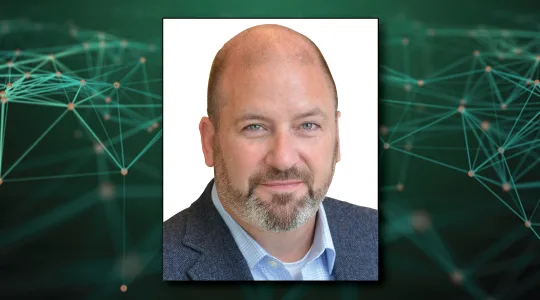
John Gilroy: Welcome to Constellations the podcast from Kratos. My name is John Gilroy, and I’ll be your moderator. Our guest today is Tom McNamara, Vice President of C-band transition management for Intelsat. Today, we will discuss the accelerated rollout of 5G and the purpose of satellites and the C-band relocation effort. 5G cellular services hold the promise of connecting everything, everyone and everywhere. The transition will unleash massive amounts of bandwidth for new and innovative applications. To drive America’s leadership and 5G, the FCC is accelerating the rollout by re-purposing the C-band spectrum, which is thought to be optimal for 5G services.
John Gilroy: Intelsat is one of the satellite operators that has used the entire band, and now has agreed to mobilize its operations to promptly relocate to a different portion of the band in support of the 5G rollout. To tackle this unprecedented and challenging transition plan, Intelsat has put together a team of more than 50 employees focused on this complex clearing initiative. The team is working to successfully and quickly transition current users while maintaining a high quality uninterrupted broadcast to more than a hundred million American homes and businesses. Intelsat also plans to build and launch multiple new satellites to replace C-band capacity, being transitioned to 5G cellular network services. With us today to shed some light on their C-band relocation plan is Tom McNamara. He is the vice president of C-band transition management for Intelsat. Tom has over 20 years of experience as an operations executive. Tom, this seems like a big project you’ve got your hands on. Isn’t it?
Tom McNamara: Oh, yeah. I like to call this the Hoover Dam project of the satellite industry. It is massive, but it’s really exciting and interesting work.
John Gilroy: Yeah. They say that people will be able to see the Hoover Dam in a thousand years or something. So we’ll see how long this one stays with a project this massive, what motivated your company to move forward with the FCC’S plan to accelerate the relocation of the C-band spectrum?
Tom McNamara: Sure. So in 2017 and 2018, the FCC began to inquire about what it would take to free up more mid-band spectrum, which is really important for the efficient and economic rollout of 5G networks. There is a lack of available mid-band spectrum, and so they began to target sharing the C-band that we use for our customers to deliver television programming and cable programming. And we saw it as a potential threat to our industry.
Tom McNamara: And so as we began to look at it, we turned things on their head and said, “We can either fight this and we’re probably not going to win, or maybe we can go and make lemonade from lemons here.” So we approached the FCC and said, “We will volunteer to free the spectrum. We will do the work to free the spectrum if you’ll allow us to sell the rights to it.” That concept got debated for a couple of years and after much debate, they did not adopt that exact plan, but they did offer C-band operators an incentive to clear the band quickly. And so we thought it through, considered it very carefully and decided that if the clearing is going to happen anyway, we want to make sure that we are in control of the process to ensure an orderly clearing for our customers and preserve the industry. So we had a plan. We’d been working on an engineered solution and all of the project planning for two years. So we believed we could get it done and achieved the acceleration dates. So we decided to accept it and go forward.
John Gilroy: Now, we’ve done interviews with a lot of startups and they always talked about innovation and flexibility and everything else. You’re a fairly large company. This really displays a lot of flexibility on your part doesn’t it?
Tom McNamara: Sure. Yeah. I think most of this work is work that we do regularly in the course of business. And so there’s nothing earth shattering here in terms of the individual technologies or tasks, but the totality of it, the scale of it is a bit daunting. But I think Intelsat is one of the few companies that could accomplish this. We have some of the best satellite technology experts in the industry and just a wealth of experience doing these activities. So we’re well suited for the work.
John Gilroy: So Tom, do you think that 5G is complimentary or competitive to satellite?
Tom McNamara: Oh, we definitely see it as complimentary to satellite. We think there’s a big opportunity for satellite to play a part in the 5G ecosystem that’s being built and to integrate satellite really into the larger telecommunications space to support a wide variety of the use cases that are being talked about for 5G. Satellite offers some really interesting advantages to compliment the 5G mobile networks. We can cover virtually all of the inhabited earth. We have no distance or topography or line of sight issues. We aren’t impacted by natural disasters or human conflict. So we are a reliable worldwide partner for 5G to support, back off of their entire network or for a coverage area. So we really think we’re part of that ecosystem. The standards include satellite in them for the first time, the three GPP standards. And we’re excited about 5G. And what kind of opportunities that creates for Intelsat.
John Gilroy: I think both you and I, if you look at the last 15, 20 years, had a lot of discussions with software developers and project managers, and they always talk about scope creep and in scope of this and scope of that. And so can you describe the scope of the C-band relocation effort and discuss the challenges in making this transition a success?
Tom McNamara: Sure. So as I mentioned, C-bands are used primarily for media, content, distribution, contribution, and restoration. So all basically all national TV programming that you see on your cable networks or broadcast networks is touching a satellite at some point in the process of being delivered to your house. So the FCC is repurposing 300 of the 500 megahertz in the C-band. So we need to move our customers out of that lower 300 megahertz. And repack them into 40% of the space we had available to us before.
Tom McNamara: So there’s really four main pieces of work to be done to accomplish that. First of all, we have to build then launch seven satellites, which is NASA. The satellites take two to two and a half years to build and launch and costs upwards of a hundred, $150 million apiece. So it’s no small task there.
Tom McNamara: Then we have to repack the customers into their new homes across the fleet. And then manage the impact on the down link side. So we move a customer from one transponder to another. That could be as simple as a frequency change on the customer receive sites. Or it can be something more involved, like going to a cable head end and having to build a new antenna so that they could receive the feed from its new location. They may not have an antenna that points at that location. So repack the customers and manage the ground impact.
Tom McNamara: We also have to consolidate our telemetry command and control antennas. These are the antennas that we use to fly satellites and to collect information about what’s going on on the satellite. Critical, critical infrastructure for us. However, some of those signals are currently using frequencies in that lower 300 megahertz. So we need to pull these antennas as remotely as possible to get them out of the reach of likely 5G deployments for the next 10 years. And so we’re really building out two teleports there with about 14 antenna. The final piece of the work is installing pass-band filters on 35,000 antennas throughout CONUS. So every receive antenna for C-band is going to get a pass-band filter that prevents it from receiving signals in the lower 300 megahertz. So that the 5G signals don’t interrupt that.
John Gilroy: And the interrupt is the most important part because you’re doing this all while your customers are having uninterrupted service. And this is like driving your car and changing the oil and you’re going down the road. It seems like quite a task.
Tom McNamara: It is. And if you think about the television industry, they are extremely sensitive to any outage or any interruption that, if you take a three second outage on a cable station, you’re probably getting a call from your customer and getting yelled at, right? So it’s a really interference sensitive group of customers. They like their signal to be perfect. They pay to make sure that their signals are resilient. So yeah, we need to be very careful about how we go about this so that we don’t create any sort of disruption for them.
John Gilroy: Heaven forbid someone miss their British bake-off show, huh?
Tom McNamara: It’s that secret ingredient. You got to get them all.
John Gilroy: So what about your secret ingredients? What is unique with your expertise or experience or resources? What about your company and what do you bring to bear on this complex development here?
Tom McNamara: Satellite is what we do. Intelsat is filled with expertise. Some of the most highly talented satellite engineers in the world. Nothing we have to do here in and of itself is unfamiliar. You know satellites, check. Build antennas, check. Install ground equipment, check. Move services. We’ve done all of this before. The totality of the work and the speed at which it needs to be performed is really massive but we’ve been planning this work for over two years and really worked through all of the kinks and the processes. We’ve built systems to support us. We have established partnerships with some of the finest field tech companies in the country, and we’re ready to do the work and feel a high degree of confidence that we’re going to be able to get this done on time. We have about 40 internal employees working on this, and then hundreds of field techs, literally hundreds of field techs throughout the country, because the antennas are everywhere and need to be retuned or filtered.
John Gilroy: Yeah. You talked about filtering, I think it was 35,000 antennas. And I wrote that number down and I thought, “Oh, this old antiquated expression called necessity is the mother invention.” And so are there any new technologies you’ve kind of whipped up in the back office there to help you in this relocation effort?
Tom McNamara: Yeah, so the pass-band filters are nothing new, but we spent a lot of time in R and D over the last two years, working with our manufacturing partners to develop a filter spec that is really efficient and can minimize the amount of guard band that we need and protect the customer signals from the much more powerful 5G signals that are out there. So a lot of time on the pass-band filters, getting those just exactly where we wanted them to be.
Tom McNamara: In addition, part of how we get to release 300 megahertz is by compressing customer signals. So we’re implementing impression techniques for some of the content providers, such as advanced video coding or high efficiency video coding, HEVC, which requires work on the uplink antennas. And then new IRDs, new integrated receiver decoders at the receive sites to take advantage of the next generation of algorithms and encoding, and really reduce the amount of bandwidth that they consume afterwards. And so we’re seeing some of our largest customers reduce the bandwidth required for them by half, which is saving them money in terms of what they pay for bandwidth each month and also modernizing their plants and their distribution system. So it’s a huge undertaking and it’s going to be a logistical challenge, but I think on the other side of this, we’re going to be better off for it and better capable of existing in a world where we only have 40% the C-band capacity that we had previously.
John Gilroy: Let’s go from capacity requirements through the ground station. So how big a role will your ground station strategy play in the relocation effort?
Tom McNamara: The ground stations are where the bulk of the uncertainty and the bulk of the work lie. So we’re going to spend quite a bit of time at our stations and uncovering sort of different challenges at each site. We will find antennas that are 30 years old and rotting. We’ll find equipment that is outdated. We’ll find that the antennas mounted on the top of the steeple and we need a cherry picker. So really trying to get ahead of it with outreach and virtual site assessments as much as we can, before we get out to the site is a big part of our risk mitigation strategy to avoid running into just scope creep and delays.
John Gilroy: Tom, thousands of people from all over the world have listened to this podcast. You go to Google and type in Constellations podcast to get to our show notes page here, you can get transcripts for all 80 interviews. Also, you can sign up for free email notifications for future podcasts. We talk about topics like the one we’re talking about today with Tom. So Tom, how are you assuring a high quality of service and minimizing the impact on customers during this transition? It seemed to be maybe some burps and maybe some blackouts somewhere, huh?
Tom McNamara: Well, for each customer transition, we provide a dual illumination period, which is an alternate carrier for their service for them to, at the same time, maintain their old signal on their old location, with their new signal on the new location. That really allows the customer a chance to tune the service and get it just right to peak the carrier and make sure they’re exactly where they wanted to be. And then they begin migrating their customers over. This helps the customer throttle the process and ensures that all the receive sites are safely migrated before they shut off the old signal. So most of our services that are in scope for this are not managed services. Where we do manage services, there’s more of a QoS hands on approach, but typically these are transport only services and the customer maintains the video quality, but we allow them to have extra transport so that they can get the service right, and minimize any disruption or interruption of service.
John Gilroy: Tom, I imagine you have a deadline for this. So how long will it take for the C- band relocation effort to become completed?
Tom McNamara: There’s two key dates in the order. December 5th, 2021, we need to have 120 megahertz cleared on each of the satellites over CONUS and to have filters installed on all of the receive antennas in 46 of the top 50 partial economic areas in CONUS. So that will allow 5G to be deployed in those top 46 markets starting at the end of next year. Then two years later, we need to have all the full 300 megahertz cleared and all antennas in CONUS filtered. Plus the satellites will be launched by then. And the TT&C sites, that’s telemetry and command site will be consolidated by then.
John Gilroy: And compensation for losing the spectrum, you mentioned that at the top of the interview here. Your company will receive billions of dollars from 5G bidders as incentive payments for relocation costs. So how will those funds be used?
Tom McNamara: Well, obviously my main focus right now is doing everything I can to make sure we capture those billions of dollars to ensure that we have a smooth transition for our customers and American TV viewers. But we have an entire team building out our business plan right now. And I’m sure they’ll be anxious to share it in the coming months with the public. What I can say is that the satellite industry and our view is undergoing a massive transformation right now. This C- band initiative provides us the capital to adapt to those changes and expand our offerings to meet the needs of the new economy. So consumers are using more and more bits. We sell bits. So we see this as a big opportunity for us. And we’re excited about it.
John Gilroy: Earlier, you talked about building satellites and how much they cost. And I would imagine these new satellites will be used to replace C-band capacity being transitioned to 5G. Can you tell us a little bit more about these satellites?
Tom McNamara: Sure. We have seven satellites being purchased. The purpose of the satellites is to extend the life of the C-band at those orbital locations. So where before we had less than fully utilized satellites in place, we were looking to consolidate to fewer locations with the full 500 megahertz. However, giving up the 300 megahertz forces us to spread that load over all of our orbital locations and reinvest in and maintain satellites in each of those spots. So over the next three years, we’ll be launching seven satellites into orbit and replacing the existing assets that are there to extend the overall life.
John Gilroy: Yeah. When you get a new car, you got to do something with the old one. So what’s going to happen to the satellites that are going to be replaced?
Tom McNamara: Some will be retired at their end of life. They’re approaching end of life right now. And they will be deorbited. Others may be repurposed for their remaining useful lives, but we’ll have to see what those applications may be. Given the practical constraint that most of the receive sites don’t have technical capability or physical space to add new antennas, you can’t just migrate content services or cable services to another location, to non-penetrate orbital locations. So really the only thing that’s feasible for us is to extend the life of those satellites and keep the orbital locations there available so that if an antenna is pointed at an orbital location, there’ll be a satellite guaranteed there for the next 15 or 20 years.
John Gilroy: Now, Tom, if I look at the last 10 interviews I’ve done, I probably asked this question more than any, is how many satellites do you project in the next four years or five years? What kinds of numbers all over the place? And I know there’s going to be a whole lot and inevitably the topic of interference comes in. And so how are you addressing this issue of potential interference issues between satellites and 5G?
Tom McNamara: Well, we worked really hard on the filter and on the specification. We drove the technical specifications with the FCC to ensure that they adopted a filter plus guard band approach to manage interference and to ensure that 5G didn’t knock out satellite signals. So the standard that the FCC ended up adopting was a bit different than what we came up with and suggested. And so, we’re part of a working group formed by the FCC, to deal with interference issues, how we will detect it, what processes we use to figure out what the source of the interference is should it occur, and ways to remediate if it happens.
Tom McNamara: And so I think there’s a work in progress there. We did a lot of good design work upfront, and we’re confident that those designs are going to work, but we also want to have a process in place for when interference inevitably happens due to either overpowering a base station or pointing it incorrectly. So we want to make sure that we’re sure we know how we’re going to approach it when the instance arises so that our customers are safe and the services continue. It’s really important to get this right to continue the ecosystem and ensure that our industry is vibrant for years to come.
John Gilroy: It’s time for the crystal ball question. So get serious and get out your crystal ball. And this may project out in five years from now and see what roles 5G and satellite are going to be playing in the industry.
Tom McNamara: I think there’s enormous opportunity for satellite in the industry over the next five years. The movement towards 5G and our standards, our software defined satellites, and some of the other innovations that are coming along, really open doors for us to converge with 5G and create new marketplace. Well, the network operators are going to be able to complement their 5G services with satellite connectivity to offload their scale and their terrestrial networks as needed seamlessly, interoperably would be with the satellite. So we think that there’s a lot of room for us to fit right into that ecosystem and the sky’s the limit for us.
John Gilroy: When the listener to this podcast thinks about a hundred million American homes and thousands of antennas and satellites, it gets kind of confusing. And I would just like to thank you for bringing clarity to this whole topic of 5G and the whole satellite and the C-band. It makes things a whole lot easier for me to understand. I hope it brings clarity to this complex topic for our listeners as well. I’d like to thank our guest Tom McNamara, Vice President of C-band transition management for Intelsat.
Tom McNamara: Thanks very much, John. Thanks for having me.
