Transcript:
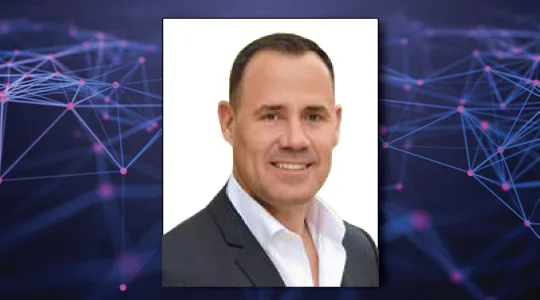
John Gilroy: Welcome to Constellations, the podcast from Kratos. My name is John Gilroy and I’ll be your moderator. Our guest today is Jeff Rowlison, vice president of strategy and government relations at Velos. Well, Jeff, we’re going to start off by going back to Ancient Rome. In Ancient Rome, there is a god called Janus. It had two faces, forward and backward. The month of January is named after this god. Today, much like Janus, we will look back on 2020 and look forward to 2021. 2020, what a year. Hey, let’s burn that calendar. Some call it the year that never was, but can we really say that in our industry? It seems to me that, actually, a lot has happened in 2020 for the satellite and space industry. To help us go through this not so easy task, we are happy to welcome Jeff Rowlison. Jeff is the vice president of strategy and government relations at Velos, a consulting firm for the aerospace, defense, and intelligence communities in the DC area. Jeff, we can’t wait to pick your brain on what’s your thought of 2020. And we can’t have a year in podcast without shifting our focus to 2021 and what it holds for us, so I’ll make sure to ask you a few questions about the future as well. Well, hey, let’s kick it off here. Let’s look back at 2020. Jeff, was there a specific game changer, maybe a company that significantly revolutionized the way things used to be done in the satellite and space industry?
Jeff Rowlison: John, first, thanks for having me. It’s always a pleasure to talk to you. As you look back into 2020, I don’t think there was necessarily one industry or one company that really changed the face of what we’re doing. I think we saw some really encouraging innovations and evolutions this year that, despite some of the challenges that you alluded to in your intro, we’ve seen some remarkable advancements, whether it’s the small satellite innovations, certainly those that are coming along in LEO, some of the digital ground infrastructure advances, and the commitment within the industry to evolve our hardware, or just some of the incredible advances in remote sensing and those technologies, whether it’s RF, radar with synthetic aperture radar capabilities, or traditional optical, so I think across the board… And that does nothing to say about the advances that are coming in and have shown just amazing effects and access to space and launch. So I think 2020 was a fantastic year for our industry, despite some of the major hurdles and challenges that the COVID environment presents.
John Gilroy: Well, you just brought up some of the noteworthy activities that happened. Now, let’s go the other end of the extreme here. What would you define as the most unrecognized event of last year, of 2020?
Jeff Rowlison: Well, I think this is another one where we all understand the incredible toll that this has had now, both from a personnel and economic impact. But I think the light at the end of the tunnel is just how well the industry has responded, and how, throughout all of the challenges, the commitment by our space industry to deliver their capabilities and their innovations to their customers, is really inspiring. And so, I’m continually amazed at the resilience of our industrial base, and so I think that’s really one of the unrecognized successes of this year, is how well the industry has delivered, despite the hurdles put in front of them.
John Gilroy: Well, Jeff, I’ve got kind of a complex question, but I’m sure our listeners are going to understand where I’m going with this. So let me ramble through the start of it, then ask you the question. If you just look at what’s happened in the last few years, the demand for wireless broadband services continues to grow, but at the same time, mobile traffic is surging in many sections of the United States. To enable the development of next generation wireless networks and help close the so-called digital divide, the FCC has pursued a comprehensive plan to free up the spectrum in the low, mid, and high frequency bands for commercial use. This includes reforming the use for the 3.7 to 4.2 gigahertz band, I think a lot of people call that the C-band, by repacking existing satellite operations into the upper 200 megahertz of the band. Okay, set the stage for the question. So, what? Good, bad? According to the FCC, we can expect incumbent satellite operators to invest $2 billion in equipment to reconfigure their networks. Is it possible this new investment will support thousands of new jobs? So give us a judgment here, Judge Jeff.
Jeff Rowlison: I don’t think there’s a good or bad side of that. It’s the reality that we’re in, in sort of the digital environment that we had. And the realities of spectrum utilization and where we find that spectrum in a really congested environment is just one of the challenges that both governments and industry have to sort of cooperate in. And so, the positive of that is, we’re seeing industry responds in a way that, even a couple of years ago, probably would have been unheard of, right? So companies are committing resources to work with governments or make that C-band spectrum available, and they are committing to new satellites, really, at an unprecedented and accelerated timeframe. And so, of course, that network reallocation and the satellites that are coming onboard are obviously going to be a boon for both the ground infrastructure providers and the satellite manufacturers, and so that’s obviously going to create opportunities and jobs within our industry. And there’s some really powerful synergies developing to make sure that all of those vital services and capabilities continue, while also preparing for the evolution of our spectrum environment. This has been a long road with that C-band reallocation, and I think at the end of it, you’re going to find that the industry responded aggressively and made those capabilities available.
John Gilroy: You just used the phrase, “Unheard of.” Well, let me tell you a few things that are unheard of. It’s shocking. I heard about this, is that Apple may get into the electric car business. I don’t know if you saw that. And what about Microsoft and AWS moving into the space business? How do big tech companies change the space environment, and what do they have in store for us in 2021?
Jeff Rowlison: Well, I think what you see happening with Microsoft and AWS is really bringing the power of what they can do on the innovation front, and with their ability to partner with companies to really get after bringing a virtualized cloud environment available to anybody, anywhere, at any time. And so, for example, if you look at how Microsoft has partnered with a variety of satellite owner operators, SES being one, they’re bringing their Azure data centers right to the SES gateways. And SES is a multi-orbit operator, and so they’re really making and then enabling a powerful digital environment that gives users quick access to cloud in a way that, years ago, that would’ve all been done through terrestrial mechanisms and different hardware. It creates innovation and partnerships that are going to be very, very powerful. Whether that’s on the commercial side, the civil side, or the government side, these types of relationships, and the power of both Microsoft and AWS and their infrastructure, is going to be, really, an enabler going forward. And so, it gets us away from legacy investments and stovepipe hardware, and just makes the cloud accessible. And really, as that is enabled or powered by satellite access, that’s all the more exciting.
John Gilroy: Well, you look back at 2020, you really got to talk about COVID. It sure disrupted the lives of many people across the world, and has drastically crippled the hospitality industry, among many others. So what has been the effect of COVID on space ground operations?
Jeff Rowlison: Well, in one area, it’s just kind of highlighted the importance of the ground segment, which is often overlooked, both from the satellites, or the shiny object that everyone pays attention to. But really, the ground infrastructure that connects the users and makes that accessible often goes overlooked. And so, like I said before, the really positive out of COVID is seeing how the industry responded and has continued to place an emphasis on delivering the ground infrastructure capabilities, while also putting an emphasis on the evolution of the virtualization of the ground architecture. And so, that is an inspiring type of advancement within the technology of our community, is you get away from stovepipe hardware investments and look to capitalize on new resources, whether it’s within LEO, or MEO, or the traditional GEO options that are available to users. How do you bring all of that? And all of that is ultimately accessed through our ground infrastructure, and so I think we have to continue to see ground as the vital connector within our environment, and we’ve got to continue to accelerate that type of commitment that we’ve seen already in 2020, as we get into 2021.
John Gilroy: Jeff, we just hit our three-year mark for this podcast, and regular listeners know I like to toss in, show me the money, show me the money. Well, here’s the show me the money question here. 2020 was also the year of financial difficulties for some space-oriented companies. So why did it happen, and should we expect more companies running in the red in 2021?
Jeff Rowlison: Yeah, I think you’re alluding to some of the bankruptcies earlier in the year that some companies have fought their way out of. And I think the reality of how our economy came to a really crashing halt, and then, how the industry has steadily built the capability and the diversity to be resilient enough to respond and recover, I think the reality is, we’re not quite through the economic uncertainty that has been instigated by COVID. And so, I think in the early part of 2021, people are going to be sort of looking at how the economy is recovering, and then making smart decisions that enable them to continue their operations and schedule and perform in a way that’s financially responsible. So I don’t think we’re quite out of the woods, but I think, if anything, our industry has really been a shining example of the commitment that these companies have to deliver for their customers.
John Gilroy: Jeff, thousands of people from all over the world have listened to this podcast. Go to Google and type in Constellations podcast to get to our show notes page. Here, you can get transcripts for all 91 interviews. Also, you can sign up for free email notifications for future podcasts. Jeff, I have a friend whose son works for SpaceX in Texas. And all the cool kids talk about SpaceX, but they made a lot of noise this year, between the Starlink constellation that illuminated the sky with a thousand satellites and the successful launch of Crew Dragon, the first crewed launch from American soil since the end of the space shuttle. I think it was around 2011. Last year was a pretty good year for them. So why are those accomplishments so important, and what does it mean for the space industry?
Jeff Rowlison: Well, I mean, if you look at our ability to launch American astronauts from American soil using an American rocket, that is an incredible story of domestic achievement. And so, I think as you look at what that means, both from the access to space environment, from a launch environment, to, as you mentioned, SpaceX’s Starlink, domestically manufactured, LEO infrastructure, that’s bringing some really exciting capabilities to the market. You just have to be inspired of what’s going on domestically. And so, if you look at what that means for our industry, I mean, we’ve got other companies that are equally as committed to that type of domestic manufacturing and capability, and your reference, Blue Origin, ABL, VOX Space, and even companies like Sierra Nevada with their Dream Chaser, and doing some really innovative things that I think we can all be very proud of as we look into 2021 and where we’re going in the future. But certainly, SpaceX has been sort of the absolute visible marker of success for a return to U.S. domestic space manufacturing and access to space capability.
John Gilroy: Jeff, you just mentioned the term marketing. I guess the classic book on marketing is Blue Ocean Strategy. Everyone’s looking for a blue ocean where there’s very little competition. So from your perspective, so what do you think will be the new markets for satellite technology coming up in 2021? Will it be satellite servicing, debris retrieval, maybe data fusion? What looks good?
Jeff Rowlison: Well, I think you’re hitting on it. As you look at what’s coming and what can be exciting, I think a little bit, all of the above, right? So from deployable systems to space manufacturing, like you said, space servicing, how we’re evolving with some imaging developments, and sort of the profound advancements in Space Situational Awareness and advanced visualization options, I think it’s really going to be, like you referenced, a blue ocean going forward for a lot of innovating capabilities. And one of the cool things that I think is also developing, whether it’s NASA or the U.S. Government on the DOD side is, there is a robust commitment within some senior leadership to integrate commercial capabilities into areas where one would often think that those are government areas. And so, it’s really exciting to see how the market will continue to mature and just adding, whether it’s optical communications, free-space optics, or just the options to getting to space. We see a really profound opportunity landscape going forward.
John Gilroy: Yeah, I don’t think you’ve mentioned the antenna segment here. Is anything new developing in that area?
Jeff Rowlison: Yeah, well, and that was an oversight on my part, because I think as you look at all of the capabilities that some of the new space capabilities bring, whether it’s Starlink or some of the others, AWS, the Kuiper versions, or… All of that requires innovations within antenna technology, and so that is something that is another area that are going to continue to see leaps and bounds forward, whether it’s flat panel technologies or just a diversified range of options for users to continue to access space. And so, I think that between, as I mentioned earlier, kind of the virtualization of the ground segments combined with some of the antenna technologies that are emerging and continue to evolve, access to space is going to be ubiquitous, and then just even more enticing for our industry to continue to develop innovations.
John Gilroy: I got a question that sounds like it’s out of some kind of a science fiction book or something, but got to talk about Space Force. So can you give us an update on how Space Force has grown over the past year, and what is there to look forward to here, in 2021?
Jeff Rowlison: So just last week was the Space Force’s first birthday, right? And so, 2020 marked the first full year of the Department of Defense having a separate service dedicated to the space domain. And I think we’ve seen some incredible progress and leadership over the last year, and I, certainly, over the period of this short discussion, won’t be able to do all of that justice. But I think under the chief of space operations, General Raymond, his leadership over the last year has been outstanding, in that they’ve transferred former airmen over to the Space Force, and I think they’re over about 2,500 now, they’ve built out their leadership team, and we now have four stars and three stars on the Space Force and rolling in all of their space operators, which recently decided to be now called Guardians. And so, they’ve published their space warfighting doctrine, they’ve released a vision for an enterprise satellite communications and how they’re going to operate within the SATCOM environment. And then really importantly, last year, they submitted their budget. It was a little separate from the air force. And Congress has just, with their omnibus actions this week for FY21, given the Space Force their own budget to operate within. So it’s really just been one historic event after another, this year. And just last week, General Raymond, as the chief of space operations, was welcomed into, and formally made a member of the Joint Chiefs of Staff. So I mean, the focus and leadership that has occurred to not only stand up a new Space Force, but to integrate capability and motivate those actions through this year, despite all of the challenges of COVID, again, is just nothing short of historic. And so, I think that’s an inspiring topic to discuss, and we could probably spend the entire day doing that. But yeah, it’s been fun to watch, and I think there’s only more to come.
John Gilroy: Got a final question for you here, so you’re going to drag out your crystal ball, Jeff. So it’s a who question. So who should we focus our attention on next year? I mean, who do you think will be the most influential space executive or company in 2021?
Jeff Rowlison: Well, I mean, I’ll give you a little bit of a political answer here. I think it’s probably too many to name individually. And I think if you look back at what we’ve seen as successes in 2020 across those segments, I think you’ve got a lot of opportunities to really excel in 2021 and really make a name for yourself within our industry. I think government has committed to integrating capability in a very open fashion, and I think, as resources and capability continue to evolve and grow, we’re only going to have a chance to become more integrated, more leveraged by both our commercial partners and our government partners. So I don’t think there’s one influential space executive or company in 2021, I think it’s really a greenfield for everyone to get after what they prevent or what they provide to their customers in a differentiated way. And I’m really excited to be part of it.
John Gilroy: Well, Jeff, you certainly covered all the bases in this short interview. We’ve talked about everything, new space and satellites. And I know our listeners are looking forward to 2021 with much anticipation. I’d like to thank our guest, Jeff Rowlison, vice president of strategy and government relations at Velos.