Transcript:
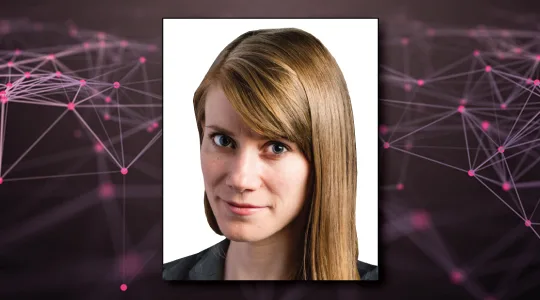
John Gilroy: Welcome to Constellations the podcast from Kratos. My name is John Gilroy and I’ll be your moderator. Our guest today is Carolyn Belle, Director of Advanced Systems at Astroscale U.S. In previous episodes of Constellations, we’ve discussed tons of topics, among them are space law, space sustainability, and on-orbit servicing. Today, we’re going to see how these are not independent issues at all, but an integrated framework of space concerns. And to take us through all of this we have with us, Carolyn Belle. She is the Director of Advanced Systems at Astroscale U.S., a company focused on space sustainability. As a senior analyst with NSR, she appeared on the Constellations Podcast at the 2018 Small Satellite Conference. And to be perfectly frank, we’re shocked that she agreed to appear again. I mean, wow, Carolyn, big career mistake here, isn’t it?
Carolyn Belle: Any chance to spend time with you, John, I’m delighted to do that. Thanks for having me back.
John Gilroy: You know, Carolyn, I’ve been watching your tweets and in one of your tweets, you referred to yourself as a space sweeper and sherpa. I think you have a t- shirt that says that there, and if you’re not going to Mount Everest, what do you mean by those terms?
Carolyn Belle: Yeah well, I wish I were going to Mount Everest. You wish you were going anywhere these days. So, space sweeper goes back to the origins of Astroscale. So, we were founded in 2013 with this mission to clean up space. And so naturally what emerged from that was a really fun logo with some astronauts out on an EVA with brooms, mops, and a vacuum cleaning up space, right? Making sure that we could remove space debris. So, that’s where the space sweeper term comes from. We’ve expanded beyond that now so I don’t know what our new term could be. But Sherpa, the other part of your question. So Sherpa, this is a really fun, extra thing that I do with my time, which is to serve as a sort of mentor for space startups. Sherpa is the term that’s actually used by one of those specific programs, the Catalyst Accelerator, which is down in Colorado Springs. Currently they’re working with a set of startups that are developing on-orbit servicing assembly and manufacturing services. So, very related to what I’m interested in, and it’s been really fun to help advise these companies and watch them just grow and develop.
John Gilroy: Boy and there’s sure a lot space accelerators everywhere. We talked to a gentleman in London who’s been all over the place, I think Colorado Springs, all kinds of places for these accelerators’ startups.
Carolyn Belle: Yeah. There’s a lot of really exciting activities going across the world. And I mean, for Colorado, we have a lot of aerospace innovation going on all the state.
John Gilroy: Okay. I got 10,000 topics. Let’s start with space debris. China filed with the ITU for two mega LEO constellations, totaling nearly 13,000 satellites. Wow. Without open communications agreements on-orbital debris, collision avoidance and spectrum coordination, I think we may be heading for some serious issues and potential battlegrounds in space. Is this what you predict here? A lot of confrontations about these issues?
Carolyn Belle: Yeah. We certainly have a lot of rising issues in space. I mean, it’s more than just China. We have, as you note, thousands of satellites being proposed by China. We also have thousands of satellites being proposed by companies here in the U.S., right? We have Starlink and Kuiper. In the UK you have OneWeb. There’s a number of smaller constellations that focus on earth observation, but it all adds up. We have government entities. So, around the world, there are so many companies and agencies looking to launch thousands of satellites and really to take advantage of what the attributes are of having a distributed architecture in space, which comes with it a lot of satellites. So, it’s really a global issue given the types of participants we have, as well as the reality, that space is a globally shared environment. And so we do need to have those open communications agreements that you say are lacking now. We need to have more exchange on this. If we look at what has happened to the space environment over the last decade, we’ve seen a near tenfold increase in the number of satellites that are launched.
Carolyn Belle: We now have more defunct satellites in orbit than we have operational satellites in orbit. So, space is becoming very congested at the moment with not just operational satellites. So, those thousands that you just mentioned that are going to be launched, defunct satellites, rocket bodies that have been left in orbit. So, the upper stages. We also have pieces of debris that have resulted from collisions or on-orbit breakups. And so there is a very congested environment that operators are looking to be active in. So, this is becoming problematic for space traffic management and how and when to maneuver, to avoid a collision. Even having enough data on space objects and ownership and responsibility for those objects to be aware of the risks that operators are facing. And so, these are really areas where we could use more international dialogue and collaboration. Also, around radio frequency interference and spectrum access, that’s coordinated by the ITU but are we equitably distributing access to that? We often think about space as big, but core orbits that people want to operate in are somewhat limited. And so there are certain orbits that once occupied by a mega constellation maybe cannot be occupied by another constellation. So, how are we having access to that? So, yes, there are a lot of global issues that are coming into play here that really need to be robustly discussed with some paths forward agreed upon.
John Gilroy: Now when I look at the last 10 or 15 years and graph the number of satellites that are on. I mean, it’s just outstanding, I can’t believe it. I think this is a matter of maturity. And when I think of maturity, I think of my 18 year old grandson, who’s very bad at sharing. And I think people have wanted to share information that’s going on here. I think this is, with 13,000, maybe this is going to precipitate this whole discussion of trying to figure out where everyone’s at and trying to get along better out in space. Most of our listeners have heard this guy named Kepler and most have not heard of this guy named Kessler. And the Kessler effect. So, tell us what this Kessler effect is all about?
Carolyn Belle: So, this guy named Kessler was a NASA scientist, and back in the 70’s he built this theory, which was looking at a scenario as we increase the number of objects in space, whether they’re active, inactive, debris, whatever those objects are. We could reach a point of congestion in space where once there is a collision between two objects, the debris that’s created from that collision then can go on to create additional collisions. And then there’s a sort of cascade of collisions throughout the space environment, so it’s sort of a snowball effect for collisions in orbit. What this means and why it’s a problem, why Kessler was raising this as a concern at NASA was that this could prevent us from operating safely in certain orbits. If there’s so much debris that anything you put up would be subject to collision or it could prevent us from launching through certain orbital shells. If the collision and the debris cloud ends up being at a low orbit, depending on what the inclination of that is, what does that mean for how we can continue to launch satellites above that.
John Gilroy: Well, that’s going to scare a lot of people, that phrase “debris cloud”. Well, now it’s not an object, it’s a cloud of objects. We had a basic introduction here with the Kessler effect. I know that can have an impact but what about climate change? Can it influence space debris and any relation there?
Carolyn Belle: It can. Yeah. So, we often think about the terrestrial climate as being separate from space, but they’re interconnected in more ways than one. If we’re specifically talking about how climate change impacts debris, what it does is as we have higher levels of carbon dioxide in the atmosphere, that are causing heat to be trapped and that’s what leads to a lot of climate change effects on earth. More carbon dioxide in the atmosphere, in the upper atmosphere especially reduces the density of the atmosphere. What that means is that there’s then less drag that’s acting on space objects to slow them down, and it caused them to burn up on re-entry into the atmosphere. So, right now, as objects reduce in altitude it’s due to drag. And so with a less dense contracted atmosphere, you’re not going to have that drag effect. And so more objects will remain in space for a longer period of time, which means more potential for collisions.
John Gilroy: When you think of climate change and climate risk, it seems like an academic topic or something. But these topics of climate change and climate risk are getting prominence in the investor world. And there’s a potential new climate risk disclosure is part of the required financial filings under consideration at the SEC. So, how can this effect a space company?
Carolyn Belle: It impacts space companies in a few different ways. One of that is that as there’s more attention in the investor community, and by the SEC on the environmental, social, and governance. Then on climate risk, there’s this need to track that and have accurate data on it and so operations in space can provide really valuable data on that observation of, you know, greenhouse gas emissions, you can track from space. And so, it’s possible that this growing attention provides an opportunity for satellite operators to provide services for the financial community to track this, or for companies to self-disclose as required. But the other element of it is that, I think space companies cannot keep thinking that they can monitor terrestrial climate risk without also monitoring and being aware of their own space climate risk, because the space environment is experiencing rising risks as well as we have this congestion that we were just talking about. And both of these do present a risk to the long-term success of the company, which is why investors care, which is why the SEC cares.
Carolyn Belle: So, those proposals that are under consideration at the SEC are not just to disclose the risks, to understand the risks, but also to have resilience strategies and understand how climate risk, and in this case I’m talking about space climate risk, fits into overall risk mitigation. The SEC is basically saying, think ahead to what you’re going to do and how you’re going to make this less of a risk. So, I would say that space companies can and should do the same thing for the space environment, because it does impact their long-term ability to deliver services from space. I would say for listeners, as we talk about the SEC often, we just think about publicly traded companies in the U.S., which there certainly are more publicly traded space companies. We just had two more this week come out. But the SEC also has control over any company that’s looking to raise capital from investors based in the U.S., so that is a huge pool of influence that they have over the space industry.
John Gilroy: Carolyn, beyond the legal technicalities, debris removal raises complex policy, geopolitical, and economic challenges as well. So, whose responsibility is it to remove the debris? Is it the government? Is it the launcher? And who should pay for it?
Carolyn Belle: Yeah. These are really two huge questions in the community now as we talk about debris removals. Let’s look back at how liability is considered in space. We look at the outer space treaty, the first international agreement relative to space in that liability falls to the launching state. And so that responsibility for an object placed into space is the state that licensed the launch and operations of that. I mean, there are few other definitions of launching state, but generally that’s what we focus on. And even debris remains the responsibility, but also the property of that state when it’s in orbit. And so, there is a lot of complexity around the ability to remove debris, depending on who is the original source of that. When you start talking about debris that has resulted from an on-orbit breakup or a collision where it’s not necessarily feasible to determine what is the original origin of that, it gets to be very complicated. And so, this just reinforces the reality of meeting a global level of engagement on this topic. We started to see the World Economic Forum, the IAF, the United Nations start to talk about space debris and risks that are posed here. The G7 in the last few weeks, when they met, were starting to talk about space debris risks.
Carolyn Belle: So, this conversation opens the door to then considering how do we address this problem long-term? So far, we have seen states and agencies make plans to remove their own pieces of debris. So, at Astroscale, we are working on a project with JAXA in Japan to remove a Japanese rocket body. So, again one of their own objects that they’re taking responsibility for to remove. ESA has a mission in place, launching in a few years that will remove a European payload adapter. So, it’s very much agencies looking at their own responsibility for objects that have been left in orbit, which is an awesome step to see both of these agencies putting money on the line to say, we need to address this issue of space debris, and start to figure out a solution. The bottom line is that space is an environment that we all use together and we each have a responsibility for anything that we put into space. I would also split this responsibility question into responsibility to remove debris that’s already there, but also responsibility to not create new debris as we continue to operate in space. So, now that we know it’s more of an issue, what are steps that today’s companies, today’s agencies are taking to make sure that they don’t leave additional debris in the space environment?
John Gilroy: Carolyn, thousands of people from all over the world have listened to this podcast, go to Google and type in “Constellations Podcast” to get to our show notes page. Here, you can get transcripts for all 100 plus interviews. Also, you can sign up for free email notifications for future episodes. Carolyn, your company, Astroscale has been involved with space debris for some time now. In fact, they were a guest on a previous Constellations Podcast. Since then, Astroscale has introduced two new services, end of life and life extension services. I guess the first one sounds like euthanasia for satellites or something. Tell me more about them and how they are related to the whole space debris effort.
Carolyn Belle: Yeah, absolutely, they’re completely related to the space debris efforts. When Astroscale was founded, we were looking at all of the benefits that are offered by space. So our founder, Nobu Okada, who actually didn’t come from the space industry, but as he was learning about space was seeing the immense benefit that space offers, but also that no one was really taking accountability for long- term care and long-term utilization of the space environment. Taking steps to ensure that the benefits we drive today will be available in 10, 20, 100, 200 years from now, right? That’s all around what we call space sustainability, so space debris is one element of that. It’s cleaning up the space environment, but the other element of that is making sure that we preserve the space environment by not creating new debris and also making sure that we’re supporting satellite operators to get as much out of space as possible.
Carolyn Belle: So, when you look at Astroscale missions and services that we’re supporting, everything is in line with this mission to preserve the space environment. To provide sort of this full life cycle support for a satellite and to a satellite operator to ensure that they get the most mission value possible, but that they don’t leave any debris in orbit at end of life. So, yeah, what you mentioned euthanasia for satellites, that’s our end of life service. This is working with satellite operators to prepare their satellites for servicing, which means placing an interface on satellites before they launch so that if something does happen, if there is an anomaly, it is possible and cost-effective most importantly to have a servicing vehicle approach, dock with and maneuver that satellite to wherever it needs to be.
Carolyn Belle: Potentially that’s deorbiting it. Most satellites won’t need that service, most do have plans in place to deorbit themselves at end of life, whether that’s via propulsion or whether that’s via something else that deploys from the spacecraft. But there are always anomalies, so we’re asking and working with satellite operators to be aware of that and to plan for that. So, our end of life service, we are working with ESA and OneWeb. It’s a great partnership there to prepare the OneWeb satellites for end of life and design a servicer that can support those. The other thing that you asked about the other element where Astroscale has grown in the last year is around life extension. This is taking our expertise in honor with servicing in LEO and extending it up to GEO.
Carolyn Belle: There’s so many satellites in GEO that are offering really important services to earth. There’s a lot of economic activity that centers around GEO spacecraft. But right now it’s a pretty static way of operating in space, where a satellite is designed, a couple of years later it launches, it works for 15, 18, 20 years and then if anything fails or if it runs out of fuel, it stops providing services and it’s removed from operations. But what if you could keep using it even after it was out of fuel. What if that satellite was still providing a viable commercial service, was generating revenue for the operator, and it simply needed help to stay in its operating orbit? So, that’s what we’re doing with life extension. We will dock with a client spacecraft in GEO, and then we will provide both station keeping and attitude control.
Carolyn Belle: It’s important that you provide both of those, so that not only is the satellite remaining in its GEO slot, but it’s also accurately pointing towards the customers that are using that service so that an operator can get additional years out of that satellite. But there are also other ways to use that vehicle. So, to use our Lexi servicer, it’s maybe to be used for moving a satellite from one GEO slot to another and not spending fuel to do that relocation but spending fuel to stay in your slot once you get there. Maybe it is moving a satellite from GEO up to the graveyard so that it’s not remaining in a critical orbit like GEO at end of life. So, a lot of different ways to do it. But everything we do is around providing operators with the tools and the options that they need to have a more dynamic relationship with their satellites, once they’re put into space and ensure that the choices that they’re making are not only serving their bottom line, but also delivering space sustainability.
John Gilroy: Carolyn, when you used the phrase, “life extension”, I thought of this trending word, sustainability. It’s very popular in the last seven, eight years. So, all these efforts you’ve been talking about, can that be under the umbrella term of space sustainability?
Carolyn Belle: Absolutely. Yes. All of these are efforts to ensure the ongoing use of the space environment and the ongoing benefit of the space environment. That’s also an element of sustainability. I think often sustainability people just focus on the environmental aspects. But it’s also on the science, the economics, national security aspect of making sure that we can continue to derive these benefits from space. So, it’s all about sustainability.
John Gilroy: Now, Carolyn, you do a lot of interviews, so it’s easy to do research on you. And there was one where you discussed integration of the space economy with the terrestrial economy. What a great idea. So, what does that mean to you? And when do you think that tool will be truly integrated?
Carolyn Belle: Oh, this is one of my passion topics. So, I think that you are more connected now than most people realize, most people who are outside of the space economy realize that services like navigation. So, if you’re using Google maps, if you’re using Lyft or Uber, if you’re asking Siri to find you a nearby coffee shop, because it’s six in the morning, and you’re late to a meeting. All of these are based on space services. If you’re doing financial transaction. If you’re going to an ATM and withdrawing cash, if you’re using a credit card. All of that is based on space services. Remote communications, disaster communications, even remote areas where you can use your normal cell phone often have a satellite component for back haul, weather data from space contributes to weather models that are used here on earth.
Carolyn Belle: Earth observation, how do we monitor land use and agricultural output? So, there’s so many pieces of the terrestrial economy that are dependent on space either entirely or in part that most of us just don’t realize. So I think that awareness is important, but making all of that more seamless, the role between what space can provide and how that relates to the functioning of the economy on earth, I think can be much more seamless. And a lot of this at the end does fall on the space industry to start seeing ourselves as part of the global economy, rather than something separate. I think for a lot of our history, we have seen space as being sort of its own bubble of the global economy rather than interconnected with everything else that is happening on a daily basis around the world.
Carolyn Belle: I think we’ve gotten a little bit better at this if you look at the example in communications of mobile network standards. So 3G and 4G satellite largely missed the boat on engaging with those. But 5G, there was a shift and there’s much more concerted effort from the satellite industry, especially GEO operators, LEO operators as well, to engage in how that was defined to work with terrestrial operators, to be part of that 5G solution. Which is absolutely what we need to have seamless global connectivity so that anywhere you are, you can talk to anyone else or send data or whatever it is without having to worry about what sort of terminal or interface or service you have access to. And I think to continue this integration really gets to your question of when are we to be fully integrated.
Carolyn Belle: We need to continue on the path we’re on. Over the last 10 to 15 years, we’ve made great progress in having more regular access to space. In different ways of offering services from space, in different cost profiles that are available for services from space, and really just providing more awareness of what space can offer and how it can integrate into terrestrial activities. A lot of that is just education and making space more accessible.
Carolyn Belle: The phrase, “well, it’s not rocket science”, is I think a perfect example of how people think that space is separate, hard, complicated and difficult to use, when in reality it isn’t. So, it’s just having that conversation with people to show that, oh, our data that you think is just a hard to read black and white image, there’s actually immense value that this can offer to your daily operations and to your bottom line. So, you should make this part of your working processes. I think we’re getting there, but I think a lot of it is on the space industry to reach out and really see ourselves as part of that global economy.
John Gilroy: Carolyn, I’m going to ask you to put on a different hat now, put on your HR hat, I guess, I don’t know what hat this is called. You are a big proponent of a more diverse space community making it more accessible to others. And I know that you were a very active supporter of STEM education, mentorship programs, and building a community for underrepresented groups in the space industry. Tell us about those and what are you trying to do anyway?
Carolyn Belle: Yeah, absolutely. This is another passion of mine, and I think a passion of a lot of people that we have in the industry today. So, I’ve spent my entire career in the science or space industry and I know a lot of wonderful people in the industry during that time. And what I’ve come to realize, pretty quickly, the first summer I was there, is that the industry looks fairly similar and that’s not just from literally what people look like, right? But also, educational background, socioeconomic background, cultural background, really everything that makes us a person, only a small set of what that could be is represented in the industry today. And so, I have made efforts as part of my career and my role in the industry to work on the education side and then on the community side.
Carolyn Belle: And that is making sure that people, students, whether you’re talking third graders, eleventh graders, people in undergrad, that they choose to pursue the industry. But also helping people, once they’re in the space industry, helping them feel fulfilled and part of a community so that they want to stay in the industry. So, it’s really around retention. Over the last year, I’ve shifted a bit more to mentorship than some of the larger events I was doing before. So, I had the chance to mentor a high school student. She was awesome. A total go getter, really passionate about space sustainability, which was exciting to see from someone who’s 17 years old. It was great to work with her. I’m also currently mentoring a university student as part of a program called the Zed Factor Fellowship, which if you’re not aware, I would encourage people to look that up.
Carolyn Belle: It’s an awesome program that was set up this last year to provide opportunities for underrepresented groups in the space industry. And so there’s a wonderfully diverse set of students there, each bio that I read, I’m like, wow, that person’s awesome. That are having the opportunity to be placed in an internship to have mentorship, to do a community service project, which I think is a really cool element of the fellowship. So, I’m enjoying that. I organized small happy hours for women in the space industry in Colorado, just an opportunity to meet up, to know other women in the industry and talk sometimes about work, sometimes about challenges we face in the industry, sometimes about life or whatever launch is coming up next and what exciting mission is on it. And so these are just different elements that come into play about cultivating those different pockets of perspective and expertise in the industry.
John Gilroy: Now, Carolyn, I’ve done hundreds and hundreds of interviews. And the toughest question to ask is the why question, because you’re putting somebody against the wall, or maybe they can’t answer, there’s an awkward response or a gap in the interview. But I’m going to ask you a why question here and then see what happens to you. Why do you think it’s important to change the opportunity landscape for who can be part of the space industry and what value does this diverse community bring?
Carolyn Belle: Yeah, absolutely. The why is an important question. So for me, it’s really all about perspective and what is the future of the industry that we’re trying to build? I have always been a space nerd. We can go into a lot of detail about why and what I was like as a kid. But I love space and I have a very specific vision for space, and perspective is important there. So, there’s a lot of opportunity to be had in space and I would argue that most of that opportunity has not yet been realized. I think that we need people from different backgrounds, from different disciplines that are coming to the table to perceive those opportunities, to see opportunity in an area that no one has seen it before. But also, and very importantly, to solve the problems that we will undoubtedly encounter along the way.
Carolyn Belle: If you have the same set of people with the same education, same background that are trying to solve a problem, chances are they are going to try to solve it in the same way. Maybe that’s going to work, but maybe it’s not going to work. So, what we’ve seen through studies and other industries is that more diverse teams can solve problems more efficiently. And so I want to bring that to the space industry as well. I, of course have a personal connection to diversity as well, being a woman in the industry and I’m also disabled. So, when we talk about crewed space flight, we have had female astronauts, we’ve had non- white astronauts. We certainly haven’t had enough of either of those populations but we’ve not had a disabled astronaut.
Carolyn Belle: ESA, so the European Space Agency is actually seeking their first disabled astronaut right now. It’s only part of a feasibility project, but it’s a really exciting step. They’re the first ones to actually say, no, we think that it’s fine to send disabled people to space, which is exciting. And especially being part of this community of understanding that I think disabled people actually bring more to the table when we’re talking about crewed space flight. So, living in space, working in space, doing science in space means that you were in an environment that was not designed for you. Space certainly was not designed to support human life and disabled people do that every day of our lives. We live in a built human environment that was not designed for us. And so we have to problem solve all the time and to the point that sometimes we don’t even realize we’re doing it, we’re so good at it.
Carolyn Belle: And so I think that brings really valuable perspective when you start talking about operations in space, just because we have so many different ways of thinking and innate problem solving that has been built up over decades, however old the person is that you’re sending into space, has been alive. So, I think that’s interesting, and of course not all of the industries crewed space flight. I certainly don’t work nor have I ever worked in crewed space flight. But when we start to think about the pipeline, so connecting to the last question, talking about students, talking about STEM education. We need to think about what it is that children are exposed to. So far that is sort of astronauts and astronauts as being this sort of pinnacle of humanity, of super intelligent and super physically fit.
Carolyn Belle: So, we’ve transitioned away somewhat from the original astronauts to this new idea. But I think we have more work to do to enable children to really see themselves as part of space the first time that they’re exposed to it, right? First time they see a spacewalk when they’re in second grade or third grade or whatever. So, that means more women, it means more minorities, it means more disabled people. It really just means having more humanity in space in all of its forms. And I think we need to carry that through as students’ progress. Getting back to your question, John, the why. When I think about the long-term future of people in space, the future that I’m working to build in part, through my work at Astroscale, it’s open to all people, no matter what their background is.
John Gilroy: Wow. Carolyn, I think you’ve covered too many topics, space debris, space climate change, diversity. I don’t know how we’re ever going to come up with a title for this episode. I’d like to thank our guest, Carolyn Belle, Director of Advanced Systems at Astroscale U.S.
Carolyn Belle: Thank you so much for having me.