Transcript:
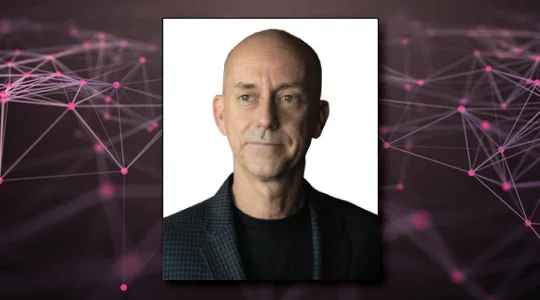
John Gilroy: Welcome to Constellations the podcast from Kratos. My name is John Gilroy, and I’ll be your moderator. Our guest today is Tim McBride, co-founder, and COO of Zoic Studios. Today, data is coming down at a rate of speed like we’ve never seen before. It’s coming from sensors, satellites, airplanes, and untraditional places like social media. You have all these pieces of data coming from space and sensors, mountains of data and you must find the pieces that are relevant. Our guest today is Tim McBride. Tim is president of Zoic Labs. I will talk to him about this data and the different ways it can be combined so it can be understood and acted upon. So Tim, give us a little background. What exactly does Zoic Labs do and how does it relate to space?
Tim McBride: You mentioned the two different hats that I wear. I’m one of the co-founders and the COO of Zoic Studios, and that’s an entertainment-based, Hollywood- based computer visual effects company. We work with all the major studios, Netflix, Disney, Amazon, Hulu, Peacock, and all those great organizations helping them make great TV shows and film. But we have a separate division, a separate company, called Zoic Labs of which I’m the president. Zoic Labs provides advanced visualization for big data, satellite data, those kinds of things as well as software engineering on UI/UX, augmented reality, virtual reality, etc. So, on the Zoic Labs side, when you say, how does that connect to space? We’re working with a lot of Space organizations both directly with the government and or through contractors. For example, we’ve worked with the NRO, Air Force Research Lab, the U.S. Air Force, the Space Force, and or some of their contractors like Northrop Grumman, Slingshot, etc. We’re just having a blast on the one hand working in Hollywood and on the other hand, working with the Space Force and some of these government contractors. Just having a blast doing both sides of the spectrum.
John Gilroy: I’m thinking Tim of interviewing you as a 10-year-old boy and saying, “Well, Tim, what do you want to be when you grow up?” “I want to hang around with the Space Force and movie stars.” You got the dream job, don’t you?
Tim McBride: Right. Pretty unbelievable. You’re spot on John. We’re having an awful lot of fun, thank you.
John Gilroy: So, you look all these pieces of data. I mean airplanes that generate all this data and satellites and you’re trying to find the needle in the haystack. What does it take to organize that data and find out what is significant?
Tim McBride: One of the things that we’re really good at is understanding exactly what the operators and the analysts need to do with the data and then creating interactive, reconfigurable, on the fly tools that allow them to analyze, understand, and visualize the data. So, we put together these, maybe visualization experiences, where it’s not a static 2D dashboard that’s boring to look at, but instead it can be 3D, it can be 4D, it can be an augmented reality or virtual reality, etc. We put together simple, easy to use interfaces. We make the experience a really good experience. So, by making it beautiful, visually stunning, interesting, and reconfigure on the fly, we allow the operators to find those needles in the haystack. We allow them to find things they may not find on their own and, we make it much more interesting in the process.
John Gilroy: I’m sure in the movie industry, there’s some specific terms that have emotional impact and there’s words in the space and satellite community too. One of these words is the word exquisite. So I’m going to ask you a question with the fancy word exquisite in it. How does Zoic Labs accentuate that with exquisite data visualization?
Tim McBride: Well, I would say that we bring Hollywood to the eventual result. We’ve worked on projects that have been significant over the years. We’ve helped create some of those virtual or futuristic, visual interfaces and those kinds of things that were very futuristic at the time. Today, they’re becoming more and more common, but we’re able to give visualization experiences to the analysts and operators that are using your term exquisite. We would say visually stunning, we’d say creative, we’d say beautiful. Maybe that Hollywood flair that makes it that much more interesting for analysts and operators to work in those environments.
John Gilroy: You talked about 2D and 3D just a few seconds ago. I know your background is in making 3D virtual technology for the entertainment industry. Where’d you come up with the idea for visualizing data at all?
Tim McBride: Well, to be honest with you, we didn’t come up with it. The U.S. government came and found us. We were asked to work on a project many years ago for the National Geospatial Intelligence Agency. The project at the time was a map of the world. They wanted us to bring some of our Hollywood experience, our creativity, our futuristic interfaces, those kinds of things to that project and it was such a success that the NGA asked us to work on another project called BADAC or Broadening the Deepening Awareness and Capabilities project. And again, that was a success and I think what happened was our reputation began to precede us. Somewhere along the way, we found the space community and we’ve worked on a lot of projects as I mentioned before, with the NRO, Air Force, Space Force, AFRL, etc.
Tim McBride: I think they liked that we had a lot of experience making spaceships. You know, we made spaceships for shows like Battlestar Galactica, the Serenity Spaceship in Firefly, we worked on a more recent show called “The 100”. So, we work on space shows. I think we have a lot of experience in that area and that we brought some really creative ways to do it. Even a way to just take it sideways for a minute. If you think about the youth of today, the millennials and the college graduates, they tend to go to maybe Silicon Valley or they go to Wall Street. But the idea is to bring them into Washington D.C. and to work for government projects as well. The government needs its interfaces to be interesting. They need the visualization, their data to be interesting. I think that’s part of what we bring to the affair, is not only finding those needles in haystack but making it a much more interesting experience in the process.
John Gilroy: I think it occurred similarly to a guy named Dr. Pat Hanrahan. I don’t know if you know him up at Tableau, but he takes and visualizes data in a different capacity. But yours is just, I think the kids would say it’s funner, you know? Battleship Galactica, wow. This seems like a whole lot of fun, doesn’t it?
Tim McBride: You’re spot on. Thank you very much, John.
John Gilroy: Anyone can look at numbers, charts, and graphs and try to come up with something, but making them easy to understand by many, that’s the challenge. You can get a data scientist and sit around the room and they understand the numbers, but Joe six pack out there, or maybe a CEO may not understand it. So, that’s the challenge, isn’t it?
Tim McBride: I think you’re absolutely right. The amount of data that gets pushed through the pipes these days, for example, feeding down from satellites, it’s massive. It’s unbelievable, it’s unbearable. So, what needs to happen is that these analysts and operators that are looking for really important stuff need to have the right tools at their fingertips, where they can, let’s say visualize data in such a way where they can find that needle in haystack using your term. Or where they’ve got some extra tools, we tend to create tools for the end use customer that they may not have, that allows them to manipulate on the fly what they’re looking at, turn it upside down and sideways, whatever that takes for them to find that story. That’s part of what we are, is storytellers right? And we try to bring the analysts the opportunity to find the story within the data.
John Gilroy: Yeah, that’s an unusual scope. One is a quantitative skill. One is a qualitative skill where you have to be articulate, know vocabulary, but the other one is you have to understand the numbers. And so it gets kind of difficult. So, what do you mean by intuitive storytelling? Just find someone with an 800 score in verbal who’s also an engineer, get both those skill sets together?
Tim McBride: Without being facetious, the answer is yes to your question. We’re really good at, through lots of interviews, understanding what the customer needs to know and wants to know. In some cases, understanding what their end goal is and even if they’re not able to put it in words, we really dive deep and try to understand exactly what the customer needs and wants. Then from that, we know what kind of data they’ve got, and we use our intuitive skills to get from where they are to where they want to go. An example, maybe even outside of space, might be that we worked on a project for COVID-19, with a scientific organization at the University of California, San Francisco called Krogan Labs. They had a massive amount of data and researchers all over the world that were trying to collaborate and yet they didn’t have the right tools to do so. So pro bono, just trying to help in this world pandemic, we built some tools for them to be able to collaborate, share the data, and visualize the data. And it was very helpful in terms of scientists in Paris, New York, Germany, San Francisco, etc. collaborating. Similarly, we worked on a project recently called Spectra. I know this is a Kratos/Constellations Podcast. There was a lot of Kratos data that was coming in to CSPOC and we worked with CSPOC to help provide some tools to help them manage their electromagnetic interference reports. So, there’s a lot of data out there, but everybody needs a little bit of help to be able to pull that in and manipulate it in such a way that they can understand it, visualize it, and back to your word, using our intuitive storytelling where our storytellers help get the results of what they’re trying to get at.
John Gilroy: Last night after dinner, I sat in the living room with my wife and I went to Amazon Prime. I fired up Minority Report. She said, “What are you doing?” And I said, “I’m doing my homework for this interview.” I’ll let the cat out of the bag you know. There are scenes that you have developed in film that are very far reaching and certain scenes in Minority Report that you’re now actually building as functional data visualization tools. I mean, did someone come to you and knock on your door and go, “Hey Tim, I want something just like that movie.” How do you go from these cool movie scenes with Tom Cruise to visualization tools for these hardened DoD folks?
Tim McBride: I think that’s part of the skill set that Zoic Labs brings to the table. Our sister company Zoic Studios has been working on futuristic projects for its entirety, all 19 years of existence, we’ve been working on futuristic projects. So we’re able to tap into that right? At the end of the day, you’ve got data coming in and it needs to be displayed or visualized and we’re able to put some visually stunning results to the data, futuristic looks. So absolutely, we do have customers that have seen Minority Report or Iron Man and say, “Hey, can you give us some of those heads up displays or futuristic looks?” And the answer is yes. It’s what we’ve been doing for our entire careers, is putting out the result of our creativity on the big screen and now we’re giving it to analysts and operators to do those analytics on the small screen.
John Gilroy: Tim, thousands of people from all over the world have listened to this podcast. Go to Google and type in “Constellations Podcast” to get to our show notes page. Here, you can get transcripts for all 100 plus interviews. Also, you can sign up for free email notifications for future episodes. Let’s go from Minority Report to Avengers. Zoic Studios created the visual effects for Avengers: Age of Ultron and Zoic Labs is its sister company. I read that Zoic Labs will draw upon inspiration from the Avengers movies to convert satellite sensor data to video. Is that accurate and how are you doing that now?
Tim McBride: The answer is yes, it’s accurate. Again, on some level, we’ve talked about that already, but we did work on Avengers: Age of Ultron as one of many exciting superhero projects that we’ve worked on. I could mention some for you a little bit later, but the answer is yes. That’s visually stunning, that’s visually exciting to all of us, whether we’re watching it at home, the big screen, or the theater. Why not give the analysts and the operators some of those kinds of visuals that frankly maybe helps them find those needle in the haystack, because they’re visually alert and aware looking at something that’s more interesting and stunning, right? So, we try to bring those great visuals to our work. That’s an important part of our expertise but that’s not our only expertise. That we can do these Hollywood stunning looks, but that’s part of what we bring to the table.
John Gilroy: Zoic Labs, parent company is Zoic Studios. I think their mainstay is creative visual effects for television and feature films. You created technology that allowed 3D scenes to be reiterated quickly. I guess you can turn around lots of visual effects shots in a real short period of time. In fact, it’s been said that you’ve created a model that looks at data as fast as the speed of thought. Can you talk about this technology and how do you turn it around and use it for the DoD?
Tim McBride: Well, maybe I’ll take you back a few years. Part of what Zoic Studios did before we had Zoic Labs is, we were pushing massive amounts of data through our own pipeline, through our own studio. So, we had a bunch of software programmers, scriptors, and coders that were doing analytics on our own data, trying to find ways to move it through our pipeline quicker. We built visualization tools internally for ourselves, and that’s why jumping into space for example, was not difficult for us. Process improvement is a key part of our infrastructure, it’s a key part of our DNA, it’s a key part of our capabilities. So when we then pivoted and got into space for example, data is data, and our tools could use the data of any type. We built some proprietary software called cognitive code, for example, that allows that data to get ingested and visualized as you put it at the speed of flight. Of course, it takes some amazing hardware to be able to store and move that stuff through. But yes, we’ve built some great technology that allows that visualization to get visualized immediately and that’s what’s amazing for the analyst and the operator, is they’re looking for things that are immediate. They need results. They don’t want to mess around. They don’t want all this time it takes to ingest data, all the time it takes to output the data, and they have to bring in software engineers to help them format it and all that kind of stuff. We’ve built some great tools that allows that to happen much quicker and much faster so they can get at their results quicker. So that’s an important part of it.
John Gilroy: And you’ve been in the business long enough to know that years ago, what they used to do is take hard drives and FedEx them over to organizations that would render it all night long and go back and forth and back and forth. I mean, that’s why the speed was a big hurdle which they had to overcome and obviously come up with some proprietary solutions to do that.
Tim McBride: Right.
John Gilroy: Now, you’re based in Los Angeles, all kinds of exciting things out there, 10 million people in the county. We all know that. And out there, I guess everyone wants to work in the movies, in front of a camera, behind a camera. It’s probably not difficult to find someone in that general area. However, once you get in the field of data, especially data scientist, I don’t think the job market is as packed with talent. So how hard is it to find candidates for this work? Do you even look at data scientists or does everyone you work for come out of television and film?
Tim McBride: I would say on the data scientist side, John, that we don’t employ data scientists. We sometimes contract with them and or we partner with other companies that have data scientists, but we do everything else. We’re engineers, we’re artists, we’re designers, we’re software programmers, we’re game developers, we bring all those other tools. Full stack software developers are part of the team that are helping write the code and creating some of the solutions that our clients are looking for. So yes, data scientists per your question, we’re not engaged with. But, I’ll tell you what. There’s a lot of software engineers and technical artists, that are in very high demand these days. So, we’re working very hard to build a great culture where we attract those kinds of great employees and where they want to stay. And we’re proud of that culture. It is an important part of business these days.
John Gilroy: Okay. Put on your thinking hat here and look at the last 20 years of your career. Tell us what the most interesting movie project that you’ve worked on for Hollywood has been.
Tim McBride: Well, that’s a very interesting question because quite frankly, we’ve worked on about 1000 projects over the last 20 years and so there’s just so many. We’re doing a space podcast here, maybe one of the popular projects that was a lot of fun was working on Space Force with Steve Carell, which was a fun show and a comic show, also very popular in the Space Force in the Air Force. Maybe there’s kind of an interesting story here too. The real general, General Raymond, stated publicly that he wished they would have put Bruce Willis in there for all relevant Steve Carell which is kind of funny. We were in a different meeting with the Space Force where, right in the middle of a meeting, somebody stopped and said, “Wait a second. Let me understand this right. You’re working with us, the U.S. Space Force and you’re making the Space Force TV show right now at the same time?” So, it’s been a fun project to work on. If I can throw out a shout out to Steve Carell, Zoic Labs was involved recently in the General Mormon Memorial trying to help put on you a great product for that live Memorial on Zoom. Zoic and I reached out to Steve Carell directly through an intermediary between third party and asked if he’d want to contribute as part of the Zoom recordings that were done in advance, as Zoic helped clip together the final result. And Steve Carell was very gracious to do so. He put out a brief respectful and of course, humorous clip in honor of General Mormon for the memorial. All by itself, that Space Force project, it was a fun project. Man, has it been fun for us to both work for the U.S. space force in reality, as well as on TV at the same time. That’s just one of 1000 great shows we’ve worked on.
John Gilroy: That’s great. You know Tim, when we launched this podcast three years ago, I never thought we’d have the opportunity to interview a company that applies visual effects from TV and film to satellites in space. I mean, this is a great mix you got going here.
Tim McBride: As you put it up front John, how lucky are we that we’re working in Hollywood for some of the biggest and best studios in the world. I mentioned, we worked for these TV and film studios, we also worked for the great ad agencies, we worked for the big video game companies. So, I mean, it’s just a dream come true on one hand to be working with those guys. But we never thought 19 years ago when we started the business, we’d been working for the U.S. Space Force, Air Force, NRO, NGA and the DOD, just so many great organizations. We couldn’t be happier, and we’re thrilled that we can add value to our government and help make the world maybe a little bit of a better place.
John Gilroy: Oh great, you sure are. I’d like to thank our guest, Tim McBride, co-founder and COO of Zoic Studios.