Transcript:
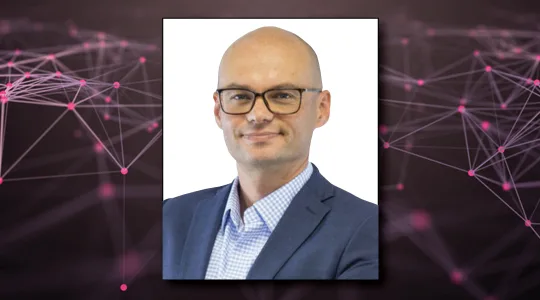
John Gilroy: Welcome to Constellations, the podcast from Kratos. My name is John Gilroy, and I’ll be your moderator. Our guest today is Nathan de Ruiter, the Managing Director for Euroconsult, Canada. Today, we talk about non-geostationary orbit satellite constellations or NGSOs. We’ll talk about their exponential growth, the commercial and go-to-market plans, and the challenges and opportunities that lie ahead in realizing a bandwidth-filled future.
John Gilroy: Well over 50,000 NGSO communication satellites are planned for launch over the next decade. SpaceX, Amazon Project Kuiper, SES, Telesat, OneWeb, and many other constellation providers are promising to transform the space industry with thousands of NGSOs beaming tens of terabits per second to the ground to satisfy a seemingly endless demand for bandwidth. During this episode, Nathan de Ruiter, the Managing Director of Euroconsult, Canada, will share insights into the go-to-market market plans and commercial strategy for these NGSO constellations and the implications from a business model cost, funding, and ground segment perspective.
John Gilroy: Nathan is well-qualified to discuss this topic based on his expertise in commercial due diligence, market analysis, financial forecasting, and strategic planning. Over the last nine years, Nathan has managed and contributed to more than 90 consulting missions for leading organizations in the satellite industry. Nathan, let’s jump right in here. Some will argue that today’s wave of planned NGSO constellations may suffer the same fate from those that happened in the 1990s, where many went bankrupt or were canceled. So, what do you think is going to happen?
Nathan de Ruiter: Yeah. That’s a great first question, John. As you pointed out the track record is not great for LEO Satcoms. Obviously, I think when you need to look at it there’s some changes I think from the ’90s, but maybe even from a bigger perspective. I think what the investors need to understand, it’s a long-term game, right? I think that’s a crucial part of this business. If you want to turn around a quick buck, this is not the place to invest in. So, looking at what we see today, and I think what investors nowadays also well-understand, is that this is a long-term commitment with long-term investments. If you see as well, the kind of parties leading today looking either at Starlink, for example, they’re very well-funded.
Nathan de Ruiter: They have been able to attract a lot of capital over the years. If you look at the others like Telesat and OneWeb, obviously OneWeb’s out of bankruptcy, but now have government support. It indicates that there’s a long-term view, I think an interest from governments, naturally debt, that may be better aligned with the kind of business cases that we’re looking at when you talk about these NGSO constellations, it’s a very competitive field. If you look at a business case, economics, and we can discuss that in more detail later on, but the kind of the utilization of those constellations are very important because you have a lot of capacity coming in that needs to bring at work.
Nathan de Ruiter: But also, as you replace satellites, frequently, obviously you need to quickly fill up your satellites and make the return in a very competitive field that can definitely lead to a number of other kinds of catastrophic events in terms of bankruptcy. So, I would say we can definitely not rule out more bankruptcies in the future. But I think, the underlying investment discipline and perspective here are maybe better matching up with what we see today than what we’ve seen previously.
John Gilroy: Well, that’s good. From the commercial and go-to-market plans, you’ve seen a bunch and analyzed a bunch. What makes this second wave here of the NGSOs more likely to succeed than the first? Lessons learned, or what do you think?
Nathan de Ruiter: Yeah, I think, obviously, there are some lessons learned, but I also think the market has fundamentally changed their thinking. If you go from the ’90s to today, just the concept of broadband internet, obviously and pretty straightforward has dramatically changed, right? The expectation of having broadband basically anywhere, everywhere, is now much more of a fundamental concept, I think, compared to so many years ago.
Nathan de Ruiter: If you look at the numbers, there’s kind of two ways to look at it. One is the most obvious, I think, area for satellite, is beyond the reach of terrestrial networks and particularly in the mobility space. So, if you look at that, they’re about 250,000 of vessels and airplanes that are beyond the reach of terrestrial networks and today only 15% are connected by internet. So, I think that already shows us tremendous upside potential in connecting them and they’re also typically underserved. Even if you’re the crew on sea, there are not that many that have the ability to watch their Netflix show or be able to communicate on a daily basis.
Nathan de Ruiter: There’s a lot of constraints still in the performance and the costs are quite still significant for offering services either at sea or in the plane. I mean, we have seen a wide-set of solutions, but they tend to be still either pretty expensive and to take a break are still fairly limited. So, there’s a massive amount of growth in that area. Then as well, others of the constellation, they focus more on bridging the digital divide, right?
Nathan de Ruiter: Even if you have the big billion-dollar number of the number of people being unconnected, but an-hour analysis of what you’ve done as well is looking at, “Okay, what kind of group of population would be able to afford this kind of services?” and that easily goes still up to 700 million people that are still not connected and should be at realistically means having financial means to pay for connectivity service.
Nathan de Ruiter: So, again, that is I think the two really, from a broad perspective, what basically the ultimate underlying drivers for these constellations. Now, obviously it also becomes to the question, how the satellite industry is not only about the satellites, but it’s also bringing the conductivity service to the ship, to the vessel, and to the kind of unconnected community and that’s kind of still the missing link, I think that we are at today.
Nathan de Ruiter: So, that’s I would say, I think what from all the kind of marketing plans and commercial that is driving it and obviously different constellations, and we can talk a little bit about it later as well. They target slightly different, they have different approaches to it, and that’s an interesting thing to see how it pans out.
John Gilroy: Nathan, we’ve done over a hundred podcasts. We’ve interviewed people from every different aspect of the space business. We talked to the folks at Quilty Analytics so I’m going to pull them into this discussion here.
John Gilroy: Quilty Analytics has stated that NGSO constellations face a massive revenue challenge to gain an attractive ROI. Having to triple the entire $6 billion in revenue that the Satcom industry generates to realize a healthy ROI. So, same numbers you’re using? Optimistic, pessimistic?
Nathan de Ruiter: I agree with his underlying kind of statement that there’s this massive revenue challenge, and it comes back to my earlier point about driving utilization on the assets. Our numbers maybe are a bit different, but I think it’s kind of approached the same way. I think even if you want to, another kind of great way to look at it is what the tradition of our industry, the satellite industry has generated a lot of revenue from the video side, which is now kind of tapering off. If you look at the connectivity, capacity usage, there’s like $10 billion annual revenue just from transponder capacity leasing and about 50/50 is from what we now call broadband versus video, but if you look at satellite services, this is a completely different picture, right? When we talk about satellite service, think about the actual services being delivered to the end-users, the total market is close to $120 billion today. Over its 82%, actually, even close to $100 billion is from video services.
Nathan de Ruiter: So here, I just want to point out is that, in that side of the business, we’ve been able to address a much larger market because this 80-82% of the $100 billion, let’s say, roughly, is really driven by about 232 IPTV subs in the world. If we look at it on the consumer or the current kind of broadband subscribers over satellite, you talk about 3 million people. So again, it shows that this kind of scale that we’re trying to achieve in industry is really at its early stage.
Nathan de Ruiter: It’s really kind of I would say the task of the initial constellations to facilitate and drive that service adoption. I already pointed out, the addressable market is there, it’s now how quickly you can be able to penetrate and to deploy those services and get that money from those kinds of addressable markets. But, it has been demonstrated in video, it has been done. Now, I think it’s a turn for the NGSO constellation and the sell at broadband marketing in general as well, to get the similar kind of skill, to achieve the similar kind of skill as has been succeeded in video previously.
John Gilroy: So, if you had to pick one or two specific markets as the most promising, what would you pick as the most promising target for the NGSO?
Nathan de Ruiter: I think the mobile broadband, like the Arrow INC in maritime, I think are naturally well-aligned because you talk about what are the two things that they’re bringing is obviously global coverage, right? At the NGSO constellation, most of them, they provide global coverage. So, that’s very attractive as those systems are you know, planes and boats are moving along, so you have one single system, you don’t need a patchwork of different satellites to connect with.
Nathan de Ruiter: So, there is a clear, I think, value in that. As well as the terminal cost is less of an issue because as you also probably have heard that on the NGSO side currently compared to GEO cost economics are unfavorable because you need to track the satellite. So, there’s other type of equipment required and there’s many kinds of progress, Starlink gives the key example. They’ve been clear about their path and bringing down the costs of their terminals, but definitely, that has been an issue, and it’s currently higher than GEO. But again, if you move into mobility from the kind of terminal cost is already more on equal basis than I would say in the fixed broadband.
Nathan de Ruiter: But then again, I think one of the other interesting markets is the government side. So, either being the civil government, helping to connect schools, helping to make hospitals, and there’s tremendous opportunity there. And again, you see governments more and more involved in these, and it’s partly maybe generated by COVID as well. Where the need for a wider role kind of connectivity across the country is more and more embraced, I would say, or more and more recognized. Governments investing into the NGSO space so recognizing the importance, but also into more like defense, military-related opportunities, where again, you have your satellite assets around the world if there’s a conflict, which you cannot always predict, can occur anywhere in the world in a certain area although, there are some constraint areas. Due to the full global coverage of an NGSO constellation it obviously gives you great advantages in terms of where you would need capacity when a conflict quickly emerges. So, those I would say are definitely very promising target markets for NGSO services, either from federal government, civil government, but also the military has shown a lot of interest and in NGSO. I think we would see definitely good commercial traction in those segments.
John Gilroy: Many of our listeners are interested in revenue. Earlier in this interview, I mentioned 50,000 satellites. Now that’s not going to happen overnight. That’s going to gradually build up to there.
John Gilroy: So, I would think there’s got to be some revenue sources maybe in the short- term and in the long-term. Do you see that changing over time where the revenue sources are going to change?
Nathan de Ruiter: Yeah, I think there’s always if you want to think about like the low-hanging fruit or earn a little bit more higher-hanging fruit, I think, where we would kind of expect to first kind of take up is migrating existing users. So, I already highlighted in maritime, so there’s already like a substantial amount of ships that are already connected. We’ve had VSAT connectivity services, so there’s more of a natural migration path. I think they understand satellites, and you would expect them to be benefiting from the better performance and the lower cost provided by some of the NGSO solutions.
Nathan de Ruiter: The other thing is obviously consumer broadband. I mean, there is definitely, if you follow Starlink, there’s a quite impressive, I will say, progress they have been making. They have launched nothing but a beta service, but they’re already up to 90,000 subscribers or even maybe 100,000 subscribers now, and they have over half a million in kind of interested and expressed interest that paid down the deposit.
Nathan de Ruiter: So, it’s clear and this definitely demonstrates that the consumer broadband market is that ready to be connected basically. Obviously, the Starlink brings, overall to the satellite industry, a great kind of tremendous marketing campaign. Even for other satellite companies that are thinking, satellite becomes much more mainstream as a solution by all the news that Starlink is generating in a general public press. So, I think the Starlink effect would definitely help for some of those solutions to get more wider acknowledgment and have some adoption around the world.
John Gilroy: You’re up there in Canada, this time here, you’re probably looking at different hockey teams and predicting which one’s going to be successful. Let’s take a look at the satellite market here. So, we’ve mentioned a few earlier, what constellations do you think, have the best chances at succeeding in this just super competitive environment?
Nathan de Ruiter: It is very, very competitive. I do mention though it’s very competitive as some, they target a little bit more different fields, and it’s also partly because their architecture is kind of the difference, right? So, I think the old kind of general challenge they would have would, if they’re focused on the specific market is sufficient to build your business case.
Nathan de Ruiter: So, take Starlink, for example, right? They clearly went out of this and have the prime market focus that was the consumer broadband, connecting individuals. But obviously, now they’re making some changes in their design, and they also have expressed interest in moving into other segments, like mobility and so on. So, I think that’s going to be the challenge across the board, where a single market will probably not be sufficient to generate a return especially as you pointed out to 50,000 satellites, they’re not all going to stay because you need to replace them all the time, right?
Nathan de Ruiter: So, that’s a lot of replacements of satellite in that number too. So, that’s why I think if you look at the different system architecture, what we typically, and it really varies the attractiveness, we call it, the vertical-markets-fit, right? If you look at the technology and what are the requirements from an end-user. So, if you look at O3b mPOWER, for example, or O3b the first generation is very well- positioned to attract kind of the high volume users. So, think about a cruise so really like the multiple Gbps kind of users or massive amount of people on a ship that would like to use connectivity and also for example, the oil and gas side.
Nathan de Ruiter: So again, really that free video for civilians and significant crews on the offshore rigs, those are kind of very high-user requirements that are best served by a system like, O3b but also like Telesat actually. Telesat Lightspeed has a similar kind of architecture, so those have the ability to provide a lot of capacity. On top of that, what Telesat can do on its Lightspeed are the technologies to bring a large pool of capacity over demand hotspots. That’s for example very important if you think about an airport, right?
Nathan de Ruiter: Let’s say we connect all airplanes in the world. Then those airplanes fly out, but most of the concentration of the airports is around 2, 3, 400, 500-kilometer radius around major airport. So, think about all those connected planes and all the demand very close to the airport is going to be quite substantially massive amounts of capacity requirement, right? So, your architecture then needs to be kind of designed to be able to pull or push this amount of capacity into those airports.
Nathan de Ruiter: So, that’s why the Telesat design is really more geared to do that, while other designs have maybe a bit more different approach to it. So again, it really differentiates a little bit. So, I think in markets like Aero, for example, I think the Telesat design is very interesting in that perspective, but that doesn’t mean OneWeb, for example, can’t serve business jets or maybe other types of airlines.
Nathan de Ruiter: So, it doesn’t really exclude one or the other, but you clearly see some lets say NGSO constellations that have a better fit in terms of the technology to the requirements in specific user segments. That’s why you have a quite diverse array of different players in the market because again, these user requirements change quite dramatically from one to another.
John Gilroy: I think each one of these players is going to encounter different obstacles in being successful. I mean, everyone’s got a little niche as you talked about, they have different fits in different specific areas, but there are big obstacles that you can name. I mean, is a typical obstacle funding? Or is it an obstacle of regulations, is it economic trying to figure where the market’s at, or is it a technical factor? Where do you think the obstacle is going to be to overcome that?
Nathan de Ruiter: Yeah. That’s a good question. I think actually this sometimes changes a little bit because even, I think a few years ago, I would’ve said funding would still be a significant factor, but where we are today with tons of funding sources. You see the market there’s, even from SPACs, different types of funding sources being available today. Funding at this point seems to be kind of the least of the issues, I would say.
Nathan de Ruiter: So, I would kind of say where we focus most of our attention to in terms of what are the challenges, I think it’s really into the distribution and market access. I think generally these constellations have done a great job to have the technology development, have the constellation program on the road, if they are all basically ready or starting to deploy these services, but now to scale up the service, it’s all about distribution and market access. Because at the end, we’re talking here about a massive amount of capacity, but also global service delivery that you need to achieve.
Nathan de Ruiter: That’s something, do you know how many companies or let’s say business plans that start from day 1, with have a kind of a global reach? So, an area to kind of fulfill your business plan, you need to be able to access all those markets. Again, it ties a little bit into your regulatory point in some of the markets are more straightforward. But when you move in a big area like Asia, a lot of regulatory market access challenges are apparent in the market. So, very interesting to see how they go around this because again, the beauty of the satellite in that sense is that once a satellite’s up, you have a global service being available, but it doesn’t mean that this service is accepted to be delivered in a country like Indonesia or Pakistan or the Burundi, right?
Nathan de Ruiter: There’s all regulations that they need to navigate and then to okay, there’s this connectivity available. But to get an actual terminal on a school in Zimbabwe, there’s a lot of fieldwork, commercial development, distribution of the terminal, and all the kind of nitty-gritty that needs to come around with that. That’s still a bit of a challenge, and how do you manage that? I think across multiple countries at the same time, when you scale up, that’s the interesting part, and we’ll probably see a lot of distribution agreements, hopefully, the mobile network operators that are big parties in these countries can play and work together. It’s, I think one of the things that satellite industry has probably missed in previous years are the kind of collaboration, partnerships working together with terrestrial partners and be more integrated into the networks. That will be a tremendous opportunity for our industry to become from the niche and the 3 million subscribers that we have today to hit the 200, 300 users, right? So, this is what is kind of is required to make our case and to become commercially successful.
John Gilroy: Earlier, we talked about competition. We know it’s a competitive environment, I guess we’re focusing on the NGSO constellation folks, all competing with each other, but let’s not forget there’s big dogs out there.
John Gilroy: Some of these people plan on competing with these big trustful broadband providers, I think they’re competing against them. So, can they compete effectively with these bigger companies and price service and reliability? Can they really go up against the big dog and think they’re going to win?
Nathan de Ruiter: I think in that sense there’s, the satellite world will remain the smaller brother compared to the terrestrial world. But there are clear, I would say cases where we see that satellite based on the business’ economics, satellite can win, right? So, we always talk about more rural, like more on the edge kind of delivery of connectivity.
Nathan de Ruiter: So, not necessarily into the cities, but even if you look at a different kind of total cost of ownership, economics, there are quite a number of instances where satellite becomes more cost-efficient than a microwave or other kinds of solutions. So, there’s definitely a right to win of satellites in providing connectivity into the more rural areas, the more unconnected areas. But again, I would say that’s hopefully as well, we’ve kind of this move into the 5G environments where it’s sometimes feels a little bit like satellite versus terrestrial.
Nathan de Ruiter: I think that’s something that industry, we’ve tried to more break and bring more convergence to the networks and the trends of software-defined networking is really moving into that direction to actually. So at the end, the end-user doesn’t really care that much, right? Even if you think about from that perspective, and we’ve all the kind of software-defined networking build around it if then the most traffic can be routed over terrestrial satellite or NGSO or GEO that would basically be an undecided on the network the best kind of algorithm and analytics build around it.
Nathan de Ruiter: That will be kind of the Holy Grail, I would say, to really have this orchestrated network where it all fits in together. So again, we’ll still be kind of competing with the terrestrial networks. Some places will lose, there are some pockets of areas where we will win, but the bigger thing is to be more integrated to work together and find the most cost-efficient solutions across a network for both audiences.
John Gilroy: I’m sure Nathan if you go to the next couple of satellite shows, people in the aisles be talking about NGSOs, we know that. Well, what about the old folks? What about the traditional GEOs?
John Gilroy: What role are they going to play in this whole market? You talked about they’re only about trading off, big-brother, little-brother kind of depending on what they need and work with each other, or are they going to go after it, head-to- head?
Nathan de Ruiter: Yeah, no, it’s a great point. I think I was even looking recently in some of our numbers, and it was quite surprised. But if you look at just the sheer volume of total capacity so is really starting to take over the next coming year, like 80% of the total supply by 2022 is to come from NGSO. So, it really feels a little bit a GEO is going to be knocked down. Right?
Nathan de Ruiter: It’s still a thing that there’s a different perspective to it as to because at the end of the day, it doesn’t always matter how much, what is the biggest pool. It also, where can you bring the capacity where it’s needed. There, GEO has really taken up on that kind of challenge as well. We see this kind of completely new trends in GEO, what do they call software-defined satellites and standardized software- defined satellites.
Nathan de Ruiter: So, they did those two things. So, one important word is standardized, which I think is important because traditional GEOs were all custom-made and that just something custom-made is more expensive. Now, obviously, NGSO is more of a uniform trying to repeat much more cost-efficient in a certain way for production, and some of those elements they’re now translated into GEO. The second thing, what is important is this the software-defined element to it, which you really give you much more flexibility because the 15 years, for five years, a lot of things can change, but its software-defined satellites can completely reconfigure themselves.
Nathan de Ruiter: So, in terms of orbit coverage, even some frequency bands, so there’s much more flexibility build around it. So, there’s definitely not, I would say, a lost case of GEO. As you pointed out, there’s a legacy, but they been definitely adopting and implementing some of the new technologies as well to become competitive. Then you still have the big boys, like [defy sets-3 00:24:42], two very big satellites that in terms of cost separate economics are very comparable to NGSO.
Nathan de Ruiter: So, and even in some cases, I think even more cost-competitive than NGSO. So, there are certainly competition from GEO, but it’s clear we’ve all the wave of NGSO. We’ve seen a drop in GEO satellite order. So, it’s going to be interesting to see, I think, some of the operators as well. Like SES, for example, they adopt this hybrid strategy, right? There’s this role for both as well into fields, but yeah, no GEO is still there, and I’m definitely working on being more competitive and bringing more value to their customers.
John Gilroy: Trending word in the satellite communities, word sustainability. If I bring up the fact that 50,000, like earlier in the show, people would go, “Hey, wait a minute, Nathan, wait a minute. What about interference? What about space debris?”
John Gilroy: Is this going to contribute to the problem? Or is this going to be managed better than we had in the past? So sustainability, this big number, what are your views?
Nathan de Ruiter: Yeah, no, I think it’s you do hear it as well in conferences, and I’m pretty sure in the upcoming counselors will be continuous debate. This is more and more getting attention. I think it’s very, very important because we want to avoid that there is going to be a catastrophic event really happening of the collision or something before we really take action. Right?
Nathan de Ruiter: So, there are I do think there are some parties have expressed their willingness to be very disciplined about it, but I think there needs to be some kind of rule set in the domain so at least we can ensure that wave the continuous increase in new satellite launches that we can protect the space environment. So, clearly, this is I think one of the things that as well recognize, it’s just a little bit hard to see who’s going to take the lead and how it’s going to be implemented. Right?
Nathan de Ruiter: So, this is something that people are still trying to think around it, but I think generally people see due urgency and that’s better early than late to make these rules of the game clear to all of us. So, definitely a growing concern and something that needs to be addressed in the next coming year.
John Gilroy: Well, Nathan, it’s crystal ball time. I want you to get that crystal ball off your shelf and polish it up and look five years into the future.
John Gilroy: If anyone in the world, we can predict five years, we’re going to ask you to predict five years in the future, bold predictions here. So, what are the things going to happen? Give us the straight scope in the crystal ball.
Nathan de Ruiter: Yeah. Even in our reports, we have to forecast 10 years. So, imagine What that’s Possible.
John Gilroy: 10 years?
Nathan de Ruiter: But five years. Yeah. I mean, I think five years from now, this is going to be the next five years going to be, do or die basically for this industry. Right? Because I think you need… I already pointed out it’s a long-term game, but in the next five years, you need to see this commercial progress, that there is the adoption. So, we identify the latent need for connectivity.
Nathan de Ruiter: Now, we need to see that the constellations are able to bring the connectivity to the ships, to the unconnected per people, and being able to serve as being used scaling that up. So, that’s kind of the crucial part of it. You are still believed that as possible, right? That is the only thing that I think in general, or maybe you’re a consult perspective is, and maybe bit contrary to some of the others is that we always feel that, that the timing part, it sounds five years long, but for some of these programs to really set up a school program in an African country, it’s often one, two years of planning and development.
Nathan de Ruiter: So, there’s, there is these longer timeframe. So, I think we hope to see the progress. I’m still pretty sure we’ve in five years from now that people might consider that has not met their initial expectations because I think it’s a very long-term game. It’s probably the 5, 10-year game that we need to look at it, but hope to have seen it work out for most of it. I think we’ll see probably some consolidation because there are so many different constellations out there, there’s different approaches to it.
Nathan de Ruiter: As I said depending a bit on the market, so I think everyone would test the water. We’ll broadly see, we’ll crack the code, not only in orbit but also underground, and based from that sound, we’ll probably see some merging and integration of some of the capabilities going forward. I think a stand-alone of five, six constellations, may be more difficult to see, but there is a definitely need and a place for NGSO constellations from today to five years, into 10 years, we are pretty confident that will be the case.
John Gilroy: Nathan, it’s very difficult to present a perspective on these NGSOs because of so much going on, but I think you did a great job this afternoon, really hit a home run if they say that in Canada, we say that down here, United States. Like to thank our guest Nathan de Ruiter, Managing Director for Euroconsult, Canada.