Transcript:
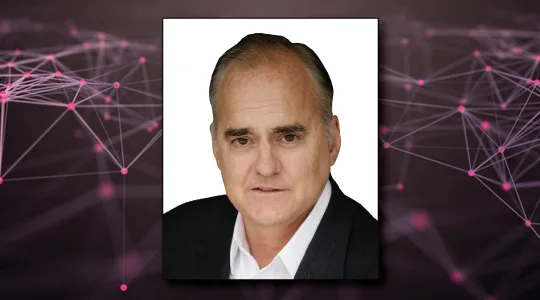
John Gilroy: Welcome to Constellations, the podcast from Kratos. My name is John Gilroy, and I’ll be your moderator. Our guest today is Brian Barnett, Founder and CEO Solstar Space Company. Solstar Space is the leading commercial space, space connectivity company, pioneering the use of continuous communication services for low earth orbit satellites. During today’s podcast, we’ll discuss the technology behind Wi-Fi in space, what it takes to prove that new technology works in space and moving space communication dreams from imagination to reality. I guess the whole imagination to reality inflection point is an incident where a text message was sent to space, and then it was responded with a tweet from space. So, let’s talk about the preliminary issues and puts this in perspective before we talk about the fun parts here. Brian let’s talk about the history of communications in space. So, what type of technology supported space communication in the past and what were the general purposes that it served?
Brian Barnett: Well, thanks John, for having me. I’m very, very pleased to be here today. And so space communications, it has been, let’s just talk about how NASA has been doing it. So NASA’s been doing it for 50 years and more, and they basically have used their own ground stations around the world, really big ground stations and government satellites to provide communications to the rockets from, they started the Mercury rockets, and Gemini, and then Apollo, and the Apollo lunar missions and so forth. And so that was all government infrastructure and they had ground stations around the world to accomplish, for instance, the communications with the astronauts on the moon.
Brian Barnett: They have a deep space network and that’s how they provide the communications to the orbiters that go around Mars and that sort of thing. And then closer to earth, they have, what’s called TDRS. That’s an acronym for tracking and data relay satellites. And that’s what is used currently to provide communications for instance, to the space station, the International Space Station and earth. And it basically is a system that NASA uses to control their satellites and their spacecraft. And as well as it was developed for the space shuttle in the 80s actually and then so that’s what they’re still using. And they have updated it and now we’re moving towards commercial and that’s where Solstar comes in.
John Gilroy: Oh, we have the baseline here. And so here it is what, 2021 coming up on 2022 pretty soon. So what’s the technology of space communication like right now?
Brian Barnett: So it’s really the way I just described, just using mainly government infrastructure. You basically need to fly over ground stations. There is commercial infrastructure out there as well, commercial ground stations, a number of companies that do that. And so basically a spacecraft oftentimes has to fly over one of these ground stations before it can communicate with earth. And that’s how it’s been done really since the 1960s.
John Gilroy: And so there’s demand from more options. Is that right?
Brian Barnett: Yeah. I mean, Solstar, we believe that it’s a good time to start modernizing space communications to make it easier for people on earth, basically to contact spacecraft through the internet basically. And so that’s what we are working on.
John Gilroy: Good. So every time we see a satellite up there, if you’re at the beach, you see a satellite in the sky. So every time there’s communication from satellites and out in space, there’s a ground system to receive and interpret it. So how do you receive your communications on the ground with the newer systems?
Brian Barnett: Well, we do send it in to the ground stations on earth, but we also have, we have inner satellite links between the satellites that are in orbit already. So the way it works for us and our tests so far is that we have our space communicator installed on the spacecraft before it flies. And then that communicates with the nearest satellite. And then it can go from satellite to satellite, down to the commercial ground station on earth.
John Gilroy: Well, it sounds like you’ve got decades of experience in the business. You start off at NASA, many different companies here. So you have a technology and we just talk about the ground and that’s ready. So it must be difficult to ensure a path that works the way everyone believes it will nor convince someone this actually works. So what is some of the challenges you encountered when working to prove that the new technology actually functions in space?
Brian Barnett: Well, we obviously had to figure out how to test it, right?
John Gilroy: Yeah.
Brian Barnett: On real rockets and real space flights. And so we had our first test in November 2013. And so we’re actually coming up on eight years of that. That was the first test that we could actually see if our concept, if our theory, if our idea was going to work. And so on that flight, for instance, we put our payload communicator on board an up aerospace rocket, which was launched out of Spaceport America, which is in Southern central New Mexico, about 200 miles south of where I’m sitting right now. And that’s in fact, the same spaceport where Virgin Galactic just launched out of and has gotten a lot of publicity lately. So we launched out of there. And then when we were about above the Carmen line, which is 100 kilometers, which is where we wanted to get to, we were around I think, 72 miles above the desert of New Mexico.
Brian Barnett: And so the way we proved it worked on that day is that we sent text messages from earth to our payload communicator on board the rocket. So we sent the text messages from a computer, like the computers that you and I are using right now, that could’ve been located anywhere in the world where you had an internet connection. We chose that day to send them from a high school in Albuquerque, New Mexico called the Bosque School. So, I used them. I had student rates to pay them. It was great to have physics students, advanced physics students there who we trained for weeks before the mission. And they had a script of text messages that they were going to be sending that day at the specific moment that we needed them to send it. And so basically we had the text messages loaded up, ready to go. And then when the time was correct, well, as soon as the rocket launched, they started sending text messages to our device on board, which then relayed that to the near satellite and to the internet basically. And it did work by the way, so.
John Gilroy: Yeah. Oklahoma football, they got to throw the ball, hit a moving target and you guys were hitting a moving target. I mean, it wasn’t just a guy running fast. It was like 17,000 miles an hour target. Wasn’t it?
Brian Barnett: Well, that’s right. Now of course, we do have some pretty good quarterbacks so they could get pretty close, perhaps.
John Gilroy: I’m sure they could.
Brian Barnett: But yeah, you’re right. Our satellites were moving at 17,000 miles an hour in one direction at around 500 miles up above the earth. And then the rocket that we were flying on that day was a mock three, mock four speeds. And so that’s right. We just didn’t know if this was going to work.
John Gilroy: Yeah.
Brian Barnett: And so that’s what we proved would work in fact that day.
John Gilroy: Okay. Little text message comes back, real fast moving target. So walk us through the process of the first tweet I mentioned earlier, the first tweet in space is going mark a monument for you or something, huh?
Brian Barnett: That was. And our device is called the Schmitt Space Communicator that was on board that day, is now at the Smithsonian Air and Space Museum. That you’ll be able to see that in 2025, as a matter of fact. So that’s how I guess, important the Smithsonian thought what we did, the first commercial tweet. We make sure to say it’s a commercial tweet because we use entirely commercial infrastructure. And then the NASA astronauts, they tweet from the space station, International Space Station. The difference is that they used completely government infrastructure, the government satellites I was mentioning earlier. And so the way we did it is that we had our Schmitt Space Communicator on board. Space Communicator is our product name for a line of, we had a router inside, basically a Wi-Fi router inside the spacecraft. And this was on Blue Origin’s New Shepard spacecraft, which is the same spacecraft and rocket that William Shatner flew in last week.
Brian Barnett: So basically, we had the first commercial Wi-Fi hotspot. And so if you were on board that day or William Shatner, if our equipment was in the crew capsule that day, then he could’ve used his cell phone if he would’ve taken it, and logged into the Solstar hotspot. And he could’ve tweeted just like if he was here, sitting here where I am right now or anywhere else. That’s how easy we make it, is that he would just log on and then we would take care of the rest.
Brian Barnett: And so we flew successfully twice on New Shepard in 2018. And so we wanted to test that we had an internet connection from our device on the spacecraft. What we wanted to do was have the connection, internet connection all the way from the launchpad, all the way up into space, in space, and on the way down. So in fact, we were quite successful in achieving that. And then the way we did the tweet we wanted, so we wanted to prove to the world, so to speak that it was working. And so then we decided to do that by sending out a tweet from the spacecraft through our Wi-Fi onboard. That’s how we did it.
John Gilroy: I don’t see a tweet here, but I see a theme. Schmitt was an astronaut and Shepard Newton, Shepard was an astronaut. So we have some kind of a legacy here, don’t we? I mean, honoring the people who put their lives at stake to get this business going 50, 60 years ago, huh?
Brian Barnett: Yep. That’s a great observation there. Yeah, that’s right. We are naming our space communicators after astronauts, who I worked with actually in my career, early on in NASA and then throughout the years. And so yeah, Schmitt Space Communicator is named after Harrison Jack Schmitt, he was on Apollo 17. So that was the last lunar landing. And he was the only scientist that ever flew to the moon. He was a geologist, PhD geologist.
Brian Barnett: And so I had the pleasure of working with Harrison Schmitt for about two years. A number of years ago, the spaceport we were just talking about, spaceport America was just an idea that was around when I moved from Houston to New Mexico in late 1993. And so when I left Houston, the NASA complex there, I wanted to find something in New Mexico that would keep me in the space industry. And so there was this idea of a spaceport in New Mexico at that time, even at that time.
Brian Barnett: And so I was on the board to advise governor Johnson who had just been elected on what he should do with the spaceport. And then I worked with Harrison Schmitt. I hired him and we won a contract to write the first business plan. And we actually located the spaceport where it is today, the same one that Virgin flies out of.
John Gilroy: People who donate money to universities get their name on the building. I guess you get the name on the technology. It’s even more impressive for an astronaut. I’ll give you an impressive number here that when I first heard it, I was kind of shocked. I didn’t believe it. And maybe regular listeners of Constellation podcasts are going to agree and other than novices new people are going to go, that’s an amazing number. So here’s the number. Soon, the number of LEO satellites in orbit will rival the number of tweets posted in an hour. I mean, I looked up the number it’s like 80,000 or something. I mean, that’s going to be a lot of satellites up there. More LEO satellites increase the need for continuous communication. All these LEO satellites. Can you elaborate on the technology required for enabling continuous communications for all these LEO satellites assets out there.
Brian Barnett: Yeah, sure. That is a huge number. Isn’t it? So basically we think that as more and more objects are flown into space than as I was saying earlier, we want to make it much more convenient and more modern in order to communicate with those satellites and space crafts and other things. And so basically the way we do it is that you need to have one of our space communicators installed on the spacecraft before it’s launched. And then we have antenna, obviously a satellite antenna that connects to the nearest satellite. And then, and so we sell the space communicators and then we also sell the service. So it’s just like with your cell phone, we all have to pay monthly service. Don’t we. We wish we didn’t, but we do.
Brian Barnett: And the same thing with our space communicators and our service is that we sell you the phone per se, that you install before you fly up, and then we also sell the service. How much bandwidth do you use for a mission or by the month, or like your cell phone, you get billed by the month. So how many. If you have astronauts on board, how many voice minutes did they use? How much Wi-Fi did they use? And then if you have devices on board, like experiments, let’s just say, let’s just say on the space station, then your Wi-Fi enabled experiments and instruments can attach to our hotspot. And then just like down here, however much bandwidth, how many megabytes, gigabytes that you use, then we’ll send you the bill at the end of the month for that.
John Gilroy: So the space communicator enables this continuing or continuous communication. And so when I hear the word, continuous communication, does it vary with LEO, GEO and MEO or is it just LEO?
Brian Barnett: Yeah, that’s a good question. And we want to call it persistent communications because just like your cell phone, nothing’s going to be on at full strength, that your signal strength is going to vary in space, just like it does down here on earth. So we refer to it as persistent so that we’re not advertising that we’re going to have connectivity 100% of the time because nobody can do that. But yes, it will, depending if your spacecraft is in, we’re focusing mainly on LEO right now, because that’s where all the action is, or most of the action is. And we feel like that’s where most of our business is going to be. And then our satellites that we use, the key is that they have to be above the spacecraft that you’re trying to communicate with. And so if the spacecraft that you’re trying to communicate with is above our satellites, then that’s when you won’t get the service. And of course, if you’re doing this on the moon, communicating with things on the moon, then that’s a whole different case as well.
John Gilroy: Brian, thousands of people from all over the world have listened to this podcast. Go to Google and type in “Constellations Podcast” to get to our show notes page. Here, you can get transcripts for all 100 plus interviews. Also, you can sign up for free email notifications for future episodes. So faster communications, improved communication capabilities are something that everyone wants in every industry. So does the improved technology we’ve been talking about that supports those in effect, do they also impact commercial and military entities differently?
Brian Barnett: Yeah, that’s another great question. So our space communicators will be able to be integrated into commercial and military. You obviously have to be very secure with everything, even if it’s a commercial application, the communications links still needs to be very secure, very cyber secure. And so you mentioned the military. So we have a contract with the air force, space force currently to develop our CDR. That’s an acronym for critical data relay. And so when we launch that in a couple of years, hopefully then we will need to demonstrate to the air force and space force that this is extremely secure device, so. But obviously with the military and with NASA perhaps, it’s even more secure than if it is a commercial application.
John Gilroy: Brian, when I’m in the classroom, this topic of sustainability comes up. It’s really popular with the millennial, young people come up talking about it all the time. It’s going to be their world in 40 or 50 years. But sustainability is also a hot topic in space. I guess this is due largely to the, just the massive number of LEO launches estimated over the next 10 years. So how can access to continuous communication support space sustainability?
Brian Barnett: Yeah. That is another great question, right? Because we all have to be very, very cognizant and aware of too much space junk, right? So we all want to take care of what we’re putting up there as much as possible. And in fact, that is part of our culture, right? We are very pro-environment, taking care of this planet as we move out towards the next planets. And so our devices actually will help with that because you’ll be able to for one, you will be able to communicate with it to move it. If you see a potential collision coming on, then you can use our services to move your spacecraft out of the way, as well as you can use it to deorbit. So sending a deorbit command. And so that’s very important to us.
John Gilroy: Well, it’s crystal ball the time now, Brian. We’ve picked your brain for a while about communications. Now let’s look into the future here. So what do you imagine the future of space communication technology would be like? Can we expect, okay, I’ll put two and two together here. So astronauts are posting selfies to Instagram from outer space or from the moon. I mean, is this the goal here? I mean, it seems like it’s possible, huh?
Brian Barnett: Yeah, it is. And it’s kind of like our theme is that we want to make it as close to how you do on earth as you’ll be doing it in space. So it shouldn’t be any different if you posting a selfie if located in space as it is down here on earth. And if you think about, if you’re riding in an airplane, like I use internet on the airplane a lot. I’ve done that for a long time. And so that’s basically how we will provide it to astronauts, is the same thing. It’s a hot spot. So all they have to do is pull out their whatever device they have, it’s a smartphone or their laptop and use it. So it’s going to be like that. Now, the part that I think that we’re going to be helping out with that will be really, expand the capabilities of space researchers on the ground is that basically with our capabilities, we want to make it as close to say a laboratory environment as possible through like virtual reality.
Brian Barnett: So in other words, if you’re a scientist on earth and you have an experiment, let’s just say on the space station. Well, in order for world class research to be conducted, you really have to make it as similar for that scientist on the ground to conduct his or her research in a laboratory in space, as it is on the ground. So in other words, we believe our communications technology will allow for them to kind of be in that laboratory virtually. And that will really advance the way that space research is being done currently. That’s one example.
Brian Barnett: We also think that, so we can help out with serious science, right, with doing this. We have some really important reasons for making this happen for NASA and for commercial businesses that want to conduct research in space. You always hear about this. We have heard about it, my entire career about laboratories or manufacturing facilities in space. Well, you need to have internet on board, right, if you’re going to be doing that from the ground. And so we just want to make it as similar for a scientist to conduct their research in space from the earth, as it is doing research on the earth in your laboratory on earth. If that makes sense.
John Gilroy: No, that’s kind of bringing the whole topic together. This idea of continuous communication enables scientific experiments to take place and they can track, I imagine you can track Jeff Bezos heart rate when he’s up there and his brother’s heart rate or something. I mean, we want to do this continuously. You don’t want to know this five minutes later, do you?
Brian Barnett: Well, that’s right. I’m sure Jeff wouldn’t appreciate if we were checking his heart rate, right?
John Gilroy: Yeah.
Brian Barnett: During the mission. No, but you’re right though. You’re right. That’s exactly right. You could have a heart monitor strapped around to save me if I was flying, a chest strap that was sending out my heart rate or my vital signs, and I was on board with our Wi-Fi there and it was Wi-Fi enabled my chest strap monitor. Then it would hook up into the Solstar hotspot and send that down to our flight surgeon on the ground. And I’ve had this conversation with Dr. James Vanderploeg here, he’s one of the best space medical researchers in the world.
Brian Barnett: And he was with NASA for many years in Houston. And he has also served as flight surgeon for Virgin Galactic for a long time. And so we’ve talked about this very thing, to be able to monitor. We think it is a really good tool for research with astronauts flying for training purposes. If you’re speaking with your doctor the entire flight all the way up in space and on the way down then Dr. Vanderploeg talked about how you could, if a person is getting nauseous, then the physician is talking with them the entire flight and can say, well, move your head slightly this way. Perhaps the nausea will go away. And that sort of thing. So yes, medical research is one of the best applications of what we do.
John Gilroy: We’ve had a great conversation. I’m kind of summarize it for our, we have novice listeners and we have experienced listeners. The novices probably listened to our conversations and they learned that satellite communications is not as easy as it looks on Star Trek.
Brian Barnett: Yeah. That’s right.
John Gilroy: And the weathered veterans who know a lot about this, they’re saying, oh, what they learned is that innovation is pretty tough in of itself. But the most important part is proving that it works. I mean, you got to have innovation, you got to prove, and you did that, didn’t you?
Brian Barnett: Yeah, that’s right. And we try to make it as easy as possible for customers, right? They shouldn’t have to pull out some crazy device in order to make Wi-Fi work when they’re in space, just because they’re in space, as well as on the ground. You don’t need to have a huge satellite dish outside your house here to do this communications. You don’t need that with our technology. All you need is your laptop or your cell phone to talk to somebody.
John Gilroy: I’d like to thank our guest, Brian Barnett, Founder and CEO, Solstar Space company.
Brian Barnett: Thanks, John. Thanks for having me.