Transcript:
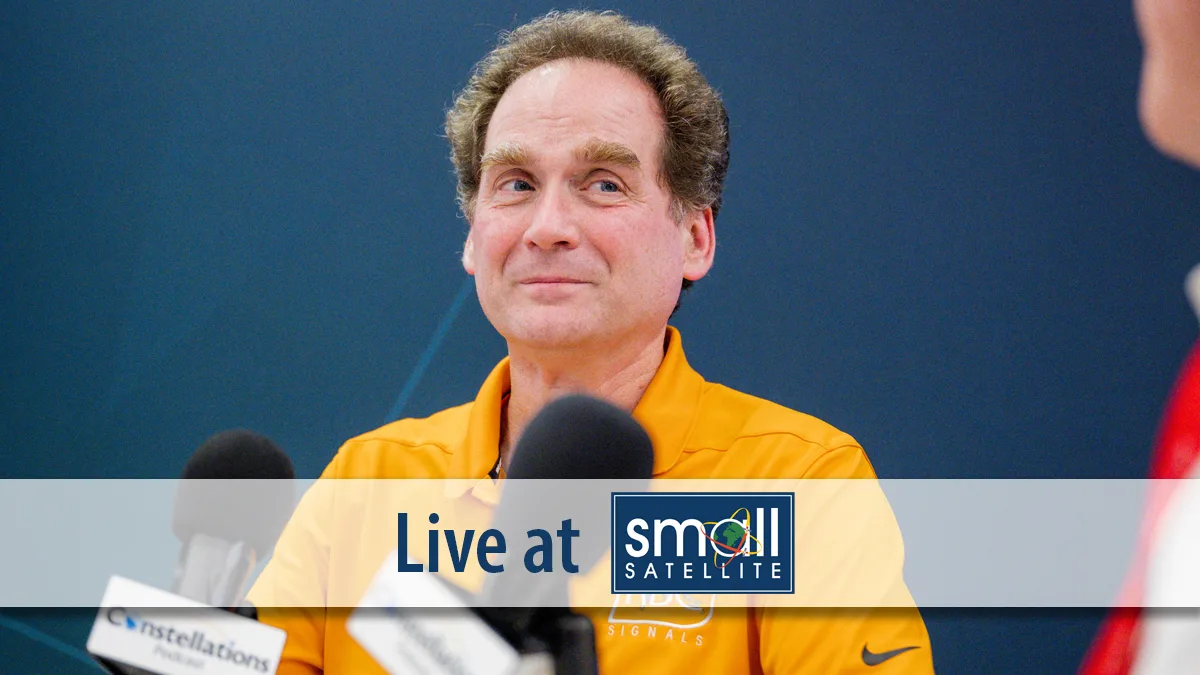
John Gilroy: Welcome to Constellations, the podcast from Kratos. My name is John Gilroy and I’ll be your moderator. We are recording this at SmallSat in lovely downtown Logan, Utah. The digital transformation of satellite technology and ground systems has opened the door to new options that weren’t previously possible. Today, we’ll be focusing in on how the ground segment is evolving to support the emergence of smallsats on orbit. Our guest is Ron Faith, president and CEO of RBC Signals. He’s also a serial entrepreneur returning to the space industry after stints in cloud computing and mobile commerce. He served as the CEO of data protection company Data Castle and launched Apple’s first standalone Internet product in the 1990s. Today he joins us to talk about all things GSaaS and smallsats. Ron, many satellite operators and service providers have considered including the ground segment as a service or GSaaS model as part of their business. In 2022, EuroConsult reported that GSaaS providers were starting up and investing massively in ground infrastructure. What is your general perspective on the state of GSaaS now to use later?
Ron Faith: Well, we’ve seen tremendous amount of growth in this sector. So first of all, just as many companies adopted the cloud in order to get flexibility, resiliency, and scale, this is the same motivations they have for adopting GSaaS or ground station as a service. And so we’ve seen dramatic expansion on the number of antennas, the frequency rates that those antennas are provided by, and all of us now support many, many hundreds of satellites on orbit. And today in LEO, there are thousands of satellites, and that’s going to grow very quickly here to tens of thousands of satellites. And every satellite that goes up has to be able to communicate with the ground.
John Gilroy: And that’s the phrase that pays thousands and thousands. I mean, 10,000 people at this conference, 10,000 guesses, isn’t it? I mean, who knows, but many, many, huh? Maybe we should just say many, many from now on. You walk around a conference, you’re talking to people. I’ve talked to people from NASA, people from Israel, from Chile, all over the place. So are there trends or breakthroughs that you’ve noticed in satellite data delivery, something like multi-orbit or multi-mission capabilities?
Ron Faith: Absolutely. So traditionally, folks used to build bespoke ground stations, and there was a one-to-one relationship between the satellite and the ground station. What ground station as a service does is make all of those ground stations software-defined ground stations, and that’s one of the new innovations that we’ve seen, and that enables those ground stations to be multi-mission and multi-tenant. And so that gets the utilization rate of the antennas up. Antennas are expensive assets, and when you get the utilization rate up, you can bring the cost per pass down. And again, as we’ve seen great advances in cost reduction in launch and in satellite manufacturing, we’re seeing the same thing with space communications to the ground.
John Gilroy: Well, here we are at the SmallSat conference, obviously why you’re here, because smallsats seem to be playing the largest role in the growth of GSaaS. Do you have some experiences on smallsat launchers, their unique ground segment needs or use cases that you can share?
Ron Faith: Well, the hundreds of satellites that we support today are predominantly smallsats, and I’ve been around long enough that saw the conversion from mainframes to PCs, and we’re seeing something similar here and going from very large satellites to smallsats, and these smallsats, like PCs, are going to be everywhere. Initially they’re going into LEO, but we have many customers that are going into MEO and GEO and cis-lunar with their smallsat capabilities.
John Gilroy: That’s a real good parallel you set up, because I do remember the days of mainframes, large and flexible and just physically power hungry, but now PCs were smaller and more flexible, so it’s a real nice way to set this up. That’s good. So Ron, what do you see as the biggest concern for smallsat launchers when considering an as-a-service model for their ground segment? And what’s your response to it?
Ron Faith: Well, one of the things that happens with smallsat launchers is many of them are new space companies, and they just don’t know what they don’t know. And so one of the advantages of going with GSaaS providers is that we see this a lot, right? We handle a lot of customers, a lot of layup operations. They’re oftentimes very worried about launching early operations where they’re first connecting with the satellites and then establishing the health of the satellites and then eventually the operations of it. And if they haven’t done that before, it’s a nail-biter. And so by having established GSaaS providers support you, then that takes a lot of the risk away, but that doesn’t mean that they have to trust you. And so sometimes trust is hard to get in an engineering culture.
John Gilroy: I do like that Don Rumsfeld mentioned the unknown unknowns and they don’t know what they don’t know. And Ron’s been around and he’s got the T-shirt, and he’s going to… Listen, did you consider this? Have you considered this? That must be your whole conversation.
Ron Faith: I’ll be honest with you. We have dozens of conversations here while at Smallsat, and that’s at the heart of a lot of our conversations.
John Gilroy: Have you considered? Well, I didn’t know, thinking about moving to Phoenix in August. Well, have you considered maybe the weather there, huh?
Ron Faith: Yeah, exactly. Well, a perfect example of that is that many smallsat providers come to us and say, “Oh, I want higher and higher bandwidths to work with,” and one of the things we encourage them to do is put something as simple as UHF on their spacecraft because that way when you launch in early operations with a UHF antenna, you can hit the broad side of a barn, and that way you can find your satellite quickly, because once you’re going up on a transporter mission, for example, you are in with dozens of other satellites, and you have to be able to find your satellite, communicate with your satellite, and get it healthy. And if you have something as simple as UHF on there, it’s easier to find in the early days, and those are some of the lessons learned. Unfortunately, some new space customers learn those the hard way, but we try to help them not to.
John Gilroy: Yeah. So a lawyer will say, “It depends,” and Ron will say, “Have you considered?” Boy, that’s a nice neutral way to present it. In April of 2023, Space News published an article called “Delivering Data: What Customers Get Wrong About the Ground Segment.” It says that, and I quote, “Ground segment providers suggest potential customers approach them anywhere from a year to 18 months before launching satellites.” Do you agree with that and why?
Ron Faith: I do agree with that. And the primary reason you’re doing that is not technical. It’s because of regulatory. So what happens is each of the ground stations have to be licensed for your spacecraft with the FCC in the US or with whatever regulatory authorities there are around the world. And so oftentimes that can take nine plus months to get through that process. So many customers save communications to the end or to the last, about their satellites and their sensors and launch and all the sexy things, and so they leave comms to the end and then it’s too late for them. So we strongly encourage folks to engage at least a year in advance. Two years is a little long, but at least a year in advance so that we can get you through the regulatory process so that your ground station is ready on the day of your launch.
John Gilroy: And here’s a shameless plug. Go to ConstellationsPodcast.com, and we did an interview with the ITU, and they were very, very careful about every word they spoke because there’s literally thousands of people trying to figure out how to comply with a lot of different things.
Ron Faith: That’s absolutely right.
John Gilroy: Aside from sometimes waiting too long to engage ground segment providers, so Ron, what are some other challenges that satellite operators and service providers come up against that they work to get their projects operational?
Ron Faith: First of all, they need to leave enough time in advance of the launch to do thorough testing, in particular radio compatibility testing between what they’re flying on the satellite, what frequencies they’re going to operate, what their MODCODs look like, and ultimately talking to the ground station and the radios and spectrum analyzers and many of the great equipment that Kratos provides along those lines. And so you need to test what you fly and then fly what you test. And all too often we see with new space operators, they’ll test what they fly, but then after they’re done testing, they tweak something or they change something because they think it’s safe and it’s okay to do it, and they can sometimes get themselves blocked up. And so we really appreciate for folks to test what they’re doing and then don’t touch it after it’s working and everybody’s good.
John Gilroy: Well, we mentioned satellite operators and service providers. Now let’s flip that around a little bit. So on this flip side, what changes have you seen infrastructure providers making to try to help reduce the time it takes to get the ground segment up and running for new launches?
Ron Faith: Yeah, absolutely. So first of all, we always joke that we can build new antennas faster than a satellite operator can get their satellite built and up, right?
John Gilroy: Wow.
Ron Faith: So that’s always good, but there needs to be a planning component to that. And so again, engaging with us early, looking at capacity in terms of how many passes a day you want to take, how many customers are on a given antenna, how we’re taking advantage of that, and then we have some new innovations that are coming along. So one of the things that we just announced at the show this week is a service called Gobik. So to complement ground station on the service, we’ve partnered with Viasat and with IQ Spacecom to provide L-band-based relay services from LEO to GEO and back down, so we’re providing the ground for that, obviously. We’re also doing the dynamic leasing of spectrum from Viasat, and that allows you to do TT&C from the satellite in conjunction with what you’re doing on the ground and that gives you higher resiliency. It also gives you better options, and you can do it at any time rather than waiting for when your satellite flies over your ground station.
John Gilroy: And easy to remember. Gobik’s pretty easy.
Ron Faith: Gobik. That’s right.
John Gilroy: Let’s mix it up a little bit here and let’s talk about the use of commercial services and infrastructure in defense. So where have you seen this particular convergence taking place?
Ron Faith: Oh, tremendously. So first of all, things like the Air Force Signal and Control Network is oversubscribed, right? Because the government is launching so many missions to going to space and trying out new satellites and capabilities. And so we work, we have the Space Force as customers of ours, the SDA Tranche Zero we support today, AFRL Air Force Research Lab, as well as the Defense Innovation Unit and DIU. And they use us all for a wide range of capabilities. One is new test and demonstration satellites and communicating with them where it might be difficult to get antenna time on missions of record for traditional satellites that are already up there, but also we’re seeing all sorts of unique new ways that the antennas are being used in order to support DoD missions. So for example, in space domain awareness, our antennas are used for listening for whether it be adversarial satellites, et cetera, one to characterize the emissions that are coming from them, but also if you use three antennas in some location in the world, you can then triangulate and then be able to look at that, and Kratos is actually a partner of ours in that area. They do a great job in space domain awareness.
John Gilroy: It is an interesting conversation topic to walk around the Smallsat conference here, meet someone in the cafeteria and talk about the emergence of commercial source for defense. I mean, 10 years ago, no one said, “Don’t even ask that question.” Now they’re talking about commercial resources and defense. So on the other hand, is there still a demand for sovereign systems? There must be.
Ron Faith: Absolutely. So first of all, on the DoD side of things, it wasn’t that long ago that DoD customers used to call smallsats crapsats. So they don’t do that today. They are heavily adopters of it as they platform, in addition to what they’re doing in GEO, they platform with all these smallsats in LEO and MEO to provide a very resilient infrastructure to do that. But then what we’re also seeing is a result of the cost of launch going down and the cost of manufacturing satellites going down that nation states that traditionally weren’t able to go into space are now able to. So we’ve done things, for example, we deployed a ground station for the Colombian Air Force last year because a number of countries are, one, putting up their own satellites because they can, and then they’re concerned about sovereign data rights. And so they really want that data to land back in their country, and so that’s where ground station providers such as ourselves are able to go in and provide them that capability, and then they’re also looking to integrate and work with allies around the world with their ground station networks. But depending on the geopolitical situation, they may want to turn those on or turn those off, and ground station as a service provides them that flexibility.
John Gilroy: Well, here we are at Smallsat, and I think the last three or four days here, a lot of the military people have be coming in and sitting down with you in a closed room and no recordings and just talk about this. So are there any new trends that you’re seeing that are specific to this defense market in smallsats?
Ron Faith: We do. We do. So one, everything that’s old is new again, and so cyber security lands up being critically important, and so being able to conform to standards like NIST 800-171 for cyber security and things of that nature are absolute table stakes for them. But then what we’re also seeing is that the ground stations themselves are becoming mini data centers. And so you’re landing up having a distributed compute architecture where some compute workloads are going on the satellite, obviously some are in the cloud or in the data center. Behind the scenes, we work with AWS GovCloud and Azure GovCloud as well. But increasingly, we’re seeing workloads in microservices, secure containers deployed at the ground stations so that the encrypted traffic comes into that, they decrypt it inside their secure container, they perform whatever logic they want to, they create advanced data products, they re-encrypt those and then come out of the container as the ground station operator. We never have to see those things, nor do we want to. It’s all highly secure and the customer is able to have the compute performed on the data in the place where it’s most effective for them to do that, whether that’s at the edge on orbit, whether that’s in the cloud or whether that’s what we call the terrestrial edge at the ground station, when the data first lands on the ground.
John Gilroy: I was talking to a guy from the Navy and he said these days these ships are like floating data centers, and now you got, it should be like a ground center, not a floating data. It’s a terrestrial data center. Right, exactly.
Ron Faith: Well, it’s funny you should say that. We just built for a government customer a ground station in a shipping container. We joke that it’s a containerized solution, both hardware and software, and so it’s got a little mini data center in it. We have Starlink antennas on top, and we have a slide that the antenna comes out on. It can work at a ship at sea, and it can work for telemetry tracking for rockets for launch from anywhere in the world.
John Gilroy: You call it container, container or container squared, or what do you call it?
Ron Faith: It’s a fully containerized solution.
John Gilroy: Like Duran Duran, container container. I asked my previous guest about looking into a crystal ball, but I’m not going to ask you this question. I’m just saying tell me exactly what’s going to happen because you’ve been around, you’ve seen things. So looking 10 years ahead, and we’re writing this down, Ron, how do you see ground systems evolving?
Ron Faith: Well, for one, the ground stations are going to evolve depending on the demand of the customers. And so our customers are going to go to tens of thousands of satellites on orbit.
John Gilroy: Oh, we know that.
Ron Faith: So they need scalable solutions. They also will need different levels of service because not all the traffic will be created equal, and so that means that they’ll need satellite relays on orbit, so inter-satellite links. A lot of the data still needs to come down to the ground, and so the ground stations will need to be dynamic. We’re also going to see within the next 10 years more cis-lunar activity, and so that means some larger antennas, antennas that need to be located elsewhere in the world. We’re a big believer that rather than building really big antennas for lunar, you build a arrays of slightly smaller antennas so that when you’re not in line of sight for the moon and providing lunar missions, that you are able to use those antennas for other customers in GEO or MEO or LEO, so you’re again getting good utilization rates of those going up. We also anticipate more artificial intelligence and machine learning weaving its way into all aspects of what’s being done. We already see that on the cyber security side of things for it, but we believe it’ll come in mission planning and operations and all sorts of other ways that we can’t even anticipate today because it’s 10 years off.
John Gilroy: Well, Ron, I think you’ve given our listeners a pretty good handle on developments in the concept of ground segment as a service. I’d like to thank my guest, Ron Faith, president and CEO of RBC Signals.
Ron Faith: Well, John, thank you very much. An absolute pleasure to be here, and we’re all looking forward to enjoying the rest of the Smallsat conference.