



Amazon Buying Globalstar at $11.57B Valuation, a 23.5% Premium, Will Operate It Alongside Amazon Leo; Apple on Board

Originally published by Space Intel Report. Read the original article here.
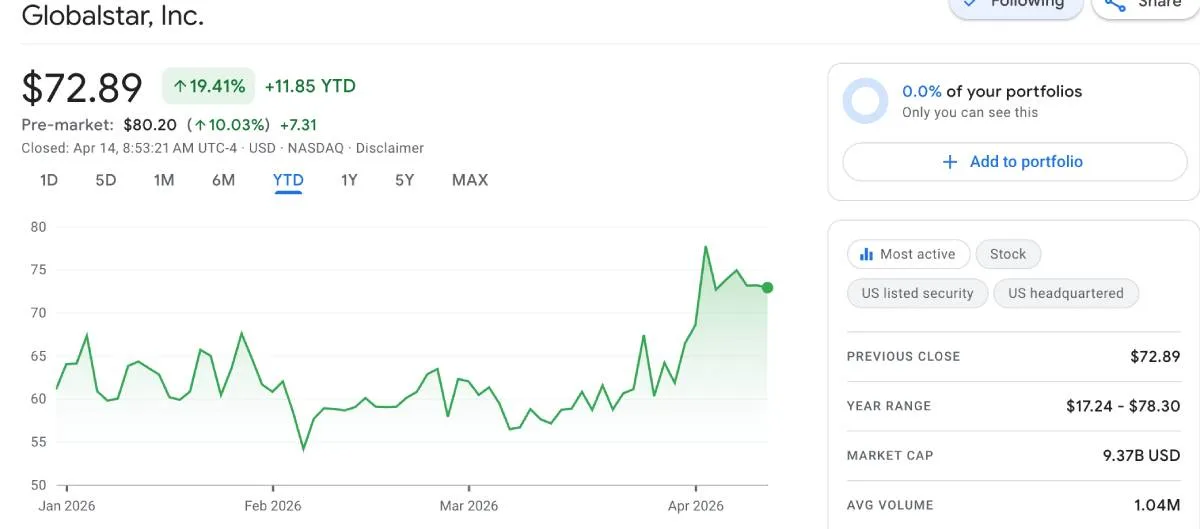
LA PLATA, Maryland — Amazon Inc. is purchasing mobile satellite service provider Globalstar Inc. in a transaction that values the company at $11.57 billion, a 23.5% premium over where Globalstar’s stock closed April 13 on the Nasdaq exchange, after having secured the endorsement of Apple, Globalstar’s partner.
Apple has reserved 85% of the capacity on the Globalstar constellation and is financing 85% of the capex for Globalstar’s future satellites. Securing Apple’s place as Globalstar’s cornerstone customer was key to securing the acquisition, industry officials said.
The Amazon-Apple tie-in also presents the industry with a credible, deep-pocketed competitor to SpaceX’s Starlink and Starlink Mobile.
“Apple and Amazon have a long and proven track record of working together through Amazon’s core infrastructure services, and we look forward to building on that collaboration with Amazon Leo. This ensures our users will continue to have access to the vital satellite features they have come to rely on, including Emergency SOS, Messages, Find My, and Roadside Assistance via satellite, so they can stay safe and connected while off the grid,” Greg Joswiak, Apple senior vice president of worldwide product marketing, said in an April 14 statement.
The two companies said their agreements “will promote innovation and competition across the space, satellite, and telecommunications sector, and support efforts to close the digital divide globally
“By combining Amazon’s low Earth orbit satellite network with Globalstar’s infrastructure and spectrum assets, the acquisition enables faster deployment of D2D connectivity at scale.”
The deal has already received the approval of 58% of Globalstar’s shareholders and is expected to close in 2027, the companies said.
Globalstar shareholders will choose between receiving $90 per share or 0.3210 shares of Amazon stock. The cash portion will be capped at a maximum of 40% of Globalstar shares, with the rest converted automatically into Amazon common stock.
The valuation could be reduced by up to $110 million if Globalstar fails to meet “certain operational milestones,” the companies said.
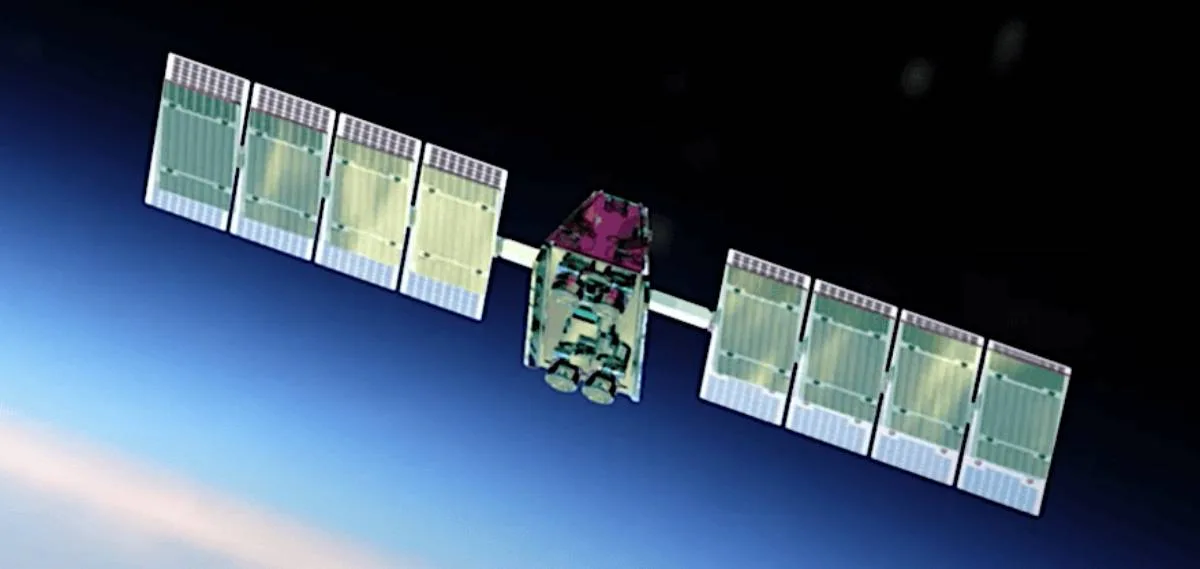
The deal appears to preserve Globalstar’s current $1.5 billion investment in a new constellation of 50-plus satellites under contract to Canada’s MDA Space and scheduled to launch starting in 2027, but Amazon said its own D2D constellation will be deployed starting in 2028. How credible that schedule is given the ongoing deployment of Amazon Leo remains to be seen.
Amazon will acquire Globalstar’s current satellite fleet “and its new satellites with expanded capabilities, [which] will operate alongside the Amazon Leo broadband system and Amazon’s planned direct-to-device satellite system,” the statement said.
Amazon plans its own D2D constellation starting in 2028
Amazon, which is struggling to complete deployment of the 3,200-satellite Amazon Leo constellation and is awaiting US Federal Communications Commission (FCC) approval for a deadline extension, has not detailed its plans for a separate D2D constellation.
“Beginning in 2028, Amazon Leo will deploy its own next-generation D2D satellite system, allowing Amazon to deliver more advanced voice, data, and messaging services to mobile phones and other cellular devices,” Amazon said in its statement.
“The Leo D2D system will offer substantially higher spectrum use and efficiency than legacy direct-to-cell systems, which translates into faster speeds and better performance for customers. It will also integrate seamlessly with Amazon’s first- and second-generation Leo systems, forming a powerful, unified network that combines fixed and mobile satellite services to support a wide range of customers and use cases. The complete Amazon Leo network will include thousands of advanced satellites in low Earth orbit and have enough capacity to support hundreds of millions of customer endpoints around the world.”
Amazon Leo operates at between 590 and 630 km. Globalstar’s constellation operates at 1,414 km.
The transaction represents a vindication of sorts for Jay Monroe, whose family-owned company Thermo, has carried Globalstar for many years.
Originally published by Space Intel Report. Read the original article here.