



Deutsche Telekom to Satellite IoT/D2D Providers: Come One, Come All, but Remember You’re Just Clowns in Our Circus

Originally published by Space Intel Report. Read the original article here.
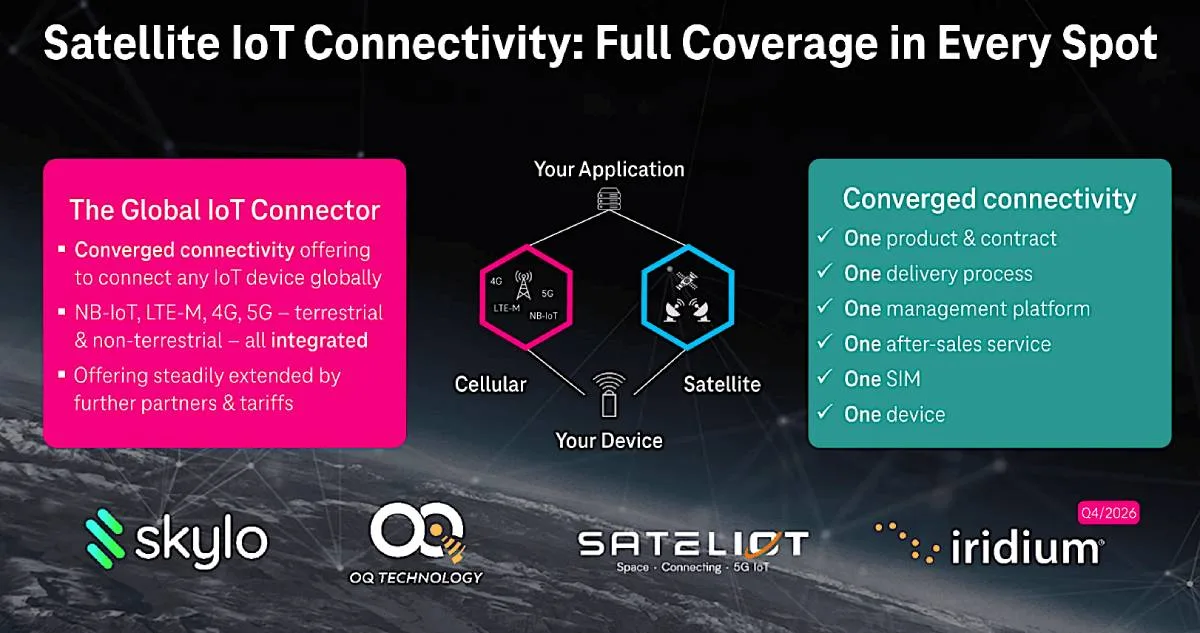
LA PLATA, Maryland — Deutsche Telekom has been among the most aggressive telcos in signing on with satellite IoT and direct-to-device (D2D) service providers.
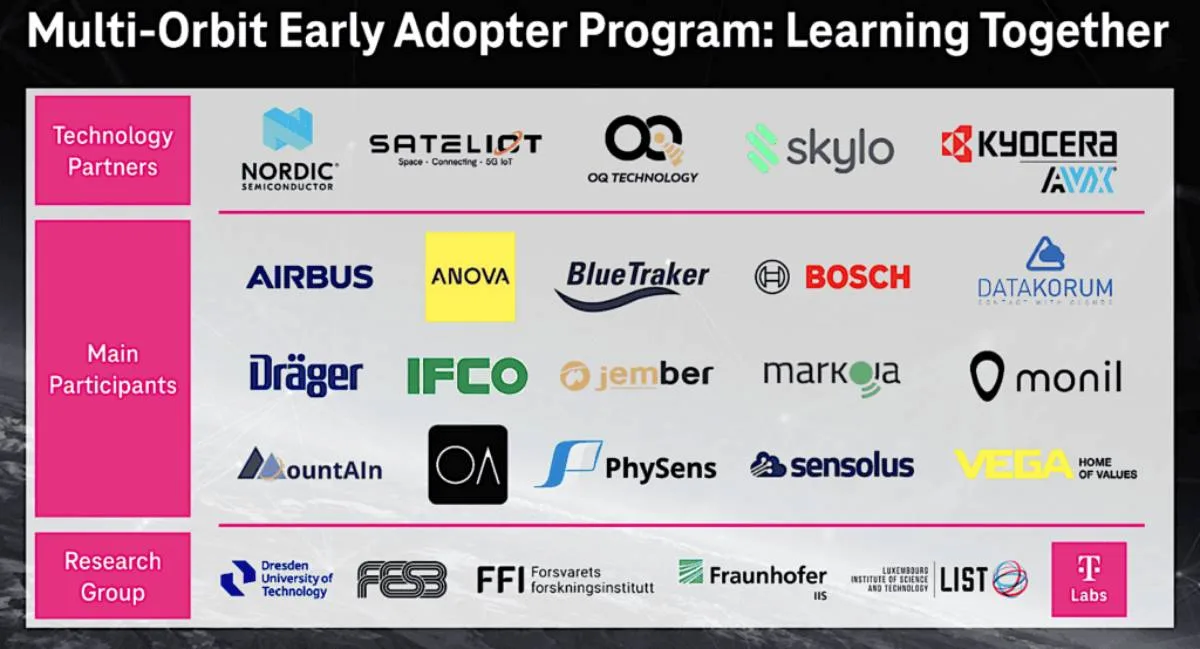
It started two years ago with US-based Skylo, which leases capacity on geostationary orbit satellites for its D2D messaging service. Last year it added OQ Technology of Luxembourg and Sateliot of Spain, two startup smallsat constellation operators.
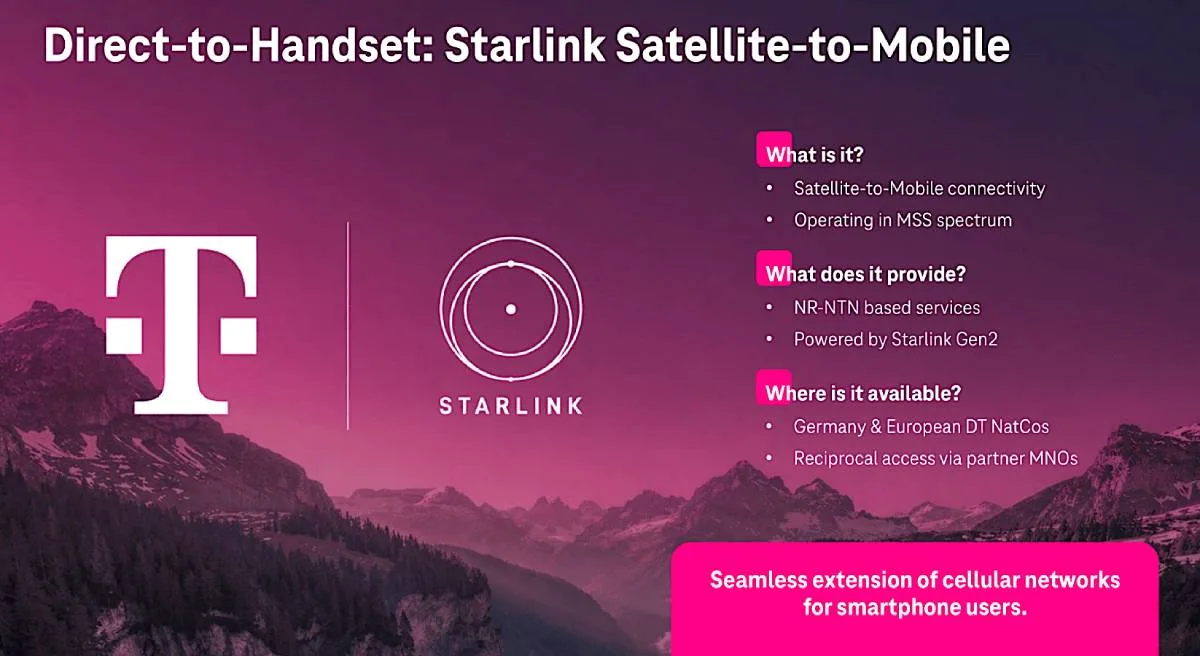
It plans to add Iridium NTN Direct toward the end of this year, and in March announced a deal with SpaceX for Starlink Satellite to Mobile — not the current version, but the one that will be using mobile satellite spectrum recently purchased from EchoStar Corp. and awaiting regulatory sign-off. It will start with messaging and expand to voice connectivity.
“It’s important to note that this runs on mobile satellite service spectrum, not on [telco] spectrum, so it’s not the same model as we do in the United States with T-Mobile, where they have a service compatible with existing LTE phones.
“The service in Europe is based on 5G NR and NTN and will run on next-generation mobile phones and satellite spectrum, so you don’t have any issue at the borders. I personally think this is going to be more sustainable.”
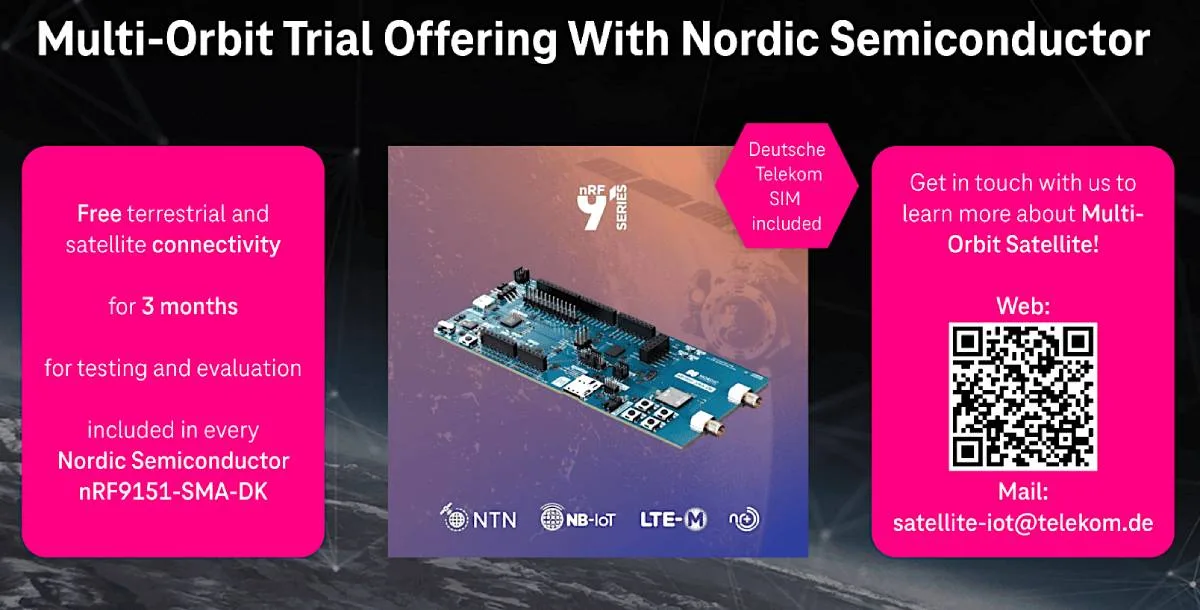
Deutsche Telekom is running a promotion with chipset manufacturer Nordic Semiconductor and antenna provider Kyocera to offer connectivity to both LEO and GEO satellites, accessible from a single Deutsche Telekom SIM card that comes with the Nordic Semiconductor chipset. Users can get three months of free satellite and terrestrial service with this promotion.
“It’s one product with one process. No need to worry about deploying your devices: one platform to manage it all, one service with one SIM and one device — maximum simplicity,” said Jens Olejak, head of Deutsche Telekom’s satellite IoT product business.
In an April 30 presentation during “The 5G Journey… and the 6G Destination” webcast, organized by c21-virtiual, Olejak delivered a message to satellite IoT/D2D providers:
We want you, but don’t let that go to your head.
“We are not selling satellite connectivity, we are in the business of integrated connectivity,” Olejak said. “It’s not a new product, it’s just an extension of a roaming partner. We’re relying on global standards, only 3GPP technologies. We will not pursue proprietary approaches because at the end of the day this is often higher cost to our customers, with vendor lock-in.”
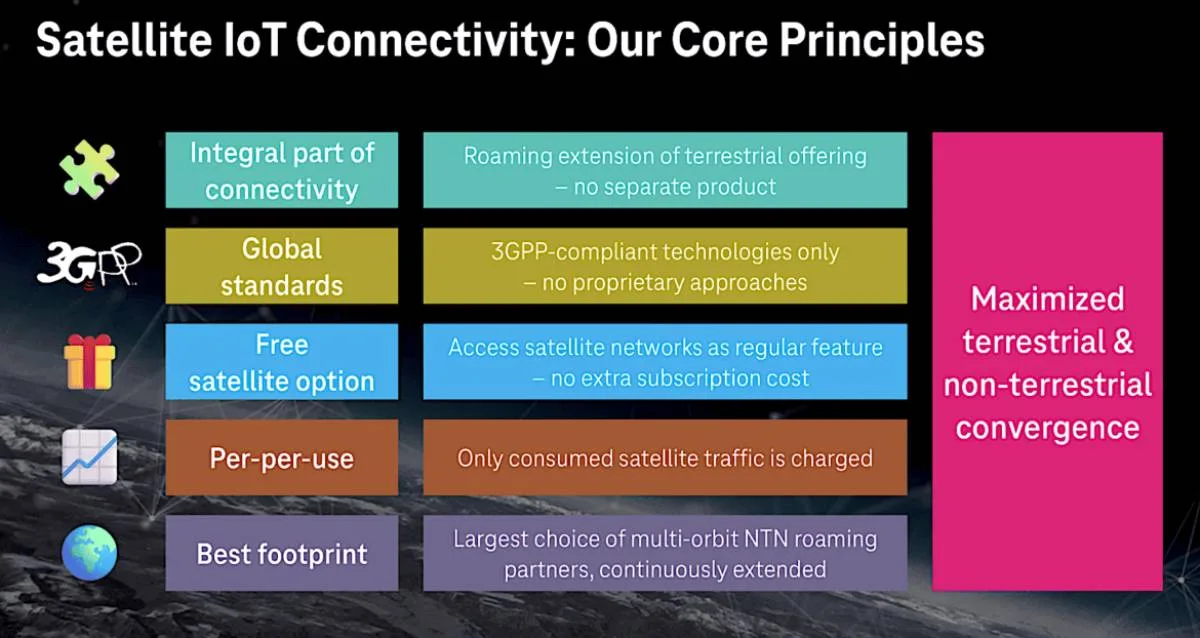
Deutsche Telekom will not ask its mobile customers to pay a monthly charge for satellite connectivity, it will be pay-per-use. Olejak did not outline the fee scale, but echoed recent statements by T-Mobile of the United States that direct to device will not be a high-use feature for most customers.
“The option to use satellites as an IoT solution provider will come for free,” he said. “You don’t need to pay us anything or any of your devices to connect to a satellite. Needless to say, satellite is a complement to cellular.
“We expect that in most cases, except maybe the ones for maritime, customers will be using satellite in a small fraction of their devices — 1%, 5%, 10%, 20%, but not 80%. That is why any of those devices can theoretically use satellites and you don’t need to pay for that.”
Service providers similarly do not need to now which devices will use satellites. All will be enabled.
“We are keen to claim the best non-terrestrial network and we’ll continuously extend our offer to provide our customers with the best choice. We want to make satellite part of an IoT offering. Perhaps in five or 10 years, we won’t talk so much about satellites because they will be such an integral part” of the mobile ecosystem.
Originally published by Space Intel Report. Read the original article here.