



EU Commission, ESA and Commercial Parters SES, Eutelsat and HispaSat Reach Agreement on IRIS² Architecture, Cost

Originally published by Space Intel Report. Read the original article here.

Update Aug. 7: This story was updated to include Eutelsat’s statement on its increased IRIS² investment
TUPPER LAKE, NY — The seven-month negotiation among investors in Europe’s IRIS² multi-orbit network concluded Aug. 7 with the signature of an “implementation agreement” between the European Commission, the 23-nation European Space Agency (ESA) and the SpaceRise consortium of satellite operators SES, Eutelsat and HispaSat.
Many questions remain after the Commission’s announcement that the RDV-1 negotiations on IRIS²’s cost, schedule and performance had concluded.
SES, in an Aug. 7 statement, said: “Following RDV1, SES and its partners will move into implementation activities, including satellite development, payload integration, network operations and user terminal deployment, while continuing to progress through future review and validation milestones.”
It’s not clear what’s in those future validation milestones.
Here are key takeaways from the Commission’s statement, and separate statements by operators HispaSat , SES and Eutelsat on signing the 12-year concession agreement to operate the network.
— IRIS², as expected, will include an additional 66 satellites to its low Earth orbit shell, bringing the total to 330 LEO satellites, plus the 18 satellites in medium-Earth-orbit in the original design set in December 2024.
These 66 new satellites in low Earth orbit will be military-Ka-band only, not a Ku- miliary-Ka-band mix as the rest of the constellation, and will be dedicated to military/security users and will “strengthen capabilities for defense, security and emergency services, further enhancing its architecture,” the Commission said. They will be among the first to launch, in 2029.
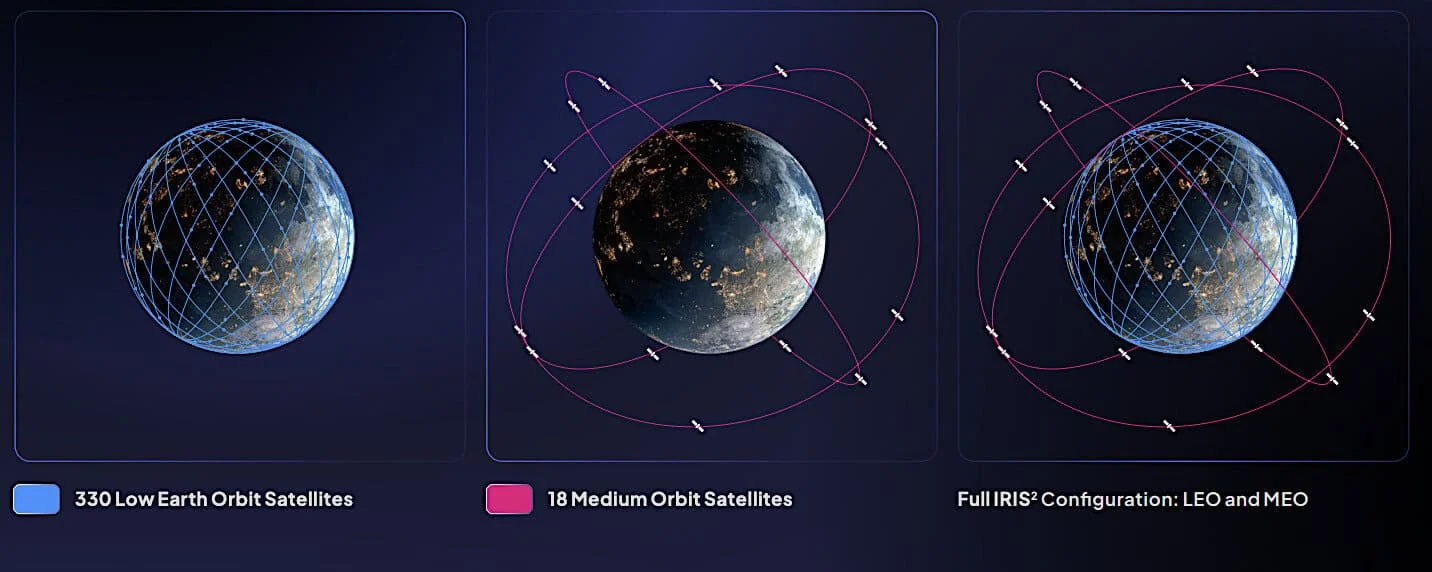
“This reinforcement will increase secure governmental capacity by 60% within the EU and 54% globally, while significantly expanding Europe’s ability to support critical missions during crises…. European manufacturers have committed to delivering the additional satellites, designed with enhanced resilience. Concrete next steps are now in place to achieve first launches by 2029.”
The other IRIS² satellites have a dual-use function to provide commercial revenue to the SpaceRise members.
— The RDV-1 negotiations “confirmed the program’s key parameters and necessary adjustments, including the design, system capacity, deployment schedule, target price and private operators’ investment,” the Commission said.
— Adding the new, security-focused satellites and getting them ready for launch starting in 2029 will increase the program’s total budget, the Commission acknowledged without specifying its cost. “Funding will come from a combination of EU budget resources for 2028-2034 and additional investments from Member States and third countries.”
The Commission is allowed to borrow against a 2028-2034 budget for a program like IRIS² by including provisions that account for possible future budget changes.
HispaSat, in an Aug.7 statement, said IRIS²’s capex is now estimated at more than 15.6 billion euros ($18 billion), compared to 10.5-11 billion euros at the December 2024 signing. In both figures, SpaceRise members’ total contributions are expected to be around 4 billion euros.
“Member States are already strengthening IRIS² through national investments to address specific additional needs. Poland and Hungary have already committed €656 million and €500 million respectively, while Spain has announced investments between €1.6 and €2 billion. Further Member State contributions are under consideration, with the relevant agreements currently being finalized.”
— The commitments in the Aug. 7 implementation agreement apparently permit the major hardware contracts, including with the prime contractors for the satellite network and launch service providers, to be concluded.
“Under the leadership of the Commission and the technical expertise of the European Space Agency, the SpaceRISE consortium will now accelerate program development,” the Commission said. “This includes satellite manufacturing, the procurement of launch services, and the development of secure ground infrastructure to ensure the timely deployment of the constellation.”
Hispasat to oversee deployment of 1.6-billion-euro IRIS² ground network
— Hispasat said it has been selected as prime contractor for IRIS²’s ground network, “the largest infrastructure of antennas, control systems, and connections to ground networks developed to date in Europe, representing an investment of 1.6 billion euros,” the company said.
HispaSat is also overseeing IRIS²’s low-LEO network, orbiting at 750 km or lower, to be used to test direct-to-device (D2D) and other technologies. The company said the budget for this segment is 125 million euros through 2027 and 175 million euros starting in 2028, pending approval of the EU’s next budget.
Hispasat is investing 600 million euros into IRIS² in return for “access to non-geostationary orbits in regions of high strategic interest — exploitation rights in regions of high strategic interest and commercial value for the business it already operates through its geostationary fleet,” the company said.
— SES said Aug. 7 that its investment in IRIS², which in December 2024 was set at up to 1.8 billion euros, had been reduced to up to 1.35 billion euros. “No future exceptional cash proceeds will be used to fund the project.”
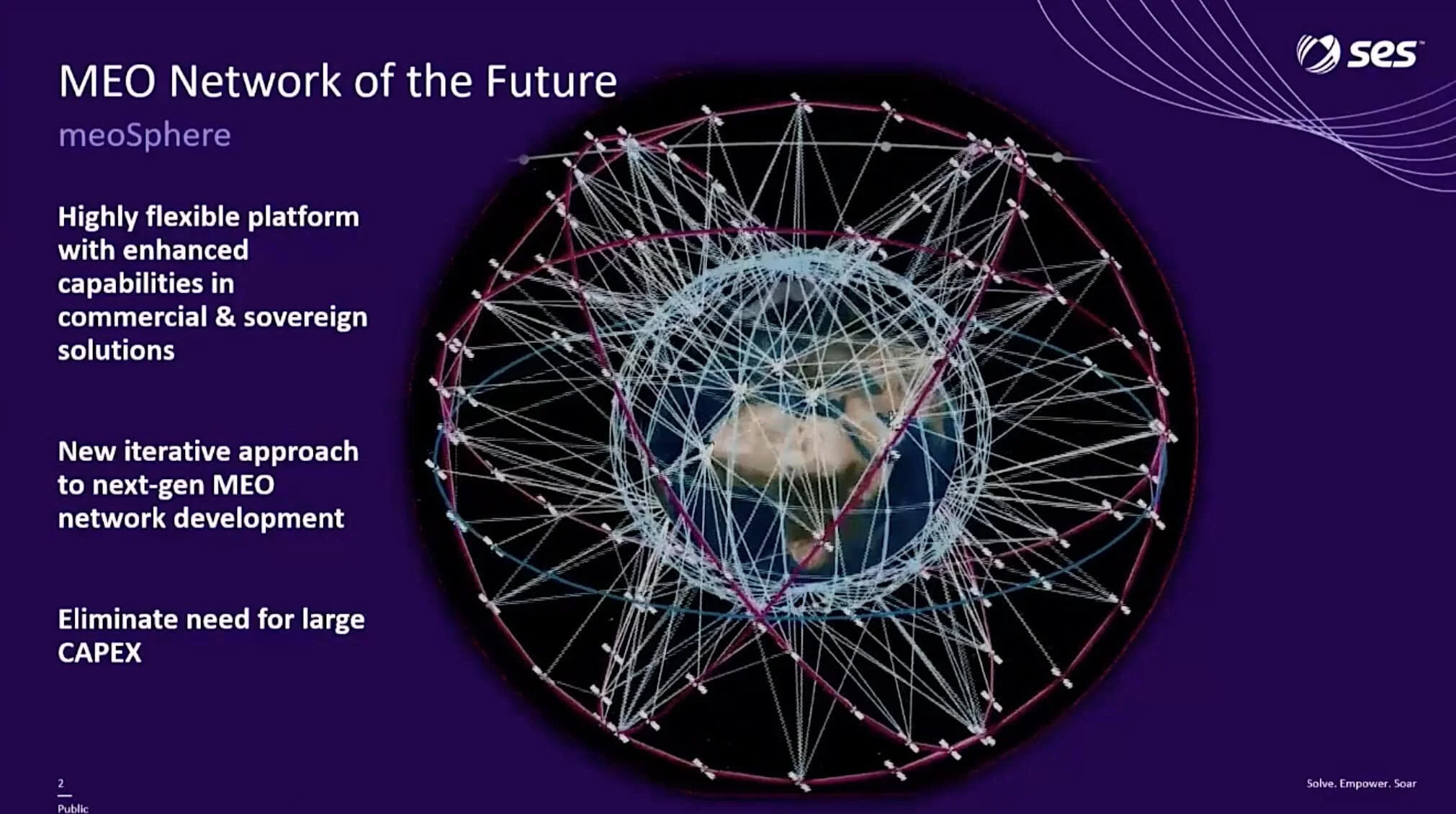
SES is overseeing the 18 MEO satellites, for which it is providing the payloads from SES’s new satellite hardware construction site in Luxembourg. OHB SE of Germany is the likely builder of the MEO satellite platforms. SES said the satellites would be in service in 2030.
SES said it will also lead “user terminal development, operations and the provisioning of LEO/MEO services through IRIS² control centers.”
The RDV-1 negotiations enhanced the value of IRIS² to SES through “lower capital requirements, enhanced satellite capabilities and an expanded role in program delivery,” SES said. “The Internal Rate Return (IRR) of the contract is expected to meet SES’s minimum 10% hurdle rate, underpinned by a compelling commercial value proposition.
“Approximately 90% of MEO capacity is expected to remain commercially exploitable by SES, generating significant long-term revenue opportunities across government, mobility, enterprise and cloud connectivity markets over the lifetime of these satellites.”
Eutelsat increases its invesment in IRIS² to $3.91 billion
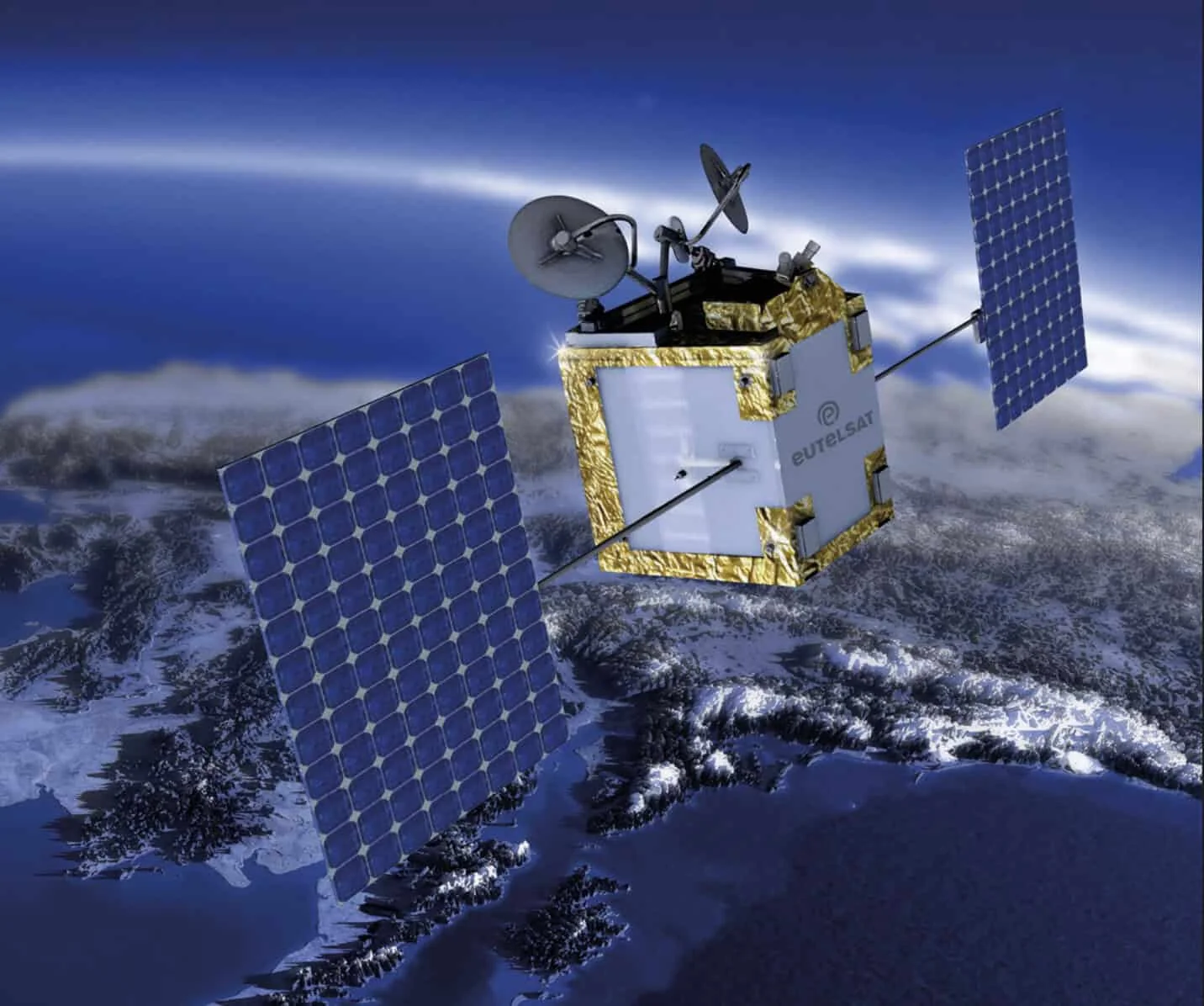
In an Aug. 7 statement, Eutelsat said its investment in the shared IRIS² infrastructure would be 2.23 billion euros, and another 1.16 billion euros in the commercial segment, meaning the Ku-band payload and the commercial element of the IRIS² ground segment. The investment will occur between 2027 and 2034.
In December 2024, the company had said its contribution to IRIS² would be 2 billion euros.
To assure service continuity between IRIS² and Eutelsat’s OneWeb constellation, the company will add 229 satellites in addition to 440-satellite Gen 1 refresh order with Airbus already contracted, at a cost of about 1 billion euros, Eutelsat said. This will extend the OneWeb constellation’s service life to 2034.
Revenue generated from the IRIS² LEO capacity “are estimated at over 10 billion euros between 2032 and 2040,” Eutelsat said.
The principal contractors for IRIS²’s LEO layer will be Airbus Defence and Space, Thales Alenia Space and Aerospacelab.
Originally published by Space Intel Report. Read the original article here.