



The Road to Interoperability
Making Gateways More Resilient

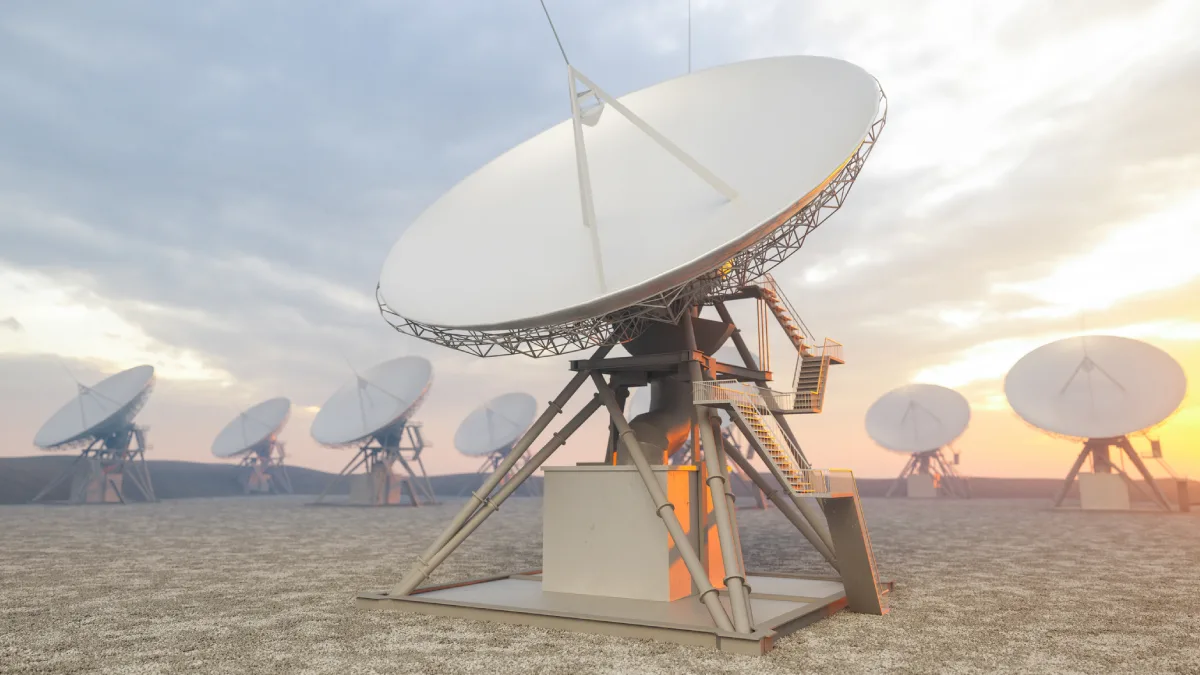
Recently an SES gateway in Israel was hit by a missile, targeted as part of the war in Iran. According to Space News, SES said “a small portion of the geostationary antenna field was damaged, adding that no injuries were reported and the impact did not affect the main facility at Emek Ha’ela.”
While I’m not privy to global intelligence on these things, this is the first time I can remember hearing about a commercial ground station being targeted physically, especially by missiles.
In fact, it turns the standard attack narrative on its head just a bit. Usually, we think about the ground segment being targeted by cyber and jamming threats, while missiles have been more of a growing concern as kinetic attacks on satellites in the space segment.
Either way, one point is clear: threats against satellite connectivity are growing as our reliance on those satellites deepens. Which is why both defense and commercial organizations are increasingly concerned about the resiliency of these networks.
That’s one reason why the defense sector has been so active in standards efforts including DIFI. In a nutshell: standards-based distributed, virtualized and cloud-enabled systems are more adaptable and reactive to disasters than hardware. It was one of the key motivations behind the Internet, to create a survivable global network even if large parts of the network were to fail.
How does DIFI come into play? By digitizing analog signals at or close to the antenna, data and communications can quickly be transferred for processing anywhere. Instead of being chained to a vulnerable, damaged or destroyed local gateway, processing is shifted to any devices that can handle data conforming to the DIFI standard. In addition, signals can be shifted to antennas at other gateways that are able to connect with the satellite in play, all contributing to far higher levels of operational resilience.
In addition, operations can be reconstituted faster since DIFI-based elements can be obtained more quickly from multiple vendors. That’s true for hardware components, and even more rapidly for virtualized software elements that can be downloaded instead of being shipped and installed.
5G NTN will add another layer of resiliency when it comes into widespread use, potentially allowing operations to roll over beyond antennas and gateways as well as between satellites and even networks.