



MDA Space: Factory for up to 400 Software-Defined Sats/Year Is Open; Pursuing Multiple Commercial/Govt Constellations

Originally published by Space Intel Report. Read the original article here.
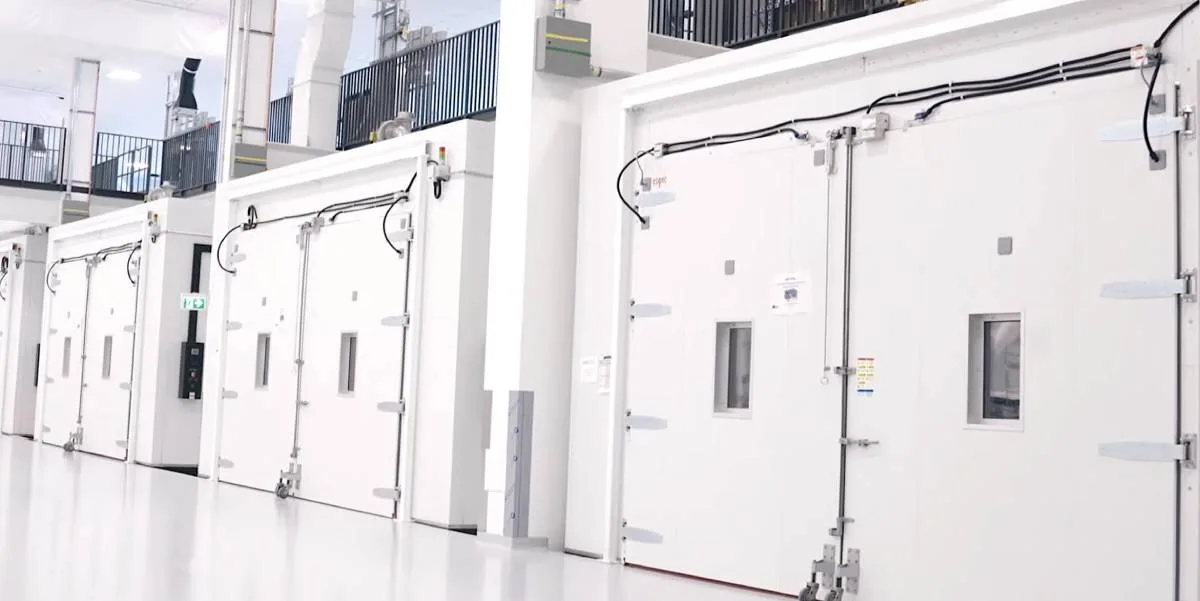
LA PLATA, Maryland — Canada’s MDA Space said it’s on schedule to complete construction of its 400-satellites-per-year factory in Montreal, which will begin limited deliveries late this year of satellites for Telesat’s Lightspeed broadband constellation.
It’s in 2027 that full production ramp of Lightspeed’s 198 satellites will occur, as well production of Globalstar Inc.‘s 50-plus direct-to-device (D2D) satellites. Broadband and D2D satellites do not look alike, but both production lines are based on MDA’s Aurora software-defined platform, which the company is counting on to drive further orders for broadband or D2D satellites.
EchoStar termination liability paid in full
For a brief period, MDA had secured a third constellation with the August 2025 order from EchoStar Corp. for 100 D2D satellites. EchoStar abruptly terminated the contract, valued at $1.3 billion, in September after selling its S-band spectrum rights to SpaceX.
In a March 4 investor call, MDA Chief Executive Mike Greenley and Chief Financial Officer Guillaume Lavoie said EchoStar had paid in full its termination liability and other charges due for cancelling the contract.
Lavoie said EchoStar had insisted that the termination charges not be disclosed.
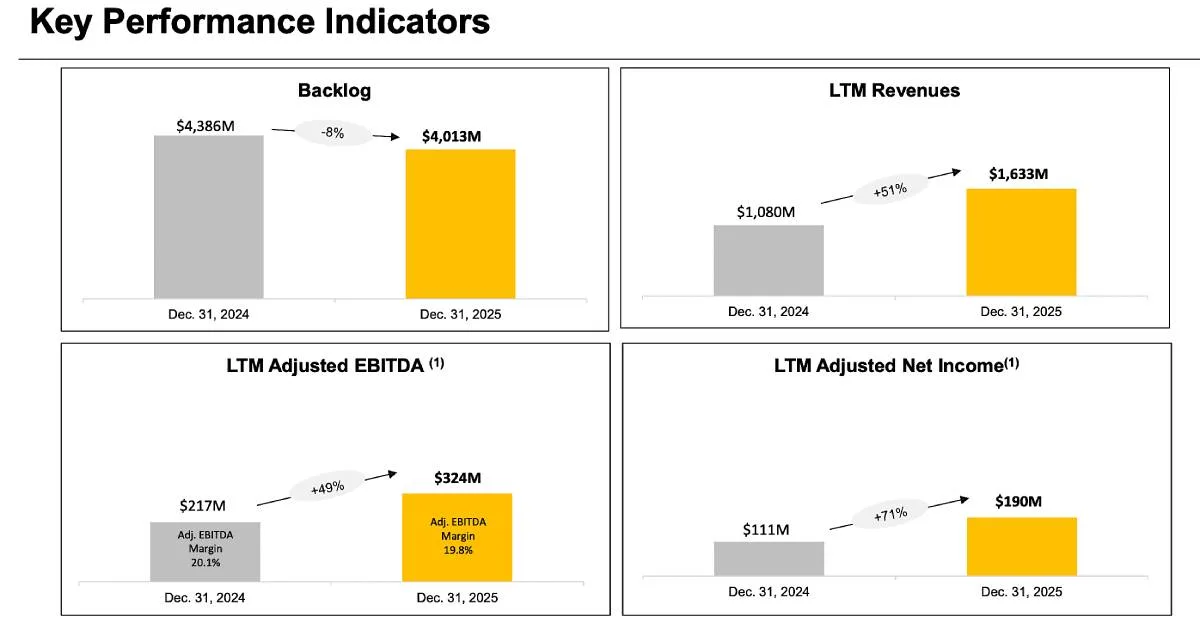
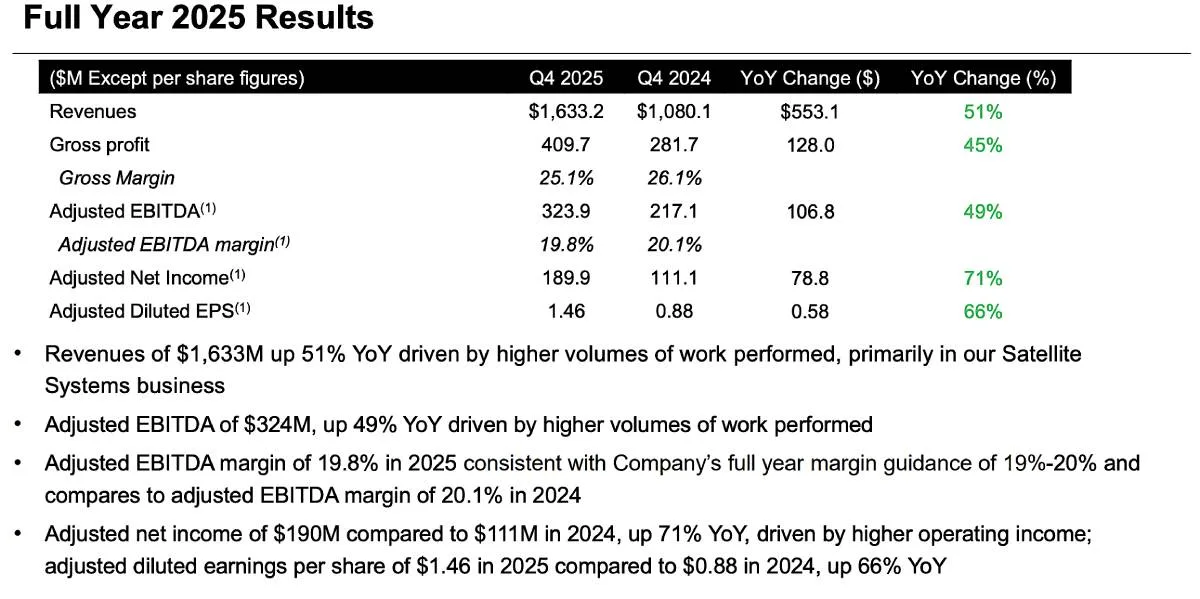
In the three months ending Dec. 31, 2025, MDA’s Satellite Systems division reported revenue of 371 million Canadian dollars ($271.3 million). The division’s revenue for the previous three months, ending Sept. 30, 2025, was 283.5 million.
The EchoStar termination fees are somewhere in that increase of 87.9 million Canadian dollars, or $64.2 million. Lavoie cited the termination as one of the principal reasons for the revenue increase.
“We have received payments for all termination amounts we were entitled to receive,” Lavoie said. “The terms of the agreement are confidential. We are glad this was completed in the 4th quarter.”
In a March 2 filing with the US Securities and Exchange Commission (SEC), EchoStar listed $68.27 million in contract termination costs paid or settled in Q4.
One of the first questions any broadband or D2D constellation project must answer when meeting prospective backers is: How can you possibly compete with SpaceX Starlink? The coming Amazon Leo constellation only adds to the pressure on startups to prove a business case for constellations that cover the world.
Greenley said during the call that MDA continues to field “multiple requests for commercial and government constellation projects.” It would be interesting to learn if the split among these has shifted toward government.
MDA in January signed an MoU with Korea’s Hanwha Systems Co. Ltd. to examine the use of MDA’s Aurora platform for Korea’s K-Leo constellation. In November, the Canadian Commercial Corp. (CCC) signed a letter of Intent with Korea’s Defense Acquisition Program Administration (DAPA) for “strategic cooperation in space and maritime” investment.
DAPA in August 2021 announced a 10-year, $13.5-billion program for military space technologies and is already moving forward on development of domestic space-launch vehicles and a radar satellite constellation.
Hanwha and Telesat have an MoU to collaborate on satellite connectivity solutions and user terminals compatible with Lightspeed. Whether Korea would accept purchasing a portion of the Lightspeed constellation, calling it K-Leo and taking sovereign control of that piece of the network, is unclear.
Greenley said MDA, in its annual assessment of potential contracts, has concluded that 10 billion Canadian dollars of opportunity — including civil, commercial and military programs — lies in programs for which MDA has been downselected as a candidate or in likely follow-on contracts from existing customers.
The figure includes “a number of space defense and non-space defense” programs.
MDA on Feb. 19 announced the creation of 49North, a wholly owned subsidiary focused on “multi-domain C4ISR — Command, Control, Communications, Computers, Intelligence, Surveillance and Reconnaissance — as well as non-space capabilities for Canada’s military.
On Lightspeed, Greenley said the 198-satellite constellation’s critical design review is about complete save “a few action items still being worked.”
“In terms of moving with the construction of the satellites, that is all progressing because we owe [delivery of] a couple of satellites this year into Telesat. So we are leaning into that.”
Lavoie said the Montreal production site “is virtually completed, but we need to invest of accommodate people” with office space and parking.” The company is also investing in chip development based on technology from Satixfy Communications, which MDA purchased in July 2025 for $356 million including $76 million in debt.
Originally published by Space Intel Report. Read the original article here.