Space is a Network.
Constellations is Your Connection.

Space Security & Defense

Threat Briefing 1: Laser Dazzling

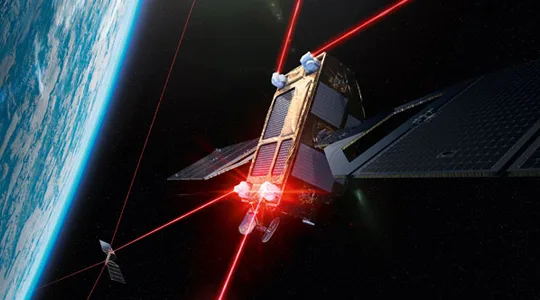
One threat Space ISAC is currently tracking that is undeniably intended for space systems is a phenomenon called laser dazzling, that is the use of powerful lasers to flood electro-optical sensors of satellites, effectively denying, degrading, and at worst destroying satellite capabilities.
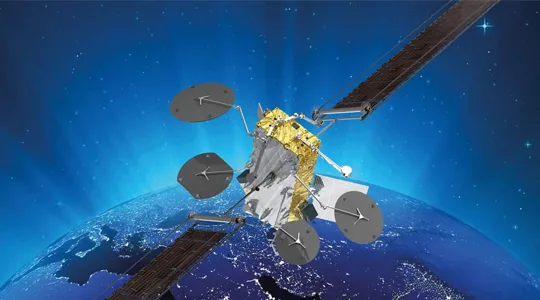

Satellite fleet operator Arabsat said software-defined satellites are the future of geostationary-orbit companies and offer a defense against market encroachment by constellations of low-orbiting satellites. Arabsat’s chief strategy officer, Abdulhadi Al Hasani, shares his view of the market and expectations over the coming years.

DIA’s John Huth explains the need for commercial data to support the intelligence mission “across the electromagnetic spectrum.”

Secure communications in the future will require two things: space and quantum. Constellations spoke with Dr. Mark Adams of the STORM Lab at Auburn University, about the unique advantages of quantum key distribution over classical encryption, its progress, and the challenges for applying it in space.

The nightmare scenario of “Q-Day” is not the sci-fi fantasy it was in the early 1990s. The most cautious experts believe a quantum computer could be developed by 2025 that’s powerful enough to break a 2048-bit RSA key in a matter of hours—a feat that would take trillions of years for a conventional supercomputer. Most experts expect to reach a critical point in 15 years, according to the latest Quantum Threat Timeline Report.

Artificial Intelligence & Analytics

Aurora Insight: Mapping Spectrum Use from Space

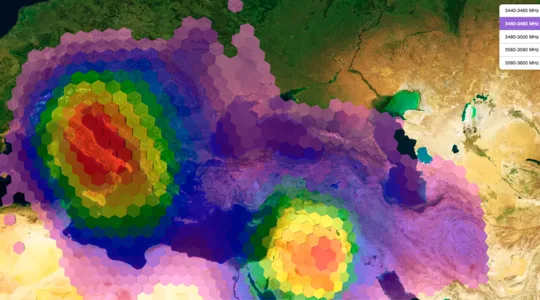
Aurora Insight, based in Denver, Co., has documented the growth of wireless network activity, infrastructure deployment and spectrum use across frequencies. Since deploying its first satellite in 2018, Aurora Insight has documented a global map of spectrum use that is “agnostic” to specific signal frequencies.

Al Tadros pointed out that NASA has led, “a lot of firsts in space: the first time we go somewhere, the first time we image or collect data.” This time, 50 years after its Apollo landing, NASA’s upcoming Artemis missions are all about collaboration with commercial and international partners, the ambitions to explore more of the lunar surface and establish the first long-term presence on the Moon.