Space is a Network.
Constellations is Your Connection.

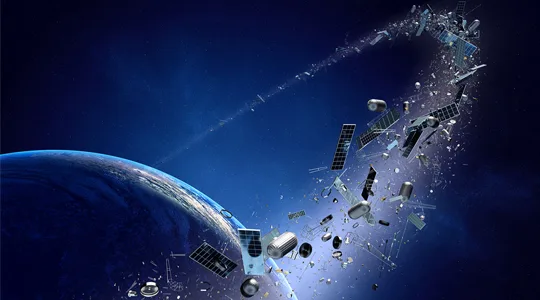
Until recently, Space Domain Awareness (SDA) has not received as much attention or investment as other space activities. Now, with the number of satellites projected to exceed 100,000 by the next decade, companies, governments and investors are becoming more attuned to the need for real-time, operational SDA data and many are pushing the boundaries of traditional technology to acquire it.


Constellations recently spoke with Dr. Lisa Costa, the Chief Technology & Innovation Officer (CTIO) of the United States Space Force. In this role, she is charged with “unlocking and harnessing innovation to leverage increase speed and advantage.” Previously, Director of Communication Systems and the Chief Information Officer for the U.S. Special Operation Command she is now responsible for employing cutting edge technologies to digitally transform the United States Space Force (USSF).

In the fifty+ years since the first human landing, the moon has remained as silent as it is distant. That may be about to change as more than 100 lunar missions are planned for this decade with the goal of establishing data storage facilities, exploration bases and even colonies. The area around the Earth extending out to just beyond the Moon's orbit is referred to as cislunar, and it will need communications infrastructure to support these and other missions.

Constellations recently sat down with Bill Ray, Vice President Analyst for Gartner Research and part of Gartner’s emerging technologies and trends office. The discussion covered a broad range of topics including LEO constellations, 5G technology, the emergence of global connectivity and investment strategy.

Today’s space ‘renaissance’ resembles little of the era that preceded it 50+ years ago. To understand the trends driving the proliferation in space, Constellations spoke with Josh Duncan, Principal Systems Engineer at Blue Canyon Technologies, a subsidiary of Raytheon Technologies that makes spacecraft and other products supporting many types of space missions, about recent notable developments.

Ask any space insider: the risk of satellite failure for the 5,000 operational satellites in orbit today differs dramatically in Low Earth Orbit (LEO) compared with Geosynchronous Orbit (GEO) for many reasons, from how spacecraft are built, to their velocity and orbital direction, to how much space junk they must navigate around.

Which side of the geospatial imagery industry should be more afraid of commoditization: Satellite fleet owners of providers of geospatial analytics? As multiple fleet owners move toward once-a-day coverage or better, with satellite sensors providing ever-sharper imagery, the pixel makers do appear exposed, especially as customers place higher value on the package of data provided, and not just the picture.

Network Architecture & Infrastructure

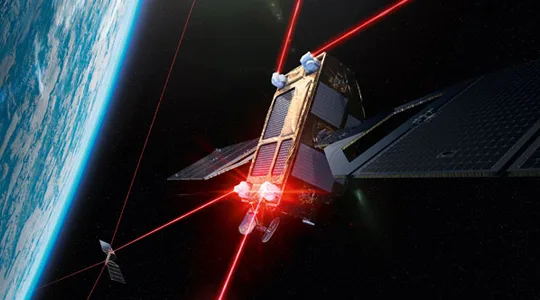
Laser Terminals Are Shaking Up Space Networks

Constellations recently spoke with Mynaric CEO Bulent Altan about how satellite communications are being impacted by the introduction of laser terminals space. Radio frequency (RF)-based communications have been the staple for transmitting data in space, but the movement from analog to digital signals has opened the door for new methods of data transmission.