



Resilience Under Pressure: Design, Deterrence and Future Force Planning in U.S. Military Space

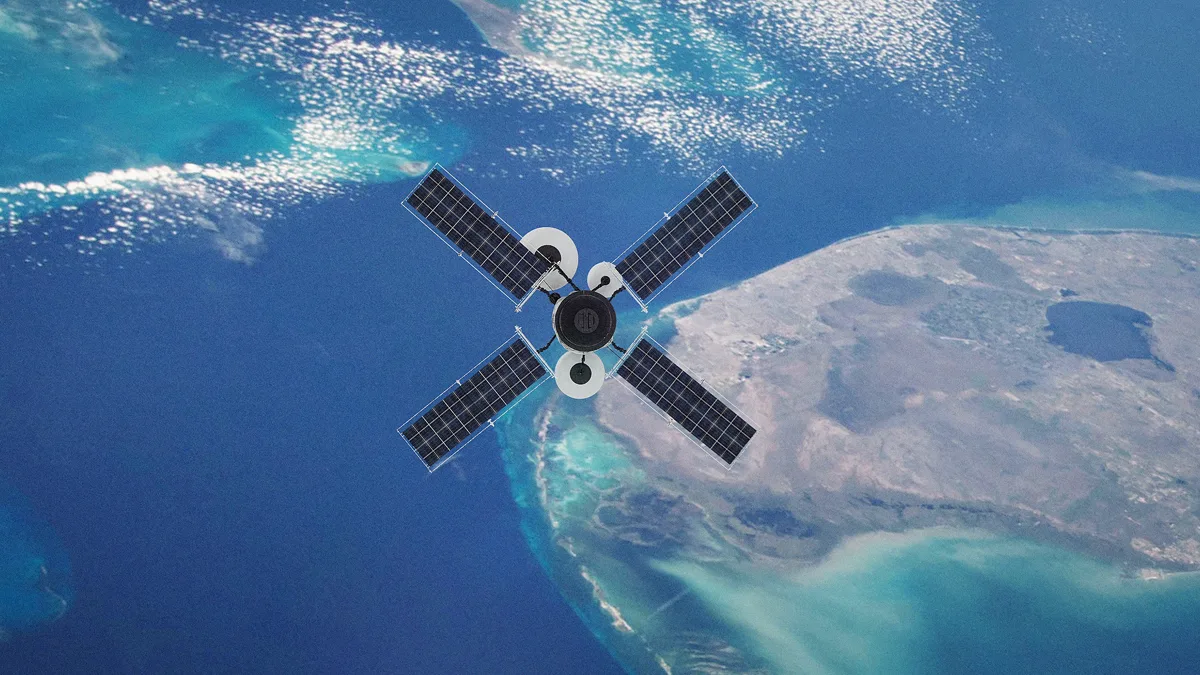
As the United States reshapes its military space posture, the focus extends beyond building resilient satellite systems to aligning space architecture with broader strategy, acquisition, industry partnerships and long-term planning in an increasingly competitive domain.
Within this effort, satellite architecture remains a critical component. The U.S. is redesigning its military space architecture around the assumption that disruption is inevitable, prompting greater emphasis on architectures intended to sustain operations even as systems face potential threats or anomalies.
At its most basic level, distributing satellites reduces the operational impact of losing one, said Charles Galbreath, director and senior resident fellow for space studies at the Mitchell Institute’s Spacepower Advantage Center of Excellence (MI-SPACE) and former U.S. Space Force Colonel.
“The most obvious is any loss of a single satellite is no longer as critical to the overall architecture or mission success as it once was, because you have so many others to fall back to, whether that be from an attack or through a natural anomaly or an environmental issue, radiation or micrometeorite,” Galbreath said. “So that resiliency, because of those numbers, is possible.”
While proliferated architectures can complicate targeting, they do not eliminate risk, said Galbreath.
“There are still challenges,” Galbreath said. “If you have a poor design of a satellite system and you simply replicate that poor choice over and over, that could be a problem. And you put up a whole flight or orbit of poorly designed satellites if you’re not careful. That just propagates.”
Deterrence and Risk in Orbit
But successful design and scale alone do not determine survivability or mission success and durability in a contested space environment is determined by more than the robustness of a network. Shared communications pathways, adversary escalation thresholds, acquisition timelines and the elasticity of the industrial base all influence how well a defense architecture performs under sustained stress.
The U.S. has a distinct advantage in terms of both the amount of space capability and variety of mission types due to the number of U.S.-owned space assets in orbit, Sam Wilson, director of strategy and national security, The Aerospace Corporation’s Center for Space Policy and Strategy.
“Most of the spacecraft that are active in orbit are owned by U.S. companies … being able to leverage that from different government agencies, whether it’s the defense side or the civil side, that’s just an enormous advantage that no other country has,” Wilson said. “It’s really the whole spectrum of including national security missions, including things you would associate with intelligence missions.”
The operational importance of those capabilities has already been evident in recent U.S. military actions in the Gulf region, Galbreath said.
“Space intelligence certainly played a role in identifying targets and even conducting battle damage assessments, as well as identifying where threat systems, so ground-based anti-aircraft systems, radars, et cetera, where those are located to do route planning for some of our attacks,” Galbreath said. “Certainly, missile warning capabilities are coming to bear to defend our forces in the region. So space was critical.”
In fact, awareness of these capabilities can serve as a form of deterrence for adversaries, Todd Harrison, senior fellow at the American Enterprise Institute (AEI) and retired U.S. Air Force Reserves Captain.
“Our space-based ISR is integral to our intelligence assessments of other countries and our ability to track specific leaders and understand their decision-making processes,” said Harrison. “I think adversaries know this, and with space-based ISR becoming persistent they should know they are always being watched.”
For example, the Kratos KnownSpace Global Sensor Network identified Iran-origin RF interference targeting at least six commercial GEO communications satellites since the outset of the conflict in late February.
Risks to U.S. assets can in turn post financial risk for commercial contractors, said Harrison.
In general, commercial space companies can be perceived as participants in a conflict if they supply data or services to the U.S. military—much as the United States would consider foreign firms fair targets if they aided an adversary’s operations, Harrison said. That perception creates financial exposure for U.S. and allied commercial providers, since their satellites could be attacked even if they have no formal ties to the military and an adversary simply assumes they do, Harrison said.
But the U.S financial system rewards flexibility and risk-taking, providing a strong technological and industrial advantage, and the current geopolitical tensions are unlikely to deter commercial firms from contracting with the U.S., said Andrew Berglund, senior policy analyst, The Aerospace Corporation’s Center for Space Policy and Strategy.
“I think the factors that matter the most are the factors that have always mattered: Can I trust the demand signal and the customer? Are the quantities ordered worth my time and cost? How challenging are the legal and regulatory hurdles? Is my IP being protected? I think those kinds of core business questions are still going to be the main ones that drive those considerations and those decisions,” Berglund said.
Instead, rising interest in sovereign space capabilities could drive some international companies to work closely with their own state on capabilities, Berglund said.
“At a basic level, that just increases the demand for those companies, their products and their services,” he said.
Strategic Gaps in Space Force Planning
Despite the demonstrated technological prowess of, the U.S. Space Force has underutilized strategic simulation as a tool in shaping real operational concepts and procurement decisions, said Peter Garretson, senior fellow in defense policy at the American Foreign Policy Council and retired Space Force Officer.
“In my view we’ve been way too tactical and too narrow in how we are using strategic simulation,” Garretson said.
What’s missing, he explained, is a broader, long-term approach that models how solar system expansion and industrial development might actually unfold. These kinds of simulations could identify the most effective infrastructure choices, prime locations, logical sequences of actions, and even the points where adversaries might try to provoke crises or escalate conflict, he noted.
“We haven’t had a government-run, space-themed ‘Civilization’ or ‘solar system Monopoly’ or ‘solar system Catan’ that really looks at how space industrialization and expansion develop under strategic competition,” Garretson said. “That kind of long-term planning and anticipation would lead you to ask the right questions about technological investments, tech trees, where you want to go and why, and which strategic cul-de-sacs you want to avoid. It’s the sort of thing that should have been an obvious first step for U.S. Space Command and the U.S. Space Force in their first six months to a year, and to the best of my knowledge it still hasn’t happened.”
Historically, U.S. defense space programs have been fairly narrow, with the bulk of the budget and planning applied toward updating or recapitalizing existing systems, said Berglund.
Balancing Long-Term Strategy with Operational Agility
However, Chief of Space Operations Gen. Chance Saltzman during a Feb. 23 keynote speech at AFA’s Warfare Symposium revealed that early discussions have commenced for “Objective Force 40,” the Space Force’s new 15-year plan.
The 15-year plan is not the first time the Space Force has adapted a long-term strategy, although the strategy has undergone change in recent years, said Galbreath in a slight counterpoint to Garretson.
“When Gen. Raymond was the chief of space operations, he had some longer-term visions of where the service could grow in the future. Digital transformation was a key element of his vision, and how to use AI and how to use virtual environments, et cetera,” Galbreath said.
In contrast, the Space Force under Gen. Saltzman’s leadership has taken a more near-term approach and has also prioritized integrating Space Force operations with other domain operations and services, he said.
While the preliminary 15-year plan talks signal interest in a long-term strategy that includes greater investment in on-orbit servicing, as well as initiates that are expected to go beyond the 15-year timeline, such as cislunar operations and an expanded human role in space military operations, discussions are still in early stages, and the current climate will necessitate a balance between long-term planning and elasticity, Galbreath said.
“This is not a definitive roadmap. It’s an area where we might want to pursue, but it’s going to be flexible because we have to adapt to the changing environment,” he said.
Technology will always move faster than the acquisition system can turn it into fielded capabilities, which forces a choice between relying on commercial innovation or taking a more hands-on role, Berglund said.
The Space Force’s challenge is trying to balance speed and flexibility with maintaining a coherent architecture—one that gives portfolio executives room to make decisions but still operates within clear guardrails, he said.
“If the trade space is too broad, you struggle with execution. If it’s too narrow, you don’t give them the flexibility that they need,” Berglund said.
The industry also needs clear signals about what capabilities the service will need in the future so companies can invest with confidence, and those signals only work if they’re backed by a consistent, coherent vision, he said.
Combining Objective Force 2040 with the acquisition transformation underway at the department level creates a new ‘trade space’ that shifts the focus from simply recapitalizing and sustaining existing systems to exploring new ways of achieving missions and enabling portfolio acquisition executives to pursue capabilities along multiple paths, said Berglund.
The Space Force will also benefit from tools that let leaders make quick trade-offs, Berglund said. That includes having a market research capability, building flexible architectures that can adapt and understanding how acquisition choices affect the industrial base so the service can sustain the capabilities it needs, he said.
“I think the long-range planning part is important, but probably more important from actually achieving this vision is having that sort of real-time kind of decision support tools,” he said.
Creating an ‘Arsenal of Democracy’ in Space
As technological innovation is rapidly advancing, current space strategies have been too rigid in adapting to these rapid shifts said Garretson. “While the Space Force initially made a forward-looking effort toward space mobility, logistics and concepts like in-space assembly and manufacturing, there has been no real follow-up in terms of investment,” he said.
Instead, funding has largely focused on small satellites, which are beneficial, Garretson noted. However, he said, there remains “tremendous skepticism about in-space refueling, basically no investment in industrial precursors or in-space commodities, and only the most limited investment in servicing, with none in assembly or in-space manufacture.”
These neglected capabilities are critical for achieving defense-in-depth and creating an “arsenal of democracy” in space, making U.S. industrial chains Earth- and launch-independent, Garretson said. Such capabilities could determine outcomes in a prolonged space conflict and help deter war by providing overwhelming industrial and logistical advantages., he added.
Yet the Space Force’s current focus on short-term timelines like 2027 or 2028 “greatly undermines the longer-term strategic role the Space Force could play,” similar to how the U.S. Navy once projected power globally for centuries, he said.
In some ways, the U.S. has held itself back in space by relying too heavily on “soft levers” like norms and policies over weapon-building, said Garretson. When adversaries didn’t mirror that restraint, the U.S. ended up underprepared and lagging in key space-weapon areas, he said.
“Typically, norms restrain the rule-followers and result in us under-preparing and over-relying on them,” Garretson said. “They can be useful in broader coalition-building, and our allies appreciate knowing what the rules are and that we follow them. But for such things to be truly advantageous, they have to start from a position of mutual advantage, where it is already in everyone’s interest to follow the norms.”
That reality underscores the need for a proactive approach, said Garretson. The United States should work to build norms, policy and culture in ways that strengthen its strategic position and create a space environment aligned with U.S. values, Garretson said.
These soft levers can help shape the environment, but they are no substitute for military capability, readiness, and—most importantly—an early and meaningful presence in the key terrain of space, Garretson said.
Shared norms will prove vital as the drive for space sovereignty leads to more actors – and assets in space, said Berglund.
“I think overall the environment will become more challenging as the number of actors increases,” Berglund said. “As those budgets turn into increasing number of assets on orbit, that becomes a more difficult environment for us to shape and operate in. And we can’t achieve our goals without cooperation.”