



Beyond Connectivity
SpaceX’s Next Chapter: What an IPO Means for the Future of Satellite Connectivity

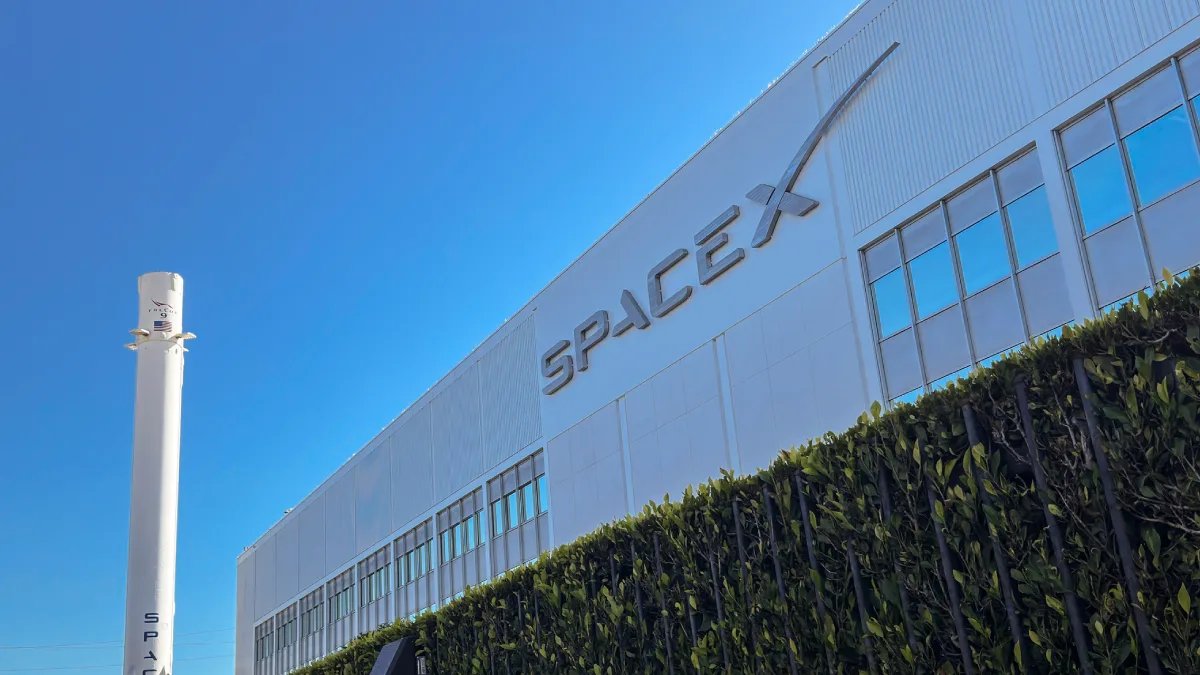
A SpaceX IPO would be one of the largest and most consequential events in commercial space history, signaling growing investor confidence in satellite networks as critical digital infrastructure.
Rachel Kong, industry analyst for ABI Research, explores what a public SpaceX could mean for investment, competition, direct-to-device services and the broader convergence of satellite, telecom, cloud and AI ecosystems.
Q: What does the potential SpaceX IPO signal about investor confidence in the commercial space sector, and could it accelerate investment across the broader satellite industry?
A: SpaceX’s IPO is at a target valuation of approximately $1.75 trillion with capital to raise targeted up to $75 billion. The sheer scale of this IPO indicates that investor confidence in the commercial space sector has evolved from speculative and venture-backed curiosity to institutional validation. The IPO filings revealed that Starlink generated $11.4 billion in 2025, accounting for over 60% of SpaceX’s revenue, demonstrating the value and monetization opportunity of LEO satellite constellations and validating the mega-constellations business model as one of the connectivity pillars supporting telecom infrastructure.
Starlink’s success proves the global demand for satellite connectivity and will accelerate investments into the downstream ecosystem such as space-grade chipsets, laser communications, ground station infrastructure and technologies like artificial intelligence (AI) and quantum key distribution (QKD) that support digital security and increase the efficiency of operations.
While investments will accelerate, the IPO will also highlight the stark contrast between SpaceX and emerging competition. This move will drain liquidity from smaller, emerging space companies as capital and funding concentrates around a few dominant players in the market for satellite-enabled Direct-to-Device (D2D) players (AST SpaceMobile, Lynk, Skylo, Globalstar, Iridium, etc.). Meanwhile, in the global satellite broadband market, SpaceX will face stiff competition from massive mega-constellations like Amazon Leo and Spacesail’s Qianfan constellations. This stand-off occurs as SpaceX actively disrupts fixed satellite service players like SES and Eutelsat OneWeb, which are focusing heavily on a multi-orbit strategy to retain enterprise and government clients.
Q: A public SpaceX would bring even greater attention to satellite connectivity markets. How might that influence the deployment of next-generation constellations and the expansion of services beyond traditional satcom?
A: In the D2D and mobile connectivity markets, there will be increased pressure on existing satellite providers to build and launch their satellite constellations within their targeted timelines. We can already see satellite operators like AST SpaceMobile grappling with launch delays and execution bottlenecks, with Bluebird 7 failing to reach the correct orbit on Blue Origin’s New Glenn in April 2026. However, the company is shifting its near-term strategy, preparing to launch Bluebirds 8, 9 and 10 aboard a SpaceX Falcon 9 rocket in June 2026. The heavy reliance on launch providers and supply chains constraints already is accelerating a broader shift towards deep vertical integration. AST SpaceMobile has a vertically integrated manufacturing strategy through designing, developing and manufacturing almost all sub-systems internally. In April 2026, Rocket Lab acquired Mynaric AG for US$155.3 million, an optical laser communications provider, bringing the manufacturing of laser optical communications terminals in-house, ensuring they have complete control over their deployment pipeline. In China, Spacesail has heavily integrated its manufacturing pipeline via mega-factories that can produce up to 300 Qianfan satellites annually. As of June 2026, Spacesail Technologies launched over 200 of its Qianfan satellites into orbit.
Expansion of D2C applications will undergo faster commercial rollout as operators race to demonstrate competitive advantages and differentiation of services. Many satellite providers have upgraded their satellite constellations for D2C services – notably Starlink’s V3 satellites and AST SpaceMobile’s Block 2 Bluebirds – to bring global mobile connectivity to unmodified smartphones. In addition, SpaceX’s strategic merger with xAI underscores their intention to move high performance into the space service stack. Orbital data centers, as covered extensively by my colleague Andrew Cavalier, will be one of the key developments that ABI Research expects to expand rapidly. For example, SpaceX’s infrastructure play has already locked in deals through massive enterprise cloud contracts, including Google’s $920 million monthly lease starting October 2026, and Anthropic’s $1.25 billion monthly agreement for mega-scale GPU capacity.
Q: SpaceX has helped demonstrate the commercial potential of satellite broadband and D2D connectivity. Following a potential IPO, what new business models or revenue opportunities do you expect to emerge across the industry?
A: SpaceX will dedicate a massive portion of its IPO proceeds to scale its computing infrastructure and build its space-based data centers. As space-based AI chipsets and modems are critical components of this ecosystem, the semiconductor industry is set to gain significantly from this shift. For example, Google placed an order with Intel to manufacture more than 3 million tensor processing units in 2028, highlighting how semiconductor giants are ramping up production to feed the global demand for AI infrastructure.
Another critical supporting technology required for this ecosystem is the deployment of optical satellite communications and laser hardware. Because space-based data centers cannot rely on traditional radio frequencies to transfer massive AI workloads between satellites, the shift towards orbital computing triggers an urgent need for ultra-high bandwidth optical inter-satellite links. For example, the European Space Agency (ESA) awarded a $21.8 million contract to Canada-based Kepler Communications in April 2026 to deploy and host new space-based laser communication payloads and advance optical networking.
Q: SpaceX has positioned satellite networks as part of a larger digital ecosystem that includes mobile operators, cloud providers and IoT platforms. How do you see this convergence reshaping the competitive landscape and creating new opportunities for satellite-enabled services?
A: One of the most consequential developments has been the convergence of satellite and cellular ecosystems via satellite D2D connectivity. Historically, mobile network operators have relied on the coverage and capabilities of their terrestrial tower networks for strategic differentiation. Moving forward, we are seeing carrier’s competitive edge becoming increasingly influenced by its orbital partner ecosystem. While we see major carriers like T-Mobile, AT&T and Verizon aggressively moving into satellite joint ventures and partnerships, skepticism persists in the telecom industry around NTN’s capability to move the revenue needle.
The integration of LEO satellite networks with cloud architectures, coupled with the ability to run AI directly on satellite payloads, will expose more satellite-enabled services for downstream industries. Earth observation satellite imagery used by government, maritime, geopolitical and defense industries can be processed onboard. Instead of downlinking massive, raw multi-gigabyte image files taking hours to decode, the system processes the raw pixels in orbit and downlinks only highly compressed, actionable intelligence. This will drastically minimize data latency, establish a highly secure closed-loop environment, and optimize bandwidth efficiency by downlinking only the critical data points to the customers and enterprises.
Ultimately, the entire stack in the space ecosystem value chain – satellite operators, mobile network operators, handset OEMs, chipset vendors, cloud players, data center providers and launch providers will be more integrated and closely connected.