Transcript:
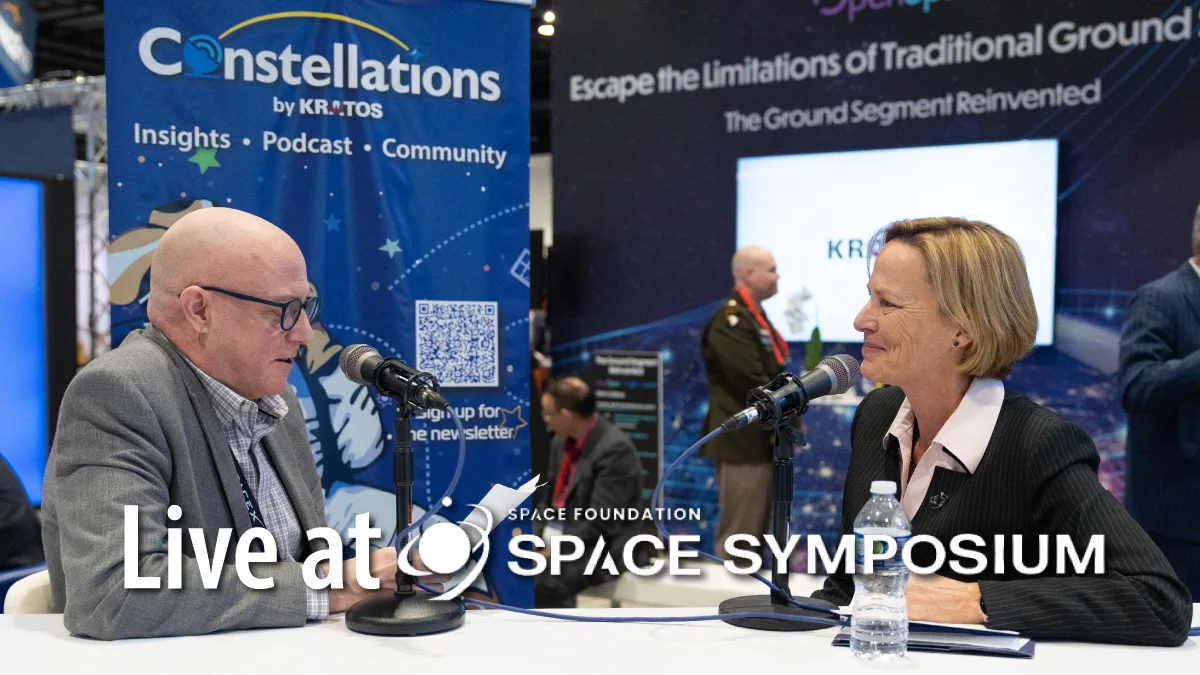
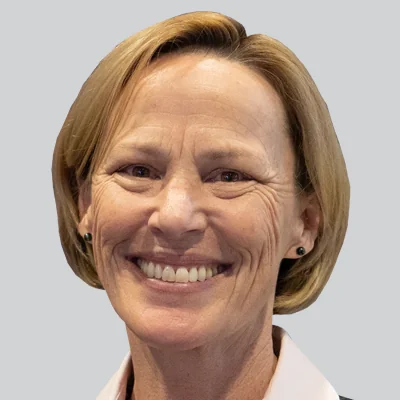
Jason Meyers: Welcome to Constellations, the podcast from Kratos. I’m Jason Myers, your moderator and managing editor of Constellations. We’re joined today by Heather Pringle, CEO of Space Foundation. Heather brings extensive experience in advanced research and emerging technologies in the national security space. A retired Air Force Major General and former Commander of the Air Force Research Laboratory, she has led work across next generation space systems and major defense R&D efforts. Her background offers perspective on the themes driving today’s conversations in space exploration, global cooperation and the evolving space economy. Heather, welcome. It’s great to have you with us.
Heather Pringle: Well, thanks for being here, Jason, and I love the booth that you have set up here at the Symposium.
Jason Meyers: Great.
Heather Pringle: So thank you for having me.
Jason Meyers: Thank you. So now that Artemis, which is a big topic of conversation today, I know Artemis II has taken place, what aspects of the mission do you think will have the most influence on how the space community approaches the next phase of exploration?
Heather Pringle: Well, let’s start with the big picture.
Jason Meyers: Yeah.
Heather Pringle: And first of all, huge congratulations to NASA, the international partners, as well as the industry partners who made this mission happen. And I think when we have a successful launch and a successful splashdown, it underscores the years and years of dedication, solid engineering, solid mission management that made it all happen, as well as this team of teams. And so really, starting with that as a foundation for where we are going next. And as we heard Administrator Isaacman say this morning, it’s the next step in the path to getting permanent lunar presence on the Moon. And so the fact that Artemis was so successful really increases the momentum, it increases the excitement. And again, there are opportunities for other companies, other nations to become part of where we are going. And so I’m really excited about this next phase of Artemis.
Jason Meyers: That’s great. And I understand you had a front row seat to ignition and launch, right? What was that like?
Heather Pringle: Well, yeah. So ignition was really interesting. So it was the opportunity for NASA to talk about where they are pivoting and how they are trying to meet the intent of Executive Order 14369, which is that ensuring American space superiority, and it had multiple sectors that it was addressing. Raise $50 billion from the private commercial banking institutions’ investment. The Department of Commerce has to infuse that into this space economy so that it can grow and become viable. That we have more companies, more competition and truly something that stands the test of time. So they talked about that. They talked about some of the trade-offs that they had been assessing. They are leaning in on partnering with the commercial sector, which is why we see so much excitement and energy here.
Jason Meyers: Right.
Heather Pringle: Right. And honestly, the sense in the room was that we’re serious, we are getting after it and there are concrete milestones. And so the administrator really laid out, “Hey, here’s the vision, here’s how we want to approach each of the different phases. We’re going to focus how we approach it.” So it was really, the room felt serious, it felt ready to tackle it. And then as far as the launch, that was magic.
Jason Meyers: Yeah?
Heather Pringle: That was absolutely magic. So I was on the causeway, which is a grassy area, with NASA friends and family. So you’d see the workforce out there with kids and they were playing cornhole, which is a funny little game. I was on a bench and I had some French individuals on my right, some Italians on my left. ISA behind me. And then there were buses of industry that brought in their workforce. And so first and foremost, the opportunity to have that large of an audience and so diverse watching the successful launch of Artemis, it was just pure magic.
Jason Meyers: That’s great.
Heather Pringle: I’ll remember it the rest of my life.
Jason Meyers: I’m sure, absolutely. So how would you say you see today’s focus on the Moon differing from the Cold War era, especially in terms of longterm goals and kinds of opportunities nations are pursuing?
Heather Pringle: Yeah. So the Apollo era was an opportunity to beat the Russians.
Jason Meyers: Right.
Heather Pringle: And it was about flags and footprints. Can we accomplish it as a nation? And so it was symbolic as much as it was geopolitical. And so now, as we look at the Artemis era, and so I love being part of the Artemis generation. It’s about sustained presence. And so that’s a different mindset. You can’t just do a touchdown, you can’t do a fly-by. You have to think differently.
Jason Meyers: Right.
Heather Pringle: About the technologies, the support, survive the night of course. And so truly, it’s about permanence. And the other thing that I’ll add is that the securing that as a high ground. So it’s important for our national leadership and we need this to maintain the leadership that we’ve had.
Jason Meyers: Absolutely. Let’s shift gears a little bit to talk about some of your past experience. You’ve had experience leading advanced military R&D in areas like hyper-sonics, AI and next gen space systems. What lessons from that work do you think are most relevant as human deep space exploration accelerates post- Artemis II?
Heather Pringle: Oh, that’s an excellent question. So first and foremost, it was a privilege to be part of the Air Force Research Lab, and those scientists, engineers and technologists are the best of the best. And my first lesson is that it is about the people and the individuals who make the technology happen, so I would say that’s an important aspect. And as we approach this Artemis generation and sustaining that lunar presence, we’re going to need the workforce across all different aspects of that mission. And you heard the announcement about nuclear propulsion.
Jason Meyers: Right.
Heather Pringle: So we will need experts in that and that’s a area that has atrophied over the years. Or at least, it’s not front and center. So we need to grow a robust workforce to support and sustain our permanent lunar ambitions.
Jason Meyers: Okay. So missions that go beyond low Earth orbit bring different technical and operational pressures. What changes do you expect to see in how organizations plan and prioritize as these missions become more common?
Heather Pringle: Yeah. And that’s a really great question. So as we go beyond LEO to GEO, it really is about understanding the impact of sustained human presence. So the effect on humans individually, medically, what are the technologies that they need to support? We know the physics are different as you get out beyond LEO to Lagrange and beyond. So a whole different set of approaches, technologies and support for human presence will be needed.
Jason Meyers: Okay. How do you see the mix of government, commercial and international actors shaping the next phase of activity around the Moon?
Heather Pringle: Well, that’s been particularly exciting right here, this week at Space Symposium. So first and foremost, we know that the government is increasing their reliance and their requirements that they’re sending out to the commercial sector. The Space Force has a commercial plan, NASA has a commercial plan. The Executive Order says, “Rely on the commercial space.” So that’s first as a strong signal to the commercial sector, we want you, we’re telling you what we want to do, where we want to go and we need your ideas. We need to get there with speed and so those commercial companies that can meet it quicker and do it well enough will really matter. So speed and capability matters. And then lastly, I’ll just mention that we’re seeing a greater synergy across multiple sectors of the government. So Department of Commerce, NASA, NOAA, and the military and the intelligence community are all coming together to really accelerate American leadership in space.
Jason Meyers: Excellent. When you look at the current landscape, what questions strike you as most important for leaders to grapple with as deeper exploration becomes more regular?
Heather Pringle: What is the risk that we are willing to take? And so as we are going faster and as we are having a sustained human presence, that’s a balance. NASA is very clear, safety first. And they want to get the mission done, and so understanding the risk trade-offs. And we’ve seen success in Artemis II. Partnering with commercial, partnering with international. So we’ve addressed that part of the risk equation, but as we try to accelerate I think that’ll be a new question that leaders will really have to grapple with. And how do they make that transparent and understandable across the entire enterprise?
Jason Meyers: Great. So what kind of decision making or leadership habits do you find most effective for navigating rapid technical change without losing sight of mission priorities?
Heather Pringle: Yeah, that’s a really good one and one I grappled with when I was at the Air Force Research Lab.
Jason Meyers: For sure.
Heather Pringle: So first and foremost, it is empowering the team that you have. When you have such excellent scientists, engineers, technologists or policymakers, you really want to empower them to be the best that they can be. But also, with that, when they’re trying to go fast, they need to understand where their boundaries are and you need to provide that safe space for learning to occur, and to give that feedback when it doesn’t always go right. Because when you’re going fast and you’re taking risk, it’s not always going to be perfect.
Jason Meyers: Right.
Heather Pringle: And so how do you make it a learning organization so that on the whole, you get to the right endpoint?
Jason Meyers: That’s great. So when you look across the technology landscape, which areas strike you as most likely to reshape how we design, operate or support missions beyond Earth in the near future?
Heather Pringle: I love that question and I asked that of Administrator Isaacman and Director Kratsios this morning. And both of them said nuclear power-
Jason Meyers: I heard that, yeah.
Heather Pringle: … and propulsion. And I thought Director Kratsios was going to go with artificial intelligence. It’s accelerating our ability to ingest data and to have novel approaches to design and mission architectures and mission orbits, and all of that. But nuclear power and propulsion is the survive the night aspect and so that is what enables us to be in the long game. And so I had to think about that for a minute, and I’m going to give it some more thought and come back to you, but I’ll go with that for now.
Jason Meyers: Okay. So as operations extend farther from Earth, what aspects of mission architecture or system design do you believe will require the most rethinking?
Heather Pringle: And I don’t know if it’s rethinking, but I think it’s just deeper thought about the implications of sustained human presence. And what are the support needs? You can’t really know until you are able to test it out more or try it out more. Or just like we had all the learning with the ISS in low Earth orbit.
Jason Meyers: Right.
Heather Pringle: And the way it was built back then, 25 years ago, is not how commercial companies are necessarily building it today. And so I think the same process of learning will need to happen. So we just need to get up there, test it out and incrementally learning.
Jason Meyers: Great. So on the international side, what forms of collaboration feel most consequential to you as exploration scales up, and where do you see the real challenges in making those partnerships work?
Heather Pringle: Yeah, great question. So first and foremost, the Artemis mission did prove that international collaboration can succeed. They built a trusted … Talk about the ultimate signal of trust. And guess what? ISA delivered, Canada delivered.
Jason Meyers: Right.
Heather Pringle: So our partners are coming through with real capability. So it is about real capability, proving it out, and they are. And so I think as we look more longterm past this mission, it’s about interoperability. And so how do we build things at scale so no matter who is building it, that they work together and it compliments each other? The internet wouldn’t have been successful if we didn’t have some of those common interfaces and that is exactly what we need for space architectures.
Jason Meyers: Great. So when you look at the overall growth of the space sector, what helps you distinguish areas that are building lasting capabilities from those that may be more speculative?
Heather Pringle: I love this question because we had a finance forum about two months ago and we asked investors from Wall Street that active question. And they said it’s, first and foremost, who is the team, the management team. Do they have the quality, the expertise to get the job done? But also, are they meeting their milestones. And so can they prove that they execute on their schedule? Do they understand their risks, do they understand their technologies and what they’re trying to deliver? So between the human side and meeting their milestones, that’s what I would say.
Jason Meyers: Great. Okay, actually last question. Which policy decisions or technical milestones do you see as most likely to shape how we operate beyond Earth over the long term? That’s a tough one.
Heather Pringle: Yeah, that’s a tough one. You could say interoperability and standards that really help us because we are moving fast, as an industry, as more nations are coming onboard. So I would say that would be really helpful. Policy or milestones? I would say that the executive order that came out in December is a great start. It was comprehensive, it covered the landscape and as we learn from meeting those milestones, I think we’ll need more like that. And maybe it’s just more about execution right now than it is about policy.
Jason Meyers: Absolutely.
Heather Pringle: I think I’ll have to give it a little more thought, But as part of the Artemis generation, I’m excited about where we are and where we’re going, and it’s really been an honor to be here.
Jason Meyers: Absolutely. Well, thank you very much. You’ve given us a lot to consider and I appreciate your time. Thanks for joining Constellations.
Heather Pringle: Thanks for having me, Jason.