Transcript:
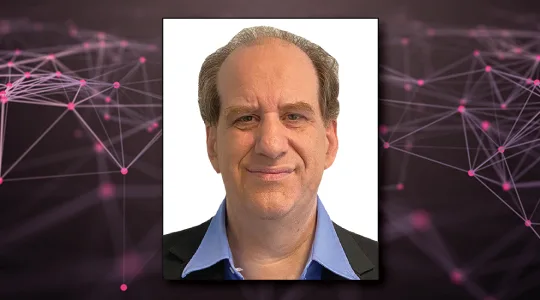
John Gilroy: Welcome to Constellations, the podcast from Kratos. My name is John Gilroy, and I’ll be your moderator. Our guest today is Jeff Freedman, CEO of Kythera Space Solutions. Jeff, how are you?
Jeff Freedman: Oh, I’m just great. Thank you.
John Gilroy: During this episode, Jeff will discuss how satellite operations are evolving with satellites that can change frequency bands, coverage areas, power allocations, and architecture on demand. He’ll discuss how these increasingly capable but also complex software-defined satellites can be managed effectively with powerful satellite network management systems. Jeff has more than 30 years of telecommunication engineering and software development experience. He holds dozens of patents in satellite payload design, satellite resource management software, and telecommunications architectures. Whoo, boy, I’m really giving you a good setup here, aren’t I Jeff? You sound really smart.
Jeff Freedman: Fun stuff.
John Gilroy: Okay. Let’s get into it. Demands for satellite services are becoming much more dynamic, especially with airlines and cruise ships that need reliable broadband internet service connectivity, anytime, anywhere. So Jeff, how has this demand for more dynamic service impacting satellite operators and their business models?
Jeff Freedman: Well, the real key here is that the operators need to reduce their cost per useful bit on the satellite. That’s everything to these operators, because if you can get a lower cost per bit, you can sell your service for less money and it means everything. That means trying to squeeze out, if demand of moves from one location to another, how do you adjust for that? When conditions change, how do you adjust for that? And that’s where all of this comes from. You want to fill those holes.
John Gilroy: Yeah. It sounds like a lot of optimizations and complex algorithms, doesn’t it?
Jeff Freedman: Yes, exactly.
John Gilroy: Yeah. Need some of the few patents to figure that out, I would imagine, too.
Jeff Freedman: Right, exactly. Very challenging. Yes.
John Gilroy: There’s an insider phrase in the satellite business and we have an international audience, I don’t want to toss in these big insider baseball terms, but it’s called a bent pipe, which is kind of like a reflector, like a big mirror in the sky. And so in this new environment that you’re talking about, the traditional bent pipe satellites, the big mirrors in the sky, are facing challenges to adapt to this market change and these different service needs that can evolve almost minute to minute. Some satellite operators are considering or moving towards software-defined satellites. So, why is this whole concept of a software-defined satellite the right approach?
Jeff Freedman: That’s a good question. There are many reasons on multiple levels. From the satellite manufacturer standpoint, software-defined also means you can build a generic satellite, which means you can get the cost of developing the satellite down. So that’s one of the big motivations is you build this nice generic satellite and it can handle all kinds of things. The other is just what we were talking about. You want to adapt to the dynamic environment, moving aircraft, changing markets that might change in the evening and be different during the morning. All of that is what’s driving the need for these software-defined satellites that can adapt to changes over time, conditions, markets, and all of that.
John Gilroy: Jeff, I was taking notes. And when you talked about generic satellites, I keep thinking of generic hardware in a data center. Outside of Washington, DC, there’s tons and tons of data centers, but this is essentially the same concept. Where you can leverage the ability of just yanking a server and putting another server as long as the software can respond to that. So it optimizes all kinds of things in a data center. It must optimize all kinds of activities in the satellite as well. Is that right?
Jeff Freedman: That’s right. And historically satellites were highly customized where you would say, “Okay, here’s my market. I know I’m going to serve this area and this area and this area. I’m going to have this demand.” And I place all my beams down and I put my business plan together and it requires a highly customized satellite, a highly customized service. And today we can come up with these generic satellites that can change over time. And it’s much more powerful, more flexible, and more generic.
John Gilroy: So proprietary services to almost infinitely flexible services now. That’s really a big change, isn’t it?
Jeff Freedman: Yes, absolutely.
John Gilroy: So these satellite services, how are they provisioned differently in a software- defined world in comparison to the traditional one we just defined?
Jeff Freedman: It’s a good question. So in this world, you need to orchestrate everything together. You’ve got terminals, modem hubs, and the satellite itself. And if you want to make a change, so let’s say you’re realizing a change either in demand or conditions like rain or other things, you have to be able to adapt. And when you adapt, you have to tell the satellite what to do. You’ve got to tell the terminals what to do. You’ve got to tell the modem hubs what to do, and they have to be synchronized. And that’s where all this complexity comes in and then what’s the best way to do it. How do you do it optimally?
John Gilroy: When you use the word orchestrate, I first heard software development people talking about that with containers and orchestrating containers. They’re stealing terms from the music world, aren’t they? They’re just stealing them. But it can work if all these different complex services always have to work and produce the same note or the same movement, huh? Yeah. Makes sense.
Jeff Freedman: And be synchronized. So you want the terminal to be ready for the service when it’s ready to be delivered. So, orchestration is the right term, you need a conductor saying, “Okay, how are we going to get it all working?”
John Gilroy: That makes sense. So software-defined satellites and digital payloads bring increasing capabilities, but guess what, much more complexity. So I got to tap your brain here. So how is it possible to dynamically manage bandwidth, capacity, power, and thousands of beams across multiple satellites without the human intervention? Maybe people your age and my age can remember back in the Ed Sullivan show, they had a guy with different plates on top of like a stick. And it was like five or six plates. And here we got Jeff Freedman going from plate to plate to plate and managing this and running over there and all without the plates falling. So you’re like a magician, aren’t you, Jeff?
Jeff Freedman: That’s exactly right and that’s exactly what we do. We first figure out what are the best plates to put up and where should they go and then balance them, so they all work together.
John Gilroy: Yeah, that’s quite an accomplishment. There’s a company called SES; most listeners know about that. They have a O3b mPower MEO satellite and the SES- 17 GEO satellite. And these I think are among some of the first of this new generation of software controlled spacecraft. So how is your technology helping these satellites to more dynamically provision the services kind of on the fly?
Jeff Freedman: In the case of O3b, O3b mPower, that is a MEO, meaning that unlike the geosynchronous satellites, which stay at a fixed location of the sky, the MEO satellites move with respect to the earth and therefore there’s dynamics there inherent into their system. And so, on top of all that dynamic, then you put on, okay, demand may be changing, weather conditions may be changing. You have to get your system to again orchestrate and get all this stuff working together and keeping track of all the motion and all the different assets. And so that’s what we do.
John Gilroy: So way different story to be told for a MEO satellite than a GEO satellite, like whole different sets of people, you must have different teams for each type of satellite, huh?
Jeff Freedman: Yeah. So, we have different software that works customized to those different satellites. So it can optimally serve exactly what those requirements are.
John Gilroy: For the benefit of our listeners, let’s maybe crystallize some of these services. So, can you provide an example of how your satellite network management system can help, for example, SES deliver these services on demand in a way that it couldn’t be done in a traditional way?
Jeff Freedman: Well, in the traditional model, you kind of had this, way back when you used to have these transponders and they were kind of fixed. You would share a transponder and you didn’t have to do anything. But with a dynamic system, now we can have changes in weather conditions, we can track aircraft, we can put capacity there when it is needed and take it away when it’s not. All of those wonderful things that help, again, reducing that cost per bit, because you’re getting the bit to where they’re used. Sending bits to an area where there’s no customer doesn’t do you any good.
John Gilroy: I’ve talked with many network managers over the years. And 10, 15 years ago, a network manager in a data center would say, “Well, managing a router is like managing a refrigerator. We just plug it in and off you go.” And I think that’s how the satellites are kind of, if they’d bounce the signal back, we wouldn’t have much management. But now there’s software-defined networks, there’s software-defined routers, but increasing complexity and much more skill involved. It’s really a complex process. It’s thousands and thousands of rules for just one smaller router. Putting them all together has got to be a real challenge, isn’t it?
Jeff Freedman: Yeah, absolutely. But it has to be seamless and it has to be error-free. And it’s one of the reasons why satellites have lagged terrestrial is you’ve got to get it done right. You can’t make mistakes. The satellite’s far away. You don’t want it to ever break.
John Gilroy: There’s a book many years ago by a guy named Frank Cooper. And he said, “The customer signs your paycheck.” And so let’s talk about customers and customers for SES, so how can they benefit from your flexibility?
Jeff Freedman: That flexibility can provide you better performance. You can track an aircraft, adapt to weather conditions, or get the demand to them that they need. So all of this type of adoptability also helps the customers because it can provide the services and improve the quality.
John Gilroy: Jeff, thousands of people from all over the world have listened to this podcast, go to Google and type in “Constellations Podcast” to get to our show notes page. Here, you can get transcripts for all hundred-plus interviews. Also, you can sign up for free email notifications for future podcasts. I’ve interviewed people with different CEO titles and some of them have operations manager in their title somehow. I would think that a person who was trained in operations for the last 10 or 15 years, the new skill sets got to be radically different than this traditional operations manager hat or business card that they have. And so how would these operations managers, how would they have to change to adapt to the software-defined satellites for people, processes, and technology, kind of the classic triad there?
Jeff Freedman: Right. The idea is that we have to integrate both business and operations and everything has to be moved smoothly. It’s like the old telephone industry, which used to use this patch panel where you hook everything together. And now you’re moving more toward AT&T, you pick up the phone, you want to dial the service and get exactly what you want when you want it. This is the service I want. I need it now. And you just dial it, you get it.
John Gilroy: Never would have been dreamt up back in the days of PBXs if you remember that term.
Jeff Freedman: Yes.
John Gilroy: So, we got you, Jeff, you’re leading different teams that are innovating eight, twelve hours a day. So, as you innovate and drive these real-time operations in space, how do you overcome the challenges of synchronizing all that effort with the existing ground assets that may not be as dynamic? Kind of teaching the old dog new tricks. Might be a challenge just in and of itself.
Jeff Freedman: Oh, that’s a very good question. Yes. One of the big things about our Kythera OS and also the ARC system is that it has to deal with assets as they are designed. So some assets are next generation and highly flexible and other ones aren’t, and you need to be aware of what their capabilities are and exploit them to the extent they are exploitable. So if this asset cannot change a frequency or can’t change pointing, then you’re aware of it. You live within the limitations, you optimize it as best you can, given the constraints. And then if some other asset has the ability to do other things, you, again, take advantage of it. So you exploit what you can and you live with what is fixed.
John Gilroy: Good. Are other satellite operators or manufacturers taking advantage of your satellite network management capabilities, Jeff?
Jeff Freedman: Oh, absolutely. Yes. We’re working with Airbus, Maxar, Ligado, and others. So yes, we have, like I said, this Kythera operating system concept, which is, ARC is the perfect example of it for SES. But we manage dynamic satellite networks and optimize the best way to get services.
John Gilroy: Just listening to this interview, it’s like, well, how come we’re not in Silicon valley? It’s just seems like all the terms you’re using are network management terms. I think you’re in the Washington, DC suburbs, but this is increasingly software management skills, aren’t there? This is really what it is anymore.
Jeff Freedman: Yes.
John Gilroy: So, what drove your company to building satellite network management platforms in the first place?
Jeff Freedman: Oh, good question. So about 15 years ago when we were, see, Kythera is actually a spinoff of RKF Engineering, and I was one of the founders of RKF back in 2001. So we first started working with companies like DirecTV to help design their satellites and to figure out the best markets for them. And we wrote optimization software that optimized the best way for them to deliver services. And then we moved to TerraStar, which was a mobile satellite, and we kind of evolved over time.
John Gilroy: Yeah. So you didn’t just stumble on this. It takes years and years to understand all these complexities.
Jeff Freedman: Absolutely. Yes.
John Gilroy: You were the F in RKF. We always wondered that here and so this business is developing and changing. So how do you see the future evolving with software- defined satellites and managing them?
Jeff Freedman: So I think it’s getting more and more automation, that same thing I was talking about with the AT&T. You want the network to be invisible. If you want a service, you should get it on demand, whatever that service is, if there’s a hostile thing in the environment, whether it’s interference or rain or whatever. You want to mitigate it and want it all to be resolved without you noticing, or at least without the customer noticing and everything on demand. So much automation and all behind the scenes, fixing all your problems.
John Gilroy: If you talk to a historian, you think of automation, you think of maybe a factory producing bottles or tires or something, and they’re producing the exact same thing over and over and over again. But your automation has to be dynamic and change with the weather, with the new services, with the new software threats out there. So this is an automation that really is integrated with humans and integrated with all the current innovations that are going on. Every week something new is coming out.
Jeff Freedman: Absolutely. Exactly right. And so we have to keep up with everything.
John Gilroy: Well, great. A lot of our listeners kind of have a whole lot better idea of this complex topic of a software-defined satellites. I’d like to thank our guest Jeff Freedman, CEO of Kythera Space Solutions. Thanks, Jeff.
Jeff Freedman: You’re very welcome.