Transcript:
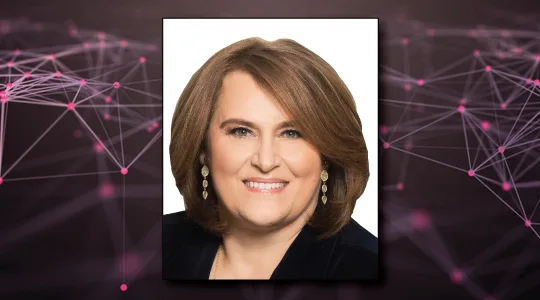
John Gilroy: Welcome to Constellations the podcast from Kratos. My name is John Gilroy, and I’ll be your moderator. Our guest today is Carissa Christensen, CEO of BryceTech. Software-defined networking, satellite life extension, innovative financing, all are having a huge impact on the satellite industry and who better to explain it than Carissa Christensen, CEO and Founder of BryceTech, a leading aerospace and emerging markets consultancy, and the publisher of the annual State of the Satellite Industry Report. Carissa is an internationally recognized expert in commercial space and interplay of government, military, and commercial activities in the aerospace sector. Carissa, your company, BryceTech recently delivered its State of the Satellite Industry Report. How many have you done of those reports anyway, a whole bunch, huh?
Carissa Christensen: John, what a pleasure it is to be here today and particularly a pleasure to talk about the State of the Satellite Industry Report. The next one will be the 25th year of that report. Bryce has not produced all of them, we’ve produced quite a few and very early on in the history of that report, I was fortunate enough to help develop the very first one for SIA. So that 25 years of time series data, is really extraordinary in the industry and very satisfying to me as a matter.
John Gilroy: Well, from a historian’s perspective, I’d love to compare them, but that’s for a different show, maybe we’ll do that down the road somehow. In this particular report, the lead I think involves increasing affordability and productivity, plus some new capabilities that are changing the dynamics of the satellite industry. So a lot of changes here. What are the main drivers behind these big three changes?
Carissa Christensen: The drivers behind changes in the industry right now are, there are several different streams. One is the continual and continued investment in technology and incremental, even beyond incremental, improvements by longstanding and well-established satellite manufacturers, satellite operators, launch providers and ground segment companies. So historically, we’ve seen some drop in launch prices just because of incremental efficiencies. We’ve seen a very significant increase in on orbit capacity over the last, roughly five years, because of the deployment of high throughput satellites, which have significantly more capacity and the cost per unit of throughput is dramatically lower than previously. So, the space industry, the space ecosystem’s continual investment in technology improvement, we continue to see the impact of that.
Carissa Christensen: Another thread that’s quite interesting is the nexus of a new small satellite form factor, that’s become more and more mature, combined with investment from venture capital firms and billionaire super angel in a variety of space companies and for the super angels, particularly in launch capability. And those factors together have created a new stream of space activity driven by venture funded risk tolerance firm, seeking to change architectures and develop new capabilities.
John Gilroy: I’m taking notes, I wrote down 25 years and wrote down the word incremental. A wise man once told me that people always overestimate what they can do in a year and underestimate what they can do in 10 or 15 years. And so just small incremental changes, 1% change over 25 years, you get all these drastic changes here just today and it makes things very interesting to talk about. You mentioned financing, I guess that’s the heart of it, investing in new startups. New capabilities are not limited to satellite functions, are they? Or are new capabilities in the way financial deals with investment structures such as SPACs? So, the technology is changing, and the financials tools are changing too, is that right?
Carissa Christensen: Absolutely. And the space economy is now taking advantage of innovative financial tools in a way that it had not previously at the same level. The data is very interesting, we produce another report called “startup space” that shows venture investment space and that’s any company that’s had venture or angel investment throughout its history is included in our startup space roll up. There was a very significant step function from almost none to a couple of billion dollars in 2015 of venture capital and super angel capital invested in space startups. And that number has grown to exceed $7 billion annually. That investment really has changed the way companies operate and it was enabled by, among other things, those small satellites. If you’re starting a company and the satellite, really the nominal satellite that you can build costs a couple hundred million dollars and $50 million to launch or more, it’s difficult to raise startup capital for a risky venture. Whereas, if you can build satellites on the order of a million dollars and launch them on a ride share or on a small launch vehicle, your launch costs are in the single or low double-digit millions. That becomes feasible, you can raise $5 million, $10 million, $20 million to start a business venture, which is a risky business venture, much more difficult to raise that capital for a high-risk business venture when you’ve got additional zeros added on. So the combination of technology and rate of financing for the space industry has really driven a surge in new companies and new types of services.
John Gilroy: I was at your website this morning, and I saw this figure, I was amazed by it. It’s some figure, something like 40% of the smallsats that have ever been launched, has been launched in the last year or two or something. I mean, this is shocking, isn’t it?
Carissa Christensen: It is. It really is. It’s an extraordinary moment in space. So if you think about the history of launches of satellites and the vast majority of the commercial space economy centers on satellites. The commercial space economy today, it’s a digital economy, it’s associated with the satellite value chain. The manufacturing and launch that enable the deployment of assets and then those assets are providing digital services. I hope we have a moment to talk about beyond the satellite economy, the sort of in space activities, which has a different economic structure, but let’s focus on the big commercial space industry, really driven by satellites. And the dynamics around those businesses, as I mentioned, have significantly changed through financing, through new technologies and funding of startup companies with many more satellites that are much smaller. So, the sequence has been, the introduction of smallsat, the business constructs using small satellites, which started out to be focused on remote sensing systems.
Carissa Christensen: We had Skybox out of Stanford that was acquired by Google and then sold to Planet. We have Planet, we have Spire and any number of companies. And those are satellite systems that are focused on imagery and the satellite constellation size is on the order of a hundred, say 50 to 100 satellites. Those companies raised money, they developed satellites successfully, they began to deploy. And then we saw the emergence of telecom satellite, smallsat concepts, those constellations are numbered in the thousands, in terms of number of satellites. And they are in an earlier phase, they’re just starting to deploy, whereas, a number of remote sensing companies are fully deployed. They have had to raise, they require more capital because the constellations are so much larger and they’ve had some really fascinating effects.
Carissa Christensen: If you’re watching dozens or even hundreds of small satellites, it doesn’t have a huge effect on the launch rate because they’re small satellites, a lot of them can fit in a large vehicle, but when you’re launching thousands it does start to affect the launch rate in a noticeable way. And the statistic you highlighted, so giving a proportion of historical satellite just in the last year’s, largely because SpaceX deployed a thousand satellites last year, and they’ve deployed a thousand satellites this year and will deploy more. Large groupings on stock and nine associated with SpaceX’s, large telecom constellation of smallsat Starlink.
John Gilroy: Carissa, when you mentioned the commercial space industry, if you look at this historically in the last 25 years, we benefited from historical low interest rates. And so this whole idea of low interest rates is this a new norm or just a real calm before we get hit, before the storm actually hits us?
Carissa Christensen: The investment environment of the really, I guess it’s the post-internet investment environment and the post 2008 investment environment, has been extraordinary across tech businesses. And I think the impact that space has is going to be a little bit differential because space has become like a tech business, in that you have the opportunity for a startup, smaller startups, individual founders to really have an impact. So I don’t know that the low interest rates and the generally favorable investment environment, the availability of capital, seeking a home with returns, higher returns has affected this from a financial point of view in an extraordinary way. I think it’s that space ventures are now participating in that activity, in a way that they weren’t before, because of the changing technology.
John Gilroy: Speaking of individual founders, you look at people like Musk, Branson, and Bezos, I guess they’re coming up with something like this billionaire effect or something. All of a sudden it’s becoming stylish or important to invest in all these different types of space ventures. Do you see that effect as well?
Carissa Christensen: Well, that’s a great question. And we asked that question in 2015 as we were doing our first study on startups space. And we wondered is this surge of investment interests driven solely by the sense that, a kind of a drag along effect from billionaire investments, what’s going on? And we interviewed venture capital firms and different investors and the answer is that the activity of somebody like Jeff Bezos or Elon Musk in space, the investment in a startup space venture certainly does legitimize a space venture in terms of deal flow. That is you might have a better chance of getting in the door to make your pitch, or at least, in 2015, 2016, 2017, that would have helped. But still venture capital firms are not investing out of a love for space, they’re investing out of a desire to generate returns. So really the concept, the business venture has got to stand on its own.
Carissa Christensen: More recently what’s happened is there’s been so much activity that space has become a topic for the mainstream financial media. As you mentioned, I’ve been doing this for a long time and 15 years ago, Space News might’ve been happy to talk to me, but probably the economist wasn’t calling me. And now, on a weekly basis, you’re seeing articles, New York Times, The Washington Post, and The Economist and Bloomberg has done documentaries and The Financial Times has done documentaries. I just talked to PBS, who’s doing a documentary on commercial space. I think that certainly the billionaire involvement shines a light of publicity and brings attention to the topic, but the underlying business model has really got to be the driver.
John Gilroy: Carissa, thousands of people from all over the world have listened to this podcast. Go to Google and type in “Constellations Podcast” to get to our show notes page. Here, you can get transcripts for all 100 plus interviews. Also, you can sign up for free email notifications for future episodes. Carissa, I want to go back to your report we started the interview talking about, it looks like it covers four key segments of the satellite industry, manufacturing launch, services, and the ground. Now, are each one of these categories changing equally or one more than the other, how do they all compare?
Carissa Christensen: Well, they’re certainly all changing very dramatically, and none are changing, if you’ll pardon the expression, in a vacuum.
John Gilroy: A little space humor there, huh? A little space humor there Carissa?
Carissa Christensen: Yeah. I was just going to move quickly by that, they affect one another. So, the changes with regard to satellite manufacturing, particularly those two trends that I mentioned for a large GEO satellite, the introduction and successful deployment of high throughput satellites, and then the introduction and successful deployment of small satellites, under 600 kilograms is the definition we tend to use. Also, the emergence of satellite servicing, commercial satellite servicing demonstrated with Northrop Grumman’s MEV in the last couple of years has an impact on the shape of the industry. So certainly satellite manufacturing, those capabilities enable expansion of satellite services, new types of remote sensing modalities, the four now five, China has said that it’s going to deploy a very large telecom constellation.
Carissa Christensen: Those very large low-earth orbit constellations of small satellites that seek to provide competitive broadband to end users. Those are enabled by those manufacturing capabilities, but of course, must be viable businesses or envisioned as viable businesses in order to become a meaningful part of the services segment of the market. And we’re in a very interesting stage where there’s a huge amount of investment, a significant amount of hardware success and we’re poised now on the cusp of, are we going to see business case success and what’s that going to look like and how is that going to play out? Are we going to have multiple systems? Are we going to have one system that triumphs? Are we going to see systems deployed, but then not be able to generate sufficient revenue and get acquired? So, some investors lose money, but we still have a capability, this whole shootout on the services side is really fascinating right now.
Carissa Christensen: Launch enables everything, and ground segment is really what, I mean, often when you’re talking about space assets and capabilities it gets a bit overlooked, but as you know very well there is zero revenue from the digital space economy without an effective ground segment. Whether that is delivery to the end user or the support and infrastructure operations that enable satellites to operate and perform and deliver the services that they seek to deliver.
John Gilroy: One of the key segments you mentioned was launch and pretty hot topic of late, given the exploits of Branson and Bezos. At a recent conference, you stated that launch is not a barrier to big satellite companies. Don’t reduced launch costs have a positive effect for all satellite companies?
Carissa Christensen: So, this is such an interesting topic and there are so many different business structures, and launch costs have different impacts in those business structures. So let’s take the most obvious place where launch price makes a huge difference to the size of the market, where the market is incredibly responsive to launch price. And that is space tourism, commercial human space flight, whether that is suborbital or orbital. If I’m looking at a trip to space like Inspiration4, or a trip to the International Space Station, like the Axiom 1 mission or to visit space, but not orbit and touch space, then come back like the recent suborbital flights, those, the cost, the biggest cost component of that activity is the cost of launch by far. And the ability of people to afford and their willingness to pay for those leisure activities, and certainly there are science and research and business activities, but let’s not talk about that. The most responsive to price case of leisure space flight, enormously responsive to launch costs.
Carissa Christensen: The difference in the number of people that can afford a $50 million flight versus a $10 million flight versus a $250,000 flight versus, we hope $50,000 suborbital flight in the future, that’s a dramatic, there’s dramatic slope on that curve. So now let me go to the other end of the spectrum where launch cost is really not a big driver in answering the question, can this business succeed? What is the financial? Can we close the business case? Is this worth doing? And that is certain kinds of large satellite ventures where absolutely you’d be delighted to save $10, $20, or $30 million per launch, but the venture is so large, the financial top line and bottom line of the venture is so big that, it’s really driven by revenues associated with satellite services. And the cost of say, programming, if it’s providing television services, that launch cost is not a driver in the business case, it’s just a small piece of a 15-year business case that is really driven by the cost of content, the cost of customer acquisition, and the revenue from those customers.
Carissa Christensen: So those are the extreme cases and of course, lower launch costs generally are better rather than worse, but they don’t necessarily make an enormous difference. So, the smallsat ventures that we’re seeing deployed, particularly these massive constellations, it takes a lot of launches to get multiple thousands of satellites in space. Nevertheless, I would argue that the more significant elements of those businesses with regard to launch is the predictable availability of launch rather than a lower price. That said, there’s lower price and there’s lower price. We’ve seen a drop in price that’s maybe 30% on average, maybe, that’s significant. That’s certainly, in terms of the satellite launch pie means that the lower price provider is going to get a bigger piece of that pie. It’s not necessarily going to dramatically grow the pie, if we see launch prices drop to one 10th of what they are, then that may change the economics of certain businesses and make that pie get bigger. But you really got to think about how much of the business costs is the launch component really.
John Gilroy: When you start thinking about launch, I guess that leads naturally to the discussion of a bus, taxi, ride share, Uber, Lyft. I mean, everything’s changing here, isn’t it?
Carissa Christensen: The emergence of these large constellations of smallsats has concomitantly seen many, dozens, well over a hundred concepts for a much smaller launch vehicle. And the benefit of a much smaller launch vehicle is that, to do a launch, to conduct a launch, instead of paying $50 to a $100 million dollars or more, for a large complex satellite, you might pay $10 million. So that seems like a dramatic savings. And if you’ve got to go to a specific place, at a specific time, you need to control that launch vehicle, and you only need a small payload, then that’s very helpful for your business model or for your mission dynamics. So if you’re a science government science agency, for example, and you’ve got a specific payload and a specific target and a very unique launch requirement, you are so much better off with a smaller launch vehicle than a larger launch vehicle because you’re able to dramatically reduce your total costs.
Carissa Christensen: If you’re launching a whole lot of satellites, you probably don’t want to launch them one by one. So there, in terms of efficiency, the process efficiency if nothing else, you might prefer a large launch vehicle and the cost per kilogram on a large launch vehicle is a good deal lower than on a small launch vehicle. It’s the, you’re exactly right with the bus and taxi comparison. If you need to go to a particular place at a particular time, a bus is not going to serve your needs no matter what, because in order to get it to go to the particular place at a particular time, you’d have to buy the whole bus, cheaper to take the taxi. Whereas, if you’re predictably going, if the bus is predictably traveling to where you need to frequently get a lot of people or satellites, the bus is going to be by far cheaper and more efficient than the taxi. Now, imagine taking a school trip with kids in a bunch of taxis that would be worse, not better.
John Gilroy: There’s a nightmare.
Carissa Christensen: The economics of launch are very specific to the application of the payload.
John Gilroy: If we step back from 20 or 30,000 feet and look at some of the advances in satellite manufacturing, talking about software-defined payloads, miniaturization, virtualization. So which of those three do you think will have the strongest or maybe the most sustainable impact on the industry?
Carissa Christensen: That’s an interesting question and I’m going to veer slightly off that and say that probably the most important trend with regards to the satellite industry is integration with terrestrial telecom systems. Satellites right now are another layer, as opposed to being truly dynamically integrated into a terrestrial telecom. And so, the ability of software-defined payloads, the ability to adapt satellites certainly are going to be important to that. Miniaturization largely reduces the cost of a deployment and as launch costs go down, maybe that gets slightly less important. However, as small satellites become more significant, perhaps it’s more important. Interestingly, small satellites are getting bigger and we were so accustomed to think about satellites getting smaller, because we’ve seen the introduction of all these small satellites, but in point of fact, as you look at any particular small satellite constellation, as the architecture evolves, the mass of those satellites goes up. Because the basic dynamic of putting platforms in space is, the more you can do on each platform the better. I would say that technology’s driving towards telecommunications integration are really going to be the most important factor.
John Gilroy: One aspect that we mentioned in your report was the ground segment, let’s talk about the ground segment here. Traditionally, and you’ve been around long enough to know that it was always called the redheaded stepchild that no one really want to talk about the ground segment. But I think this is changing now with the advent of software-defined satellite networks and virtualized ground systems, it’s gaining some popularity, huh?
Carissa Christensen: Absolutely. And the idea of ground segment as a service is really quite compelling and maybe would not have been compelling 15, 20 years ago when the majority of commercial satellite operators on the telecom side, with a large constellation or national constellations operating their own satellites. But thinking about startups who want to focus on the space segment and might be delighted to outsource the ground segment piece ranging from infrastructure all the way through to engagement with customers, suddenly that’s a market, that’s a business area that really didn’t exist. And we’ve also seen of course, a dramatic change in the magnitude and I guess what I’ll call organization of data markets in the world and the ability of a service provider to connect a satellite operator with those markets is also very interesting going forward.
John Gilroy: Carissa, we’ve done over a hundred interviews here on the Constellations Podcast, and we’ve talked with people about debris management, about on orbit servicing, we’ve talked about 3D printing in space, some of the new services referenced in your report. As they become more and more mainstream, I guess they’ll contribute to the industry’s changing dynamics, won’t they? Some of these new technologies.
Carissa Christensen: Absolutely. And I think a really useful way to think of space activities, and it’s funny, of course, that we talk about the space industry. It’s like saying, let’s talk about the ocean industry, which could mean cruise ships or oil rigs-
John Gilroy: Or beach houses, anything.
Carissa Christensen: Or surfing competitions, exactly. And in many respects space is like that, it is an enormously diverse business and operational arena. So, we talk a lot about the satellite value chain, the other segment that I think it’s quite useful to think about is in space activities. Which can include human space flight, planetary exploration, on orbit R&D and manufacturing, even colonies and mining in the far future, those kinds of applications, maybe we’ll call them the non-digital space activities. There’s increasing commercial interests, there’s increasing investment, there’s increasing capability, both commercial and government. The markets however, are very early stage, they’re not particularly mature and the end payer for most of those things at the moment tends to be the government, not entirely, but very significantly.
Carissa Christensen: Certainly, for exploration activities, certainly for most human space flight and for a lot of on orbit R&D and manufacturing, while companies may conduct an experiment on the International Space Station and pay for that at some level, they’re getting access to the Space Station, they may be getting some launch on a lower cost or minimal cost or no cost basis because of course, the Space Station is as a national laboratory. So we’re at a much earlier stage in the commercial evolution of those businesses. It’s been interesting that the investment surge and interest on the satellite side has now created investors that are more sophisticated about space, interested in the space economy broadly and are starting to look for future growth opportunities in those in space activity, segments of the future market.
John Gilroy: Well, Carissa, I would be remiss if I didn’t bring up the elephant in the room here. In the last couple of years, everyone’s talking about COVID. So what satellite sectors have been affected by COVID?
Carissa Christensen: We looked at COVID impacts in the State of the Satellite Industry Report and generally speaking, there’s a big chunk of satellite telecom services focused on airplanes as the frequent flyers listening will know it’s gotten a lot easier to be connected while you’re on an airplane. Some people think that’s good, some people think that’s bad, but the reality is you’re connected and that’s largely through satellites, on maritime applications, cruise ships as well as in industrial maritime. So certainly, those segments were the underlying customer segments dramatically affected. So essentially no cruise ships, significantly reduced flight rates and numbers of passengers. Those underlying customer industries affected satellite operators. Also satellite, there are adjacencies, there are certainly large aerospace and defense firms that build launch vehicles, build satellites and also build aircraft, Boeing and Airbus notably, that were affected on the aircraft side. Overall, that created stresses for those companies across the board. So, maybe there’s less discretionary investment funding available, maybe there’s a little bit less risk tolerance for certain kinds of projects. Generally speaking, the COVID impact was not a across the board, devastating, double digit drop, it was focused on those particular operator applications. We saw a point or two in terms of total numbers, you’d think no, that’s not trivial for a business and sub businesses were hit harder, but from a sector standpoint, the impact was uncomfortable but in no way, devastating.
John Gilroy: Well, Carissa, it’s crystal ball time now. You’ve been tracking this industry for a long time and I just want to find out from you, when you look into the future, what excites you and then what concerns you the most?
Carissa Christensen: On the satellite ecosystem side, I mentioned it earlier that integration, the idea of a more fully integrated satellite telecommunications operations. And we’ve seen integration of mapping and imagery with everyday life. We certainly see the integration of weather data with everyday life. So, integration of satellite telecom services and the ability to switch dynamically from a terrestrial provider to a satellite provider and seamlessly, that’s the most interesting to me in terms of fully realizing the potential of satellite capabilities. With regard to in space activities, there’s so many fascinating things, but I will confess that I am just delighted by the idea of increased commercial human space flight. And I hope to see a dramatic success and dropping prices and more and more people experiencing that extraordinary moment of seeing the earth from space. I think that’s a very exciting thing to look forward to for all of us.
John Gilroy: Boy, she was motivating a lot of people. Carissa, a lot of our listeners are going to get a meaning from this interview because of your ability to take a jargon filled topic like finance and put it into understandable terminology, so we really appreciate your time today. I’d like to thank our guest Carissa Christensen, CEO of BryceTech.
Carissa Christensen: Thank you so much for having me on, it was an absolute pleasure.