Transcript:
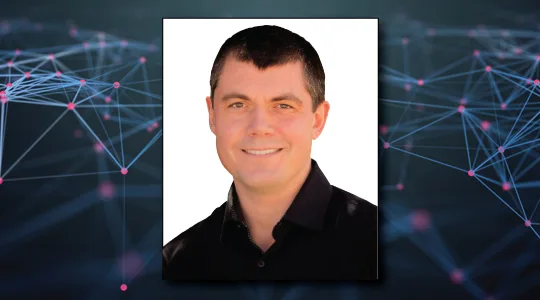
John Gilroy: Thanks for listening to Constellations, the podcast from Kratos. Today’s guest is Chris Pearson, Vice President, Space Products for Roccor. Chris, how are you?
Chris Pearson: Hi there, John. Yeah, thanks for having me on. Very good, very good.
John Gilroy: Many people in the industry are talking about your company. You’ve made a big splash with some of your innovations, but before we begin and talk about that, tell me about your background and the strange accent you have.
Chris Pearson: Yeah, it’s funny. I get that a lot. I moved over from the UK about 15 years ago, but I’m still married to an English lady. I think somehow I managed to hold onto at least most of my accent. I started about 20 years ago, through Astrium as it was then or Airbus now, doing a lot of spacecraft systems engineering. Moved over here in 2004, to help set up a US arm of a British space components supplier. I was actually at ABSL Space Products working on batteries for about seven years. I ended up running the US side of Surrey SSTL for a couple of years before moving on to Moog and then I had this opportunity to start up Roccor. It’s close to home here in Colorado, doing a lot advanced deployable systems and thermal products as well and it was a real fantastic opportunity. I’ve know the CEO Doug Campbell for a long time now. Great management team in place and it’s been nice and everything I could’ve imagined. It’s been a fantastic couple of years actually.
John Gilroy: And you are very humble, you also have two Master’s Degrees, twenty years experiences so you’re positioned real well to take advantage of some of these new breakthroughs in technology that you have. How did this company even start? Was it Campbell’s idea or what happened?
Chris Pearson: It was founded in 2011. Originally, the founders were trying to move away from space. They both have been experienced in the space industry and were looking for something that was going to move a bit quicker and really capitalize on the advancements that they’ve seen and these high strength composites, these novel materials that they were trying to leverage, other companies were trying to leverage. The company sort of grew up really on SBRI type of work but there was gradually a real pull back into the space community with contracts from DARPA and some commercial work too. As much of the folks were trying to do something different it really seemed there was a home for the technology in space. We had a sister company called ITC that we merged with in 2016 and that gave us some thermal expertise and thermal products that were very, very, complimentary with deployable systems. After that merger there was a boom in the last two years, 18 months or so, after I’ve come on board we’ve had a lot of growth. So we will talk a little bit about a big commercial constellation that we are a supplier on but we have had a lot of success on some US government deployable special-class systems as well. The other side of the business is actually heavily into combat care as well. We are doing some work for the Marine Corp, for the Army, such as Itrauma and also Medivac products as well. It’s a very diverse company as you say. I’m on the space product side so I’m responsible for executing those flight programs we have on board but it’s an interesting firm, there’s an awful lot going on.
John Gilroy: We’ll talk about advanced deployable structures later on. You mentioned earlier SBIR and it’s not a British word, it’s an abbreviation, some listeners know what it is and some people know it’s Small Business Innovation Research program. So tell me your experience, was that a good experience or a bad experience for you?
Chris Pearson: For the company it’s been fantastic. As you say it’s definitely not a British word, I’ve worked in the U.S. for probably about a decade or so before Roccor and all the time it was either for large businesses or foreign owned businesses and so. We were ineligible to go after SBIR type of business. The idea, the scheme is to develop technologies towards an area where there is a real government need. There are very different agencies that kind of sponsor us. It is low TRL or low technology at this level pushing these products and then having someone actually commercialize it. That is really the end goal. There is an ROI both for the agency but for the U.S. economy as well. Small business is obviously a big engine and yes it is coming to Roccor. I have just been really impressed with how well it has worked. Obviously we have had some good technology developments but there has been a real means to an end. All of these big global products and programs that we are going to talk about, they will hinge on technology that was developed with the U.S. government Air Force research lab. We have taken that further, we have really applied it to both commercial and military applications. For me, it is a great marriage between commercial and government and a great ROI for both the taxpayer and also growth for Roccor. I can’t say enough about it. It has been a big part of the success of the business.
John Gilroy: You know, Chris, I go to your website and I see words like advanced deployable structures and it seems like, you know, engineering talk but then I go to YouTube and I type in your company name and I see what you guys are developing. It’s pretty fantastic stuff; I mean just looking at the YouTube video I imagine someone in high school would want to go into engineering and go to work for you out there. This is some really amazing stuff you have, isn’t it?
Chris Pearson: Yes, it is pretty incredible if you are familiar at all with how mechanisms typically work in space and deployables typically work. You have effectively components that are like Swiss watches, so lots of precision engineered parts and a very long bill of materials and processes, assembly processes that require an awful lot of touch labor. All that adds up to time and cost. And yet, you take a look at our website and we have these advanced materials that we can shape and fold in different ways, really store strain energy so that we can use the energy inside that compress stroke and stretch it and might actually get to pilot an entire system. You’ve got these decreases in complexity, decreases in cost and mass which are really kind of ground breaking.
John Gilroy: You know Chris, I think the sizzle for your company is some of these visual demonstrations of these deployable structures that you have. But I want to have you put on your business hat now, so take off your engineer hat and put on your business hat. So you sit next to someone on a plane they turn to you and they say “Well, what business problem does Roccor solve?” What’s your little 30-second answer? What’s the business problem that your company essentially solves?
Chris Pearson: Going back to those descriptions of those piece parts what that means is that there is a longer lead time on items, there is an awful lot of engineering that is required upfront and it means that if you are in the new space market where you are trying to really get products to space a lot faster and get return on your investment faster it gets very challenging. What we are able to do is to lead with the simplicity that comes from using these materials. Cut down costs and cut down lead time and get that product into space and actually return in revenue much faster than anything that was available before.
John Gilroy: So your advances in engineering allow you to provide simple, low cost components. Is that a good nutshell summary?
Chris Pearson: It is. You have asked from a business point of view and the kind of technical approach is half of the answer. I said at the very beginning of this that the founders are trying to get away from the sort of traditional kind of space market and the one reason for that is they work. They were kind of a little bit tired and frustrated about how long it took for them to actually get products into market and taken up. But that sort of risk posture that was there about a decade ago has changed a lot and what you have now is the lower cost of access to space the kind of proliferation of small satellites and what you can do with it. You have a lot more commercial folks that are trying to get into the market and actually utilize space and for them to be able to do that they need to get down cost, they need to get down lead time and they are happy to take some more risks. So all those things added together meant that it is the right time for the technology, for the approach and in getting there you needed a fresh face, you need a bunch of folks that were able to operate in a different way from the old companies. We kind of pride ourselves in a lot of upfront co-engineering, that’s kind of crucial in making this stuff work. When you have a new entrance to space, when you have people that are trying to do things at a different cost point you can’t just go to a components supplier with a widget specification, you need to get in there, you need to co-engineer together and that requires investment from both sides. That kind of agility, that kind of openness, it is really from the business side as well as the technical side what’s been the key ingredient for our past success. It is a fresh approach for working together.
John Gilroy: On your website I see the pictures of the fresh young engineers that are collaborating and they are working with the concepts and everything else. But you know, when you come up with an idea for a product, how do you validate the opportunity? How do you know this is really a square peg in a square hole?
Chris Pearson: That is a great question. It is difficult. What you need to do is you need to be close to your customer base. I think that’s the one thing that the SBIR program allows us to do. A lot of the folks, they call them our “customer points of contact” if you like. There are also subject matter experts in deployable systems or thermal solutions. So what that means is when you are going through the SBIR process, when you write a proposal, when you are having discussions, you are really getting down to the nuts and bolts of the end user, understanding what their problems are and really making sure there is a place for the technology and it is not just going to be searching a solution. But there is always a challenge, you know you have to work out there, how much to actually invest in an IR point of view as well, internal research and development important to me as well. For me, the principles are still the same; it is about customer intimacy and understanding their problems. So on the commercial contracts we actually … this is the big constellation I think we are going to talk about, we were actually working with that customer for about three years; I think it was, before we ever really had a full contract from them. We did an awful lot of work which was performed on our own dollar. That was an investment. It allowed our customer to show maturity to their investors to keep the program going. But all the way through that, there were other opportunities that we could go for and we had to stay focused and make sure we invested in the ones that we thought that were most probable. And the only way you can really do that and really have an informed decision is, again, going back to that customer intimacy. It is a challenge in the business but I think that is one thing that we are really good at. We get close to our customers and it is a co-investment.
John Gilroy: It is great to have good technology and be close to customers but there has to be … You know this word is thrown around all the time it’s unique, it’s unique but there must be some special sauce or some capability that you have that is a differentiator from other companies in your business there.
Chris Pearson: Yes, I think there is in our area in terms of the actual technology on the deployable side. Talking about high-strength composites specifically yes, there are other folks, like I have said. There are probably at least three other companies in the world that are trying to do what we do. I think what sets us apart is not so much the technology itself, I think what sets us apart, what our secret sauce is, is actually the way we are structured as a business. If I look at those other companies they are either heavily VC backed or they are existing aerospace entities with pretty established cultures. The beauty of Roccor for me is that we are 100% employee owned and with a very, very flat management structure from top to bottom. Between the engineers on the floor to the senior management teams to the execs there is only about two or three levels there. So that gives you a level of agility, a quickness in decision making which I think our competitors just can’t live with and the other side of it is just the level of commitment we have from our employees here. Everybody is heavily invested in the success of the company and have a huge amount of pride of what goes on here. Those are very powerful arguments when they come together. So yes, having a sort of management team that is very, very close to what is going on on the floor, and being able to have balance about long-term view which often outside investors struggle with in the space business. You know, space returns don’t generally come in 12 or 18 months, they take a lot longer and require a lot more faith. Having the kind of level of control we have, that to me is the real differentiator. I think there are some things technically that we have that are different and they could be advantages but what I think our customers really appreciate is the way we do business.
John Gilroy: I know you are from Leeds and you may not be familiar with a lot of these old TV commercials here in the United States, but back when you were youngster there was a TV commercial and they got on the air and said “This is not your father’s Oldsmobile” and when I think of that commercial I think of old space, new space. You are involved in the world of new space and you are saying this is not the old way of doing things where it took forever to get something done. So how do you compare old space and new space?
Chris Pearson: It’s interesting that you can talk to ten different people in the space industry and you will get sort of ten different answers as to what new space is. To give you my view, I think there are a whole bunch of factors which have really come together at the same time which have allowed new space to really come to the floor. It is not as if people haven not been trying to do things in a different way in space but what has happened is that you got the ability to really do it. In the past you have had a lot of space programs that have been driven by government projects where there has been a kind of slowness to market. You have very big space assets which would launch on a onesie, twosie basis and when you have that, each of those assets is a big dollar value, it has to work. And then the risk of change becomes prohibited and that came with two or three things, the launch industry is dramatically different to ten years ago. You have rideshare, you have the ability to be able to share the cost launch, which was not even really feasible ten years ago, you had these small launch vehicles which are coming through and then you have SpaceX which is bringing down the cost for the established sort of launch assignments as well. You have a few things there that drive down the cost of launch and it also increases those opportunities to actually get to space, so that is the first thing. And then the second is with more satellites you are just able to do so much more with them than you could before. I mean small satellites have been around for 15-20 years but they have been there as technology demonstrators. Things like the use of commercial parts, the establishment of an actual supply base in that area, they are not just onesie, twosies that have really driven the cost down and the availability up. That gives customers, be it the government or be it the commercial side, a whole lot of applications which just were not even possible before like AIS or Radio occupation and from the U.S. Government point of view they can really do things like disaggregate their payloads on smaller spacecraft and their resiliency by flooding space with more small sats. So you put those things together and there is a whole bunch of opportunities that were not there before and people to be successful in new space have to be able to balance risk posture. Roccor meeting new space is all about being able to work in an environment where one size does not necessarily fit and the first thing we do when we have a new customer is that we really understand where that risk posture is. Where is that balance between cost and risk? Then we put something around that and that is what new space is for me.It is the ability to really balance cost and risk and I just don’t think you had the ability to do that a decade ago.
John Gilroy: You used this word “flooding”, I want to maybe focus on that a little bit. You know there seems to be an interesting move here for large LEO, LEO Constellations with maybe around a dozen, eleven constellations in various stages of development here. It seems that there are some challenges here with all these numbers out there that you did not have before. So yes, there is new technology, there are new launch techniques but there are new problems as well aren’t there?
Chris Pearson: Yes, there are and from Roccor’s perspective as a supplier, we are supplying solar array deployment systems in one of those constellations so we have got to deliver enough of those systems for about 900 spacecraft for over a 20-year period. I have been involved in the space industry for a couple of decades and the biggest build I was ever involved in was about a couple of dozens so there is a great opportunity that comes with that but obviously it is about hardware … The real challenge for us is to be able to deploy a system of that size. You really got to get the kind of cost point down to what you traditionally have in space. The main challenge is getting that cost down while also keeping the reliability at levels which are acceptable. Yes, we have kind of gone with something in taking account of that. Our strategy has been that we are not making volumes in terms of cars here. It is not as if we can get down to the kind of levels of automation, the levels of disposable assets that I feel like you can with the car industry. For us, it is more a kin to the defense world with things like missiles so we have taken a lot of better approaches. For instance, we use what is called a loss-acceptance test approach where we basically produce a large number of items so we can do that at a lower cost. Then we take a statistically representative sub sample of that lot and basically do all the traditional tests that we would do for space qualification. So you have a sort of marriage there of more commercial techniques and traditional space techniques and the real challenge—and I’m still saying we are working through it—we don’t know all of the answers yet, it is taking the best of the traditional space and also the best from the commercial side and finding that compromise point. But it is really exciting. Yes, it is a different world for us in the space industry.
John Gilroy: I am going to come up with a real simple illustration here. So out of this small town in Virginia there is this gas station on one corner and a gas station across the street. If they start lowering prices and lowering prices, well, I win because prices go down but sometimes that may not enhance one gas station’s ability to survive. So if you get in this battle of low cost per unit this could impact constellation vendors’ ability to survive, won’t it?
Chris Pearson: Oh absolutely, yes! We are very careful on this and we continue to be careful but we have not gotten the business on any particular individual contract. And, yes, the beauty of our success over the past couple of years has been how diversified we are. So we have set a point, a price point that we are happy with, these constellations are not all as active as the press would believe. It is not as if they are all driving down prices in the way you have described yet, not quite a commodity. But what we have is these large occurring builds as well as the traditional aerospace the kind of onesie, twosie higher value, higher liability more from the U.S. government as well. So yes, you are absolutely correct that if you just went all out to win that business and you accepted that you are going to take a huge amount of risk I think eventually you would be in trouble. But I think from speaking with other vendors that have gone after these commercial constellations if that value goes down you really get to the point where you know a lot of them have actually walked away. And it takes someone with a fresh business model, fresh business perspective to actually make it a commercial success.
John Gilroy: That is a lot of information here! If you are listening to this podcast and you want to see a video, go to YouTube and type in “Roccor impact video”. It is a really good summary of everything Chris has said over the last 20-25 minutes. We are running out of time here and I would like to thank my guest Chris Pearson, Vice President, Space Products for Roccor. Thanks Chris.
Chris Pearson: Thank you, John, it’s been a pleasure.