Transcript:
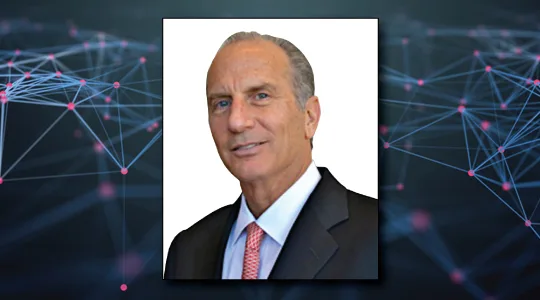
John: Our guest today is Cliff Beek, CEO and President of Cloud Constellation Corporation. Kind of appropriate that you’re on a podcast called Constellations, isn’t it?
Cliff Beek: Ah, yes it is, John.
John: Good, good, good. Cliff, can you give us a quick background on this?
Cliff Beek: Sure, I’d be glad to. Thank you for having me, John. It’s great to be here. So what my background is I started in the satellite communications industry mostly from a finance background. First project was in Taiwan and we began an uplink facility for a company that I didn’t really know too much about, it was called CNN Networks and so that took off and I ended up going into the operational side of the business and my career just sort of grew from there. Anyhow, I joined Cloud Constellation about two years ago and it was based on trying to secure data, this idea of data being hijacked and spoofed when it’s moving around the terrestrial networks was the motivation for our business model. So our goal was to put about 12 Leo space crafts in low earth orbit at 400 kilometers above the earth and what we were doing is trying to move data in a secured environment so it never gets exposed to the terrestrial networks.
John: Well you’re from Washington DC, if you’re sitting in the Washington DC Metro and someone’s next to you and tries to understand your company, so essentially what you’re trying to do is you’re trying to come up with an innovative way to assure the sovereignty of data, isn’t it? Is that the phrase, the phrase that pays?
Cliff Beek: Absolutely. Sovereignty of data is really important in this world today, particularly as companies are asked to be in compliance with the Global Data Regulatory regime. And that really started by frankly, from companies who were doing business overseas with the US; actually these were European companies that did not want to come under the jurisdictional venue of the US government. A data center such as IBM, Google, Amazon, were asked to start to build their data centers in Europe. And they needed to authenticate that the data was not being replicated in other countries.
John: I wrote down 12 satellites. Now if we went back in time to eight, ten years ago, this was laughable. No way you going to do that, Cliff. This is a pipe dream. However, you can do that, can’t you?
Cliff Beek: Today’s technology is amazing. The satellite industry has evolved quite a bit. The companies that are producing low earth orbit satellites have been sort of the flavor of the year. You probably read a lot about the companies that are building low earth orbit satellites. And to some extent, they do compete with the large geo-stationary satellites. One of the unique features that we’re doing is that we are not competing with the geo- stationary satellites. John, as you probably know, we’re leveraging the existing geos as we fly underneath the transponders of those and we’ve turned our reflectors up to be able to capture their particular transponder coverage, primarily like a cell tower.
John: It’s very innovative, isn’t it?
Cliff Beek: Well you know we had a patent issued on it. It was actually issued in March of 2016 and we’re very excited about it. So I don’t think anyone ever thought about it. In fact, we were sitting around a room one day and we’re thinking about how can we bring our capital cost down? Because it’s not a trivial matter when you start looking at how you’re going to operate in the multiple countries you’re looking to do business in, the regulatory requirements, the operating licenses. So we were sitting there and the drawings were upside down and one of the guys, the engineers, looked at it and said, “Why don’t we turn our reflectors up?”
John: Eureka!
Cliff Beek: Yeah, exactly. The reflectors are now facing up and we’re flying under the geos, using them, as I mentioned, as cell towers. And so they’re the ones who already have the regulatory licenses and the approvals and the spectrum, and all we’re doing is looking like a flying VSAT.
John: It’s more clever. I mean, it’s a very clever way you do it. It’s already sitting there; you’re taking advantage of what’s already there.
Cliff Beek: Yeah we had a conversation with IBM. The IBM Watson fellows came to visit us one day and they looked at us and said, “This kind of reminds us of you guys are like the Uber of the car industry. You’re leveraging what’s already out there.” I kind of cringed a little bit but I thought, “Okay, if you guys want to mention that, that’s great.”
John: Some people look at the Space Belt and it may be described as cloud infrastructure rather than cloud service, so is there a difference there?
Cliff Beek: It’s like the two are converging on each other. As we’re in space and we’re looking at the markets, we’re actually looking at infrastructure as a service and we’re looking at cloud service providers. So our business model is not to compete with the cloud service providers on the ground. We’re looking at a highly select group of data that goes into space and moves around the world. Our particular target segment are financial institutions, governments, diplomatic embassies, so that what we’re doing is we’re looking at a select set of data that’s highly secure that needs to not only be stationed above the earth, but also to move. So when you mention the constellation, the interconnection is really with laser optics. We’re moving data around the world between our 12 Leos at an optical speed, at a 10-gig wave. So that data moves very quickly around the world and never touches the ground. In terms of protection of that data and having it moving, it’s very unique and very innovative.
John: Earlier in the interview you talked about your background in finance. Well, let’s talk about dollars. You know some people argue that it’s so expensive to put this system in space, couldn’t you just put that money in a ground based system?
Cliff Beek: It’s interesting you say that because our cost structure, our cap ex for this project, is under $500 million. When you look at the total investment that’s being made in some of the other projects that are launching, or their maiden launches, they’re talking billions of dollars.
John: It’s Bs not Ms, huh?
Cliff Beek: Correct. So when you sit there and you look at it’s about $480 million to put 12 Leos in space. That includes the launch, that includes the insurance, all the ground infrastructure, which is fairly limited. And then you look at the model itself for how we generate revenue. Years ago when I first came into the industry and I mentioned my first job out of business school was to look at the satellite industry, I had no idea what they were talking about in terms of kilobytes per second. And we’re talking kilobytes back then. Now we’re talking petabytes. And my job was to figure out how much revenue could we squeeze into each kilobyte. Well today, this model for Space Belt, we’re looking at eight petabytes of data storage in each one of our memory satellites. Three terabytes can store the entire Library of Congress. So you’re talking about a massive amount of data. And inside of that data, our model really is pretty unique. We’re looking, in terms of revenue, if you want to understand our revenue model, it’s $5,000 per device per month for three terabytes of data. And again, that’s for companies that are looking to put secure data in space and to move it globally throughout the world with it never being exposed to the ground.
John: And never being exposed to the internet either, huh?
Cliff Beek: That’s the whole idea, so it doesn’t get spoofed. One of the applications that I’d like to share with you, being in Los Angeles, having an office in Los Angeles, the media and entertainment industry came to us about two months ago after the hijacking of the Pirates of the Caribbean. How do we protect our data? Do you know that the value of most of the movies that are shot is probably only 20% at the box office. The majority of the value is the relationship between the merchandising of the show’s characters. So when you look at what they could risk, if that particular information is hijacked or gotten ahold of, the doll, especially in science fiction movies where if someone gets a view of what that model looks like before it’s released to the public, the studios lose a lot of money. They came to us and said, “Hey, we shoot about three terabytes of movies every day. Can you store that for us and move it globally as we begin to edit it?” So that’s again an application where our product is not something that’s going to compete with the large terrestrial data centers. It’s something that helps the companies move data globally without it being exposed to the terrestrial networks.
John: I never thought of people recording in New Zealand and one have secure editing in Los Angeles. The application right there.
Cliff Beek: Exactly, exactly.
John: Good, good, good. You’re currently start up phase, with series A funding. What types of investors do you have funding this effort?
Cliff Beek: The series A funding, as in most companies, this is your seed round. These are private individuals who are familiar with our background. They see the business as being something that’s unique and different and they’re looking to not just be a good friend to us. They’re looking to make money. The series B investors are more strategic. Our series B investors have an aligned interest. So our very first contributor to our series B was a manufacturer or our satellite. They were very, very excited about what we’re doing. They said, “Hey, not only do we want to get the procurement contract but we were interested in participating in your series B round. It was the same with our strategic vendor with our launch vehicle company. Just last week in Paris, at the Euroconsult Conference we signed an agreement with Virgin Orbit, who also made a contribution to our series B funding round. So the interests are aligned. Our success is their success and we’re very excited about the types of companies that are coming in to fill out our series B funding.
John: Well, it certainly doesn’t look like you have challenges for funding. So what are the biggest challenges that you face? Is it hiring good people? Is it technology?
Cliff Beek: You know the good news is our business model does not require a lot of, I would say, IP investment. Most of this stuff is already available. The northern Virginia area, quite honestly, has a lot of wonderful aerospace professionals coming out of companies like that deal with our federal government. The pool of engineers is amazing. Our challenges, if there are challenges, are really making sure that our memory systems are rad hardened, that our particular memory backup systems are in a position to be able to secure the data if there was some type of hit to the satellite. And so what we’ve done for our customer agreements, what we have in our customer agreements really are a three to one backup. So inside of our 12 Leos, we have three to one backup in our data storage components. So the challenge is, like any other small business, it’s customers who have expressed an interest in wanting to be a part of this, when is it going to be built, the financing is always a contingent upon how many customers you have signed up. And then the third and last component is how soon can we get this up and running, because you have a backlog in production so the earliest we’re going to get this in operational is fourth quarter 2019, early 2020.
John: Interesting. I was thinking about northern Virginia. If you drive up Route 28, there’s a company called Orbital.
Cliff Beek: Yes.
John: And the street that they’re on is called Warp Drive. They have a little fun out there, but it is a good talent pool for your specific industry, isn’t it?
Cliff Beek: It’s an amazing talent pool here in the northern Virginia area.
John: So let’s get a little calendar out and project out the next couple years. 16 satellites. What’s the timeframe for that, roughly?
Cliff Beek: We view this as our maiden launch will have 12, but as the market grows, and we hired an independent marketing firm, Grant Thornton, to take a look at our market. They said, “You guys have undersized the market demand for your product. You’ll be adding three to four satellites every year, based on the kind of demand that we’ve looked at in the market. That’s one of the reasons why we’ve aligned ourselves with a single launch vehicle such as the Virgin Orbit Group is because we look at our customers giving us requirements and we’re able to launch satellites one at a time over a period of eight weeks. So the launch cadence is really important. To keep us relevant though, we’ve been also talking to customers who’ve asked us what other applications can we put on our low earth orbit satellites? And the most exciting one in the past three months has been remote sensing. Can you put remote sensing on your satellites? Can we put them cameras on them so we can have some situation awareness of in space and also on the ground? And based on using our platform, the Space Belt platform, to collect data, to store it and to move it in a secure environment, we’ve hired a couple professionals who came from that industry, the remote sensing industry, to give us a hand on how we can stay relevant in the next three to five years.
John: Earlier you talked about Pirates of the Caribbean. In the radio world, there are pirates who are sitting in international waters and broadcasting. There’s a model there, you know? But I would think there’s data centers that if you look out and see, there might be an international space, but you could put a data center in international waters too. I mean, is that a comparison here? Is that fair?
Cliff Beek: Well the problem is international waters, you know there’s boarding, there’s induction. So you have coast guards and you have navies that can come in and shut you down. So I think it’s very difficult. We’ve looked at some of the critics out there when we sat down said, “Well, what about putting data centers in water or in international waters?” Well, they’re still very difficult to get to. The connectivity is a little tough in the middle of the ocean. So it’s a completely different thought pattern. What we’re doing is building a connected platform that surrounds the globe with 10-gig wave optical lasers.
John: Optical lasers, wow. It does sound like it’s out of Star Wars or something. It really is incredible. I can’t believe it.
Cliff Beek: Well that’s where the deep space communication system’s going. You know one of the cool things about space right now and what we think we’re at is we’re actually creating the backbone in space. When you look at what a lot of the deep space adventures are doing, whether it’s SpaceX and Elon Musk particular adventures, they’re looking for a platform to be able to connect the international space station to some other satellite for communication services. So our vision for what Space Belt becomes is that backbone service for interspace communications.
John: Here we are in Washington DC, we talked about earlier, probably five lawyers for every human on the planet here in DC. And there are some legal concerns here too. Are there legal stipulations or requirements for doing business in this manner? I mean you’re really physically away from regulations, aren’t you?
Cliff Beek: Yeah well you know whenever you get successful in the business, people start taking shots at you. The nice thing about Washington is some of the best regulatory lawyers are here. One of the premier law firms that represent space companies are here as well. And we’ve had a lot of advice coming from them. But the interesting thing, John, is that our business model is one that which we do not require really any kind of filings at the ITU or filings with the FTC, because again we’re leveraging the existing geo-stationary operators. We’re essentially just a flying …
John: Who have complied with … Ah.
Cliff Beek: Yeah. They’ve already filed their licenses. So as I mentioned, it’s no trivial matter to try and comply with all of those licensing issues and it’s very, very expensive. It takes a long time to get your permits and get all of the licenses you require, not only in space but also on the ground. So again, as you visualize what Space Belt is we’re essentially just flying under the existing geo-stationary satellites. We’re leveraging all of their regulatory approvals, all the transponder services. And so we’ve been really embraced by the industry because we stimulate demand for the transponder services. Our goal is to leverage the existing C-band, KU and KA band frequencies, and quite honestly, most of the operators, if not all of the geo-stationary operators, have embraced this project.
John: Yeah, they do that in sailing. You’ll get behind another sailboat and let them brake, and bicycling too. Same thing. You get behind the leader and then you don’t have to worry about compliance.
Cliff Beek: Exactly.
John: If I look at your, you know Grant Thornton, great. They say you’re undersized. There’s a whole lot more market out there than before, but I think your market is going to be large organizations. Does Grant Thornton think there’s more than just large organizations are going to use your service?
Cliff Beek: You know, they were actually pretty dead on with regard to the kinds of conversations we’re having now. They focused on financial institutions.
John: Makes sense.
Cliff Beek: The large banks, for example, have suffered the most during a cyber-attack. And these are banks who are trying to send, for example, sensitive transaction information, suppose from Hong Kong to New York. You know when it traverses the terrestrial networks and it reaches a peering point on the ground, the ANS numbers can be spoofed and a lot of that information can be redirected to hostile environments. So the banking institutions who looked at this from the IT directors that Grant Thornton interviewed, they came back and said, “If this is available, we would buy it tomorrow because it’s something that we feel, it’s not so much the storage of the data, it’s the ability to get it off the ground, to hold it and then to be able to deliver it to a part of the world where there’s no one in between us and that data.”
John: There was a trucking company in town years ago called GOD, Guaranteed Overnight Delivery. That’s what you’re doing. You’re doing guaranteed, well over whatever period of time, delivery.
Cliff Beek: You know how you mentioned lawyers? Lawyers hate the word guaranteed.
John: Oh boy, they sure do. My, my, my. I’m looking at applications for this: unmanned aerial vehicles, earth observation satellites, all kinds of applications here.
Cliff Beek: We were approached by a group down in San Diego who is a very large drone manufacturer. They mentioned the fact that utilizing their drones for sending highly secure information from parts of the world back to Nevada where those drones are operated was an application that was very interesting to them. It cuts down on not only the latency issues that they had, because typically when you send traffic over a satellite it needs to go up, down, up and down again. It’s called double hopping. When you look at our ring, it’s a single uplink and it goes, it travels across the ring at a high speed, at the 10-gig waves, it goes back up and down. So there’s no intermediary ground infrastructure. So the drones that are operating at about a three second latency has been one of the applications that was brought to us very early in the sense of autonomous airborne vehicles. We also started talking about, because of our patent, our patent that was issued, we were looking at ways in which we could use our system to be able to update the software for autonomous vehicles. So think of the colossal mess that could occur when you have someone breaking into a system as you’re trying to update the software for these autonomous vehicles as the industry starts to evolve, by utilizing a network that’s above the earth, not having any breaches, and being able to update software on the fly like that.
John: Aerospace engineers aren’t famous for being articulate, but I would guess if you got a couple around the table and explained this the way you explained it here, the eliminating double hopping, they may think it’s an elegant solution. How’s that for a word? It’s an elegant solution. The engineer’s not going to use that word, but …
Cliff Beek: Well you’re very kind in saying that. We take such pride in our product. In fact, it was the engineers who really developed this, the engineers who came to us and who came up with the solutions and worked really hard, because I’m on the business side and my goal really was to get the product up and launch quickly so that we could have first mover advantage. We’ve talked about it. We’ve had a lot of press releases. We’ve appeared at a lot of different panels and some different shows. And so people are beginning to talk about us. What keeps an entrepreneur up late at night is who’s going to copy what we’re doing, if you really think you have a good idea. So our goal was to try and compress, compress, compress and get this thing up and launched. Our engineers have been pushed really hard to create an elegant solution and to be able to do this in a really timely manner.
John: Good, good, good. I’ve interviewed people from many different agencies, the federal government, some agencies with three letters, some agencies I can’t name. Many times, best practice in a government environment, in a data center, is what they call data segregation. Does this apply to your world?
Cliff Beek: Yeah, I think it does. I think data segregation is a big important part of this. When you talk about the government agencies, I think one of the use cases that came up to us early were really the diplomatic centers such as embassies. Embassies deliver traffic in some of the most hostile environments. You think about the US Embassy in a country like Afghanistan or one of these countries. We’ve all seen the movie Argo and you see what these guys start shredding. If you’re able to take your data and uplink it and get it around the world to 120 of your consulates, the value of having information sent without it being sniffed or intercepted is really important. So although you look at being in Washington, everybody talks about the applications for the three letter agencies, it’s interesting and yes, definitely we would love to have those kinds of conversations. From our perspective though, one of the most important things we offer in our business model is the sovereignty of data, the idea that the data in space does not come under the jurisdictional venue of any other country.
John: You know I have a question written down here. I thought I was going to trap you on this one, Cliff. I really was. I was going to get you. It was going to be, “Okay, what about fed ramp and g-cloud and Germany C5?” But you already answered that question as far as compliance goes, so I can’t trap you with that one. But I think that would be the first question people would ask me about. And there are companies in town here whose full- time job is to assist with compliance. Full-time.
Cliff Beek: It’s good. When you’re in business, you’re always thinking about preemptive move so hopefully that was a preemptive move for me with you. I think that what we’re building, you know again, we’ve had lots of conversations with some of the large defense contractors who do call on the federal government, asking us for assistance. Can we leverage your patent? Can we leverage what you’re building and build this particular Space Belt ring for our particular needs in the US government and the military world?
John: Let’s go from the engineering world to history and political science. They use this phrase, “Continuity and change.” They take about continuity and change in the Weimar Republic. And I want to apply this to your world, continuity and change in your world, the satellite. So how do you know what’s going to happen the next three or four … How do you design a system that’s flexible enough to adapt to new technology?
Cliff Beek: You know it’s an important question and it’s a question that a large amount of the industry, there’s a huge fixed capital expenditure for the manufacturers. When you look at the perceived costs and also where the market’s going for some of these companies that spend … Have a lot of infrastructure investment in production of satellites, and we’re talking about the leaders, the Boeings, Space Systems Loral, Orbital ATK, Aerobus, these guys are the ones who are always looking at young companies like ours, like, “How do we project forward?” Our responsibility to the industry is to always be looking for ways to keep an eye on innovation and an eye on where the next markets are. From our perspective, data is everywhere. The IOT worlds, when you look at where the sensors are going for being able to collect data at the edges, the geo-stationary satellites will always be there. But companies like ours and companies like others who are out there, need to be able to have this vision of where the needs are. And we feel that again, at Space Belt, or Cloud Constellation, is one of those companies that has projected forward. Remember, we started this company in 2015 where before there was a lot of emphasis placed on cyber security and the hijacking of data. And so it’s not like we just started this to try to capture what’s been occurring the last few weeks with Equifax and some of these other companies that have experienced tremendous amount of cost associated and disruption to the industry. The global economy suffers greatly during these cyber security attacks. We’ve been working on this for the last two years.
John: My final question’s going to be kind of a silly question. I have a friend who has a four year old son. If we talked to him about satellites, the first thing he’d say is, “How big is it?” So, how big are your satellites?
Cliff Beek: They’re not nano-satellites. When the whole economy started looking at small sats, our satellites are somewhere in the middle. In terms of weight, they’re 400 kilograms at launch. And in terms of size, they’re about 1,200 kilowatts of power. So I would say they’re almost the size of our conference table. In terms of a launch vehicle, if we were to use one of the larger launches, we could get six of our satellites in one launch. But we felt that we were going to use a single launch vehicle to help mitigate if there was some kind of anomaly at the launch pad. But in terms of size, 400 kilograms and 1,200 kilowatts of power.
John: Cliff, we’ll be watching the internet for developments to your company, it sounds very fascinating. I’d like to thank our guest today, Cliff Beek, CEO and President of Cloud Constellation Corporation Space Belt.
Cliff Beek: John, thank you. It was nice being here.