Transcript:
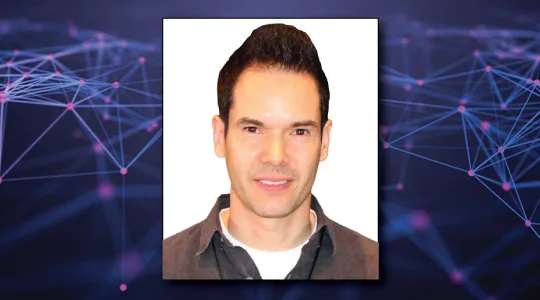
John Gilroy: Welcome to Constellations, the podcast from Kratos. My name is John Gilroy and I will be your moderator. Our guest today is Ralph Ewig. He’s the CEO of Audacy Space, which was recently recognized by Via Satellite Magazine as one of the top ten hottest companies in satellite in 2018. Audacy Space was launched in 2015 by a team of Stanford graduates, a SpaceX veteran, and NASA award winners. Audacy is a space communications service provider and their mission is to deliver any time, highly operable connectivity to space craft and launch operators.
Today, we’re going to talk about three things: real-time connectivity, spectrum crunch, and commercial space telcos. Ralph, you just heard about real-time connectivity. I think it’s an attribute that’s missing from much of commercial spacecraft. Why is this so important?
Ralph Ewig: Yeah, hey John. Thanks for having me on the show. I’m really glad to be here and, as you said; real-time connectivity is something that’s close to our hearts. I think this really hits home for me when I was at SpaceX, as you mentioned earlier on, that as a SpaceX veteran I was part of the founding team of the company and there I was responsible for flying Dragons for the International Space Station and in doing so, we had access to a relay system that NASA had launched in the 1980s called TDRS. That allowed us to have real time connectivity. I saw the contrast between being able to do that and what everybody else does which is using a network of ground stations which gives you much more intimate access and I thought this is brilliant. It makes life so much easier from the space operations perspective and thought okay maybe we can expand on that capability and make it a commercial service and that’s really where Audacy came from.
John Gilroy: So what we see in the market today access to space is improved, a lot more satellites in the next five years it seems like it’s a perfect storm for real time connectivity, doesn’t it?
Ralph Ewig: Yeah. It’s kind of surprising how few people realize that we all have this challenge. I think it has something to do with what we’re seeing on the ground, the terrestrial applications. We were so used to having all time connectivity on our mobile phones or Wi-Fi wherever you go so then most people think wait this problem should’ve been solved already. I’m actually surprised to hear that for satellites this is the case that they cannot communicate to the ground, at all times. But what’s going on is there’s been a lot of growth in lower orbiting satellites in the last couple of years which is where really just an explosion of commercial space is taking place. When you’re in a lower orbit you go around the planet once every 90 minutes, which is very fast. It means that the time you have when you’re overhead the ground station and have the ability to communicate can be as short as 10 minutes. So you end up with these intermittent intervals where you have opportunities to communicate with your satellite and long stretches where you have no such opportunity and it has been a real burden for both the industry and on the operators to work with those constraints.
John Gilroy: So we know you’ve got a PH.D. from Stanford, so some things are pretty easy for you and hard for the rest of us so tell us what are the challenges in putting together a system like this.
Ralph Ewig: Okay, just to be fair my PH.D. is actually from the University of Washington and that’s where I got most of my engineering education, but then I did go back to Stanford recently to get a business degree since I wanted to figure out the pesky money thing before starting my own company. But yes talk about the challenges. You know it’s a couple different things. You’re dealing with items as basic as just pure physics or geometry all the way to very complex technology problems. But on the fundamental side its physics, it’s line of sight. If you look at the scale of an orbit or a track of an object going around the earth versus the size of the earth and in lower orbits you’re so close to the ground you can’t see across the horizon. It’s a very thin layer between you and the Earth, really. So overcoming that geometry problem was the first challenge. So we have to be or should we say we have to put our satellites into a higher orbit where they can act essentially like cell phone towers on top of a hill and then service all of our clients which move around below us. Figuring out that geometry problem was the first part of it. The next question that came up is related to regulations. The use of radio spectrum in space is highly regulated. That’s because spectrum is a natural resource. It is ultimately finite and there are rules who can do what with it. They also have to make sure that what we’re planning on doing wouldn’t interfere or cause any problems for all the people who are already in space communicating, doing the very things that they do. Then the last part is really technical. Once you know where you want to be and you have permission to be there how do you build such a system that can actually function and communicate between objects which are moving 10s of thousands of miles an hour at a very fast and make it all work for not just one or two clients but hundreds of thousands of satellites simultaneously?
John Gilroy: Now when you try to look at this is this primarily focused on LEO satellite constellations? Are there benefits also for MEO and GEO, as well?
Ralph Ewig: Essentially this can benefit anything or any object that moves around in space but the one exception of GEO satellites. GEO stationary satellites or GEO synchronous satellites they’re in the special orbit where their distance is such that’s on rotation with the Earth. They’re synchronized with the Earth’s rotation. From the grounds they appear to be standing still in the sky and because of that it’s really straight forward to communicate with them. You can just point your ground antenna at one location and then you have this always on connection which is how much of the telephone world operates today. That’s really not what we’re targeting at our customers. However, everything else whether you are below that altitude or above that altitude looks as if you are moving across the sky, as seen from the ground. Those objects can certainly benefit from a solution like the one that we’re putting in place. We actually like to tell our customers we will provide a dial tone in space, or connectivity, no matter where you are. Anywhere from launch pad all the way out to the distance of the moon.
John Gilroy: Earlier you talked about TDRS and NASA so when I look at your solution is real time connectivity equally important to both the government and enterprise markets?
Ralph Ewig: Yes. That’s actually a good question. Initially when we started looking at this as a business this was the fourth time I’ve tried a very early stage company in the space industry and one of the things I’ve learned in my previous iterations was that for a very young company it’s not always a good idea to look at the government as your first primary customer. Just because there’s a lot of overhead associated with doing business with the government. We focused very strongly on commercial applications, initially because we’ll need things like Earth observation satellites and low orbit and also launch schedules. But then as we became more mature we attracted more and more attention from government customers, as well and today we actually have a pretty good mix between both commercial applications, civilian government, NASA and also defense applications as well. It really applies to any object that moves around in space and we can all benefit from such a system.
John Gilroy: Earlier I kind of mentioned this and kind of teased this topic but the dramatic increase in the number of satellites this year and projected over the next four or five years, now has this made access to real time coverage even more important that when you started the company?
Ralph Ewig: I think so. It’s a fair point to say that. What you’re seeing is that everything continues to shrink. What used to be a mission for a very large more prolific satellite is now being implemented with a much smaller satellite, but many of them. The additional consequence of that is the smaller satellites tend to be in lower orbits, and they don’t have as long a mission lifetime. So, in the past maybe you have an Earth imagining satellite that weighed let’s say a half a ton and could last 10 years in orbit, now a days you’ll have a swarm of much smaller satellites, which weigh maybe 20 kilograms, but you have 100 of those and each one of them would only last about 18 months on orbit. The feed is a rapid cycling of many, many smaller space objects. Their ability to communicate to the ground is much more limited just because they’re not as big and they don’t have as much power generation on board so for them to have the benefit of a reeling network like the one we’re building, helps them to be much more efficient in carrying out their mission so you can design your small satellite to do just the one thing like taking images and a specific spectral band let’s say without worrying too much of how much of that satellite do I need to dedicate to the task of communicating that data to the ground after they capture it?
John Gilroy: You know I have a background in software development. You talk about agile software development but this seems like really the classic case for agile software developments that hey guess what, we’re going to put this up, it’s going to change, modify pivot, some satellites are going up, some are going down it really is a very dynamic environment, isn’t it?
Ralph Ewig: It is yeah, and I think it’s been a fantastic benefit to the space industry. We used to see cycle times which were 5, 10, 15 years.
John Gilroy: Years, right?
Ralph Ewig: Yeah. Now we have the ability to really put something together in a small scale in a matter of months, put it up in space in maybe a years’ time and learn from it and make it better. I think that has really tremendously benefited the entire industry.
John Gilroy: Earlier we mentioned spectrum being a finite resource and there’s a special word normally associated with this, it’s called spectral crunch. That means a lot of different things. Spectral crunch, what does it mean for my listeners here?
Ralph Ewig: Yeah that’s an interesting topic. It’s something that I didn’t fully appreciate before starting to tackle this problem, but essentially the radio spectrum or frequencies available within, you can communicate using radio waves is regulated because there is a finite range of them available. There are treaties at international levels where different countries have agreed to allocate certain parts of the spectrum for specific applications. For example, there’s a range of spectrum frequencies you can use for emergency services on the ground and another range you can use for mobile phones and also range that can be used to communicate with objects in space. The way this is set up the framework is essentially any new entrant who wants to start a new project has to prove that what they intend to do does not interfere with the guys who are already up there. Since this has been going on since the 1960s the availability of spectrum has declined over time because all of it has been spoken for, essentially. Especially the component that was allocated to communicate from space to ground has been incredibly busy and has been utilized. Now we have all these new little satellites coming into service and all these guys would like to be able to communicate with their satellite so they will then go to a regulation agency in the United States that are looking to settle communications commission and say look I’m planning on flying this mission, I need about let’s say make it hundreds of bandwidth and I would like to have the allocation in this frequency band and the commission will then turn around and say that sounds great please show to us how you will avoid interference with all the other 50 or 60 people who are already using that band. As these satellites are in lower orbits, which moves very rapidly, this can be very challenging. So that’s what’s referred to generally as the spectrum crunch. There’s no more demands. The available amount that’s out there hasn’t increased. If anything it’s decreasing because it’s more and more heavily used. That has been a barrier for continued growth in the industry.
John Gilroy: You mentioned the radio spectrum and space to ground. These regulations get kind of complex. You solved the riddle but this is going to be a real challenge for a lot of companies just trying to understand the complex regulations for the spectrum, won’t they?
Ralph Ewig: Yeah. The regulatory frameworks are complicated and they’re time consuming. Just to give you an example there is an international government body called The International Telecommunication Union, or ITU, and they meet at something called the World Radio Congress. Those meetings happen once every four years. If you’re a young company and used to thinking in time scales of weeks or months waiting four years to get an answer on anything seems absolutely daunting. We’ve looked at this as well and thought this is silly. If I buy a mobile phone I don’t need a license for that because AT&T or Verizon already got the license for me. That stands the same thing work in space applications. Rather than each individual company going through this process and trying to deploy your own phone line, essentially, there should be an existing network which we can all share. We approached the regulation commission in Washington D.C. with this idea and they were quite supportive of it. So the idea is that rather than each one of these new satellites using their own allocation to communicate from space to ground we use something called intra satellite links which is the communication from one spacecraft to another to consolidate a lot of this traffic. Then only down linkage to the ground in very few specific locations. That makes coordination for the space to ground component much simpler because you don’t have 100 satellites talking all over the sky, only like two or three that go directly to ground. Then we used all of the intra satellite spectrum, which was previously not very used, has been allocated a long time ago, in the 1980s actually, but nobody really was making use of it and we can leverage that to collect all the data together into those relay satellites which are like cell phone towers on the hill. Then bring it down from there.
John Gilroy: Ralph an engineer would call that an elegant solution wouldn’t they?
Ralph Ewig: We like to think so. I mean, ultimately it was just finding the path of least resistance. Looking for opportunities for something that could be leveraged and making use of it in an effective way that not just helps ourselves but really helps space, as a whole, because you want to see this activity expand as much as possible.
John Gilroy: Now Ralph, thousands of people from all over the world have listened to this podcast. Now if you’re listening to this and you’re in Brazil or Japan or China all you have to do is go to Google and type in Constellations Podcast, click on Kratos and sign up and we will put you on the email distribution for this podcast and hear all kinds of insights from guys like Ralph. So Ralph, tell me more about this commercial space Telco thing. Sounds like you’re trying to be similar to Verizon, AT&T and Comcast or am I pushing this a little too much?
Ralph Ewig: Yeah in a way you said sort of cheek and tongue that all these years of firsts Telco companies for users who are in space rather than on the ground. In a way I guess that’s true because our business is very similar. We provide connectivity to other people except our customers aren’t people on the ground, they’re objects that fly around in space. So, it’s probably a fair analogy to call it that.
John Gilroy: You know we can drive around town here and you can see different towers and everything else and I guess building a terrestrial network’s got all kinds of challenges but a lot more difficult to build these in space, aren’t they?
Ralph Ewig: Yeah. Space is a unique environment. It has both opportunities and challenges which are very unique to that environment. For example, we have much further distances to deal with and we also have to deal with objects moving in very high speeds relative to each other. But, then on the flip side you don’t have to worry about buildings being in the way or obstructions like mountains and valleys. So, pros and cons depending on where you’re working at.
John Gilroy: Earlier in the interview you talked about the shape of the Earth and line of sight. There’s another concept in the physics called latency. How do you deal with this latency problem?
Ralph Ewig: Yes that’s an excellent question. So, fundamentally again going back to the basic laws of physics there is this universal speed limit of the speed of light. No information can travel faster than the speed of light. That applies to radio waves as well. Even if the long distance is in space there is a fundamental limit to how fast we can send data from one point to another. Then that introduces it to late which people refer to as latency. To give you an idea for our network, the Audacy network, the signal travels from the lowest orbiting satellite to our relay satellite which is in medium orbit and then from there back down to the ground station. That introduces a delay of about 250 milliseconds, about a quarter of a second, which doesn’t sound like a lot but it actually is enough to be annoying if you are trying to make a phone call with this kind of a system. So, we’re not really looking at real time voice communication but it’s primarily a system for data use. With that it is still a good amount of improvement over what you can do now where you might take an image, you have to wait 45 to 90 minutes to get to the ground station and then down link it and then you have access to your data. So, we improved from 90 minutes down to maybe a second or a half a second. But, that’s about as close as you can get to real time just giving the basic limitations of physics.
John Gilroy: Now I’m thinking about 90 minutes. Now in that process you would get lost packets, you could get disruption. This reduction really has a potential to reshape the way we communicate in space. I mean, there’s no more 90 minute delay.
Ralph Ewig: That’s an interesting point. Yeah. There is a lot of technology that was developed around this challenge of I send a command to a satellite and have to wait until it gets back to me and then I get the results. It’s almost like there’s a good analogy to software programming but not for the PH.D. student which was almost 18-20 years ago now. My professors used to make fun of me saying you guys have it so easy. You write from software code, you hit enter button and then you get a result and if it doesn’t work you make it better. In our days we used to make punch cards. Those punch cards headed up to the lab and I had to wait a week to get my results back. So we had to be very careful to make sure our code was correct because it took us a week before we could get another try. Similar things are happening with space communications. When I task the satellites to do something I have to be extremely precise and very clear on what I want it to do before I send that command because I will have to wait an hour and a half or two potentially until I see the result of that instruction. Whereas, if you move to this real time interaction it becomes much simpler to have an interaction and just try something and see what it does. I’m actually excited about this because it opens up participation in space to a broader audience. I can picture a classroom of high school students literally just pulling up a browser window and pushing buttons on a satellite to experiment and see what that does. It’s possible because you no longer are dealing with resources which cost billions of dollars and took many years to reply but they only cost a couple thousand dollars and you’ll get them up there in a couple of months.
John Gilroy: I don’t want to beat this book to death but Clayton Christensen wrote a book of The Innovator’s Dilemma, we all know it, talks about disruption we know that. I don’t want to toss this word around too casually but it would seem that a relay like this out in space can, here’s the big word, disrupt the industry. It could change things a whole lot, can’t it?
Ralph Ewig: It can, yeah. These only anticipate that our presence once we’re up and running will have an impact on the existing industry. That’s it. We don’t want to be disruptive as a negative or an impact in a form that destroys existing capabilities. In the way very much like my mobile phone works here in California it also works in Singapore or it works in New York. No matter where I am I can just turn on my phone and it works and that is that result of open standards which the industry has worked up over the years which allows us to have those kind of interplay between different providers. We see Audacy in terms of space network in a very similar way. There are existing solutions in play and they work just fine they just work only some of the time. The idea is for us to fill in the gaps and then for all of our customers to again use those open standards to transmit the information over any of these networks so they can roam between different providers pretty transparently and it just works no matter where you are.
John Gilroy: Ralph I’m reading a book called Space Barrons and yeah they talk about all the adventures with the usual suspects, Elon Musk and Jeff Bezos and whatnot but I’m just thinking from the perspective of someone trying to put something in space your technology could have an implication on these people who are going to deploy to space, won’t it?
Ralph Ewig: We like to think so. I mean, for me personally I’ve been a space cadet all my life. I started with my career in aerospace and after working in the industry doing things anywhere from dropping space capsules off the coast of California to building rocket engines in the desert to having the privilege of participating in flying and driving to the international space station and space is something that is very close to my heart.
John Gilroy: You’ve gone way beyond space cadet, by the way. You’re way past. You’re like an admiral.
Ralph Ewig: The reason we’re really doing this is because, or the reason I’m doing this is because I want to see humanity move forward and expand its space activities. For me this might be that one little legal block that we can contribute that enables others to do more and build upon that success.
John Gilroy: Just about time now Ralph. You’ve been at the center of a lot of these innovations industry here. Where do you see this concept of commercial space telcos going in the next 5 to 10 years? Who will be the key players? Where’s it going to end up in 5-10 years?
Ralph Ewig: I think we’re really moving it towards a new ecosystem of open standards. There’s been very isolated capabilities where you can go to one provider or another and we sort of almost again in the direction analog in the early days of the telephone system where you could have hard lines in different locations and you get it from one of the bigger dog companies and that’s the only choice you have in your neighborhood. I think what’s happening now is we’re looking towards a future where you have choices and that’s because there are open standards which allows you to get to an ecosystem very similar to wireless phone service nowadays where you have a number of different providers. You can roam between different networks and pretty much no matter where you are in the world you can pick up a signal and do what it is that you’d like to do. But all the implications that come with that. So, I do see the availability of information in real time no matter where you are in space to have almost astronomic an impact as it did on the ground when the internet came to be and did the same thing for us for that to work.
John Gilroy: Free market and open standards, wow. It’s going to be just great in the next 5 to 10 years. Ralph, unfortunately here we are running out of time. I’d like to thank our guest Ralph Ewig, CEO at Audacy. Thanks Ralph.
Ralph Ewig: It’s been fantastic. Thank you so much for having me on the show.