Transcript:
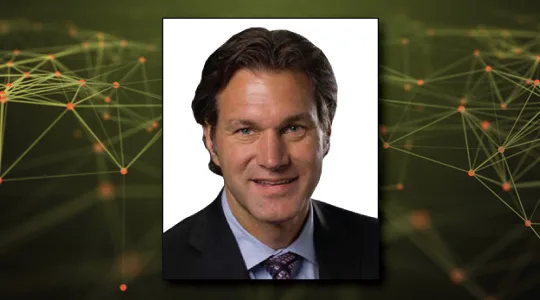
John Gilroy: Welcome to Constellations, the podcast from Kratos. My name is John Gilroy and I’ll be your moderator. Today we have Dr. Bruce Chesley with us. Dr. Chesley is the senior director, Strategy Space and Missile Systems, a division of Defense, Space and Security at the Boeing Company. We’re going to talk about one, the convergence of commercial and government solutions for satellite and ground. Two, we’re going to take a look at cloud-based platforms that support satellites. And finally, we’re going to ask Dr. Chesley about the future of space and national defense and where we need to go from here. Well, Dr. Chesley, you pick up a newspaper, you find out that President Trump has ordered the Pentagon to establish a stand-alone Space Force. It sounds like it is 100 years in the future doesn’t it? So how is it going to impact someone like Boeing?
Bruce Chesley: I think in terms of the missions that our customers need to perform, there’s probably a minimal amount of impact. But the devil is in the details and the way that budgets are going to flow, the way that programs are going to be acquired, and the coordination between a new Space Force and the remaining elements of the armed forces and the intelligence community, I think all of those details potentially could impact the way that we conduct our programs.
John Gilroy: I was doing some research for this interview and I stumbled on an article. The title is, “NASA is cool again”. So what we have is, all of a sudden, Bruce was this nerd working on hard problems, now he’s a cool guy. He’s with it, huh?
Bruce Chesley: Finally, I know.
John Gilroy: It’s taken 30 years.
Bruce Chesley: It’s taken me a long time, yeah.
John Gilroy: Any idea when the funding is going to come through? I mean, this is all just speculative right now, isn’t it? With the Space Force?
Bruce Chesley: As far as the Space Force. Yeah, there’s a lot of debate going on in the Pentagon and on Capitol Hill right now, in terms of what the administration really wants and different ways to go about and implement it. And so it’s really kind of changing day by day. And there are a lot of different possibilities that could come to pass out of that. It could be a stand-alone force. It could be a core within the Air Force, much like the Marine Corps rolls up to the Secretary of the Navy. Or it could be a sub-unified four-star command, maybe under StratComm that would ultimately transition into a unified US Space Command, similar to the way things had been in the past in the 80’s and 90’s. A lot of things could happen and nobody really knows at this point where it’s all going to settle out. It’s pretty clear though, the administration is set on having a Space Force, and so that topic is not going to go away.
John Gilroy: The listeners may not know this, we’re recording this in your office over here in Crystal City. And if we went to the roof here we could probably see Capitol Hill.
Bruce Chesley: Absolutely you could see Capitol Hill from my window.
John Gilroy: Yeah, from your window. And so you look out there wondering, you go, “Well here’s the fun part. Space Force. And it’s a lot of fun and my students at Georgetown are excited about it and maybe your kids are excited about it too. Then there’s the other side of the coin. The other side of the coin is government regulation. So how do you see government regulation changing to deal with the number of new commercial entrants in the space domain?
Bruce Chesley: We’ve been pretty active with our commercial customers and some of our own interests in making sure that regulation and the regulatory environment are favorable for these future space innovations. One big area there is RF spectrum. Access to spectrum is really the lifeblood of our communications customers, our satellite communications customers. And so looking for ways to use bandwidth more efficiently, to reuse bandwidth on higher levels and multiply up the uses of bandwidth, and to coexist with emerging terrestrial uses. You know 5G is getting a lot of hype in the press now, the next generation mobile systems. And how can satellite and 5G coexist to create a viable ecosystem for all, is a key regulatory issue. And then other regulatory issues that we are very involved with are around orbit coordination, especially with these new LEO Satellite constellations, non- geostationary satellites. Making sure that there is a collision avoidance, set of rules of the road as well as spectrum sharing among these new entrants in the satellite world. Our regulatory team is very active. We get a huge workout and there’s a really good cooperation and coordination I would say among the satellite operators, satellite manufacturers, to achieve positive regulatory outcomes for the industry as a whole.
John Gilroy: We’re in a room here that has a whiteboard, a pretty big whiteboard. I don’t think there’s a whiteboard big enough to understand all these satellites out there. I mean… who’s where and where, I mean this is a very complex problem.
Bruce Chesley: It is. And there’s so many new start-ups doing all these exciting things in imagery and remote sensing and communications and relays and even deep space exploration. The start-ups are just amazing and … let alone the changes in government. All the entrepreneurs that are out there are also making this a really exciting time in the business.
John Gilroy: There’s a start-up hub in downtown DC, dedicated just to space ventures. I mean, you couldn’t conceive, even five years ago that would have been hard to conceive.
Bruce Chesley: Yeah, and global is the other thing. It’s remarkable how much activity there is all around the world with these new start-ups.
John Gilroy: So you look out the window, you see Capitol Hill. You look out the other window, you see a lot of commercial work out there in the space industry. So is there a convergence between commercial and government solutions, especially when related to ground systems?
Bruce Chesley: Yeah I think there really is overall. I think when people think of Boeing they think of airplanes and they think of commercial airplanes and government airplanes. And really our strategy in satellites is very similar. We try to have a strong presence in both commercial and government airplanes. And the ability to share technologies and to mature capabilities across both of those is kind of key to our success. And we’re seeing the same thing happening on the ground as well. The emergence of managed network services in our ground communications environment is migrating both into our government and commercial satellite markets as we go to these more advanced beam-forming and beam bandwidth efficient kinds of satellite systems.
John Gilroy: With a good pair of walking shoes we could probably walk over to the Pentagon from here couldn’t we?
Bruce Chesley: Absolutely. Yeah you would easily, yeah.
John Gilroy: Lot of defense contractors in the area here. So how are they integrating commercial services like cloud computing into their customer solutions?
Bruce Chesley: Cloud computing has made a pretty big splash. It’s not in the intelligence community and other parts of the DoD and so I think there’s a major transformation that is occurring across cloud, across all federal programs.
John Gilroy: And increasingly they are establishing trust. I think that’s the big word. There’s trust in the cloud. In fact, the CIA has deployed some systems to the cloud. Now there’s a lot of trust there, isn’t there?
Bruce Chesley: Absolutely. Yeah.
John Gilroy: So what kind of capabilities do you think will emerge, or have emerged, that will spur the use of cloud computing and drive market growth?
Bruce Chesley: I think flexibility is something that is really making its way into the lexicon of what our customers want. And so what I think what cloud offers is the scalability and flexibility to meet their mission needs. And I think the other element of that is I think, pushing services to the edge. And so as you have important users that have a loose coupling to the enterprise, making sure that you can provide the edge services that they need, in a robust way, is one of the areas where I see commercial cloud needing some augmentation in order to meet military type of requirements.
John Gilroy: We’re about to buy a car in our house and we talk about total cost of ownership, TCO. You know, what’s that going to cost? Mileage and repair and resale value and everything else. But you know, there’s total cost of ownership in moving to the cloud too. And so you look at the cloud-based platform from the perspective, total cost of ownership, it may be hard to analyze wouldn’t it?
Bruce Chesley: Yeah I think it would. You brought up security: how do you place a value on more robust security? How do you place a premium on scalability? So I do think when government procurements are trying to determine best value in a procurement, understanding how those attributes contribute to the total cost of ownership is probably a challenge.
John Gilroy: If you go to Google Trends and type in “zero trust” you’ll see a little hockey stick there. And this is a term that’s thrown out a lot in the cloud in this town, it’s “zero trust”. And so it’s based on security in the cloud. So are you concerned about security of cloud-based systems and the cloud-based platform?
Bruce Chesley: Yeah I think we always have to be concerned about security. And there’s multiple approaches to security. And so I think in terms of migrating to cloud, versus the other extreme of having an all on premise lockdown, which has its own set of security flaws, I think all of those issues come into play when we’re talking about security in the cloud.
John Gilroy: And I think if you’re going to hire someone in their 20’s, they’re going to expect it. It’s what they’ve grown up with almost, isn’t it?
Bruce Chesley: Right. That’s true. Yeah, and modern software architectures are sort of premised on that. And so then how do we then make that and take advantage of that kind of an approach, within a government context.
John Gilroy: Within the satellite community here everyone’s talking about High Throughput Satellite, HTS and SmallSats and there’s a big conference on SmallSats, we know that. So what changes need to occur at the ground station level to keep up with all this new technology changing?
Bruce Chesley: There’s a lot of technology needs on the ground. I mentioned managed network services. There’s one non-geostationary satellite constellation that we are manufacturing now for SCS, the O3BM power system. That system has over 30,000 beams that need to be managed.
John Gilroy: That’s a lot of engineers.
Bruce Chesley: That’s a lot of engineers and it’s a lot of impacts on the ground. I think as systems get more sophisticated in space, it requires an order of magnitude, more smarts on the ground in order to leverage the capabilities and provide the robustness and flexibility and flexible services that our customers want to provide.
John Gilroy: Now Bruce, maybe ten, fifteen years ago you get some bright young woman out of college and she comes and you give her a spreadsheet and she can manage a few things. 30,000 … if you handed someone that today, she’d throw that out the window or something. 30,000 beams, different directions, changing all the times? You have to take advantage of scale and using the cloud and maybe this little concept of artificial intelligence but there’s just a limit to what humans can do with that much information.
Bruce Chesley: Yeah, absolutely. I think there are real opportunities in this on-orbit management of all of those resources, using predictive analytics, and artificial intelligence, neural networks and the like, in order to do that. And it’s not just the beams. There’s a lot of different dimensions of flexibility. So there’s the spectrum reuse of the different beams so there’s flexibility in frequency. There’s flexibility in geography, the ability to point the beams. There’s flexibility in bandwidth. Sometimes especially government users want flexibility in waveform, if they want to have anti-jam features and things like that. And then there’s just flexibility in terms of the quality of service that you offer. And all of those things shift throughout the day and so on. So yeah the problem space just explodes when you think about managing a network of that complexity.
John Gilroy: Let’s go from space to time. Einstein would enjoy this conversation. If you look back to ten years ago, this guy named Steven Jobs came up with the iPhone and nobody knew it was going to take off but everyone has got iPhones sitting around all across the table here. When you design systems today for 10 years down the road, do you have a divining rod? Do you have a crystal ball? I mean, how could you predict what is going to happen in ten years and establish something that’s going to be flexible and be able to be used in ten years?
Bruce Chesley: We spend a lot of time thinking about what the world might be like in ten years. And there is certainly a range of possibilities of how that could play out, but the trends are starting to materialize before us. You can see the notion of much more automated cars, and the proliferation of drones and UAV’s. And then when you start thinking about safety and assurity and just even traffic management for all of those things, you can think about a huge explosion in the amount of cloud activity that’s required both from terrestrial and from space- based means. And then the management and the value propositions and the equipage and just the proliferation of that through all of the different value streams that we serve today, is kind of how we start to think about what life might be like in ten years’ time, both on the commercial side as well as in the government.
John Gilroy: Let’s take you upstairs to your office. It’s 9 o’clock in the morning. You got a cup of coffee, you’re looking out the window and you’re thinking about what’s going to happen in five or ten years. You have to think about what’s going to happen in technology but you have to think about missile defense as well. And this is a topic that is very, very important that people are thinking about. More and more, in fact, in the last few years it’s really gotten a popular discussion hasn’t it?
Bruce Chesley: Yeah it really has. It’s a really important issue of course. And it’s a vital part of our homeland defense and we’re proud to be an important part of that in coordination with our customer partners at Missile Defense Agency and in the US Air Force.
John Gilroy: So if you had to … fill in the blank test, and you had to put three things down, so what would be the top three defense technologies that will move to the fore in the next five to ten years? What three general categories do you think we’re going to see more and more of?
Bruce Chesley: More and more of? Just across the board?
John Gilroy: Yeah, yeah.
Bruce Chesley: Yeah, I think we are going to see more and more cloud. Especially cloud and edge type of computing so I think that proliferation of cloud kinds of systems. I think we’re going to see more and more autonomy. I think autonomy is an important area. And I think kind of hand in hand with that we’re going to see more and more unmanned systems and robotics and drones as part of the vision for the future of what the defense area is going to be looking like.
John Gilroy: Autonomous is like a double-edged sword. I want it to be autonomous. On the other hand, there has to be some kind of human intervention at some point in the autonomy. It’s not all that autonomous. It’s more like a ten year old in the backyard than a 20 year old in the backyard. So you have to have some human control here don’t you?
Bruce Chesley: Yes certainly. But I think that will evolve over time as the technologies mature and the capabilities of these autonomous systems get improved. And it will become… when do you have to have an operator that’s continuously monitoring the controls of a system. Then when can it be, the system will alert the operator to pay attention to it when it needs control. And all the way to, it’s going to go perform large elements of its mission without any supervision whatsoever. And so I think that’s the evolution path that we’re sort of at the early stages of now.
John Gilroy: Here we are in the Washington, DC area, there’s an organization north of here called NIST. I used to go up there and set my clock because a good time up at NIST. And they talked about public-private partnerships you know. I look at Boeing here, what a great solid reputation, the Pentagon around the corner. The Air Force is not too far from here. But there seems to be some kind of a relationship, commercial and defense getting together and talking about future launch capabilities for missile defense. I mean, there’s a lot of innovation taking place that maybe the Department of Defense may not be aware of.
Bruce Chesley: Yeah, I mean the launch market is something that’s evolving very quickly right now. There is a lot of new entrants. And there’s a lot of new technology that is getting developed. The thing about shifting that to missile defense is the mission critical nature of the mission and it’s not simply launching something in a cooperative sense. When you’re trying to hit a bullet with a bullet, there is a lot of other aspects to it that make that more difficult and certainly the level of confidence that you want in those missile defense systems is perhaps higher than you would tolerate in a launch system.
John Gilroy: You get something as complex as a bullet hitting another bullet, and different … the other side of the earth, I think you have to draw on this new tech … artificial intelligence, machine learning, deep learning, neural networks. Then we got to bring in the real brainiacs just to explain some of these concepts. But these are concepts that can handle big data and some of the subtleties of 30,000 beams.
Bruce Chesley: Yeah, right. And it’s a question of how do you do all that in real time and with the confidence that you need to assure that the mission is accomplished the way it needs to be accomplished. So yeah, I think again that’s going to be a long journey but just as you said, the number of variables and the amount of data are going to require us to rely on those kinds of capabilities more and more in the future.
John Gilroy: And it’s good to have computation skills but it’s really more about the insight. You need the computational skills but you have the analytical insight as well. You can’t just rely on the numbers because the numbers may lead you down the wrong path.
Bruce Chesley: Yeah, exactly. It’s really important that you have that sort of knowledge and insight about what is important and figuring out the differences that make a difference within the data. And I think machine learning and AI are certainly able to do that on a scale and a magnitude that sometimes exceeds human capacity. But there is always still that human factor that remains essential in all of our systems.
John Gilroy: We just have a couple minutes left here in this discussion. So there are always challenges down the road. There are challenges in many different aspects in the Department of Defense. So what kind of challenges do you think would be impacting the satellite industry in the next ten years? This could be what we talked about earlier, just the signals coming down, and interference. Is it going to be technology? Is it going to be perhaps cyber security for these devices out there?
Bruce Chesley: I think for the government satellite area … I’ll mention two I guess that I think are pretty critical. One is the contested nature of space that the military has been talking about increasingly. And so what response is the US going to make, in terms of all different types of kinetic and RF types of threats to their systems. So I think those are big questions that are going to require an architectural type of response. And I think the second area that’s an emerging question that is going to shape how military satellites get used in the future, is how does the government leverage commercial satellites in a more integrated and seamless way. And there have been discussions over the years about sort of a civil reserve air fleet analogy. Maybe there is availability to quickly call up commercial spectrum to apply it to military needs. And there are implications of that for the terminals that are on the ground equipment and the end user equipment. There are implications of that for the commercial satellite operators. There are procurement implications for that, so that one’s not purely a technology solution but it’s going to require some different thinking in order to provide that kind of flexible, seamless access to bandwidth.
John Gilroy: In the cloud computing world, they’re talking about, especially in the DoD, these sync concepts called OTA’s. Where they finally can be flexible enough to do research and development in certain areas that may be fruitful or may not be, but it’s a lot more flexible than a set of requirements and a purchase order and deliver it in two years. Because in two years, who knows what you’re going to have? But I see there’s going to be flexibility that’s going to be required on the government’s behalf as far as just acquisition.
Bruce Chesley: Yeah, I think we are seeing interest in a number of different acquisition models. The Air Force Space and Missile System Center out in L.A. is really looking for ways to accelerate their acquisition processes for space systems. You know, everything from commercial type contracting to more streamlined, even streamlined traditional DoD approaches. And I think there’s a lot of interest in finding ways to do that across the board. Because as you mentioned, yeah the pace of technology changed. In many cases it’s one or two turns inside of a big government acquisition cycle.
John Gilroy: So they have to have some kind of flexibility, much more than before I think.
Bruce Chesley: Yeah.
John Gilroy: Speaking of flexibility, we’re running out of time here. I’d like to thank my guest, Dr. Bruce Chesley. He is the senior director, Strategy Space and Missile Systems, a division of Defense, Space and Security at the Boeing Company.