Transcript:
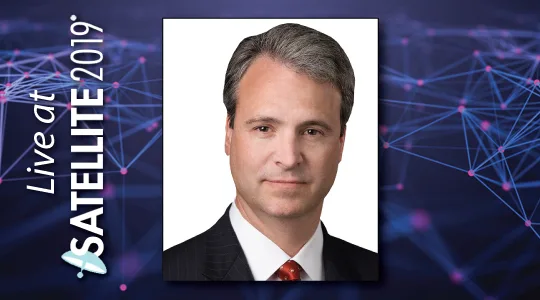
John Gilroy: Welcome to Constellations, the podcast from Kratos. My name is John Gilroy, and I’ll be your moderator. Our guest today is Dave Helfgott, CEO of Phasor. Dave, how are you?
David Helfgott: I’m well, thank you.
John Gilroy: Because I’m an old English nerd, I have to spell this out, P-H-A-S-O-R. If people listening to this are trying to find out more about the company, they can type that word in and learn all kinds of things. What they’ll find is that Phasor was founded to solve the challenges of providing broadband internet services to high-speed passenger trains, yes, trains, with very low profile antennas. As a 20- year industry veteran, Dave has extensive experience in satellite broadband, mobile telecommunications, as well as commercial and government satcom networking services.
John Gilroy: Ready for the tough questions?
David Helfgott: I’m ready.
John Gilroy: I hope so. How do you deliver on this promise of broadband mobility in an analog antenna world? Everyone’s thinking of a physical analog antenna on top of a train somewhere, so how do you deliver?
David Helfgott: Yeah, a couple things had to happen for that to actually take place. One is satellite technology itself has improved dramatically in the last five to 10 years. You’re going from these old-fashioned media distribution satellites to highly concentrated, spot beam data communication satellites. These are called high- throughput satellites.
David Helfgott: At the same time, you have this pervasive need for connectivity everywhere. Everyone has a mobile connectivity device, an iPhone, an iPad, a laptop, if you will, and so the requirement to be connected everywhere, especially in remote places and on the move, has really risen in the last five to 10 years.
David Helfgott: Finally, breakthroughs in access technology, and, in our case, electronically steered antennas that we with software form beams that connect to these satellites is critical. When you get all three things happening at the same time, the market’s ready. That’s where we are today.
John Gilroy: It looks like proof of concept was on regular old trains, but it looks like your future market’s going to be aerospace, marine, and land and mobile as well.
David Helfgott: Yeah. We look at the world as commercial enterprise connectivity. In the maritime space, you’ve got lots of interesting niches, super yachts, cruise ships, ferries, and even the bulk shipping type of applications. In aeronautical, you’ve got commercial aviation, you have business aviation. All of these are driven by passenger connectivity requirements, but then telematics and operational information comes along for the ride, if you will, on the same access pipe. Then, on land mobile, you have, of course, terrestrial wireless connectivity. But, to complement that, and in many cases, where there is no connectivity, it’s the primary point of connectivity. You have trains. You have buses, and so on.
David Helfgott: Now those are the commercial mobile broadband markets. But, that exact same three use cases, sea, air, and land mobility applies to government markets as well. Our strategy is commercial, our technology is commercial, but we have a second act, which is modified commercial off-the-shelf into government applications for sea, air, and land mobility.
John Gilroy: In August, I’m going to jump on a plane and go out to LA and do a race. I want to talk about in-flight connectivity. Is that part of your target audience as well?
David Helfgott: Absolutely, yeah, we have a couple of programs in progress already. The idea is, how do you connect high quality, fault-resistant, broadband connectivity to something going 600 miles an hour at 30,000 feet? Increasingly, connecting to people not just sending emails, but looking to do things like download and upload files, even, in the future, perhaps, streaming video, when the connectivity is more robust. We’re going to make that possible.
David Helfgott: We’ll have a solid-state antenna that is conformal to the curvature of the top of the aircraft. That the entire system is 2½ inches thick and allows a software- defined beam to connect to the satellite and track at 200 degrees per second. It’s a very robust technology that will provide very high quality connectivity.
John Gilroy: If I drive down to Charlottesville for a basketball game, let’s say, I may have a phone in the car. I call that communications on the move. But, if I go across the river to the Pentagon, comms on the move, that’s kind of a big deal, as Ron Burgundy would say, isn’t it? Comms on the move, kind of a big deal.
David Helfgott: It is indeed. It is indeed. There’s two phrases that are equivalent. In the commercial space, we call it mobile broadband. The equivalent idea is comms on the move. All the way back 15, 20 years ago, this idea of network-centric operations or network-centric warfare drove this need for pervasive, ubiquitous, and mobile connectivity. They call that COTM or comms on the move. That can be narrowband. It can be voice communications. It can be kilobit data networks. It can be positioning data.
David Helfgott: But, increasingly, with the applications that are being shared, the increasing requirement for videoconferencing and all kinds of other broadband-enabling applications, the pipes have to be bigger. Comms on the move in a defense and government communication space is a really interesting and robust market, that we are really just getting the tip of the iceberg on today.
David Helfgott: I can envision in the next five years, 10 to 20 megabits uplink and downlink to moving land vehicles. You can imagine a convoy of land vehicles all in a secure Wi-Fi bubble, all connected to the same link going 60 miles an hour flat out through the desert somewhere, or, for that matter, a boat in the middle of the ocean or a carrier group in the middle of the ocean. It can be anything like that. UAVs are another big driver of bandwidth requirement that’s on the move, and only satellite can really satisfy that need. There’s lots of analogous government and defense applications to our core, initial market of commercial.
John Gilroy: I do a lot of work on Google and Google Trends. I’m sure if we looked at satellite phrases or trends in the last six and, let’s say, eight months, 10 years, something like that, you’d see high-throughput satellites, low Earth orbit, and medium Earth orbit, LEO and MEO. Which ones do you work with?
David Helfgott: Our technology interoperates and works with all of the above. We’ve already proven that it works on both geosynchronous, high-throughput satellites, HTS satellites, and low-Earth orbit satellites in the same frequency. In other words, you’ll be able to have a single aperture, a single antenna system on some vehicle, aircraft or ship or land vehicle, that can look at two different satellites at the same time from one aperture, and that’s controlled and managed by software, and have the full gain of both satellite feeds onto that same, single aperture and track those independently from that same, single antenna, and that can be a LEO, a GEO, or a MEO.
David Helfgott: We look at the market this way. Today, there are, in the commercial space, there are equatorial, geosynchronous satellites at 22,000 miles up, and those have been refined for mobility, data mobility, and that’s what the high- throughput satellites are. As opposed to video distribution, which is the traditional role of those satellites.
David Helfgott: That’s the first wave. That’s what’s driving the demand, and that’s what’s driving the supply. That’s what’s giving us a very robust business opportunity.
David Helfgott: The second wave, which is in development right now, and really won’t be fully deployed for the next, say, three to five years, are these non-geosynchronous satellites, these LEOs, or low-Earth orbit satellites, and MEOs, who are mid- Earth orbit satellites. That’s an overlay. That’s a second wave of opportunity for us. That will provide lower latency in some cases, polar coverage in some cases, and it will give a lot more options to network service providers, as to which satellite assets they need for the best use.
David Helfgott: That’s great news for us, because we’ll work with all of the above. It’s almost future-proofing satellite network architectures, because you can talk to different kinds of constellations from the same antenna.
John Gilroy: Dave, there are thousands of people at this conference right here, and thousands of people from all over the world have listened to this podcast. If you’re listening now and would like to get email alerts when new episodes are available, go to Google, type in Constellations Podcast, and go click on Kratos and sign up.
John Gilroy: What are the lessons you’ve learned in evaluations of your technology, and what challenges did you have to overcome to be successful?
David Helfgott: There’s a lot of lessons learned in the last five years. Phasor Inc. was set up in 2014. We’ve gone from initial concept technology to product release at the end of this year in that period, which is, it feels like it’s going very slowly, but that’s a sprint in terms of working on real engineering problems and real hardware problems.
David Helfgott: But, there are some very important phases you go through, and each one is a very different period in the company’s life. One is conceptual technology. You have an idea. You file some patents. You show a very rough version of the technology, and how it works, and that’s a very exciting time.
David Helfgott: The second is a working, functioning system prototype, and that’s a whole different set of challenges. You have to get through that. You have to make sure the thing is robust. That it works in all the different environments that you’re thinking of operating in.
David Helfgott: Then the final step is that commercialization or productization phase. That’s, in some ways, the hardest still, because now you have all the regulatory and licensing things to consider, and it has to be made, a hardened product, that can survive in the commercial markets for the period of time.
David Helfgott: The lessons learned that come to mind immediately are that each of these phases is unique. Each one is difficult. But, all of it requires really high-talented engineering. I wish that technology would evolve at the speed of thought like it does in movies. It takes time, and it takes a lot of people working very hard.
John Gilroy: Well, here we are on the floor of Satellite 2019, all kinds of booths here. Your company has a booth just around the corner here.
David Helfgott: We do have.
John Gilroy: If someone just waltzed up to your booth and said, “When will your technology be available, Mr. Dave?” That’s the question to you.
David Helfgott: Yeah, well, we’re actually testing it right now. In a sense, it’s already available. But, we’ll commercially release our first products at the end of the year or, at the latest, early Q1, really depending on the various test beds we’re in right now.
David Helfgott: Our products will be released, we have three technology releases over the next five years. They’ll be released into markets as maritime and land mobility first, and then aeronautical roughly nine months to a year afterwards. That’s largely due to the certification requirements from the FAA to get a technology made airworthy to put on an aircraft.
John Gilroy: Manufacturing’s not a very sexy topic. It’s not something that gets you on the front page of Forbes or something. But, people in this town think manufacturing of satellite devices is very crucial, and they look at supply chain management. Where are your products going to be manufactured, and what have you done to reassure the people in the Pentagon, who may be considering your products? That, no, we have good hardware, and there’s no problems with it all.
David Helfgott: Yeah, this is a critical point actually. I mentioned we’re a commercial technology, but we, of course, have lots of interest and demand from government programs and agencies. This modified, commercial off-the-shelf strategy doesn’t preclude your comment. You have to be really, really diligent about your supply chain and your partners.
David Helfgott: That includes everything from: where your ASICs are made, or chip-based technology, where you acquire your PCB, how you do your electronics integration, where you do testing, where you write your software code. Phasor’s a US company. All of our developers are in the UK. We work with a supply chain that are basically all NATO certified or US DOD certified. We are thinking about that all the time.
John Gilroy: There’s a company called Mocana. Have you ever heard of this company?
John Gilroy: They deal with encryption and specific manufactured devices. Ten years ago, you’d never think there’d be a problem. But, if you have something on your system that may not have been manufactured in the United States, I think it’s a concern.
David Helfgott: Yeah. We have a supply chain traceability requirement just for the aeronautical industry anyway. We’re going through that very rigorous process for commercial markets. It’s just a benefit to have that available for government markets as well.
John Gilroy: Well, if you look at the satellite world, the space world, there’s a lot of new people moving in and a lot of companies growing, and one of the challenges is just hiring people. I would think that for you to be able to hire people that can manufacture this type of technology, electronically steerable antennas, where do you find them? This is really hard.
David Helfgott: There are some hotspots, no secret to that. Washington, DC is a very rich talent pool for various types of capabilities, from technology to frankly supporting services, legal, regulatory, people who have the right kinds of ticks to work in the government markets. There are other places.
David Helfgott: For us, London is a great area, because we can pull from some amazing technical universities. We have, we do our own ASIC design, our own software design and writing, our own system and test design. We design our hardware, and we do all of our mechanical and thermal engineering. All of that’s done by engineers that we’ve hired. Because, frankly, our best value is creating new and innovative IP.
David Helfgott: We work with our supply chain to do the manufacturing, and that’s part of our earlier comments about being really careful who we work with in bidding our supply chain all the way down. We look for talent in the US around Washington and other hotspots for satellite and let’s call it RF electronics manufacturing. But, for us, London’s been a great place also to find a lot of talent.
John Gilroy: 10 years ago, I talked to people about virtualized networking and virtualized servers with VM ware, we know that. Five years ago, this SDN was thrown in my lap, software-defined network. What the heck is that? It’s just like a server, except it’s software-defined network. Maybe that’s what, what you’re putting together is a software-defined antenna, is that what it is? An SDN antenna?
David Helfgott: Well, it’s kind of interesting you say that. After five and a half years of slogging through hardware development, it turns out we have a software-defined antenna. You have to do the hard work, the hardware work first, and then you can get all the agility and control that software brings to that. When you have a solid-state, electronically steered antenna, you have to know how to form a beam, point it somewhere, acquire a signal, and maintain that, lock and track that signal. That’s all done through software and digital control.
David Helfgott: It’s different than a traditional, parabolic, mechanically steered antenna, which you’ll see all around the show here, which is a dish on a three-axis, stabilized pedestal that moves and tracks slowly or quickly to where the signal source is. It’s a move from mechanical and analog to software-defined and digital, like many other things in the communications world. Satellite communications is really moving forward the way other more traditional telecoms have moved forward in the past five years.
John Gilroy: If I got to Rosslyn and hop on the metro there and start talking to someone next to me about software-defined networks and software-defined antennas, when they think of an antenna, they think of the dish and the house where they get satellite TV or maybe huge dishes in front of news organizations. But, then, they say, “Well, how does that signal get on an airplane?” They never think of the 747 with a huge dish on top do they?
David Helfgott: Yeah.
John Gilroy: I think people have to just make the transition into a different way of looking at what an antenna is. Instead of a physical, parabolic device, it’s a flat… It’s almost like a blanket. It’s almost moldable, isn’t it?
David Helfgott: Yeah. Our particular technology is modular, so we can make it flat like a table, about as thick as this table, an inch and a half thick, white cover that’s in direct contact with the radiating elements, so there’s no gap like a big dome you see on a ship. That can be flat, as appropriate, or it can be conformal, because the modules can come together at an angle. For aeronautical and for high-speed trains, you have a curved antenna, that also gives you a wider arc to acquire satellite signals. But, for things like land vehicles or other smaller maritime vessels, a flat antenna is perfectly fine. It just scans the entire sky, finds the satellite, and locks on it.
John Gilroy: May 14th is Taco Tuesday for me, and I’m going to a Taco Tuesday event in Rosslyn and talking about cybersecurity things. When I think of software- defined networks, I think of breaking a lot of barriers and a lot of software control. But, I also think that the opportunity there for malicious activity could be increased as well. Back when you had 30 Cisco routers, and you had to mechanically or manually update them, you couldn’t do it remotely. Now, people can attack remotely. What about cybersecurity in your systems?
David Helfgott: Yeah, our system’s closed, so it would be very difficult to hack the actual antenna itself. But, we provide access for networks, and so, really, the consideration for the network service provider is, how secure of a network can I provide, and how can I counter any potential unwanted intrusion?
David Helfgott: In commercial markets, that’s a big deal. In government networks, of course, that’s a huge deal. They often do it through various techniques in COMSEC or TRANSEC, meaning encryption on the datalink for the communications packets or encryption on the communications link itself. There are various, well-known techniques to secure a communications link on any kind of a satellite communications network.
John Gilroy: Your website talks about no moving parts. From a mechanical perspective, I love no moving parts. That’s great. Is that a typical question that you have when someone walks up to you at a trade show and goes, “Well, let me wrap my head around this. This is a software-defined antenna, so software is going to control what signal I’m going to pick up. Is that the differentiator?” Is that a question people have about just having no moving parts? It just seems very hard to understand.
David Helfgott: There’s a couple of different value drivers. It depends on almost, which use case you’re talking about. For example, super yachts, and that’s an important market for us, although it’s a small market, really care about aesthetics and performance. Performance has to do with how robust the antenna is itself, and no moving parts means it doesn’t break down as much as a mechanical antenna. But, aesthetics, a low-profile antenna that’s designed into the superstructure of this yacht is preferable to these giant domes that are sitting up on masts or on the decks of the ship. They hate those things. They call them mushroom farms.
David Helfgott: In the case of cruise ships, for example, they had these massive 2.4 meter domed antennas, and they’re running out of places to put antennas. In the old days, 2002, if you got a megabit on to and off of a cruise ship, you were doing great. Today, they need 2 to 3 gigabit networks, because everybody on the cruise ship on vacation is uploading and downloading video and doing all kinds of stuff online. They want to work on their devices on vacation everywhere in the middle of the ocean.
David Helfgott: You can’t put anymore antennas on these ships. There’s no more room. But, if you have a distributed series of flat, electronically steered antennas, you have a lot more surface area, and, also, you solve the mechanical reliability issue, and you solve the aesthetics issue. It depends on which market.
David Helfgott: For certain other applications, like aeronautical, it’s low drag. If you have a two- inch high antenna that’s lighter weight than a mechanical one, you’ve reduced the drag weight of the aircraft. You have better fuel savings in addition to having a better performing antenna. It really depends on which aspects of the no moving parts or low profile is appealing to you.
John Gilroy: I’ll have to find the list of friends of mine with super yachts, it’s probably 40 or 50 people and say, “Hey, got that mushroom thing on your cabin?”
John Gilroy: Last year, we did a whole show on interference. It was a big deal, and it still is a big deal. Satellite interference continues to be a challenge to mobile connectivity. What about ESAs from this RF interference standpoint?
David Helfgott: Yeah, that’s a great question. There’s a couple things. One is, how accurately and how quickly can you beam form? There are regulations about how small, how tight the beam has to be, FCC and IT regulations. You have to be compliant to the FCC Mask, for example.
David Helfgott: Some antennas aren’t. They’re sloppy, and they interfere with adjacent satellites or adjacent transponders on satellites. That’s a problem. That’s an antenna design problem.
David Helfgott: The other point is, you can have satellites nearby that are interfering with you. What do you do to mitigate that? In other words, it’s no fault of your satellite or your antenna. It’s the adjacent satellites interfering.
David Helfgott: With a software-defined antenna like ours, we can actually null interfering signals that are adjacent to our primary link. In other words, we can, through software, cancel out the signal that’s interfering adjacent to our signal. You can’t do that with a parabolic antenna. That’s another example of how it’s just a step function change, in terms of thinking about what antennas can and can’t do. The ability to null adjacent satellite interference is a unique value proposition that a company like Phasor can bring.
John Gilroy: Yeah, because the software allows you do that.
David Helfgott: That’s right.
John Gilroy: That’s great. We have a two-minute drill coming up here, just a couple minutes left here. When you look down the road, four or five years, and see where this whole business is evolving, what kind of changes do you see, and what role do you think your company is going play in this big, huge, massive change in the world of satellites and space?
David Helfgott: It’s really an exciting time. I’ve been in satellite communications now for almost 20 years, and this is a very unique, the last four or five years have been very exciting. But, we’re really at the beginning of it.
David Helfgott: I kind of described earlier two waves. The current wave of data mobility and comms on the move or mobile broadband with traditional satellites is really exciting. We’ll be very busy with that for the next three or four years.
David Helfgott: What’s going to change dramatically for everybody is when some of these, maybe all of these, low-Earth orbit constellations come online. The amount of capacity, the coverage, the optionality it gives service providers and fleet operators is going to be completely transformational. The cost per bit per hertz is going to crash. The adoption rate of comms on the move or mobility will go through the roof. The coverage areas will be complete. You’ll have pole to pole coverage and around the equator.
David Helfgott: It’s going to be a very different environment. Today, you have to ration bandwidth, and you have to make compromises as to where you can connect, and where you can’t. That world is exciting, and that’s what we’re playing towards. That’s the second wave after this one we’re currently in. It’s going to be a really interesting time.
John Gilroy: Yeah, and I hope to be here and talk about it, maybe interview you in five years, and you’ll say, “Well, I never expected it to be this flexible and portable”.
John Gilroy: Dave, unfortunately, here, we’re running out of time. I’d like to thank our guest, Dave Helfgott, CEO of Phasor.
David Helfgott: Thank you very much.