Transcript:
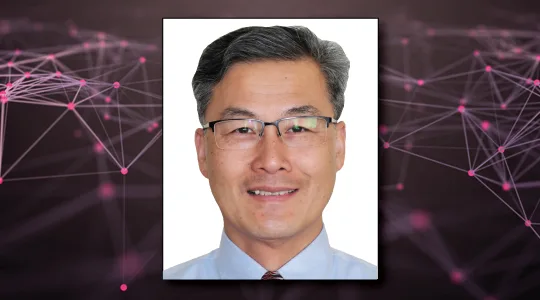
John Gilroy: Welcome to Constellations, the podcast from Kratos. My name is John Gilroy, and I’ll be your moderator. Our guest today is Bill Joo, special projects engineer at the U.S. Navy’s Communication Program office. And what a background in military communications this guy has. Bill has over 25 years of experience in software-defined radios, and he was one of the principal developers of the widely deployed joint tactical radio systems soldier radio wave form on more than 30 radio platforms. And here’s a mouthful. Listen to this. He recently held the post as the science and technology APM for the U.S. Navy PEO C4I PMW/A 170.
John Gilroy: We’re going to try to unpack at least part of that title here during this interview. During the interview today, we will discuss the Navy, the SATCOM challenges it faces and the importance of interoperability across the armed forces. So Bill, can you tell us a little bit more about yourself and how you fit into the Navy’s communication program office?
Bill Joo: Yes. Good morning. So, my role is a special projects engineer, which seems a bit nebulous, is to basically take care of any advanced technologies that we are trying to deploy for the Navy. With that in mind, a lot of technologies have evolved rather quickly in the recent past. I’m talking, possibly, only about five years. It seems with proliferated LEO and various positioning, navigation and timing systems, as of late, the technologies have evolved so quickly, whether it be from SpaceX’s Starlink constellation that’s disrupting the space to potentially using all sources of communications to determine where we are here on earth. So my job is to discover and try to exploit those technologies to deliver capabilities to our fleet.
John Gilroy: So I used a term earlier PMW/A 170. So what does that mean for the general listener here?
Bill Joo: Right. There’s a lot to be unpacked in such an acronym. So the PM portion is that we are a program management shop with the W portion is the warfare, which really is a misnomer because we do C4I systems. Our sister organizations are PMA and PMS. PMA is aviation and PMS is ships and submarines. So, the 170 organization in a numerology point of view, the number one stands for a title 10 or organization, therefore we do acquisitions. The 70 has no real designation. If you flip the OSI stack upside down, we’re typically responsible for the physical layer, the data communications and any kind of GPS based positioning, navigation, and timing systems. So, we’re both a PMW and a PMA.
John Gilroy: If someone is very familiar with communications and the DoD, is really going to understand exactly what you do by that designation. Oh, PM means this, the W slash A means this, and the 170. So really at a certain level, people are going to go, “Oh, we know exactly what he does.” So, this is for the general listener, and we had to maybe bring that up to 40,000 feet and come back down. When it comes to satellite communications, what sort of capabilities does the Navy need in its future SATCOM network?
Bill Joo: So, SATCOM networks are very important to the Navy because of our unique mission, which means we operate in the blue waters, whereby there’s no real infrastructure to be had. So, SATCOM is really the only means of delivering high throughput data with protection to the warfighters at sea. And with that in mind, it’s not the nominal variety of say, if you were on a cruise ship and you’re able to dial up a high-speed internet. For us, we need to be able to provide protected communications and while providing that capability be mindful of the fact that we will likely go into harm’s way and therefore the communications environment will be rather challenging.
John Gilroy: So if someone’s designing systems for cruise ships, it’s one thing, but you’re going to be in harm’s way in the future so you have to establish communication that’s going to be in a very difficult environment. Is that a good analysis?
Bill Joo: That’s correct. And we call that RSC 3 or resilient communications with command and control. Obviously, command and control is not possible without resilient communications. And interestingly as I’ve mentioned, in terms of technologies evolving rather rapidly, we’ve encountered this notion called a proliferated Low Earth Orbit constellation. So, SpaceX and Starlink have started that process. We see Amazon’s Kuiper, OneWeb, Telesat, and various other constellations that are coming into the near-term availability that holds great promise to deliver high throughput. And oddly enough, there are some inherent protective nature of these communication systems. So, we may be able to deliver both high throughput and some level of protection using commercial satellite communications. But of course, our go-to is military SATCOM, whether it be AEHF or the Wideband Global Satellite systems.
John Gilroy: So, Bill, when people hear about Kuiper and thousands of satellites going up there, they flip out, but maybe thousands of satellites might mean resiliency for you. Is that right?
Bill Joo: Oh, right. So, interestingly with SpaceX, they are aiming to launch 42,000 satellites. To put that into context, when SpaceX started on this mission, we had no more than 2,000 satellites that were of communications variety. So, if SpaceX is capable of delivering those 42,000 satellites, this order magnitude and better improvement in the number of apertures that will be available in space. They are already at 2,000 and we’re looking forward to other constellations supplementing this. So, the future is looking very bright for communications.
John Gilroy: We are about four or five miles here from the Pentagon. If I grabbed a general walking out the door there, I’m sure he talked about his roadmap for this or the roadmap for that. Everyone seems to have plans. With all these new technologies coming up, how does someone in your position, how do they evaluate new technologies for roadmaps that you’re seeing coming out?
Bill Joo: So the primary mechanism for doing so is through our science and technology forecasts. We try to get close with industry and learn of what’s keeping them moving forward in the technology space. And we find that they’ve been very, very open with us in terms of what they expect to do, how they expect to deploy these capabilities, not just for their commercial interests, but for the military applications. And it’s not necessarily always about wartime functionality. Sometimes it’s just simple things like morale, welfare, and recreation. So, in this COVID-19 environment, we’ve had ships that were anchored offshore for nearing a year. And sailors have not been able to really take advantage of any kind of communications means that they would normally have when they go ashore to stay in touch with their families and such. So, we find that delivering even communications capabilities in the commercial sense to the warfighter will improve their morale and possibly their warfare readiness. So, the interesting dichotomy of military and commercial communications, however, there’s a nice fusion between the two.
John Gilroy: Wow. Everyone has challenges, a lot of opportunities coming up in the future too. So, if you try to project out some of those forecasts or the roadmaps, what do you think the biggest challenge is going to be? Will the challenges be in interference? Will they be in the ground? Will it be in security? Where are the challenges going to be for you for your future SATCOM?
Bill Joo: So we’ve had a pretty easy run, I would say, in the past dozen years or so, whereby we’ve been able to deliver a lot of throughput. In fact, the Navy’s throughput, data throughput, to ships have increased by almost two orders of magnitude in 12 years, which is pretty impressive. Now the real challenge comes in terms of cyber threats and the actors that are working against this are not the usual variety, and it’s not always about the warfighting readiness, but cyber threats to our control systems, not necessarily the data systems. So, in the past we worried about anti jamming, but now what we find that the threats are against the actual satellite control and management. So, we will need some resiliency and hardening in that domain. If we are going to try to rely on these high throughput satellites, and then discover that that is denied because of the control and management systems are compromised.
John Gilroy: It’s like blocking attack. It just blocks any ability to communicate to that satellite instead of jamming it.
Bill Joo: That’s correct. The threats have become much more sophisticated threats, such as jamming is rather crude by today’s standards.
John Gilroy: You know, Bill, thousands of people from all over the world have listened to this podcast. Go to Google and type in “Constellations Podcast” to get to our show notes page. Here, you can get transcripts for all 100 plus interviews. Also, you can sign up for free email notifications for future episodes. When I’m out with my wife at the store, here and there, at the Costco, I see more and more people with NASA t-shirts. It seems to be really, really popular. And I’m sure in a few months from now, we’ll see people with Space Force t-shirts and everything else. So, how does the Navy work with something like the Space Force?
Bill Joo: So, our relationship with Space Force really hasn’t changed any of the dynamics. I think probably the establishment of the Space Force has now given space a little bit more focus. I believe in the past, when we were working with the Air Force, there was a vague mission as to whether the Air Force is responsible for everything that’s up in the air and space domain. And therefore it gets a little bit cloudy as to the emerging space domain. So, for the Navy, for instance, we ran the newest program, and we launched those satellites as well. And so it became ambiguous as to who actually controls the space domain. Having Space Force clearly delineates the domains and allows us to focus on space and the special challenges and opportunities that exist there. So, I believe the Space Force establishment is a good move, although it was a bit ambiguous in the beginning.
John Gilroy: Well, speaking of different forces and different aspects of the DoD. How is the Navy participating in the DoD’s Joint All-Domain Command and Control, or I think JADC2 is what they call it? How will they participate in that vision?
Bill Joo: We are clearly part of the JADC2 implementation aspects of this particular initiative or vision per se. I think it’s beyond a vision at this point, to fully anchor our presence in the JADC2 domain. Our Admiral, Admiral Smalls, has been assigned to run a project called Overmatch and Overmatch is really a sub- component of JADC2. Although various views differ on that, but project Overmatch essentially is taking JADC2 and putting in the implementation hooks. So, basically aligning all of our programs to ensure that we are delivering a focus capability at the end of the day, and with the notion that we will fight tonight and win tonight. So, that’s probably all I can say about project Overmatch at this point.
John Gilroy: I think what you’re hinting at and maybe talking about obliquely is this concept of interoperability. And this whole idea of interoperability, the objective is to increase effectiveness. And so we got Space Force, Air Force, Army, Navy. This will all work together to enhance your effectiveness. Is that right?
Bill Joo: That’s correct. And we take that joint notion very seriously. Fortunately, in the space business, we all converge on a common set of apertures and platforms. And therefore, we work very closely with the Army, with PM west, EMT Katz, joint SATCOM engineering center, U.S. Air Forces research laboratories. So, I believe we are pretty well aligned in terms of the jointness of the fight. And of course, that common domain called space helps to glue this fabric together.
John Gilroy: In the world of software and large systems, enterprise systems. Everyone’s talking about open standards and so my question to you is, are there open standards that the armed forces could adopt to fast track this interoperability or maybe even expand capabilities?
Bill Joo: Yes, that’s a great question. So, open standards and interoperability has been sort of the notional, or should we say the windmill that we’ve been seeking for quite some time. But the problem with standards are that there are too many standards. So, you may be implementing an open standard, but that does not guarantee interoperability or the ability to expand the capabilities beyond what you had intended for the system. So, we’ve been pursuing more along the lines of what’s called P3I, which is Preplanned Product Improvement. With P3I, we will actually define a limited set of standards that we plan against for the future versus letting open standards dictate where we go in the future.
Bill Joo: So for instance, in the intermediate frequency domain, we’ve had lots of work in the digital intermediate frequency interoperability standards development. We ended up with about a dozen different standards. Recently, we’ve joined the Digital IF Interoperability group, which takes a common standard called VITA 49, and we specify exactly how we intend to use this in a pre-planned manner. So, we by dictating standards early and limiting them to just a few sets that the group of, I should say, the coalition can agree on, we could potentially extend capabilities and ensure interoperability in the future. So once again, standards are great, but there are too many. We need to start getting focused in what we pursue as common standards.
John Gilroy: I’ve left some interviews with generals from the Army and they use the S word, the standards. It’s such a sensitive topic. They want to avoid it a little bit here, but it seems what you folks are doing is that you’re trying to maybe influence some of these standards before they go down the pike and ensure that they meet some of your Navy requirements. Is that right?
Bill Joo: That’s correct. And as I’ve mentioned, once again, the DIFI or Digital IF Interoperability standards, we didn’t just simply stand by and watch an industry group define us. We in fact joined as a member of that consortium and we’ve encouraged other organizations such as PM West from the U.S. Army to join so that we can collectively influence where that commercial standard goes. And that is a critical part of making any open standard come alive.
John Gilroy: It’s in Generals and Admirals, they always want to think big. And one big concept is this concept of digital transformation. And I’m sure 10 Admirals tend to have traditions of digital transformation. Everyone has a different idea of it. So, from your perspective, what is the Navy’s approach to digital transformation?
Bill Joo: I can’t speak for the big Navy as a whole. I will tell you that we have been pursuing digital twins. So, rather than deploying systems and learning on the job, we have initiatives such as Chimera, which tries to create digital training twins and study the effects that’ll affect them this early and often. Digital transformation from a communications point of view for me is that we’ve been living off of a lot of analog systems and for good reason. They function extremely well in the bank. The notion of legacy typically means that it works well, and why throw out something that doesn’t fail? Going the digital path or us in the communication sense involves taking all of our systems, reviewing how we do signal processing and possibly going down the path of digitizing every element. Therefore, we can have a force multiplying effect.
Bill Joo: So, for instance, the communication system, if we tie a digital radio system with a digital radar system, we blur the line as to what an electromagnetic system even looks like. And by blurring that line, we may find that communication systems can use a radar system to actually communicate and vice versa. So, we want to get to a point of convergence, and that’s what digital transformation means for us. Again, we’re coming more from the communication side, but if we go down to Chimera and the digital twins and the ability to do a lot of analysis before we encounter our adversaries, our piece of when will likely increase significantly.
John Gilroy: Bill, earlier in the interview, you used the word resilience. It just dawned on me that a lot of this convergence can actually give you all kinds of resilience. That was one of the primary goals we start off with this, wasn’t it?
Bill Joo: That’s correct. And resilience means a lot, it has various meanings to various groups. So, for us, ultimately, it’s the end warfighter being able to perform his or her mission without necessarily counting on systems to do exactly what they’re supposed to. Resilience is the ability to reform what we have and develop new capabilities on the spot. So, that is sort of the MacGyver effect in some sense to work. And I believe digital transformation will play a major role in yielding resilience for Naval chipboard communications and ENT systems.
John Gilroy: Well Bill, I just really thank you for taking the time to give us this interview here. You’ve explained some very complex communication topics, and hopefully we’ve boiled it down to the MacGyver effect or something like that.
John Gilroy: I’d like to thank our guests, Bill Joo, special projects engineer at the U.S. Navy’s Communication Program office. Thanks Bill.
Bill Joo: Than you, John. You have a great day.