Transcript:
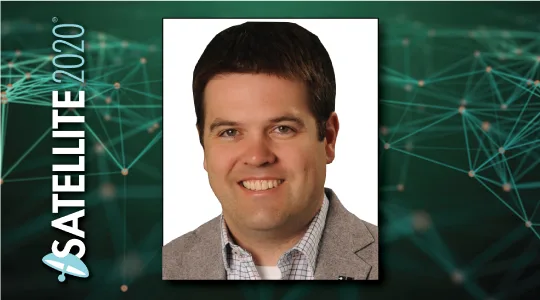
John Gilroy: Welcome to Constellations, the podcast from Kratos. My name is John Gilroy, and I will be your moderator. Our guest today is Adam Maher, CEO of Ursa Space Systems. And we are live from the floor of Satellite 2020 in Washington, DC. With this interview, we will discuss how SAR satellites are changing the space industry and how this new technology is impacting markets across the globe. Our guest is Adam Maher, CEO of Ursa Space Systems, a startup company that uses SAR satellites to provide insights into various industries such as energy and oil and gas. Ursa bridges the gap between information-rich data and those companies that are breaking new ground in global intelligence. At Ursa, they want to turn data into impact. Is that right, Adam?
Adam Maher: Yes, yep.
John Gilroy: Good, good, good. Having fun at the conference so far?
Adam Maher: Yeah, it’s been good. Yeah, definitely for me, I used to build satellites and was in the space industry. And so for me, it’s a gathering of meeting old friends, now especially that I’m not necessarily building a satellite anymore, I’m actually on the side of bringing in data and how do I take the data from these satellites and use it.
John Gilroy: I would never be cool enough to say, “I used to build satellites.” That’s really a cool thing at this conference, isn’t it?
Adam Maher: Yeah, it is. Yeah, I guess so.
John Gilroy: Let’s start off with SAR here. So what is the difference between SAR and a traditional satellite?
Adam Maher: Yeah, so traditionally, especially if we look at the remote sensing industry individuals, when you look at Google Maps, you’re looking at an optical image. And so, the great thing about radar versus an optical image is… I like to joke for those of us on the East Coast in Washington, DC, we know that pretty much from October to March, we don’t see the sun. And if you own optical satellite, the same is true. You won’t see through the clouds, you won’t see at nighttime. Versus the radar, the synthetic-aperture radar satellites, they see through the clouds, they see at night, and what it really does for the industries I work with is actually bring consistency to that data.
John Gilroy: So instead of 12 hours of literal darkness and data darkness, you open up to 24 hour period of information?
Adam Maher: Yeah, exactly. A lot of the countries we work with, especially if you look around the world, parts of China makes the East Coast of the United States look like a tropical paradise. If you think about the amount of clouds that are in some of these countries, you really can’t make these analytics when you’re thinking about, “What’s the trade coming in and out of a port?” If it’s 20, 60 days in between cloud-free image, how much activity has changed in a port in that timeframe?
John Gilroy: Well, Adam, you’re the founder of Ursa Space. So what made you decide to start the business and work with SAR satellites?
Adam Maher: Yeah, so really what it was is a few years, well, I guess, a little over five years ago now, I was actually working when the small sats were just starting to come into the markets. So you had the companies, the Planet Labs, the Skyboxes, they were bringing in the optical imagery into the space. And so, I was working with a number of those companies, and I started talking to a number of potential customers, and I had one meeting I remember, sat around a table and everyone looked at me, they’re like, “So this is great. We really love this idea. Even Planet says take a picture of the world every day. But there’s clouds.” And they’re like, “Can you…” And so, a lot people, at that time, they asked me, “Can you take and build a radar version of these satellites?” And so, we started off life, and we said, “Could I build a small radar satellite?” And that’s where we started from.
John Gilroy: Great. So your company has a unique approach to connecting people to information-rich data derived from SAR. I guess that’s your separating factor, isn’t it?
Adam Maher: Yeah. So we’ve really took the approach of when we originally started this company, we were originally looking at building satellites. But one thing that happened was when we started connecting with various customers around the world who had tried to use radar data and then when we also started looking at who actually owned these radar satellites around the world, we started to realize that it’s this great data set, I see through clouds, see at night. But on the other side, it’s a really complicated data set. And so, working that problem of, “How do you get through there?” Was what we started to realize “that’s the problem”. And so, we really shifted our business model to, “How do I build a community in the remote sensing industry” So, today, we bring together so many of the radar satellites, our mapping satellites. We even work with optical satellites. And just, how do we bring that community? How do we fuse it together and really start to show industries around the world who have never used remote sensing data before what you can do with it? It’s exciting.
John Gilroy: Adam, I used to have a podcast called Students vs. Startups, and they’d ask interesting questions to startups like you. In fact, they’re about your age. And so, tell us about your little journey to startup. Good, bad, frustration?
Adam Maher: I think in my journey through the actual startup is like any other startup. It has its ups, it has its downs, it’s a total rollercoaster. I remember at one point I had one day, I actually had hired my best friend, one of my best friends, they moved all the way across the country to come join us, and then we had this meeting. And this investor’s like, “No. We’re not investing.” I’m like, “Oh, man.” And it was this down day. But you know what happened that afternoon? I had a customer call us and say, “Hey, guess what? We have this awesome opportunity, let’s go do this.” And so it was like that. I know that’s one little nugget, but I think when I look at the startups, there’s good days, there’s bad days. It’s just a lot of hard work because what we’re doing’s never been done before. And so, it just takes hard work and a lot of some things work, some things don’t, and keep patiently working through the process.
John Gilroy: You know the Tom Cruise question, of course, is show me the money, and you’ve had to raise money for your company. In fact, you raised about $15 million. So what are you going to use this money for?
Adam Maher: Yeah, so the $15 million for us, what that’s allowing us to do is it’s allowing us to continue to build, allowing us to really continue to build that infrastructure that is required to connect. There’s all these new constellations and a lot of current satellites in orbit. And so, we’re actually building all the software infrastructure that allows us to connect those satellites, and process it, and turn it into things that someone’s interested in. You’re so used to the user experiences. You open up your phone, you open up Google, you open up a map online, and you just expect data to be there. And so, we’re really working on, “How do we build that infrastructure such that we can actually take data from the satellites and bring it into user experiences just like that?”
John Gilroy: It’s almost like being a data broker in some ways? Is that similar, something like that?
Adam Maher: Yeah, it’s been interesting. I think there’s been lots of terms for our business model. It could be in some respects as data broker, in other respects it’s more of a turnkey service. So my typical customer we work with, these are folks who are very smart in their individual field, but they probably have not used or even worked with satellite information before. So in general, they may have heard of a satellite company, but they don’t know how to go talk to a satellite. How would I go task a satellite? How do you get the information back? And then how do you process it? And even the last part, how do we take that data that you get from this radar? And so, the simple thing you could say, I detected a vehicle. It doesn’t really mean anything until we connect that with other pieces of data and actually bring context to somebody that said, “Okay, yeah. This vehicle here added with this other piece of data means that this activity, it could be if you’re in oil and gas, or insurance, or whatever industry, this actually has meaning for you. It’s not just a piece of data.” So think about your experience like if you go look at your house on Google Earth now, you’re like, “Hey, that’s my house.” But if you take these analytics, we could start saying, “Yes, your yard is in good shape, your roof is in good shape. Would you like to take the next step with it?”
John Gilroy: Elon Musk gave a presentation yesterday; I don’t know you’re there or not. He talked about doing innovation faster. You could be the poster child for, “Hey, Adam, come on up here. This guy, this guy does innovation faster,” which is what you’re doing. You’re taking different concepts and drawing more information from the existing ones that are out there.
Adam Maher: Yeah, exactly.
John Gilroy: Good.
Adam Maher: To me, it’s I look at the shows like this, and there’s so many great components and great companies here. And so for us, it’s always been about how do we start bringing that community together and building something that is greater than any one individual company can put together?
John Gilroy: A community is not a commodity.
Adam Maher: Exactly.
John Gilroy: Adam, thousands of people from all over the world have listened to this podcast. Go to Google and type in Constellations Podcast to get to our show notes page. Here you can get transcripts for all 71 interviews. Also, you can sign up for free email notifications for future podcasts like Adam. It seems that I go to your website and look around, it seems like your focus has been on energy and oil. So why’d you pick those industries?
Adam Maher: Yeah, so effectively what happened was when we first initially got into the analytics is we weren’t quite sure. We actually interviewed over 200 companies in all sorts of various industries. And what we ended up finding was we ended up finding that in the energy and oil, we happened to find a couple early customers who were very interested in moving forward. And so, we decided to work with that industry to get started, and partially because there is, especially in this industry, there is some history of working with advanced technologies for advanced data analytics. And so, that was a great industry for us to get started now as we start to drive into a number of other industries.
John Gilroy: So are there, besides oil, are there other industries that might benefit from SAR? For example, maybe construction?
Adam Maher: Yeah, construction’s one of them. So really, there’s a whole variety of industries. So we have looked at and there’s been great interest in what things we’re doing. We started in oil and gas. Insurance has great applications. There is, like you said, there’s construction, or there’s just the general mapping field. So there’s a lot of work there. To agriculture, there are certain benefits that using this technology for agriculture could have, to even financial trading. To be honest, I’m always surprised at how I find little uses for this technology in all sorts of applications around the world.
John Gilroy: Let’s bounce back to your website. You mentioned companies like financial services are using this alternative data, such as data that SAR provides. So how are they using the data you provide, and what value does it bring to a financial services firm?
Adam Maher: Yeah. So for a financial services firm, basically what we’re doing is we’re providing data that it gives a company advanced warning as to what’s going to happen in the market. So for example, earlier we actually did quite a few studies, had quotes in a number of newspapers recently where we measure how much oil is. And so, if you have, for example this week the price of oil dropping, there’s a good question about how is the market actually responding? And so, a trading firm may have a theory that says, “This is what I think is going to happen in the market.” And what we can do is we can actually provide data that either proves or disproves that theory. In a lot of cases, we’re looking at parts of the world where you have very limited information. So in general, a lot of the world still runs on monthly reports, like what is the economic strength of this country or that country tends to be monthly reports. And if you can actually, during the month, start to get information about that, you can start to have an advantage when you trade. When you are trading, do I make this bet or that bet on the market?
John Gilroy: An analyst’s job is to really understand what’s going on. Then when he tries to move into the area of predictive analytics, well, you better have some solid data before you go making them because you can lose your job, isn’t that true?
Adam Maher: Yeah.
John Gilroy: This is one more data they can have.
Adam Maher: So for in the financial services, this is a data set that allows people to have a better sense of what is the risk that they’re taking. Across all the companies we work with, this is really about decreasing risk, decreasing risk of a trade you’re going to make or decreasing risk of, “I’m going to make an investment into this country. Is this the right thing to do or not to do?”
John Gilroy: I guess you walk around the floor here at Satellite 2020, you must be some kind of a star because you’re named one of the top 10 hottest satellite companies in 2020 by the publication Via Satellite. Do you sign autographs for that and stuff?
Adam Maher: No, definitely not signing autographs. I definitely have not reached that fame yet.
John Gilroy: So you got that distinction because you separated yourself somehow. So what’s that separation?
Adam Maher: I think the key separation is really the business model that we’re approaching here. So I think probably the key we talked about here at the beginning, I used to build satellites for a living, but now we’re doing a software model. And so, I think that’s what unique here is really the business model as we’ve said. Instead of having to build our own satellite, there’s a lot of individuals and companies here and around the world who have great capabilities. And our goal as a company is, we as a company, we care about what’s happening in the world and we really care about building this community, of taking and bringing these technologies together that folks are building, and delivering value and an understanding of what’s happening.
John Gilroy: In software development, talk about being agile, and I think that’s what I’m listening and hearing between the lines is that you can take information and you can be agile and adapt it to new situations that are unpredictable. And if you just look at the news here in March 2020, there’s a lot of unpredictable things that are going on that they need more information to figure out what’s going to impact here, what’s going to impact there. And we talk about oil and gas, there’s big news just in that little small segment even this week.
Adam Maher: Yeah, it’s great that you bring up that piece there. I think that’s really where we’ve started. A lot of folks we work with have a lot of value is because, so for example, folks want to know with the recent virus going around, how is that actually impacting markets. And so, we just did a series of studies looking at what is the production impact on factories around the world. The other side of it is, if an earthquake happens, a hurricane happens, we’ve done all sorts of great work where we’ve just said, “What’s the flood extent? What’s the damage extent?” Be able to get those to folks as fast as possible. And so, a lot of that agility is built into what we do and how we operate.
John Gilroy: I always ask my students what their five-year plan is, where they see themselves in five years. But I think in this technology in this world, it’s awful hard to predict. But I’m going to ask you. So where in the future for SAR, where’s it going?
Adam Maher: Yeah, so there’s a number of new constellations coming up, both from suppliers who have been in the market for a while and new suppliers entering the market. And so, what we’re going to see here is we’re going to move from an area of just looking at long-term trends to now there’s going to be so much commercial available data, we can really start looking at things almost, not quite real time, but close to real time. And it’s going to really open up that, yes, natural disaster happened. With satellites, we can actually respond very quickly and really make meaningful impact to people’s lives for these things. So that’s what I’m really excited about is continuing to build that community and that system to be able to support those missions.
John Gilroy: I walked around the show floor, I’m sure you did, too, outside the fist bumps instead of the handshakes.
Adam Maher: Yes.
John Gilroy: What innovations have you seen on the floor today?
Adam Maher: So I used to be in the satellite world, so this is not related to this company, but it’s really interesting seeing folks move into the higher frequency bands in a higher fashion. But I also think for me, too, this time, looking around, seeing how many different options there are now for different ground stations, portable ground stations, that market’s developing, seeing how the small satellites are really developing, and the data’s starting to come from those. It’s really cool starting to see all these various technologies. So five years ago when I was in the satellite industry, a lot of these were just starting to be ideas, and now I’m actually seeing them as finished products on the floor. It’s just really exciting to see those technologies all come together.
John Gilroy: Yeah, a lot of people waited lots longer than five years for some of the technology, didn’t they?
Adam Maher: Yeah, exactly.
John Gilroy: Like 30 years.
Adam Maher: Yeah, this year, a lot of this technology’s actually been in the works for a long time.
John Gilroy: Well, Adam, unfortunately we are running out of time. I’d like to thank our guest, Adam Maher, CEO of Ursa Space Systems.