Transcript:
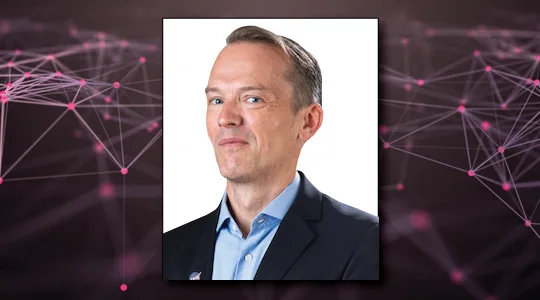
John Gilroy: Welcome to Constellations, the podcast from Kratos. My name is John Gilroy, and I’ll be your moderator. Today we have Raphael Roe ttgen, CFA. He is the managing partner of E2MC ventures. During today’s podcast, we will discuss technological advancements driving the global space economy, different space sectors that form the industry, and the current and future possibilities for family vacations in space. But before we begin, I have friends who study physics and they’re going to look at this title of the company and go, “What does Raphael know about physics with E2MC? He’s got the letters all confused. What’s going on here, Rafael?”
Raphael Roettgen: Yeah, it’s embarrassing, right? I don’t even understand general relativity and all of that. The origin of the name is actually Earth 2 Mass Capital. It sort of reflects a grander ambition that, in this quest to make life multi-planetary, that people like Elon advocating for that, we think there is a lot of investments required along the way, a lot of technologies are required. I have to put in technology stack to actually be able to live on Mars or other places, and we want to help finance these developments.
John Gilroy: Well, I’m telling you, there’s all kinds of people in this town walking around with NASA t-shirts, space is real hot, and I’m sure just with that title you’re going to get applicants after this podcast. Everyone’s going to want to work for you because wow, everyone wants to go to Mars and you’re talking about it. Let’s put your company in perspective here. If we look at the last decade, we have seen the emergence of investment firms to support the expansions of capability in space. So, Raphael, why is space such an exciting industry for investment right now? Why?
Raphael Roettgen: Yeah, you’re right, and it’s really a relatively recent phenomenon. I mean, even when we started, when I started thinking about it a couple of years ago, the conversations with potential investors would’ve been a lot tougher, right? So a lot has changed. And now you have a dozen announced space SPAC mergers, you’re basically creating public listed space companies, right? You saw news like this morning, $1.4 billion investment money raised by Sierra Space, right? From a number of Blue Chip investors. It’s really come a long way, and so I think people are basically seeing the same macro drivers that we are excited about at E2MC, and which we started understanding a few years ago, which is basically that space is becoming much more accessible. It’s becoming much cheaper as well. It’s becoming much cheaper to go to space, and then to operate in space.
Raphael Roettgen: And part of that is the access to space or the launch costs, and this is going from whatever the right numbers are, you’re taking a large rocket to go to Low Earth Orbit, around $10,000. Just speaking very rough numbers, right? But then SpaceX, by virtue of reusable… Well, reusable first stages, anyway, technology, lowering the cost to sub $3,000 if you take the entire capacity and their ride share program, it’s $5,000, so already quite a significant increase. And then of course, Starship, if that ends up working, it could take it down another magnitude, which is really crazy to think about.
Raphael Roettgen: But those are the cost of accessing space, and I think those are reasonably well known by now, because people like to watch those videos of the first stages landing, but then the cost of everything else has decreased as well, right? Because the end of the day, space, it’s about technology and it’s subject to the main trends like, roughly speaking, trends like Moore’s Law and miniaturization and all of that is… Miniaturization, by the way, is very important for space, right? Because if something is smaller, it typically also means it weighs less, and weight is basically the main driver of launch cost. You get this double whammy effect. Your component gets smaller and lighter and cheaper, and then launching it gets cheaper as well, so putting the same capability in space now costs just significantly less than 5, 10 or 20 years ago. And that suddenly makes a whole lot of business models economically feasible, and an ever increasing number of business models that just never made any economic sense before, and that’s what we’re seeing. That’s what we’re excited about.
Raphael Roettgen: We expect like the Cambrian explosion of space-related startups, similar to what the internet created the Cambrian explosion of startups in the mid, late ’90s, because it made the cost of accessing the end consumer so much cheaper, because you had e-tail, instead of bricks and mortar, and you could reach people via the internet rather than via television or radio. And so we’re expecting something similar, and we hope this is a similar moment to internet in the mid ’90s, and we want to find the equivalence of a Facebook or Airbnb, or something like that to invest in.
John Gilroy: My, my, my. You used the word Cambrian, and I look back at your academic background. You have a really strong academic background, people should know that, and I’m sure somewhere along the way, maybe at Wharton or something, you took a course in marketing. And marketing, you talk about market segmentation, but market segmentation applies to the satellite investment industry too. There are some distinct sectors. Can you maybe expand on some of these sectors? I know a couple of them may be launching space components, but there’s a lot of different sectors out there in investment, aren’t there?
Raphael Roettgen: It’s interesting, it’s actually one of those… We realized when we were talking to potential investors and generalists’ investors, like people who could invest in our fund, right? That is actually one of the first things we had to
Raphael Roettgen: explain, like what is actually going on the space sector? What are the different activities? We actually created this chart, which is so you can see… It’s, I think, still my LinkedIn background. It’s this like almost cartoon-like chart of the activities going on and people can look it up. But let me run through it. I mean, you have the, in no particular order, accessing space, right? So you have launch, right? Rockets, which basically can take you to space, right? And then what do those rockets actually take to space? Well, most of the time it’s satellites. And why are the satellites in space? Well, I mean the main use cases include satellite communications, right? And one use case of that, that has been around for a long time now is satellite television.
Raphael Roettgen: But now you have the broadband constellations, like the one that SpaceX is building, Starlink, or Amazon with Project Kuiper. You also have narrow band satellite communication applications, like for internet of things. Then another really big category is Earth observation, or more generally called remote sensing, so as the name applies, you observe the Earth for a certain purpose, and you can do this along the radio frequency spectrum. It could be optical, so visible light imagery. It could be but it doesn’t have to be. It could also be like in other parts. Infrared, for example. We invested in a thermal infrared company. And you can do that, this observation, for different purposes. Really traditional purposes include spy satellites for national security. And obviously that continues to be important, but it reaches as far as climate tech. I mean, a lot of the things, data that we know about climate is basically coming from remote sensing satellites. Then you have space tourism, so this is a little bit newer, right? And obviously that’s an example where even now it’s still very expensive, right? But we expect more of that and we can kind of talk more about it. It’s an exciting field, and we invested in that as well. You have also an emerging business model would be in-space manufacturing. And what I mean by that is, there’s actually two ways, two types of in-space manufacturing. You can manufacture stuff in space that you use in space, and then you manufacture it just in space because it’s easier to then use it right there.
Raphael Roettgen: But it’s also manufacturing you do in space that you take the final products back to Earth. I know you want to like, well, why would you want to do that? That sounds really complicated and expensive. Well, you do that because you want to take advantage of some of the special conditions that exist in space, specifically microgravity, which enables to manufacture certain things that you couldn’t manufacture on Earth, so space manufacturing is another one that we’re really excited about. Then you have other activities like the private space stations and people know there have been a number of recent announcements on private space stations. And then you go on from there, then you have Lunar- related business model, like transport to the moon, mining on the moon, and you kind of go on from there. And there’s probably a whole number of things I’ve forgotten. One thing I should point out, for example, I was talking about remote sensing satellites, but there’s actually another class of company that actually doesn’t operate their own satellites, but they analyze satellite imagery.
Raphael Roettgen: So from other people’s satellite, for some purpose. It could be like, again, for national security. Could be for insurance, it could be for oil and gas, it could for climate, for some other purpose. They’re almost like data analysis companies, but for our purposes, we still consider them space companies.
John Gilroy: Raphael, we’ve been doing these interviews for about four years and there seems to be a theme that pops up every now and then, and it originates with Tom Cruise. And the theme is, show me the money, so I’m asking the money question here. So, we’ve got these nice little segments, and we can put them on the wall and little circles around them and everything else, but so how much of a chunk do each of these sectors represent when it comes to dollars?
Raphael Roettgen: Well, it’s interesting. We’re in a transition phase right now, so if you take the latest… Some people are putting together basically annual numbers on the space economy, and then there’s also some controversy around those numbers, because some people think that there’s double counting going on, and there almost certainly is double counting going on. I think there was a group out of MIT that pointed that out in the paper one or two years ago. But whatever. By many of these metrics, the size of the current space industry, not the latest available numbers but last year, something like 200 to 400 billion dollars global revenues. However, if you look at that right now, I think still, almost about 100 billion is basically coming from satellite TV, which is one of the very traditional applications. So in many ways, we’re in a moment of transition, because of all of these trends that have been mentioned, and we expect that it will grow a lot from here, and also the mix will change away from things like satellite TV and satellite integration. I mean, those will continue to some extent, but towards things like, I think most people expect that satellite communications will continue to be a very important part, just that it won’t be satellite TV. It’ll be more like satellite broadband, like again, offered by people like Starlink. And that other segments like remote sensing will increase.
Raphael Roettgen: Now, to some extent, look, it’s a very difficult exercise to preview the future. We feel very comfortable, and we’re betting our time and our money on the fact that this industry will grow to trillions of dollars, because again, we think it’s similar to the internet, that we have these really strong trends of tremendous cost decreases, and in my previous life as a journalist investor, I’ve never seen an industry go through such dramatic cost decreases and it didn’t have a dramatic effect, so I expect that to happen here, too, but I’m the first one to admit that I don’t really know how exactly it’s going to play out, right? I mean, this is sort of similar to people trying to make predictions about, well, how big is the internet going to be in the mid ’90s? And we could probably have fun trying to find some of these old forecasts. So, don’t know exactly how it will play out, but pretty comfortable that it will be very, very significant. Another wrinkle on that in trying to define the space industry is actually that so you have things which are very clearly space industry, like again, people who build rockets or satellites, right? But there’s another class of companies that, again, we would
Raphael Roettgen: consider space companies, but maybe they shouldn’t be only defined as space companies. What if you have a company, for example, that analyzes satellite data specifically for the insurance sector? Is it a space company, or is it insurance company? Where do you count it?
John Gilroy: Yeah, yeah. Same thing with the agriculture. Is it agriculture or is it space? It crosses over and you really need expertise in many different areas. I’m sure that the general listeners of this podcast, when they thought about satellite TV, that kind of peaked their interest. But when you mentioned earlier space tourism, that really got them, and now they’re listening. Now they’re reading the transcript and trying to find out more. And when we looked at this budget allocation, this distribution of money, it looks like, I don’t know. Some figures I’ve read, maybe about a third is going to non-satellite, which I guess includes
John Gilroy: government space budgets and commercial human space flight, or what you mentioned, space tourism. But from my perspective, I think the cost to have a space vacation seems out there for the average person, so it’s difficult for me to think that space tourism is really a large opportunity. How much of this future market is really going to be space tourism? Is it just going to be Jeff Bezos, or is it going to be John Gilroy taking his grandkids up in space next summer instead of going to the beach, or something?
Raphael Roettgen: Well, I certainly hope it’s at some point in time going to be John Gilroy and your grandkids, and Raphael and his kids. We really hope that’s going to happen. I don’t know how near term that this is going to be. Like you mentioned, it’s still very expensive, but this is a normal development, right? I mean, this is like, and I’m not the first one to make this comparison, but transcontinental airline travel in the ’50s was really quite expensive. It wasn’t accessible to the average person, or I could go even further back and talk about really the grand airships, right? Like the Hindenburg-type airships, and going across Atlantic. That was not cheap at all, and the people you would’ve met on those trips would’ve been the equivalent of people who are currently taking sub-orbital and orbital rocket flights. I think this is quite normal. The price, I mean, it is still an expensive activity, right? But also from a supply demand perspective, the price doesn’t have to be cheaper at the moment. I mean, one of the reasons we invested in space tourism, and we did this by investing in Space Perspective, which is a company proposing to use stratospheric balloons to take people to the edge of space. The biggest part of our thesis is probably that we think there is, for the foreseeable future, quite a significant supply demand imbalance. What do I mean by that? So the supply of available vehicles that could take you to space, or even just near space, is very limited, right?
Raphael Roettgen: I mean, basically orbitally you have basically Soyuz and the Crew Dragon for the moment. And then sub-orbitally, you obviously have Blue Origin, New Shepherd, and Virgin Galactic, right? And then you have things like the balloons we invested in, which take you to the edge of space, but there’s very limited
Raphael Roettgen: number of vehicles. Each one with a very limited number of seats, right? Sort of like six, eight seats, something like that. On the other hand, you have actually quite a large number of wealthy people in the world, right? I live partly in Switzerland, which is the home of private banking. My private banking friends tell me, you have like 40 or 50 million millionaires in the world. No, not all of them want to go to space, right? But if a fraction of them think like, “Hey, I want to have this experience and I’m happy to spend 100, 200, 300, 500K on that”, that can get you to a multi-billion dollar market. So, we do think there’s a supply demand imbalance, and it’s actually these prices you see, they seem very high for the average person, right? I think it’s like Virgin Galactic used to be 250K, and notice they just raised the price to 450K, kind of confirming our hypothesis of the supply demand. There’s pricing power at the moment, but 450K, if you rent a nice yacht for a week, you’re there. If you rent like an island, which is possible, you’re there.
John Gilroy: Oh, yes. This weekend I’m going to rent out for half a billion dollars. I know there are wealthy people in the world, but it’s hard. And so just the fact that we’re talking about it and there’s people that can write a check and go up there, there must be some technological advancements on space tourism that they’re making it more accessible for these wealthy people. There must be some advancements there.
Raphael Roettgen: Yeah, I think so. I think there’s advancements in several ways. I mean, obviously the type of capsules, if you talk about orbital type of capsules we’re using are significantly more advanced than previous types of capsules. Like a Crew Dragon is effectively a fully autonomous vehicle, which is why you’re going to have something like an Inspiration4 mission, right? Where it’s not trained astronauts. Although, just to be clear, those guys have been through a lot of training, but not as much training as one would traditionally imagine for an astronaut. So there’s that part, and then also it’s becoming more accessible in other ways as well, right? It’s no longer just orbital, so for the sub-orbital flights, which are very short… Again, you need even less training, right? To go onto one of those. And then for the average man… This is not a reason we’re excited about it.
Raphael Roettgen: You have like the stratospheric balloons, and you effectively need no training at all. You probably get like an aircraft-style, airline-style security briefing before takeoff, and that’s that. And actually, that last example of the balloons, that’s also very accessible in the sense that it’s accessible for people who may not want to use rockets, which come with things like high G-forces and so forth. The balloons, I could send my parents, who are in their mid 80s on there. No problem. It’s an extremely gentle ride. You go to the edge of space, you see the curvature of Earth. You see the black sky, you see the thin… It’s almost like the picture of my background. Obviously not, that’s from orbit, so not as much, but similar.
John Gilroy: Raphael, thousands of people from all over the world have listened to this podcast. Go to Google and type in “Constellations Podcast” to get to our show notes page. Here, you can get transcripts for all 100 plus interviews. Also, you can sign up for free email notifications for future episodes. If we try to plan vacations, we just plan them out in the next two or three years or something. If you were trying to imagine space tourism for our listeners here…. We talked about some of the avenues that are available now, and so what do you think is going to become available here in the next 5, 10 years?
Raphael Roettgen: Yeah, I think one very relevant development here that we’ve heard a lot about in the last few weeks is the proposed private space stations. I mean, so basically just at the end of October, right? Within a space of four days, from memory, we had two announcements of private space stations. One was, what’s it called? I think star base. It’s the consortium around Nanoracks Voyager and Lockheed. And then the other one, the Orbital Reef, which is led by Sierra Space and by Blue Origin, right? And certainly Orbital Reef, I think was a little bit less clear as star base, are proposing for space tourist to be one potential use case, right? People visiting these stations. So there will be more places to go to where you can spend some time as a space tourist.
Raphael Roettgen: Because those stations are going to be still in orbit, that’s still not going to be cheap in the foreseeable future, right? Again, you’ll have the supply demand mismatch, and few vehicles accessible, but there will be more locations to go to other than the ISS, which is accepting tourists. I mean, there’s going to be a mission. There’s a mission planned for early 2022, right? The Axiom X1 mission which will take space tourists up there. But so that’s going to be one thing. If you go a little bit further out, it’s going to sound a little bit crazier, but I do think that the moon is going to start opening up, right? And so we have the first tangible example of that, of sort of Lunar space tourism, right?
Raphael Roettgen: If you remember Yusaku Maezawa, a Japanese e-commerce billionaire air bought a ticket from SpaceX, was announced, I think, about a couple of years ago, to basically take a starship on a circumlunar flight, so going around the moon, not landing. It’s a Apollo 8-style mission, and the price was never disclosed how much he paid for that, but you could sort of triangulate from various data points that it was probably a few 100 million dollars, so sort the king of space tourism at the moment.
John Gilroy: In my generation people to to brag about, yeah, I’ve got a condo in the Copa Cabana beach. So your generation, oh yeah? Well, I got my own private space station. I mean, that’s pretty much bragging, isn’t it?
Raphael Roettgen: Yes. Yes.
John Gilroy: I love to talk about space travel, and everyone talks about it and everything else, and I think you mentioned Blue Origin and New Shepherd, top of the tongue of many people here. Which sector that we talked about here is the best place to make an investment? Is it space tourism, or where should someone think about investing?
Raphael Roettgen: Oh, yeah. I mean, I… Okay, I should make all of the standard disclaimers, right? I’m not supposed to give investment advice here.
John Gilroy: Oh, yeah. Your lawyer is going to beat you up if you don’t do that.
Raphael Roettgen: Totally. Let me phrase this and let me see how I can phrase this. I mean, first of all, I should caveat. Space is an extremely exciting sector, and I think it’s a sector that holds really great promise and hands… It’s clearly also exciting for your average investor, even retail investors to get involved, right? And I know of these many anecdotal examples of people buying the publicly-listed space companies like Virgin Galactic and so forth. I will make the immediate caveat that, people, this is a deep, deep tech sector. This is maybe about… I mean, we always joke like something isn’t rocket science, or… This is rocket science, right? Let’s have a little bit of respect here, and while it is very exciting, right? That probably your average investors should approach this in a cautious way.
Raphael Roettgen: I mean, if you happen to actually work in the space industry, if you are like a trained engineer, if you have really good knowledge, I mean, maybe you’re qualified to make direct bets, and that’s fine. For most people who want to get exposure to the space sector, you should probably do it in a diversified way. Of course, I’m partly talking about booking here, right? Being a space venture fund manager. Do it in a diversified way and try to invest in some managed diversified… Doesn’t actually even have to be managed, but some diversified product, and we are now having a few space TFs, which are diversified products. And then of course on the fund side, you have funds which are by definition diversified, like my own fund for example, but there are others. That’s the first thing I would say for the average investor.
Raphael Roettgen: Now, if you’re asking me sort of as myself, as a managing partner of E2MC, what are some of the things we’re excited about? Well, in no particular order, I mentioned in-space manufacturing, I think that’s very exciting. It’s one of these activities that never made any economic sense. It was way too expensive, but it’s actually known from experiments going as far back as the shuttle days, then of course on the ISS, that it makes sense to produce certain things in space, like certain optical fibers. There’s biotech use cases, even including human tissue, some other advanced materials. Never made any economic sense, but the cheaper we go on the costs, the more and more of these use cases make sense, so we’re quite excited about in-space manufacturing. We’ve started to make investments in that. I suspect we will more investments.
Raphael Roettgen: We’re really excited also about optical communications, which is sort of like the next situation of communications technology, and we made some investments there. There’s certain types of advanced propulsion. We’re not going to stick with the type of propulsion we currently have, most of which dates back decades, forever, and people are working on some very exciting things now, and we have started investing. It’s not disclosed yet. We’re kind of watching things with curiosity, like edge computing in space. We’re producing ever more data in space, an immense amount of data, similar to like the internet was producing, or is producing ever more data. And actually, it makes sense to process some of the data right there in space, for which we need the edge computing.
Raphael Roettgen: And there’s even proposals for things like data centers in space. It’s really quite interesting. It’s an area we’re actively analyzing right now. Another area which is, and again, I’m really jumping around in no particular order here, but another area which is really quite interesting to us, and it was interesting for us, it has been interesting for us for a while, but I think it got into many people’s radar screen a few days ago, because we had this anti-satellite test by the Russians, is what we call space domain awareness, or space situational awareness, right? Which includes things like tracking space debris, right?
Raphael Roettgen: Which can be a danger to vital spacecraft, right? And even very small pieces, given the velocities and has the kinetic energy involved can be extremely dangerous. Like a very small piece, I think from memory, a one centimeter piece, if it hit a shuttle in the wrong way, it would’ve taken out shuttle. And so the more stuff we send up, then the more stuff breaks up, and then these tests obviously don’t help at all. The more debris and the more… It’s desirable to understand that, so that’s something. And I think Kratos is actually involved in that, by the way, space domain awareness. It’s something we’re analyzing right now as well, and I suspect we’ll have investment exposure to that very soon. So yeah, those are some examples.
John Gilroy: Yeah. I like diversity and we talk about a diverse investment, and I’ve done some research on you, and a phrase that you like to use is the kitchen sink. And we have all these categories, and then we have the Raphael special kitchen sink category. And so are there the non-obvious investment opportunities that people aren’t paying attention to, or maybe they don’t fit into these nice categories that we talked about earlier?
Raphael Roettgen: Yeah. I think the kitchen sink is a sort of thing that I invented out of laziness when I wrote my book. I wrote an introductory book to the space economy, which is… It’s so far only available in German, but it’s actually being translated to Portuguese and English right now. And there, I basically have one chapter per major category, right? That’s a chapter on satellite communications, there’s a chapter on satellite integration, there’s a chapter on remote sensing, there’s a chapter on Lunar business models, there’s a chapter on space tourism. And I was like, “Okay, I don’t want this book to be too long, but I should mention
Raphael Roettgen: these other things, so okay, let’s have a kitchen sink chapter.” Right? That’s really the origin of that. But I do think there’s some stuff that still, at least the wider public, or the broader investor universe is under-focused on, so again, coming back to things like in-space manufacturing, right? Which is a very emerging activity.
Raphael Roettgen: And then frankly, there is probably stuff that I can’t imagine yet. Again, in the same way that if I go back to the comparison of the internet in the mid, late ’90s, when the internet first came up, there was some use cases people immediately imagined. Like, oh yeah, there’s email, and there’s really bad web browsing, and then there was e-commerce, like Amazon selling only books back in the day. But I was in college at the time, so like ’96, ’97, at least from what I remember, nobody thought about Uber or Airbnb or Tinder even, or things like that. But all of that happened.
Raphael Roettgen: If there’s one thing I believe in, it’s human creativity and entrepreneurship, and I think the more we spread that message that space is now really cheap and… Not really cheap, but relatively cheap and accessible. The more creative entrepreneurs will start thinking about, wow, we could use this to execute on this business model. And that’s another thing I’m really betting on as a venture capitalist, that there’s going to be more and more of those creative entrepreneurs thinking up space business models that I’m not creative enough to imagine, but then hopefully I can perceive them and we can support them with money and advice.
John Gilroy: I like the parallels, the late ’90s and now, especially with technology in the space industry. Very few people could have predicted the success of Jeff Bezos selling books, so any predictions you have for, and any insights you can provide for the future of the industry? I mean, GEOINT, or any topics like that?
Raphael Roettgen: Yeah, so the exercise of futurism is always very difficult, right? I do think there’s some stuff, again, that’s relatively narrow on the horizon, which is underrated. Again, by the broader public, not by everybody. I really think people need to pay attention to Starship, right? SpaceX’s new vehicle that’s being developed down in Boca Chica, where you occasionally see a test flight, and now they’re targeting… Elon was talking a couple of days ago and said they’re now targeting hopefully an orbital test flight in as early as January. That’s a complete game changer. You’re talking 100, 150 metric tons capacity to low Earth orbit. And then if they figure out in-orbit refueling for that, you’re talking the same type of capacity to the Lunar surface. It’s just incredible. It is a total game changer. We’ve never had this type of capacity, and they want to build a lot of Starships, so this will open up the orbits even more.
Raphael Roettgen: It will open up the moon, if it happens, because I mean, you can just take large amounts of mass there and start building bases. And I mean, then people have to think about, okay, what are we building the bases for? And that’s a different
Raphael Roettgen: question, right? So the current question on the moon, okay, why should we build on the moon, and what can we do there? But at least the transport capacity is going to be there, so I think Starship is really a game changer that people need to start paying attention to, because it might happen relatively quickly. And then the follow-on effects from Starship, like that the moon may open up. And again, like those recent space station announcements, which effectively mean there’s going to be more… Again, more infrastructure than we’re used to.
Raphael Roettgen: For example, the Orbital Reef, the proposed Orbital Reef through the Blue Origin space station has almost as much cubic volume as the International Space Station. And that’s just in the basic configuration, and then they’re talking if its modular, right? They can expand it. So we’ll have a lot more infrastructure, and I hope also for aspiring entrepreneurs, like those creative people I was talking about, and hopefully some of them are listening, using these overused Wayne Gretzky hockey analogy, please try to imagine where the puck is going to be, and not where it is right now. I know what’s going on right now, and which rockets exist right now, and what you can do with those rockets, but I wish I would see more business models which actually assume that Starship is working, and you have this 100 ton capacity at a very low cost.
John Gilroy: Startups, technology and design enhancements, there seems to be unlimited possibilities today in the space industry. I guess you have to make a lot of decisions as to who will receive investment and who won’t, so can you give us some advice, maybe pull the curtain back behind the scenes on ways to get exposure for investment? Maybe what does your company look for when factoring opportunities?
Raphael Roettgen: Yeah, I mean, so specifically E2MC, at least the current vehicles we have are seed stage, so early stage venture capital funds, right? We go into the companies really very early, especially in the space industry. They’ll almost certainly, almost inevitably be pre-revenue. Maybe you have some beginning of a prototype of product, maybe not. If you go to the really early parts of seed stage, the kind of pre-seed that may only be like the team, or part of a team, right? Which then kind of brings me to the first criteria. And so for us, the team is really important, right? That we understand why those entrepreneurs are embarking on this really arduous journey, right? Elon Musk has famously said a year ago or so that being entrepreneur is like eating glass. It’s really, at times, not a very pleasant experience, so we then say, “Okay, why are you doing this to yourself? What’s your motivation, and how are you qualified? Why are you the best team in the world to execute on that, or one of the best teams, at least?”
Raphael Roettgen: So that’s a really important criteria, and of course, want to understand what the market potential is. Where is the value add in this? Why will somebody be willing to pay money for this product or service? So that’s another really important thing. Then, again, it’s a deep tech industry, so whatever problem, so
Raphael Roettgen: to say, the startup is proposing to solve, the product or service in space will almost inevitably be some sort of technological solution, so we have to make sure that whatever they’re proposing is physically possible, physics wise, or at least that we have high comfort that it may be possible, anyway.
Raphael Roettgen: I mean, we are happy to take technology risk. In fact, as being early stage investors, it’s arguably part of our job that we take conscious technology risk, but it has to be conscious and thought through. So that’s another one, the technology and checking their due diligence on that. And that’s if you fit the criteria here and there, we also try to invest in companies where we think that we, the E2MC team, myself, my partners can add value to a company.
John Gilroy: Well, we’ve covered a lot of topics here in this interview. I think you have given our listeners a good idea of how to bring core technical knowledge and combine it with business expertise. I’d like to thank our guest Raphael Roettgen, CFA, the managing partner of E2MC Ventures. Thanks Raphael.
Raphael Roettgen: Thanks, John. It’s been a pleasure.