Transcript:
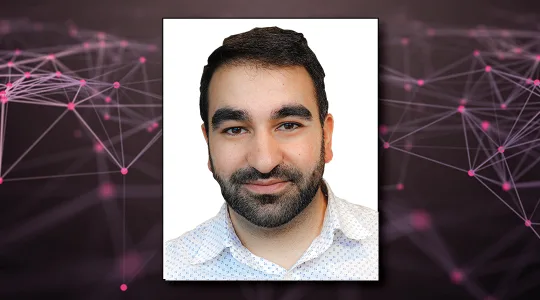
John Gilroy: Welcome to Constellations, the podcast from Kratos. My name is John Gilroy, and I’ll be your moderator. Our guest today is Mina Mitry, Co-Founder and CEO of a company called Kepler.
John Gilroy: You know the world is rapidly digitizing, devices are becoming more and more connected from your smart car to even your smart refrigerator. This is all part of the internet of things or what some people say IoT, which relies on a network of physical devices equipped with sensors to connect and exchange data with other systems and devices over the internet. Constellations of small satellites can help facilitate the exchange of this data. Joining me today is Mina Mitry, Co- Founder and CEO of Kepler, a Canadian telecommunications company that’s building a CubeSat constellation to enable data exchange from IoT devices. Mina, tell me a bit about your background. It looks like you were working with food and beverage automation before moving to telecommunications. Why the change?
Mina Mitry: Well, first of all, thanks so much for having me on the call. Really appreciate it and am excited to dig in during this discussion.
Mina Mitry: Give you a bit of background on myself. I did my undergrad and my master’s, and I spent time in my Ph.D all working in the aerospace sector. During my undergrad and my masters, I built this not-for-profit where we used to design and build rockets, drones, and satellites for competitions around the world. It’s really through that experience that I got a good grasp of what was happening within the space sector. We sort of grew that from about 5 volunteers to over 100 volunteers in over three years and 28 million in annual sponsorship. What helped us to understand the massive changes that were emerging, whether that be the reduction in launch costs, the emerging new communication standards, what could be done with satellites today. That was the focus after I left my PhD studies, I really wanted to go out and learn from that experience and turn it into a commercial venture.
Mina Mitry: The food and beverage automation was a transition point in my career where I wanted to learn about building an early-stage business. And this was just presented as a great opportunity for me to learn about doing that. I got to spend time in San Francisco, developing a point of view on how to build early- stage businesses. And then, pretty quickly after I got that foundational knowledge I made my transition directly back into the aerospace sector, where I had all my passions, all the people that I knew, and the incredible talent that we could tap into here in Canada.
John Gilroy: Well, if you put it into a formula for a successful startup: well-educated, ability to raise money, and access to a lot of innovation. You’ve got all the building blocks to create something outstanding, don’t you?
Mina Mitry: Well, for sure. And it’s pretty unique here, right? Even if you think about where our office is centrally located, and the number of Universities that are within spitting distance is just incredible. So, we get a ton of technical talent that for far too long hasn’t had this type of disruptive company available to them. That’s why they had to go to other countries or move out of Canada, but now that they have access to this, they spend a lot more time here and we can tap into that talent pool.
John Gilroy: Yeah, I think you’re going to have real success up there with this position you’re making right now. I gave a brief definition of IoT earlier, but how would you further describe the purpose and function of IoT networks?
Mina Mitry: Yeah, and I think looking back or thinking about your definition, a lot of people draw this mental image of IoT being the pet sensor or being this really little power device, but really I’d give a broader frame or broader definition of how we should think about it. It’s the transfer of data for the use in some sort of business intelligence or some sort of operational application. And that can be pretty varied, it can go from kilobytes or megabytes, something that’s like a position sensor. But it can range to terabytes of data where you’re looking to collect imagery or bathymetric data, or all sorts of oil and gas applications that have huge needs. So, we always categorize IoT networks as this kind of thing that’s been set up for low data rate applications, but I want to give it a broader term around just the need to move data for machines, for intelligence, and for the use of main state business operations.
John Gilroy: I think a lot of people think of maybe IoT on the car automation or something like that, but there’s a whole, I mean, there’s many different areas here. It’s all separate world, there’s all kinds of subsets. I’ve heard of besides, you know, consumer type IoT, there’s industrial IoT. And I think that’s what you folks are playing around with, with something called everywhere IoT, from what I understand. So, what makes this industrial IoT different from regular IoT?
Mina Mitry: Yeah, and a lot of that centers around the conception where it needs to be a low data rate application, and all of these industrial settings they’re moving gigabytes or terabytes of data from their operation. There are those applications that are, for example, remote weather stations that have low data rate requirements. But in true industrial settings you’ve got, not only is it significantly larger quantities of data, but at the same time you also have other requirements. Whether that be security, how frequently the data or the reliability of the data, the SLA that you’re going to sign up to. And that’s really what we talk about when we’re describing some of the industrial applications that we serve.
John Gilroy: Great. There’s a big world out there of telemedicine and remote sensing devices. In fact, with COVID, that’s really brought that to the forefront, I think you’re hitting the market right exactly where it should be hit. Speaking of markets, so what markets is industrial IT serving now and what do you expect it to expand into in the future?
Mina Mitry: So the majority of the markets we serve today are in the maritime domain. And that’s where we’re seeing a lot of demand for some of the work that we’re doing. And I think we’re going to see expansion of it into government applications, where there’s a wide variety of government applications that are also looking for the service. And then as you move downstream into some of the lower data rate applications, you’ll see even hobbyists coming online. People that out of curiosity, the same user groups that are buying raspberry pies or small computing resources to develop their own widget or application. A lot of these hobbyists will come online. They’ll pick up a satellite transceiver and want to play with it and want to develop their own applications. And then, apart from that, you also see personal safety devices that are coming online as the reliability of these networks expand, everything from the next generation of personal identification. When you have those adventure travelers that are going up mountains or doing those things, that’ll be sort of what these types of constellations emerged to be able to serve.
John Gilroy: Last week I sat down and interviewed a Vice-President of T-Mobile, and he told me that he’d seen all the G’s: one, two, three, four, and five. And I think 5G is something we got to talk about here. So how does a rollout of 5G affect what companies are doing with IoT?
Mina Mitry: So that’s a really interesting question, and I think it’s a super exciting time. So the historical paradigm for a lot of satellite communications has been centered around proprietary standards. No, we’ve got to build our own satellite-based proprietary standard, it’s going to be the thing that’s compatible with our network and the only way you’re able to communicate onto our satellite network. What’s emerging now with 5G, not just within the cellular wireless world but also the same theme is emerging within the low power wireless network world, whether that be LoRa or Sigfox, is the convergence between satellite and cellular technologies. That’s really what’s super exciting about 5G, is now we’re entering into the world where no longer do you have to have a proprietary satellite standard. And that forces you to build proprietary chip sets and proprietary network architecture. You can gain the economies of scale that are being developed through a shared standard.
Mina Mitry: Those are the ones that are being developed at 5G, but it’s not only within 5G and the cellular world. We’re also seeing networks like LoRa introduce non- terrestrial variants of their standards, and when they say non-terrestrial that means orbiting satellites. You’re also seeing variants of Sigfox, which is another low-power wide-area networking protocol, that’s looking to emerge and use a convergence between satellite and their own technologies. Recognizing that historically, cellular has been great at providing dense coverage to localized regions and to really extend their reach, that’s the need for them to converge with their technologies that provide a really great economies of scale, but the reach and coverage that you can gain from a satellite. And that’s what we’re super excited about as rollout of 5G continues.
John Gilroy: I keep thinking of your company and IoT and 5G, it’s like a wave, and you’re on a surfboard, and you’re riding that wave. You’re right at the break of the wave here, a lot of exciting things are happening in this whole world. Back in January, your company said that it wanted to build a constellation of 140 satellites. So, what’s the advantage of using small satellites to deliver IoT connectivity?
Mina Mitry: Yeah, for sure. And then building on your earlier wave comments as well, it’s not just the 5G and the standards that are the wave we’re riding on. We’re also riding on a wave of launch cost reduction, we’re also riding on a wave of macroeconomic changes where regulations have enabled more private companies to take advantage of space and these haven’t historically existed before. And you know, for us, when we thought about that, that ties back into what’s the advantage of using a small satellite? Well, because you can. Historically you couldn’t, where the technology wasn’t at a point that you could take advantage of a small satellite to deliver a commercial service. Now that you can use a small satellite, you can take a different risk profile, you have a massive reduction on the cost or cap of your network. You can replenish your network significantly faster because the cost to put it up the first time was much less than your traditional satellite operation.
Mina Mitry: You’re launching less mass up into orbit, so you get launch cost reductions as well. Those are all the advantages you gain by using a small satellite where as a historical space program might be something like three years in design and a fixed asset that’s amortizing over a 15-year life. The small satellite looks more like what technology is today. It’s one year in this design cycle, three to five years to replace it, and then you get the latest and greatest in processors, memory, compute onboard the satellite to go out and deliver net new services. And it’s treated like technology, not like a fixed asset, which is what traditionally has been done with the satellite world.
John Gilroy: Yeah, I think of the satellite costs, I also think of using the cloud and ground bay stations, and if you were to walk up to a software developer and talk about a 15-year life cycle, they’d probably run out of the room. They’d say, wait, how about maybe 15 months, maybe too long? I mean, this quick development life cycle, it’s pretty difficult. Let’s go back to LEO here. It looks like you’re specifically focusing on LEO. Are you looking to expand into other orbits like GEO or MEO? Can they be useful for IoT?
Mina Mitry: Well, we’re pretty squarely focused on LEO because it goes hand in hand with building small satellites. Part of the reason why you can build small satellites is because they’re not subject to the same owner as radiation environments. If you start to put a satellite in MEO or GEO, you have to go up in size, and that’s largely driven by all the radiation effects that you’re going to have to deal with, amongst other things. It’s more expensive to get up into MEO, so you want to take advantage of having paid for a more expensive ticket or ride. So usually, you’re looking for a longer life fixed asset rather than the rapid replenishment of our spacecraft. So for us, we’re pretty squarely focused on LEO because it has all these advantages. One, there are regular rides going up into LEO, so we don’t have to buy a whole rocket on our own, right?
Mina Mitry: We’re also pretty focused on LEO because it continues to allow us to refresh our constellation very rapidly. We don’t need to overinvest so that the satellite life is really extended. Whereas if we were going to MEO or GEO, because of that expensive ticket up to those orbits, we’d want a significantly longer life satellite. So, we’re very focused on LEO, I don’t envision that we’ll be on our own rides going up and using MEO or GEO orbits, but we’re totally open to collaborations. There are people that are very experienced and do a great job using those orbits and have built their entire business on that infrastructure model I described earlier, and we’d be open to those as being partners certainly over the coming years.
John Gilroy: You know, Mina, thousands of people from all over the world have listened to this podcast, go to Google and type in “Constellations Podcast” to get to our show notes page. Here, you can get transcripts for all hundred-plus interviews. Also, you can sign up for free email notifications for future podcasts. If you look at your company, it looks like you’ve been getting Very Small Aperture Terminals, VSAT’s, to work with LEO. Could you tell me more about that?
Mina Mitry: Well, that’s an exceptionally exciting and challenging development within the sector. So what we’ve been able to do with our existing satellites is repurpose VSAT, or Very Small Aperture Terminals, that are already out in the field and have them communicate directly with our spacecraft. So our customers don’t require any new hardware change in the maritime domain, they can use their existing VSAT terminal and communicate directly with our satellite network. Now that’s a huge advantage when you think about it. Well, because one, traditionally these VSAT terminals were only set up or built to work with geostationary satellites. They weren’t initially designed to communicate with low earth orbit satellites. And so being able to repurpose them and have them work with our communications network is a huge feat on its own. Second, it means customers don’t have to pay for new hardware costs.
Mina Mitry: They can take their existing invested infrastructure and use it to communicate with LEO and gain new advantages. Where our length distance is significantly closer, so we give them much higher data rates or much larger data volumes than they’d ever seen before when communicating to a GEO satellite that’s significantly further away. So that’s been really exciting and then third, it gives us a wide array of partners that we can work with. We’ve had successful tests that we’ve announced with Cobham, with Kymeta, with Intellian, and with a whole range of providers. And so, it gives customers variety, and they’re not locked into any one particular physical equipment provider to accomplish their goals of ultimately just moving data.
John Gilroy: So you’re teaching an old dog new tricks, is that your success story?
Mina Mitry: That’s a nice way to put it.
John Gilroy: Good. You’re also very specific about the maritime domain. Does this not apply to other areas or just specifically for maritime?
Mina Mitry: Well, right now, most of the compatible terminals we’ve tested out in the network are with respect to the maritime domain. There are other terminals that we’re continuing with partners to develop and increase their compatibility if that’s blind mobility or unfixed user sites. But for the most part, these terminals need to be able to track our satellite. So that’s why the maritime domain was a good early market because boats move, they move at a good decent pace, they’re not moving too fast like airplanes so they’re a little bit easier to have a moving boat communicate to a moving satellite. Most of the fixed site locations don’t have antennas that move retract, but with the advancement of flat panel antennas, like you see with Kymeta, you’re going to have more and more of those available, and we’ll continue to open up to new markets.
John Gilroy: It’s funny when you said boats move. I mean, you flashed on those boats in the Suez Canal just sitting there about two or three weeks ago, you know? Oh, sometimes they don’t. Got to look in the future a little bit here. What do you see the market applications are for these LEO networks over the next decade?
Mina Mitry: Yeah, really great question. And what I’m super excited about is not only did these LEO networks start to surface applications and use cases that we see here on the physical surface of the earth, whether that’d be the maritime vessels, the remote weather stations, the agricultural fields, aviation, government, and a whole host of applications that live on the surface of the earth. And that’s really great, but what I see as the decades out in advancement of these small satellite networks is actually transitioning their focus not only from serving use cases on the surface of the earth, but all the way into use cases outside of the physical surface of the earth, providing core connectivity for launch vehicles as they enter into Earth’s orbit.
Mina Mitry: Small satellites that need to be able to track, provide telemetry or control their other satellites will have communications through these LEO networks. International space station, or private space tourists will be able to use these same networks to communicate in real-time with earth where traditionally they don’t have that kind of access. There’s no infrastructure that’s really well set up to serve these outside-of-earth applications. And I can see the natural transition over the next decade is these networks start to work not only on the surface of the earth but outside of the surface of the earth to continue and expand connectivity to the final frontier.
John Gilroy: You know, Mina, in preparing for this interview I went to Google and I typed in “IoT”, I got 326 million results. Thanks for helping our listeners put IoT in perspective for the satellite community. I’d like to thank our guest, Mina Mitry, Co-Founder and CEO of Kepler.