
Podcast Episode #100: April 21, 2021
JADO, 5G and the Speed of Mission Need
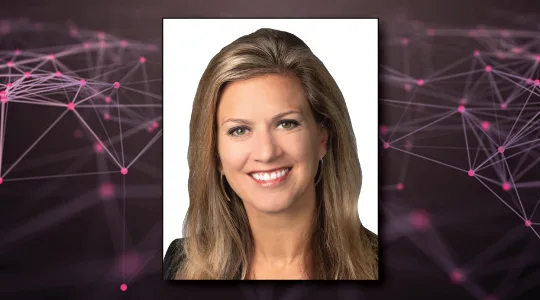
Listen to Stacy Kubicek talk about mission critical solutions that benefit the warfighter and support national defense.



Space is a Network.
Constellations is Your Connection.

Transcript:
John Gilroy: Welcome to Constellations, the podcast from Kratos, my name is John Gilroy and I’ll be your moderator today. First before we dive into a fascinating conversation with Stacy Kubicek from Lockheed Martin and discuss 5G, the Air Force’s Platform One effort, and today’s military vision of Joint All-Domain Operations I’d like to take a moment to acknowledge that today’s episode is Constellations 100th! Can you believe it! 100 episodes of talking all things space and satellite! I’d like to thank our guests for the great conversations and moments we have shared together and of course our listeners, those who have been with us since the beginning and those who joined along the road. I hope you enjoy this new episode, number 100, and here is to the next 100 episodes! Please feel free to contact us at [email protected] to share your feedback, suggest a new topic you’d like to hear about or just say Hi! You can also find daily podcast updates on Twitter, our handle is at @kratosdefense.
John Gilroy: Welcome to Constellations the podcast from Kratos. My name is John Gilroy and I’ll be your moderator. Our guest today is Stacy Kubicek, Vice-President and General Manager for Mission Solutions at Lockheed Martin. During today’s podcast, we will discuss 5G and its military applications. Also, your Forces Platform One effort. It’s a modern day DevSecOps tool and today’s military vision of Joint All-Domain Operations, which entails a computer coordinated fight across land, sea, air, space and cyberspace. Stacy, there’s a whole lot in your plate today isn’t there?
Stacy Kubicek: A little bit there.
John Gilroy: We’re going everything from 5G to warfighting. Boy, boy! Just for the benefit of our audience, give us something about your background and how you fit into this discussion at Lockheed Martin.
Stacy Kubicek: Absolutely. Hello, and thank you so much for having me today. I truly do appreciate it. As you mentioned, I lead our Mission Solutions line of business here at Lockheed Martin Space where my team, in collaboration with our very valuable customers, develops and delivers mission critical solutions along with operations and sustainment for space-based programs. What does this all mean? Like you said, it is a lot, but what it really means is we do some pretty exciting things here at Mission Solutions and I couldn’t be more proud of the team that we have here. We’ve got a very diverse customer set that includes both the Department of Defense, as well as our intelligence community. We have extensive experience and very intimate knowledge of our customers and their missions. So we can really anticipate the hard problems they need to solve. We understand that threat and the need to provide truly end-to-end solutions faster than ever before, which is where we put a lot of our focus within Mission Solutions.
Stacy Kubicek: You mentioned also Joint All-Domain Operations or JADO. With that focus, we’re actively delivering advanced capabilities to bring forward more battle space interoperability and also get decisional data to the warfighter much faster. We bring advanced technology to the fight. For example, a few things there, we’re using digital transformation like digital twins and software factories to respond at the speed of mission need. We’re also embracing and leading modern software development using Agile, and as you mentioned, DevSecOps and cloud services. As the battle space becomes more distributed, which we’re all seeing, we’re really moving data processing to the edge, using advanced mesh networking for more resilient communications.
Stacy Kubicek: Also, our advanced artificial intelligence and machine learning solutions process a tremendous amount of data and intelligently learn and respond to our customer’s mission needs even faster. Both are in current programs that we’re executing, as well as leading the way forward. Last, but not least, we’re leading some cyber engineering efforts to secure spacecraft and ground stations to harden critical systems against attacks. Specifically, we have joined with government and companies like Kratos to share cyber threat data in space. It’s something we know will help to keep this critical domain even safer. Of course, we see tremendous opportunities in 5G as well.
John Gilroy: Boy, I like the phrase decisional data. Boy, that’s got to resonate in Pentagon, doesn’t it? Decisional data. Your CEO, this guy named Jim Taiclet, I think. He once said that he envisions partnering more with the commercial technology industry and bringing 5G capabilities to the company’s military customers more rapidly. Now 5G is widely being promoted as a transformational technology, but its uses for the military are really just starting to be defined. How do you go about affecting change in this risk averse environment like the U.S. Military so that they can embrace 5G quicker?
Stacy Kubicek: Change is never easy, whether it’s with technology or with people, and there’s always a need to really balance that risk with the reward you’re getting. We’ve already seen a lot of examples of where the DoD is beginning to embrace 5G. Actually, there’s been several recent 5G RFIs and a number of projects are already in motion to demonstrate the utility of what 5G brings with high bandwidth and low latency connections.
Stacy Kubicek: From my perspective, I believe the benefits of the technology and the capabilities it will provide really speak for itself. We have experienced our military customers being very interested in learning a lot more about it and what it can provide for them. As with any new technology to adapt to, if you can show your desired outcome and define that vision of your end goal for using it, it really does help to draw people along on the journey with you to help to explain those benefits and make it a part of why it’s a good solution. My team works really closely with our customers and we work together to really explore what 5G can mean for their products. As with anything, our approach is really just to listen to what they’re looking for, present them with what capabilities we can offer to suit their needs. Then, 5G will now be a part of that toolkit and those conversations. We will definitely continue to collaborate together to show those advantages of 5G and see how they’d like to take it from there.
John Gilroy: You know, from a consumer perspective, we all see the ads about 5G and we know it’s pretty much designed to improve the performance of smartphones, but also link digital systems, which need enormous quantities of data to work automatically. What sort of 5G applications will not be intended for civil use, but for the military domain?
Stacy Kubicek: 5G, as with any new technology that we see out there, has so many facets that, gosh, we could spend an entire day talking about all the different things that could be highlighted and discussed with that. The keys and really the benefits to what 5G bring to the game are its low latency and its high bandwidth. You want as little delay between when a message or data is sent and received, and you don’t want to wait too long for enough bandwidth to be available to send that message or data. That’s really what we’re trying to bring to the fight here with our customers. As we move to a more JADO-enabled environment, the amount of data that needs to be transferred between platforms is absolutely immense, which is even an understatement at this point. Imagine an F-22 or an F-35 or ship and how much valuable data it generates just with its own sensors.
Stacy Kubicek: Today, it’s all about sharing that data, where it can help across the battlefield, but the need to move that large amount of data between platforms, it makes us need more bandwidth. Suddenly the benefits of 5G has really become more apparent to all of us. Specifically for the military, 5G will shorten the detection and reaction time from sensor to shooter, which means our warfighters can actually respond to a target or a threat much faster once it’s detected. Then, drawing us back from a space application perspective, this could mean we identify something from space, such as a ballistic missile detection with overhead persistent infrared systems and 5G’s impact could to be reducing the time between that moment and when action is actually taken. There could be a whole chain of events that needs to happen before a sat intercept can take place. So, every second truly counts and 5G could really help tremendously and reduce that data processing time so our warfighters have more time to make decisions and eliminate the threats that they’re facing every day.
Stacy Kubicek: I’ll add one more piece, we talk a lot in space about hypersonics. Hypersonics are another pressing threat where reaction time is obviously very critical for a warfighter. These new threats are very fast, and the time between detection and counter reaction is very short. To respond, you need detection data and a large amount of data as soon as possible. Combining that with artificial intelligence can really help our warfighters sort through this data quickly and identify key information so they can make an informed decision increasing the response time. The key really is to look at a holistic approach to the problem you’re trying to address.
John Gilroy: Stacy, I want to expand on this topic just a little bit here. The Space Development Agency announced a couple of contracts to initiate the design, development, and launch of constellations composed of tens of satellites with optical inter-satellite links capable of sending and receiving wideband data to and from other space vehicles and ground stations. Wow! Lockheed Martin was part of this award. Can you talk about this capability? It sounds like it’s got 5G right in its crosshairs, doesn’t it?
Stacy Kubicek: Absolutely. I’d be more than happy to. As I mentioned earlier, I mentioned we’re doing some exciting things at Lockheed Martin Space, and this is definitely one of them. Just a little bit of background on it. Last September, the Space Development Agency, they awarded Lockheed Martin a Tranche 0 contract for the transport layer. As a part of this, we will be demonstrating a mesh network of 10 small satellites that links pressure or warfighting domains to space sensors, all launching in just two short years, which we all know is very quick, which makes it that much more exciting of an opportunity. When we look at the transport layer’s Tranche 0, it’s an initial test and demonstration phase with two prime contractors building a total of 20 satellites. So, the first step toward building an inter-operable connected secure mesh network will help to enable the JADO operations, which will allow the warfighters to stay ahead of the emerging threats.
Stacy Kubicek: Imagine a world across all warfighting domains, where fourth and fifth generation fighters and tactical forces on the ground can connect seamlessly with holistic situational awareness. Interoperability, and battle space conductivity are absolutely critical to staying ahead of our adversaries, and we’re just so honored to be a part of this. Those 10 satellites are going to be operating in low earth orbit or LEO, which will provide some secure high bandwidth, low latency data links. Additionally, new link 16 network connectivity will be introduced as part of this space as well. This capability will actually connect the systems that include fighter aircraft, like F-16s, F-22, F-35, missile defense networks like PAC-3 and THAAD, and all different types of networks to provide sensor to shooter targeting and situational awareness for tactical land, maritime, or warfighters.
Stacy Kubicek: This blind beyond line of sight tracking, targeting, and communications will actually extend to the U.S. warfighting options and allowing additional coalition and allied partners to eventually bring their capabilities into the network. The interoperability will extend into space with prospective data connections to commercial satellite communications and other military protected SATCOM systems, which will definitely require some close partnership with multiple companies across the entire industry. While Tranche 0 doesn’t specifically include 5G, like you mentioned, it’s definitely the first strong step toward that type of connectivity.
John Gilroy: Stacy, you and I both know this fascinating gentleman down the Pentagon by the name of Nicholas Chaillan. He’s the U.S. Air Force Chief Software Officer. He stated that the Department of Defense is mostly still using waterfall software methodologies with software delivery every, hold onto your hats, 3 to 10 years. It makes it impossible to keep up with technology. Can you describe what this waterfall technology is? And 3 to 10 years, why so long?
Stacy Kubicek: I know. 3 to 10 years seems like ages for as quickly as the threats are changing and evolving for us. More than happy to chat a little bit about this though. Under waterfall, like you said, the standard was to develop software based on an extensive and detailed list of requirements from the government. A contractor would go off and spend some time even a year or two, just to develop the derivatives of those requirements and return with the code. I remember when I first started as a systems engineer, we would sit in a conference room just dissecting words of requirements and producing those before we’d even start writing code. Then, if any changes needed to be made along the way, it became very disruptive and time consuming for the developer and let alone the end user to flow all those changes back down. Hence the name Waterfall, it really is a waterfall process. There was really no way to bring capability into operations quickly.
Stacy Kubicek: Between 2011 and 2013, we here at Lockheed actually successfully converted all of our intelligence community software programs to Agile. Mission Solutions has actually been using Agile and Agile-like processes for well over a decade now. We shifted to this new way of doing business just because our customers, as well as the threats, are extremely dynamic. Now we’re able to deliver software at a cadence of every week, month, or quarterly, depending on the customer’s preference. We’re far beyond the 3- to 10-year frame of mind we used to be in. Constant delivery and continuous feedback are just hallmarks for Agile, which is what makes it so great. The Agile process relies on iterative sprints to deliver new features and fixes regularly.
Stacy Kubicek: Actually, some of our largest programs within the intelligence community, use Agile. These are mission-critical programs that can’t be down and are a big part of our national security. It’s definitely possible. It’s definitely a way that we can continue to evolve and continue to do business better. None of these old problems from Waterfall are problems anymore in these Agile programs. We’ve got flexibility, we’ve got visibility, and we also get improved feedback. One of the things we get feedback, from some of our customers, are that they really like it because it saves them time and money. With Agile, you build every sprint. You integrate and test features more frequently and you find problems a lot faster and earlier. It makes it easier and less expensive to fix those issues versus having to go back into the codes you’ve been working on for 10 months and try to figure out how it’s going to play out when you start testing everything all over again. It allows us, as the customer needs change, to adapt and pivot very quickly for them.
John Gilroy: Now, I enjoy speaking with software developers in the Agile world. They talk about MVP or minimal viable product. You try it on and reiterate and go back and forth and back and forth, so it’s the only way you can operate in this rapidly changing world. Let’s talk about the Air Force and the Navy here. They have adopted a development platform called Platform One. It has a real clever logo. I don’t know if many listeners have seen this or not, but I’ll try to describe it to you. If I can. It’s an image of baby Yoda imitating Smokey the bear with the caption “Waterfall only you can prevent.” It’s like the grammar of a baby Yoda. It’s really a fascinating logo. Platform One is a cloud-centric platform providing tooling and services for development, security and operations, or as we mentioned earlier, DevSecOps. Can you give us a general overview of what Platform One is and how it works?
Stacy Kubicek: I do love that logo. You can’t top a logo with baby Yoda.
John Gilroy: How did Nicholas and his team come up with something like that? Only he could come up with something like that.
Stacy Kubicek: I love it. The first time I saw that, I can’t help but make me smile on that one. It gets a point home. Very effective logo, for sure.
Stacy Kubicek: Platform One, I’ll try to summarize it here is really a standardized and widely mandated DoD DevSecOps infrastructure program used for future software development. It enables faster software development and deployment with continuous updates to our warfighters. It’ll be used on programs like ABMS. For those of you that aren’t aware of ABMS, Advanced Battle Management System, as well as Aegis.
Stacy Kubicek: Platform One manages Air Force software factories and provides DevSecOps managed services with collaboration and cybersecurity tools, open source code, artifact repositories, and also DevSecOps as a service.
Stacy Kubicek: In addition, the Platform One Basic Ordering Agreement or BOA can be used for task orders for U.S. Cybercommand as well. Several companies have actually joined Platform One as part of a collaborative cross industry effort. The goal is to get as many programs to use Platform One for standard approach to their cloud infrastructure. All DoD software factories will eventually live here and all are either part of Platform One or soon will be.
Stacy Kubicek: Back in February, the Air Force added Lockheed Martin to Platform One, which we were very excited to be a part of. BOA deepens our ongoing collaboration with the Platform One team creating opportunities for Lockheed Martin to help build and support the Platform One solutions as well as transition systems to Platform One, because obviously we still have a lot of existing systems out there as well. We currently apply Platform One for DevSecOps within our Lockheed Martin software factory to deliver cloud-based infrastructures tools and processes that are transforming the way software is created and delivered to be quite honest. We’re also applying our DevSecOps expertise in a lot of domains to address the Air Force’s ABMS division by connecting existing and future platforms, sensors, and weapons. The company has actively contributed and participated in each ABMS on-ramp exercise, which is advancing novel, open architecture, and multi-domain mission systems in support of JADO.
John Gilroy: Stacy, I think we have to define some terms. Some people are familiar with these terms, some aren’t. You tossed out the word software factory, I thought of a smoke stack and a production line or something. There’s also something, it’s a software called Dojo. We got new meanings for these phrases. How does the software factory and a Dojo fit in this Platform One initiative?
Stacy Kubicek: It’s funny you use that analogy of the smoke stack. I think one of the early charts I saw this ad for a software factory, that’s how they showed a picture of a software factory was the smoke stack. It has the software engineers get extremely offensive, but that’s how they’re innovative-
John Gilroy: We don’t smoke here.
Stacy Kubicek: Exactly. You can’t help but laugh, but yeah, absolutely. So many terms in development approaches we talk about these days, so I’ll give you at least our flavor on those a little bit. I’ll tie it back to our discussion on speed and relevance. Today’s missions really operate on timeliness of days and weeks, not months and years, like we were talking about before. Our customers need software that really moves just as fast as their ever-changing missions are. We’ve really transformed from using the long lead Waterfall like we were talking about, the development framework, into more of an iterative and incremental DevSecOps methodology that lets us deliver the most important features first. Lockheed Martin software factory is actually a corporate wide initiative that delivers cloud-based infrastructure tools and processes that are transforming the way software is created and delivered across the board.
Stacy Kubicek: We were able to embed development, security and operations or DevSecOps in every step of our software development, which keeps our clients at the cutting edge of cyber security as well. Secure coding is a fundamental principle behind our DevOps philosophy to make sure the best cybersecurity practices are considered at every step of the development. Basically, we’re combining people, process, and tools with embedded security to deliver mission critical capabilities at the speed of relevance within our software factory. We provide teams with self-service turnkey capabilities using those enterprise tools that we just talked about.
Stacy Kubicek: This curated set of DevSecOps capabilities are then pulled together from best of breed in-house capabilities, as well as capabilities provided by initiatives, such as Platform One. The big plus in all of this are our investments in these software factories are actually looking at numbers as high as 25% faster program startups because of utilizing software factories, with the ability to build software from day one when something starts.
Stacy Kubicek: You also asked that about a software Dojo. Simply put, the way I would define a software Dojo is a place to learn new techniques, collaborate and iterate on ideas. I’ll reference, you might be familiar with those offices, at least pre-COVID, without cubicles or walls, with lots of whiteboards and ways to collaborate. That’s what some of our Dojos look like. Our customers also have similar setups where we sit side by side with them, bring a growth-oriented mindset and commitment to continuous learning and learning that new coding techniques or refining a product’s roadmap on the fly, not through approvals and paperwork and different charts, but we’ve really been integrating this type of model across our business since around 2019.
Stacy Kubicek: As more employees are trained in adopting some of these best practices in our environments, we’re scaling across more and more programs. After developing some initial skills, adoption and adherence of these best practices are really growing over time from what we’re seeing with common training ground or employees are able to really leverage the best code across multiple domains, not just singular domains like they have in the past.
Stacy Kubicek: Last but not least, you asked about Platform One. How does this all tie together? I would just say that Platform One is sort of the hub for all software factories at DoD. That’s really the true vision behind it all, whether you’re thinking about base camp or Kobayashi Maru, all things we’ve heard about, those all plug into Platform One and consume common services and infrastructure. They also deliver back the products and services. It’s really a symbiotic relationship there. By adopting a real core, common, and open architecture, the DoD is really able to more easily harmonized their software development across all their services. It’s really an exciting time to be working with software to be honest with you,
John Gilroy: You know, Stacy, thousands of people from all over the world have listened to this podcast, go to Google and type in “Constellations Podcast” to get to our show notes page. Here, you can get transcripts for all 90 plus interviews. Also, you can sign up for free email notifications for future podcasts.
John Gilroy: Earlier in the interview, you talked about bringing it to the fight. We talked about different software applications bringing it to the fight, and I’m thinking about your customer, the DoD. A software Dojo bring it to the flight, would all fit in with this discussion about bringing software and make sure you can use it in the projected fight sometime in the future. We talked about Nic Chaillan earlier, the Chief Software Officer in the Air Force. He has said that collaboration with industry is the key to the success of Platform One and other advanced cloud and software efforts. Why do you think collaboration with industry is so important?
Stacy Kubicek: Oh, goodness. Simply put, you really just can’t have one without the other. I tell this to all of our partners and our teammates, our customers, none of us can do it alone. We all need to take a team approach to provide the best solutions for our military and our warfighters, which is what matters at the end of the day. For example, if you develop something, you give it to the customer and they want to add another feature from another member of industry, that’s great. This bakes in collaboration. This is a different approach based on mission need versus testing requirement space. There is something we’re very passionate about, believes strongly in, but all industry needs to participate in a successful ecosystem so that we really truly can develop top tier products that all work together moving forward.
John Gilroy: Stacy, earlier, you mentioned this JADO, Joint All-Domain Operations. From what I understand, it seems to be a vision of a computer coordinated fight across land, sea, air, space and cyberspace, and all these forces from satellites to foot soldiers to submarines can share battle data at machine-to-machine speed. It’s just amazing. I think also it’s the ability to integrate and effectively command and control all domains in a conflict and do this seamlessly. I think that this is a concept that’s supported by most of the military leaders. In this JADO-enabled world, the data shared between systems will let commanders choose the right platform, the right effects at the right time. I mean, there’s just mountains and mountains of data. I mean, how would this work? How could it possibly be automatic? Do we have to slip in this popular term artificial intelligence here?
Stacy Kubicek: Yes, absolutely. Love talking about artificial intelligence. You just listed a lot of great topics to get into. Let me see, let me take a stab at that. It’s no secret that the DoD is swimming in mountains and mountains of data. AI really is the crux of what helps to sort through that by identifying trends, filtering out the noise, and getting to what’s important. We need algorithms to do this, but we also need to keep humans in the loop to make some very important decisions that we’re making on a day-to-day basis. When I introduce it, my team does a lot of ops and sustainment. It’s critical to have the processes there, but we also need to be able to make smart decisions because of it.
Stacy Kubicek: Some of this is already being explored through ABMS, actually, on some other on-ramp exercises that they’re doing. It’s really a new warfighting doctrine. The military continues to look for ways to experiment with how that will work in practice. For example, if you’re planning a mission in a battle space or using the right assets in the mission, now we could actually use AI to assess the mission success rate, to predict better targeting with missile versus bombs versus a ground team. Those decisions are being worked. We have actually, here at Lockheed Martin, been working on this for quite a while and putting some of it into practice. Even the planning of an optimal route, take this path or another path, really helps to sort out an increasingly complex battle space. I always like to do analogies. A simple comparison of this would be, if you go to book a trip or something online, typically we would go to a website which offers the best flight options. So, you pick the flight you want. Then, you get the local hotel options; activity options, if you so choose; and they offer travel bundles with all those packaged together.
Stacy Kubicek: It’s really similar for AI when we use that in the JADO environment. This intelligence brokering really makes a smarter ecosystem to recommend the best outcome for the mission based on its desired output. It requires a lot of modeling and simulation, but the great part about this is we can also use these to plan for things in advance.
John Gilroy: Stacy, you’re going to have to indulge me in a topic that I have some interest in. I have three sisters, a wife, and two daughters. I’m always interested in females and being successful in different types of technology. If you just look at what’s going on here, there’s a lack of females entering the areas of science, technology, engineering, and mathematics. I think people call it STEM. Why do you think it’s so, and how do you inspire girls to pursue STEM careers?
Stacy Kubicek: Oh, goodness. You’re a little outnumbered.
John Gilroy: Sure am.
Stacy Kubicek: I’m going to say in a good way, though. I like it. No, I’m happy to talk. This is something obviously very near and dear to my heart. Certainly, since I’ve joined the industry, I’ve seen more women entering into technology or STEM fields. But personally I think we can always do better.
Stacy Kubicek: At Lockheed Martin, we recognize that diversity and the different perspective that brings. It’s such a huge multiplier in our effectiveness, not only as a business, but truly in our team dynamics and how we all work together. Definitely something, I carry a lot of passion for.
Stacy Kubicek: But back to your question, I really think there’s two challenges at work here. Young women with interest in math and science may not really know about all the opportunities that are open to them in our industry. I mean, speaking for myself, I know I sure didn’t. Even as far as long as studying computer engineering in college. We all probably need to be better at educating them about these opportunities, talking about it, what’s out there. I had no idea even the different types of engineering that were out there when I was pursuing my career path.
Stacy Kubicek: Let’s face it. One quick classroom visit or Zoom calls these days, I guess, while it may be impactful, it may not be enough to convince every young girl out there that STEM is the right career path for them. It really has to be a sustained effort. We need to keep going back, especially in middle school. We’re going at all ages now where young women really first start to develop some of those interests.
Stacy Kubicek: One of the things I did want to highlight here is that Lockheed Martin recognizes and in order for our industry to sustain growth, we must address increasing demand for STEM talent as a whole, and specifically, inspiring girls to pursue STEM careers. We’re collaborating currently with students in universities, around the country on some various technical programs, preparing them for careers in aerospace industry and really shaping the workforce of the future. One example of this is through our partnership, actually a pretty long standing partnership with Girls, Inc, which is a nonprofit, where we have a pilot program that connects our volunteers with girls ages 9 to 12, to strengthen their interest and confidence in pursuing STEM education and careers.
Stacy Kubicek: Before closing this out, I did want to add something. Sometimes people ask: What caused you to become an engineer? I can’t help but chuckle a little bit at that because it was really probably the least likely career path for me. When we talk about getting people engaged in it, maybe it’s not the clear path for them like it wasn’t necessarily a clear path for me. Growing up, I never thought I’d be at a company like Lockheed Martin. I grew up on a farm where you can imagine an engineer was not a career path people talked about a lot. It’s not a topic at dinner conversations, but I loved solving things, whether it was doing puzzles with my dad or hard problem in school. I loved to solve things. Even once I went to college and was studying computer and electrical engineering, I still wasn’t sure if I was on the right path. It just hadn’t clicked for me.
Stacy Kubicek: It wasn’t until I got recruited by Lockheed and I was exposed to the purpose of what we do, and I was so hooked. It’s because of the missions and the warfighters, we have the opportunity to support that I stayed an engineer. While it may not have been the reason I became and it’s why I stayed and I’m so passionate about helping other girls realize the breadth of opportunities that are out there for them and carrying that through and helping them to find their purpose and their enjoyment of what brings them to work every day for their career path.
John Gilroy: Now, Stacy you’ve accomplished the goal, handle a wide range of topics and given the listeners a better understanding of Lockheed Martin. Pretty good job you did. I’d like to thank our guest, Stacy Kubicek, Vice-President and General Manager of Mission Solutions at Lockheed Martin.
