Transcript:
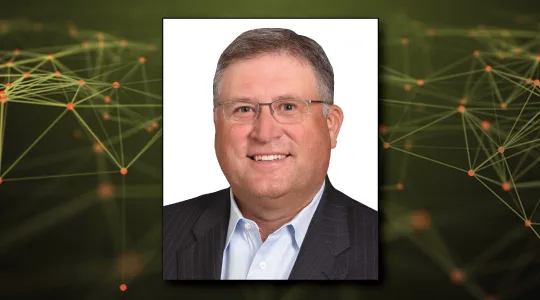
John Gilroy: Welcome to Constellations, the podcast from Kratos. My name is John Gilroy, and I will be your moderator. Our guest today is Bill Marks, Chief Strategy Officer and Executive Vice President of Kymeta. We’ll talk about the challenge of delivering always on broadband connectivity in a mobile world. From connected cars, planes, and boats, how can connectivity be maintained seamlessly while on the move. Find out what role flat panel antennas are playing in helping to make this always on vision a reality. Kymeta is a company that is commercializing new and innovative, flat panel satellite antenna systems, enabling always on mobile broadband connectivity.
John Gilroy: Bill, a senior executive in the satellite and cable TVs industry for over 25 years, is also an active investor in mobile platform technology and software as a service companies. Prior to Kymeta, he was the CEO and Chairman of the Board of the Maritime Telecommunications Network, which provides satellite connectivity and content to remote locations all over the world. In 2007, Bill won the prestigious Ernst and Young Entrepreneur of the Year Award for his role there. Well, Bill, I guess you’re the right guy to talk to about end-to-end mobile communications, huh?
Bill Marks: I hope so. I hope so.
John Gilroy: Wow, I mean, we’re not going to be able to stump you with anything. Allow me to jump right in here and ask you some questions. Thanksgiving just came and went, and people all over the world, all of the holidays, they want to keep connected all the time, when they’re in planes, cars, boats, no matter where they are in the world. This always on connectivity is limited today. What’s changing to make this always on vision a reality?
Bill Marks: Yeah, I think it’s important to understand what is limiting people from always being connected, and it really boils down to the networks. If you look at every single network that’s available, they all have limitations. Terrestrial networks, of course, are limited by the location of their towers, so you don’t see great connectivity terrestrially in countrysides. You don’t see it out in the oceans or in planes.
Bill Marks: When you look at satellite connectivity, it’s also limited. I think I read that if you look at all the different networks, cellular networks today only cover about 60% of the earth’s population and only about 37% of the land mass. Then you look at satellite, which covers most of the land mass, but it also has limitations with look angles and blockages. If you want to build an always on, connected network, you really have to look at using multiple networks. We call it the network of networks, is the way we phrase it which is the combination of all.
John Gilroy: If you’re in a big city, like Chicago or Seattle, you expect it. It’s always there, but big majority of the world out there, it’s not connected, is it?
Bill Marks: That’s right. That’s right. Only 60% of the world’s population can see it, so-
John Gilroy: Wow.
Bill Marks: We’re working with auto manufacturers today that are building cars that are really software-defined vehicles. The problem they have is you can’t rely on terrestrial wireless networks, if it’s only going to work on 60% of the vehicles that you manufacture. Herein lies the opportunity for satellite to be a part of that equation.
John Gilroy: Well, that brings up the topic of flat panel antenna technology. Where do you see this flat panel antenna technology having the most significant impact in the market?
Bill Marks: Well, we clearly are focused on land mobility, because land mobility, historically, has not been able to use satellite. In the past, it’s been mechanically steered dishes. They don’t work well on the top of a vehicle. When you look at flat panel technology and the form factor, we have an antenna that can fit between the headliner and the roof of a vehicle. Now, you look at all the opportunities that that technology will enable, so you can look forward to a world where satellite becomes part of the connectivity equation.
John Gilroy: It’s not mechanically steered. It’s electronically steered. Is that right?
Bill Marks: That’s right. That’s right. It’s a software-defined antenna. We use software to tell the antenna which direction to point. We identify the satellite that we want to talk to. The software has algorithms that’ll tell it to point in a certain direction, and we do it without moving parts.
John Gilroy: Wow. I always thought a software-defined network was cutting edge, but a software-defined antenna, that’s way out there.
Bill Marks: It’s a reality. It does seem like it’s way out there, but we’ve actually been selling this product for over a year now.
John Gilroy: Wow. I can’t even imagine the mass that’s involved. It’s crazy, but I guess if you think about it … Five pound technology fits on top of cars, and if you look at the autonomous car of the future, it’s going to require ubiquitous global connectivity. I guess this flat panel technology is one of the enablers for this, wouldn’t it be?
Bill Marks: Absolutely. You know, the way we’re thinking about the connected car, and especially as it moves forward to an autonomous car, you need to have … There are several things that are a challenge. One is you need to have always a network available, so what I talked about earlier you need probably to use satellite connectivity as well as terrestrial wireless connectivity.
Bill Marks: When you look at the amount of data that those cars will consume and transmit, if you look at any one network today, it’s probably not capable of servicing as many cars that they project to have on the road. Networks aren’t … They don’t have the right coverage, if you look at them individually. They don’t have enough capacity, if you look at them individually. Our effort is to build a solution, so we did develop a satellite antenna, but the solution looks at using all of the available networks to create the connectivity fabric that’ll allow for autonomous vehicles in the future.
John Gilroy: If you look at flat panel antennas, they’ve made great strides in land mobile market. I’ve read that the aviation market may be a more challenging market to crack. Do you think that’s the case, and why is that?
Bill Marks: Yeah, so it’s not challenging, from a technical perspective. Our antennas that we build today would certainly work on an aircraft. The challenge with aviation is there’s so much detail and certification that’s required to go on an aircraft. The FAA has a very rigorous certification process, and you need expertise in aviation. Although our antenna would work on planes today, we don’t really sell directly into the aviation market. What we do is we sell our antennas to people that are experts in aviation, to become part of the solution that they build for the aircraft. Our antennas are going to go on planes, but we’re not going to be the company that’s selling it into that market.
John Gilroy: You’re almost an OEM then, aren’t you?
Bill Marks: In certain markets, for sure, aviation being one of them. We just don’t have the skillsets in our organization to certify our antennas for flight. It takes a lot of time and a lot of money and a lot of expertise. There are other companies that are better suited to do that than we are.
John Gilroy: Plus, the technology is changing so fast, Bill, I would imagine that by the time you get to the compliance part, the technology’s changed and they come up with the next one, huh?
Bill Marks: Yeah, it’s amazing. I have had conversations with aircraft manufacturers that look at what they believe the aircraft needs to be in the future. Today, the limitations with some of these providers of the connectivity on planes … I think we’ve all been frustrated with the speeds that have been available. That’s really a limit of how much bandwidth is going to each aircraft. I think it’s four or five megabits per second.
Bill Marks: When you talk to the aircraft OEMs, they talk about a future aircraft that’s pulling down six or seven hundred megabits per second to satisfy, then, the next generation of flyers. Technology’s going to be a big part of that. The antennas are certainly the choke point that will allow that to happen, so there’s lots of innovation taking place in aviation, where they’re talking about having multiple antennas. Clearly, when you get something that’s flat, you see a future where they become conformal, and more and more of the surface area will be capable of sending and receiving signals to give people the experience they’re looking for.
John Gilroy: I think most of the listeners have read the articles and seen pictures of flat panel technology, maybe even touched it at a trade show. Tell us, behind the curtains here, the challenges in making this technology work, and deploying it on a mass scale, because really that’s the goal.
Bill Marks: Yeah, so when we started the company, one of the main objectives was to find a design, and a technology, that we could leverage existing manufacturing lines, so that we could eventually get to the mass markets with a product, and also when you get to the mass markets, you’ve got to be concerned about consumer price points. At the very start of the company, we looked at ways that we could build antenna technology that could be manufactured in mass, and the price point could be something that would be palatable. Our initial design forecasted the use of display manufacturing.
Bill Marks: If you take our antenna, we use a tool set called metamaterial, and metamaterial, in our case, is liquid crystal. We have a proprietary liquid crystal that we manipulate, much like a television set or a display. We manufacture our antennas today on display lines that make cellphones, smartphones, displays, television sets. When you start talking about wanting to move something into the mass market, you have to be able to manufacture a lot, and you’ve got to manufacture them inexpensively. Those were the two key things to have mass market opportunities. It was a challenge for us, initially, because it was very hard to design an antenna that could fall into that criteria, but we successfully did it, and today the antennas are manufactured on display lines.
John Gilroy: This means I go to the dealership and order my Toyota Highlander with one of your antennas, I guess. Is that the future for us?
Bill Marks: I think that’s the near-term future.
John Gilroy: Really?
Bill Marks: I think eventually, what we’ll see is that all cars will have antennas embedded on them. It’ll just become a standard feature.
John Gilroy: I’m underestimating the technology here, huh? Wow! It’ll be a standard feature.
Bill Marks: I believe so, yeah. There’s conversations along that line.
John Gilroy: Wow. Everyone’s read the articles, I’m sure. The flat panel technology has gone through evaluations and trials, sea trials on yachts, land mobile trials on buses and SUVs, and evaluations with energy companies for fixed land applications. What challenges have you faced in these different environments, and then what feedback have you received?
Bill Marks: Yeah, so we started a year ago, and the goal for this year was to put our product onto as many platforms as possible, to really try to understand what the challenges are of the product, and the installation. Today, like you said, we’re on buses and trains and yachts and smaller boats and you name it. What we learned through the process is that, although the antenna itself is the same across all those platforms, the way that it’s installed on those platforms is always different.
Bill Marks: We went to the market, as an example, with one type of cable, and found out that it didn’t work on some of the platforms that people wanted to deploy the antenna on. We had one type of bracket to mount our antenna to a platform and figured out very quickly that that’s also not something that is ubiquitous, so we needed to build new brackets. Like all product introductions, there were some things that we didn’t think about, and we’ve been in a constant improvement program here to fix some of the things that weren’t in our first iteration of the product. Fortunately, when you’re a software-defined antenna, those updates can be done over the air without people even knowing about it, necessarily. We’re constantly improving the technology, based on what we learn, and we can update them over the air.
John Gilroy: I just want to take a little break here and tell you that, Bill, thousands of people from all over the world have listened to this podcast. If you’re listening and would like to get alerts when new episodes are available, simply go to Google and type in Constellations Podcast, click Kratos and sign up, and you get all kinds of our episodes talking about this fascinating technology. I’ve done some research on your company, and I’m going to tell you a 7000 mile story.
John Gilroy: I’ve read that a flat panel antenna was mounted to the roof of an SUV and then driven 7000 miles across the country to test its ability to connect to satellites, even remote places. I mean, there’s a lot of remote places in the Midwest and Wyoming. It’s hard to secure Internet access in these traditional avenues, so from this 7000-mile story, what worked and what didn’t work so well during this adventure?
Bill Marks: Yeah, so it’s actually much more than 7000 at this point.
John Gilroy: Whoa!
Bill Marks: I think we drove 7000 miles across the U.S., but we’ve had vehicles now in Europe and in the Middle East, driving almost constantly. What we’ve learned is that you can clearly see where networks are available. In many cases, we’ve put our antenna on a vehicle, and we’ll fill the back of the car with cellular equipment, and as you drive … We’ve probably driven, I would guess, over 100,000 miles, at this point.
Bill Marks: When you drive down the road, and you’re out in the country, and you’re in urban canyons and cities, you figure out where there’s connectivity and where there’s not. What we’ve learned really is that when you combine the two networks, either a cellular network or a satellite GeoNetwork, you really have terrific connectivity. What we’re mostly excited about is our antenna is also capable of connecting to low earth orbit satellites, which will improve the look angles for the space segment. What we’ve learned is that our theory of a hybrid network really solves the problem of always on connectivity. We’ve seen that now in three continents and probably over 100,000 miles logged on many different types of vehicles.
John Gilroy: Transition’s always difficult, and I think that’s the key is when does one system hand off to the other system? That’s got to be a difficult algorithm to try to develop there. I mean, at what point do you switch back and forth between your system and the other?
Bill Marks: Yeah, it’s actually easier than you would think. Certainly, you write business rules about if all the networks are available, what’s the best network to use? What’s the lowest latency? What’s the cheapest network to use? A lot of those rules will be defined between our company and our customer, but the technology that seamlessly switches them back and forth is available today. It will be improved upon, as these networks become more and more available, but it’s not something that we’re losing sleep over. I can tell you that.
John Gilroy: Wow, wow. Well, let’s go to some island talk here. Antenna-equipped vehicles have been deployed through the hurricane damaged islands of Puerto Rico and Dominica to provide online connections for the relief agencies down there. How have these new capabilities made a difference in these relief efforts?
Bill Marks: Yeah, so when the hurricane went through Puerto Rico, and I’ll give a shout-out to … We partnered with Liberty Global and Intelsat on this effort. We decided to see if we could use our antenna to help with the humanitarian effort in those islands, on those islands. Collectively, we shipped several vehicles to Puerto Rico, not really knowing the impact that it would have.
Bill Marks: We started to drive the vehicles into the most remote locations that were the hardest hit. Quickly, we realized that, in these areas, there was no power. There was no connectivity whatsoever. The combination of those two things makes it very challenging for relief efforts. We’d pull into a city, and we’d see … FEMA would be there, trying to process applications. All of a sudden, we pulled in, and they had WiFi connectivity. I think, during our time there, we processed something like four or five thousand FEMA applications by just having connectivity.
Bill Marks: That was something that FEMA learned, and we learned. We didn’t know that, when we went into Puerto Rico, that our system would be used that way. We also partnered with Walgreen’s to process prescription drugs, so they followed our caravan of vehicles around. We’d pull into a city. We’d create connectivity, a WiFi hotspot, if you will. Walgreen’s connected, and they were able to pass out medications to people that otherwise had no way to prove that they had a prescription.
John Gilroy: Whoa.
Bill Marks: Then, I think we also connected to ATM machines, so people could get access to cash.
John Gilroy: I never even thought of that, you know? Yeah, that would make sense.
Bill Marks: Yeah, so it was pretty remarkable, something that our company’s very proud of. We didn’t really know the positive impact we’d have on that relief effort, but it turned out to be pretty tremendous, and it’s something that we will continue to do, as a company.
John Gilroy: Well, after that 100,000-mile test, the transition, the handoff, the seamless transition, all of a sudden, you put it to use with a very practical effort here in Puerto Rico. Wow, that’s a good story to tell. When you mentioned FEMA, I thought of Washington, D.C. We, of course, are based here in Washington, D.C. Here’s my government question for you. Is the Government taking advantage of this new antenna technology? I know there’s all this talk of Communications on the Move and other initiatives. Are they taking advantage of some of your insights?
Bill Marks: Yeah, so if you think about the antenna … The answer is absolutely yes, not only the Government and many governments, but certain militaries are taking advantage of it, as well. If you think about the attributes of the antenna, which is completely different than anything we’ve seen in the past, it lends itself to being really attractive to certain types of customers, so low profile. Our antenna’s just a couple inches thick in profile. It’s lightweight. I think it’s … The current antenna’s about 40 pounds, and it consumes very little power. This is why it can go on a vehicle. I think our antenna itself draws about 10 watts of power. You compare that to some of the technologies, flat antenna technology of the past, that’s very different.
Bill Marks: I think, most importantly, one of the attributes that we have is a one button on. If you have the antenna, and you give the antenna power, and you push a button, it will find the satellite, and it will provide the connectivity for you. This is a good example of FEMA wanting to use it. If you drop an antenna into a location, you don’t have to have an engineer onsite to get it to become active. It’s really the attributes that drive the attractiveness to different customer sets. Clearly, the Military and the Government like the attributes and are deploying it widely in different theaters and different applications.
John Gilroy: Earlier you mentioned LEO, and I thought of many different vehicles with these antennas and many different satellites up there, and my mind naturally went to the thought of satellite interference. I would think it’s still a challenge for mobile connectivity. What impact do today’s flat panel terminals have from an RF interference standpoint?
Bill Marks: Yeah, so flat panel antennas are … I’ll just say that our antenna meets the FCC and the ITU mask, so there’s regulation that is out there, that you have to abide by, so that you don’t interfere with adjacent satellites. Our antenna today meets all of those regulatory thresholds. The antenna’s very accurate. We’re pointing a beam at a satellite 22,000-plus miles away, within a half a degree of accuracy. Because the antenna is software defined, we’re able to switch that accuracy every four milliseconds. We really don’t have challenges with adjacent satellite interference, so our RF is not interfering with anything else, because the antenna is so accurate and so fast.
John Gilroy: Going back 10 or 15 years and making that statement, and see what people in the room would say. It’d be shocking!
Bill Marks: I know. It’s pretty unbelievable, but there’s technologies out there. Today, satellite antennas are much better. Even parabolic, mechanically steered antennas don’t really interfere with adjacent satellites. The technology’s gotten so much better, in terms of pointing accuracy, on both dishes as well as flat antennas, that it’s not really a problem today, which allows a lot more applications to use our technology.
John Gilroy: Yeah, I think there are several flat panel providers in the industry today, and probably others are going to jump into the market in the next two or three years. What’s the differentiator for your product?
Bill Marks: Yeah, so I think that the main difference is the fundamental design of our product and our ability to manufacture. By using these metamaterials, we believe there’s a day in the future that we’ll be able to build a satellite terminal that is in the consumer price point range. I believe there’ll be a day where you buy them on Amazon, or you buy them at your local consumer electronics store. Without the ability to manufacture in mass, you’ll never be able to drive the price point down to make it relevant. I think that’s probably the primary differentiator between us and the other satellite antenna companies that are building flat antennas.
Bill Marks: Our goal is to make satellite relevant and accessible to the masses. In order to do that, you’ve got to make them inexpensive to acquire, and you’ve got to make them simple to use. That’s really what we focus on, and I think that’s the primary difference between us and other antenna companies that are also trying to build flat antennas.
John Gilroy: You know, Bill, you’re the strategy guy there. When you look at flat panel technology, the mass market, look at five years down the road, it’s going to become more and more widely deployed and more mature. How do you see it evolving and changing?
Bill Marks: Well, certainly in five years, we’re going to see changes, but I think in the next 10 years, as an industry, we’re going to see a wholesale shift in the way that we do business. That’s coming from a variety of different things that are happening right now that are just … It’s not just ground segment or antenna technology that are going to change the landscape for us. If you take a step back, and you think for a minute what’s happening in satellite, and there’s a lot that’s happening that’s going to lower the cost to deliver connectivity from space.
Bill Marks: You read today that the industry expects the number of satellites in space to grow from 5,000 to 25,000 satellites in the next 10 years, and you hear about new orbits, the low earth orbit and the mid earth orbit satellites that are going into space, and using additional spectrums, satellites being built cheaper than they ever have been built before. Then you hear about companies like SpaceX that are building reusable launch vehicles. What all that means is that, as things get cheaper and cheaper, and more and more capacity goes in space, it’ll become more relevant to the end user.
Bill Marks: I think what’s exciting … I refer to that as just a perfect storm of all of these things that are happening at the same time that all mean the same thing at the very end, is that satellite capacity will be available to somebody that is not able to afford it or understand it today. The combination of our antenna with all those other moving … All of those other advancements, means that, I think, we can achieve the goal of having satellite more relevant and accessible to the average user. It’s a really exciting time for the industry, and everybody’s working on the same goal, which is to make wireless connectivity from space something that the average person can consume.
John Gilroy: Five years from now, we may look back and be stunned at how little it was, and boy, it’s going to be an exciting time to be in this business. Bill, unfortunately here, we’re running out of time. I’d like to thank our guest, Bill Marks, Chief Strategy Officer and Executive Vice President of Kymeta. If you enjoyed this podcast, like us on iTunes.