Transcript:
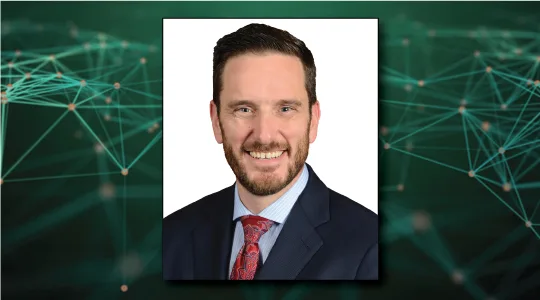
John Gilroy: Welcome to Constellations, the podcast from Kratos. My name is John Gilroy and I’ll be your moderator. Our guest today is William G. Conley, Senior Vice President and Chief Technology Officer at Mercury Systems. Dr. Conley is responsible for the technical vision and implementation of strategic objectives. He aligns technology investments across the company to meet customer needs. Dr. Conley has substantial experience in research, development, weapons systems acquisition, technology, road mapping as well as strategy development and implementation. Formerly, he was the director, electronic warfare, for the U. S. Department of Defense. In this role, he advised department leadership on electronic warfare capabilities.
John Gilroy: Additionally, he was the executive secretary for the Electronic Warfare Executive Committee, the EW EXCOM. The focus of today’s discussion is the RF spectrum, it is used by all satellites for communications to and from the ground. This spectrum is now considered a contested and congested environment and has the possibility of being attacked. It is part of the electromagnetic spectrum. Electronic attack, electronic protection and electronic support are all considered part of the Electromagnetic Spectrum Operations or EMSO.
John Gilroy: Dr. Conley, electronic attack, electronic protection, electronic support, they were considered individually separate. The term EMSO is how we do all of those things dynamically through a finite number of apertures, but also how we battle manage all of these different things which are happening in the electromagnetic spectrum today. Do you think the electromagnetic spectrum should be considered a domain of military operations alongside land, sea, airspace, and cyberspace?
William Conley: So John, first off, thanks for having me on the show today. And with that in mind, you’ve certainly cut directly to the chase with the domain conversation. The thing that I will offer is I think it’s important to understand the history of why the Department of Defense uses the word domains. And so while land, air, sea were recognized as war-fighting domains decades ago, they really were aligned to the three military departments. As we increase the jointness of our force, the concept of the domain has really evolved in terms of how it’s included in our operational doctrine, namely as a way for the joint force commander to have subordinate commanders that are responsible for a part of the fight.
William Conley: And so there’s resourcing implications. Not denying those in any way, shape or form. But I think if you look at, personally, what do we want with the word domain and when we talk about the EMS as a domain, I think what it really comes down to is having that joint force commander that’s responsible for all the operations in that, commanding, controlling those and making sure the right decisions are being made. Having a commander responsible for that opens up a new opportunity for a new degree freedom of maneuver.
John Gilroy: I think the old phrase is fighting the last war, with a thousand strategies from the last war and these are from 50, 60 years ago. So things are changing. They have to change along with the world.
John Gilroy: Now, Bill, knowing that signals intelligence, again, traditionally operated within the EMSO environment for both collection and exploitation. There seems to be a debate on who supports who with this emerging operational domain. There are similarities and operational intent, especially when you consider both the detecting aseptic of the EW and the disruption of the specific threat with the EW spectrum, both for collection and exploitation purposes. So within this context of space operations, how do you see space SIGINT operations supporting EW in the current and future operating environment?
William Conley: So like I mentioned before, domains are really more about the command relationships and not about the fundamental physics. The EMS is unique as all multi-domain operations to include space depend on the EMS to coordinate the desired effect. The coordination typically is going to occur through a radio link. Interestingly, if you look at the dividing line between the air and the land, it typically is 3000 feet.
William Conley: Obviously, a helicopter flying at a couple hundred feet is operating in the air, but the command relationship is really based around 3000 feet. And the reason for that is it allows a helicopter to be retained from a command relationship by the land commander where they’re working to execute all of that maneuver.
William Conley: Similarly in the EMS, I could advocate that we create a somewhat arbitrary limit, something like a single kilowatt to require coordination with the other commanders. Turning on any device in the EMS over a kilowatt would require alerting the other commanders and that would really allow platform self- protection to be controlled by a local commander who should be responsible for this defensive mission.
William Conley: In comparison, a high power system on the ground, which could impact aircraft, even space vehicles, it makes sense to have that be a coordinated response. I think if everybody looks, not to quote doctrine, but Joint Pub 3-0 really lays this out to learn about those relationships between the supported and the supporting commanders. And typically I think the command relationship for the EMS should be aligned to the supported commander as they have the best ability to orchestrate all of those different maneuvers.
John Gilroy: There’s certain limitations to podcasting, there’re verbal limits of course. And I saw your talk on YouTube and there’s one slide that told the story. I mean sometimes pictures can tell more than a thousand words and when you’re describing that I was thinking about that side using that talk where you had a commander and you had three different levels there and that really is a convincing argument for this new way of looking at things. In fact, if you can go to YouTube, type in Dr. William Conley and find this talk and it really reinforces exactly what he talked about here.
John Gilroy: Now Bill, because of the close ties between EW and SIGINT, who operationally should manage and coordinate operations within this electromagnetic domain?
William Conley: So I think that really elevates up to the joint force commander and their subordinate commanders that are underneath them. Because really what you’re hitting on with that divide between SIGINT and EW traditionally is actually the role of the intel functions that would report up to the so-called two versus the EW operations that traditionally would report up to the three. Under existing doctrine where that really meets is that commander local on the ground who is responsible for making those decisions in real time to adjudicate between the intelligence needs and the operational needs.
John Gilroy: Well, there’s kind of a sensitive question, I don’t want to get in any trouble with answering this, but do you think that we need a specific service to focus on this domain? Much like we have today with the Army, Navy and Air Force focusing on physical domains within the operating environment.
William Conley: So I would say no. And the reason being that all multi-domain operations that will be executed by anyone really are executed by everyone. And so with that in mind, it would be like advocating that a service go into warfare but not bring any bullets. It wouldn’t make sense to have that service doing that. Similarly, expecting a service to go in without any of their radios, without the ability to get the battle space awareness through radars, it wouldn’t make a lot of sense to do. And so I really think that every service has to have some core capability in this part of the electromagnetic spectrum.
John Gilroy: Remove yourself from this discussion, just a man on the street, what most people realize that there’s a lot of spectrum out there and it’s getting saturated. And this proliferation of EW capabilities to non-state actors and an exploding communication market, the ability to navigate this contested environment is becoming more and more difficult. So what are your thoughts on optical communications as an additive capability, both Satcom communications?
William Conley: So there is always a need to continue to expand our ability to move out of band. Items like optical communication are very useful in that sense. I also think that we need to leverage a variety of commercial advancements. Particularly exciting in my opinion is where KA band communications are largely being developed for the 5G market. I’m not advocating that we directly use a commercial solution, but instead using those underlying technologies, things like amplifier, system on ship transceivers, wide band signal mixers are really going to go ahead and give us a lot of capability as we look into the future.
William Conley: And interestingly, if you actually looked at the spectrum surveys of major metropolitan areas, we really aren’t out of spectrum, but we lack the coordination tools to make that spectrum available on much shorter timescales than we do today.
William Conley: Previously, I’ve written about this broadly through electromagnetic battle management tools and how the impact they have on spectrum management, that ability to dynamically shift what we’re doing and really it’s predicated by the development over about two or three decades of software defined radio technology. It hasn’t been around that long, but it really gives us the ability now to manage how all of these different devices are operating in coordination with each other.
William Conley: But with that in mind is, how do we get the right policy set up so we can really make that become a reality?
John Gilroy: Software defined radio sounds like my strike zone of software defined networks. Good news and bad news, you know? Just because you can do it doesn’t mean it’s going to be secure and just because you have that capability doesn’t mean it’s going to comply. And so tossing that out was one thing, but applying it, well, that’s a whole different kettle of fish, isn’t it?
William Conley: I’m not saying it’s going to be easy.
John Gilroy: As we look at the capabilities of near peer adversaries, you have mentioned that we may need to change how we dynamically maneuver. Our way of war assumes a level of spectrum access to allow us to fight in the way we desire. And with this convergence of electronic warfare and cyber capabilities presents a great deal of opportunities across this spectrum. Can you discuss this?
William Conley: Yeah, so earlier as I mentioned, multi-domain operations and the need for the electromagnetic spectrum to communicate across to all these different diverse capabilities, the vast majority of that data is envisioned to be sent machine to machine without humans having to type any values in locally to their individual system. And any machine to machine connection is obviously vulnerable to cyber-attack. However, I expect the commanders will want to ensure the confidence in the data they are using to make decisions. Trust in the sensor that is collected the data, trust in the signal processing, the supply. Trust in the movement of that data are all equally critical.
William Conley: Similarly, I expect that a commander is going to want to interrupt an adversary’s ability to conduct any sort of multi-domain operation. There are actually some models that I think are really helpful for that. There’s the well-known seven layer OSI model that we could go ahead and look at. An electronic warfare attack for example, would directly go after that physical and media access control layers. Whereas a cyber-attack in comparison would really be going after those higher levels in the OSI stack. Things like encryption, authentication, perhaps even the application layer.
William Conley: Defending all of these is essential and attacking an adversary in all of these different diverse ways is equally also essential for us going forward.
John Gilroy: No, when you said machine to machine, I instantly wrote down M to M. but you were into machine to machine before machine to machine was cool. And by the way, the cool guys say M to M. So this is hashtag M to M. Machine to machine was there for a while before he was to talk about it now with artificial intelligence.
John Gilroy: You know Bill, thousands of people from all over the world have listened to this podcast. All you have to do is go to Google, type in Constellations podcast to get to our show notes page. Here, you get transcripts of all 71 interviews. Also you can sign up for free email notifications for future podcasts with gentlemen like Bill Conley. All kinds of stuff coming up in the future.
John Gilroy: Bill, you have said that the most usable electromagnetic spectrum for radio frequency communications falls below 110 gigahertz. Here’s a quote, “We are on the verge of being able to directly process all 110 of those gigahertz in a way that a decade ago couldn’t even dream of.” So that’s a big deal, isn’t it? Kind of a big deal.
William Conley: Yes.
John Gilroy: So what does it mean for our Air Force and Army working in a multi-domain environment to lose all of these gigahertz capabilities?
William Conley: So short answer, it’s huge in my opinion. We’ve seen the evolution of terms like LPI, LPD, low probability of intercept, low probability of detection. We’re really moving more toward LPX, where X is the more holistically low probability of anything interfering with that mission that you’re trying to do. As progressively more broadband signal collection comes out coupled with artificial intelligence like you just hit on, the signal processing behind that opens up an even greater battle space awareness. That ability to hide or tactically deceive an adversary gets harder on both sides.
William Conley: Recently I saw General Holmes from air combat command showcase this vision for artificial intelligence to support what is called joint all domain C2, JAD C2 being the nickname for that, to process all of that data. And so I expect the data to be at diverse portions of the spectrum as well as spatially diverse.
William Conley: And again, that really sets up that data collection, data management trust in the data like we just hit on will all be increasingly important as we look into the future.
John Gilroy: I was waiting for you to say the word dynamic. This is what’s going on here. It’s like, well now, we don’t know what the problems are. We have to set up a table and dynamically understand what the problems are and respond in a flexible environment, which I think it’s a different strategy than has been suggested in the past because at least we had some idea what the adversaries are doing. Now, it could be anything. That’s why the X is in there I assume. Huh?
John Gilroy: You know, Bill, one of the greatest challenges in EMSO is signal processing and I’m going to quote you again right here. So you can either agree or disagree with your own quote here. The modern capabilities of signal processing and making sure we are getting the necessary information to make the right directions are critically important to us. And being able to deny that to any adversary in a time of conflict would be critically important. Are we working on those capabilities today? That denial?
William Conley: So short answer, yes we are absolutely working on those, making sure that we can make those right decisions in a timely fashion. I think if you look at some of the tools that are behind that, things like the Army with their EWPMT, which is Electronic Warfare Planning Management Tool, it’s a specific example. But really what’s happening underneath the scenes that is setting that up is actually the amount of investment that’s happening on the commercial side that we can go ahead and we can bring over and make appropriate and applicable into the defense ecosystem today.
William Conley: If you actually look at the long term trend that underlies this, at the height of the cold war back in the 1960s the federal government investment was double for R and D, the entirety of commercial industry. For where we are today, it’s three to one the other direction, basically is 2.7 actually, but three to one is close enough. It’s basically three times more money is being spent on the commercial side for R and D and it’s how do we bring those tools over that are being developed on the commercial side for signal processing and make them applicable into the defense ecosystem?
John Gilroy: So back in the day when Vint Cerf was working on TCP/IP with his crew there, they were getting money from the government, they were leaders in that area. All of a sudden it’s flipped.
William Conley: So there still are absolutely parts where the government is leading. Hypersonic weapons, fully, fully agree the government is uniquely leading there. Even today we aren’t trying to deliver packages to my doorstep in 27 seconds, for example, with hypersonic weapons. Right? But there are other areas where if you heavily look at what’s happening in telecommunications where the commercial investment is absolutely critical.
John Gilroy: Well Bill, we’ve got to go back to the future. Since 1941 the traditional U.S. way of war has been to seek control of the skies. America has largely succeeded in clearing the skies of enemy planes and filling them with our own. But this type of physical superiority will not continue with our near peer adversaries developing similar technologies. So the U.S. must now look to accomplish its objectives without air superiority. Can we do it by protecting and trolling access to RF data links?
William Conley: So short answer, yes. Protecting and controlling the access to the RF data links as well as the sensor, such as radar, will be the first step in seeking air superiority or security or for that matter in the land, the sea space.
William Conley: Having that engagement decision making advantage is huge in a tactical engagement. Being able to detect at longer ranges, guide weapons farther, that really creates that substantial advantage that we’re after. Previous secretaries of the Air Force have actually commented that today the force is the smallest and the oldest that it’s ever been. These aircraft have amazingly complicated systems and we really can’t build them quickly during a conflict. But using the spectrum to improve the survivability and the lethality is really going to be a key foundation in any future conflict for us.
John Gilroy: You know, just like our adversaries I just mentioned, and the modern American way of war depends on radio frequency networks. You’ve said that connecting disparate platforms into a network is not easy, let alone keeping them connected when the network is under attack. Boy, that makes it even more difficult. Concepts for future conflict like multi-domain operations depend even more on electronic warfare.
John Gilroy: Multi-domain refers to the desire to network U.S. forces operating in all environments, land, sea, air, space, and cyberspace so they can coordinate their military operations seamlessly, overwhelming the enemy with attacks from all directions. Is it possible to do this overwhelming move without radio frequency network?
William Conley: So I believe that answer is yes, but it’s going to require extensive training. And I’m going to use an analogy for why I say that, because that answer is probably a little bit surprising to many people that are listening. I believe it’s akin to looking at a professional football team when they’re playing on the home versus on the road or playing at home versus on the road. At home, the quarterback is able to audible a play readily at the line of scrimmage.
William Conley: In comparison, on the road, when that audible part of the spectrum is fully contested by all the fans that are there, they end up using hand signals and careful timing. Similarly, building off that analogy, in an uncontested electromagnetic spectrum provides U.S. forces the ability to coordinate in real time between all of these different distributed platforms. Without the EMS, each operator has to make that decision individually based on what they expect the other U.S. forces to do.
William Conley: The only way to build that confidence, very similar to a football team, is to practice regularly. Train regularly as we might say.
John Gilroy: Well, what a good illustration. I’m sure that people from Ohio State will all appreciate that. You know, Bill, we’ve been talking to this mostly through a U.S. lens. How do we talk about this with our partners?
William Conley: Yep. So John, I think your question is spot on. The U.S., obviously we have a lot of allies, we have a lot of partners that are very important and we tend to go into conflicts with them. And so with that in mind, it really comes down to how do we execute EMSO and how do we execute electromagnetic battle management, not only through just a U.S. lens, but with all of those allies and partners. Having the necessary trust, the ability to share data back and forth, the ability to maneuver no different than we do in the air with our allies and partners. We have to be able to do that in the electromagnetic spectrum as well.
William Conley: And so having those tools not only be to the U.S. side, not only be joint, but also be able to share that data, the tool, the visualization, the command and control structure across all of our allies and partners is absolutely going to be essential in a future conflict.
John Gilroy: You know, as mobile usage increases, the demand for more bandwidth on a limited radio frequency spectrum is growing. Is it considered a finite resource and can RF sharing it, can that be challenging?
William Conley: So yeah, it’s definitely challenged in terms of how do we share it? Over the last couple of years there’s been a lot of increased congressional interest in spectrum efficiency. Candidly, I’m not sure if efficiency is necessarily the right metric. I’m less concerned, for example, with my local fire department being efficient with water when my house is burning.
William Conley: But generally I think we should be efficient with how we think about using water. Like I mentioned earlier, the majority of the electromagnetic spectrum is actually not instantaneously in use. However, I think many people on the commercial side would really prefer an exclusive lease on that as opposed to having to worry about all the issues that come with sharing and in real time. But through better electromagnetic battle management tools, I believe we can address those many heterogeneous spectrum users in a way much like we coordinate driving today, right?
William Conley: If you really look at how we drive, there’s very little data that is transferred between drivers. You can honk, you can gesture with your hand, you can use brake lights and turn signals to provide that level of coordination. But if you look at the complexity of that environment, at the end of the day, all of us get home and so that heterogeneous ability to maneuver much like we do on the roads are the sorts of ways of thinking about how do we do heterogeneous maneuver in the electromagnetic spectrum. I think we need to bring into the future.
John Gilroy: I want to go back in time, not to 1940, but 1978. I was talking to an engineer back in 1978 and I said, “What is multiplexing?” And he turned the light on and off in the room. He said, “It’s using this signal for more than one thing.” I said, “Well that seems to be…” as something you’re looking at now, “… Not exactly a new concept.” What we’re doing now is we’re being forced to apply it in new and creative ways, especially with spectrum allocation.
William Conley: I fully agree with you there. The ability to take those existing tools, but it’s really, I mean going back 15 minutes, right? It’s that software defined transceiver where we now have the ability to rapidly reconfigure and reprogram what something is doing is essential. If you go back to the original advent of radio when everything was hardware defined, that wouldn’t be possible. But it is something that’s possible today.
John Gilroy: So we have software defined network, software defined radio signals. So this spectrum allocation problem, is it causing us to be more efficient with applying software to this RF frequency? I guess it is, huh?
William Conley: It’s beginning to allow us to do that. I think we’re beginning to collect the data. We are beginning to understand that, but it’s going to be a long journey for us as we have progressively more devices that enter into that electromagnetic spectrum, it’s going to force us to be more innovative and make better decisions going forward.
John Gilroy: Well I’m ask a question now and then we’re going to pull a plug in three hours. So get a glass of water, this is going to be a tough question. I mean, this is a question everyone’s thinking. They’re listening to this from all of France and Brazil. Who knows where they’re listening to this podcast and they’re seeing all these problems in spectrum allocation and this and that and back and forth, and so are there workable long term solutions? That’s what an optimist would say. I mean, so you’re a smart guy. I mean, what are the options in the future for us?
William Conley: So, I think the answer is yes, and it’s going to be both a combination of what happens with technology and policy and candidly, it my was one of the things I really enjoyed about the last couple of years in the Pentagon, was that ability to work on the technology and policy seem in the role now being the CTO for Mercury Systems, that ability to work the technology piece and make sure we’re bringing all of those fascinating advancements that are coming from the commercial side and bring them over, I think really is what sets up that long term solution. But it’s going to be a healthy ecosystem with many of us taking those necessary steps. Because to your point, it would take three hours to go through all of the different individual technologies behind it. So perhaps that’s an excuse to come back and do a series of these.
John Gilroy: Bill, unfortunately, we are running out of time.
John Gilroy: I’d like to thank our guest, William G. Conley, Senior Vice President and Chief Technology Officer at Mercury Systems.