Transcript:
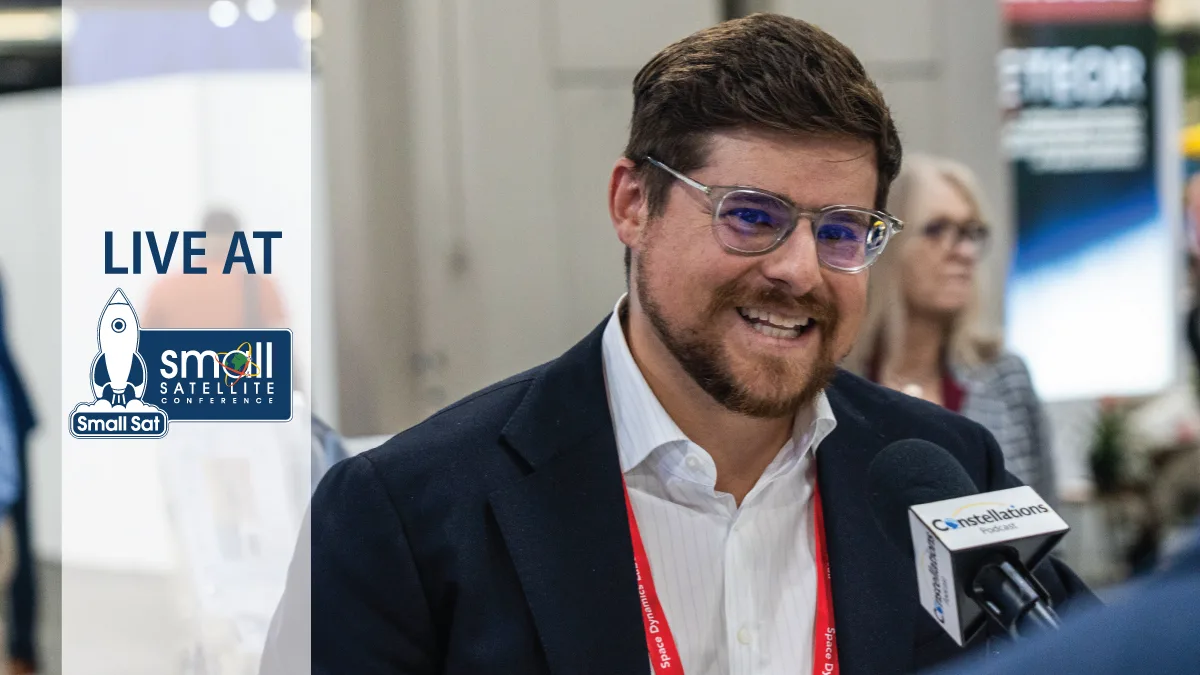
John Gilroy: Welcome to Constellations, the podcast from Kratos. My name is John Gilroy and I’ll be your moderator. In today’s satellite industry, the ability to refuel satellites in orbit is key to building a dynamic space operation. As space mobility and logistics become more advanced, satellite servicing capabilities such as on- orbit, refueling in GEO will give a significant advantage to both military customers and commercial satellite operators. Here to talk about this is Will Armijo, Vice President of Space Systems at Orion Space Solutions. Orion was recently awarded a contract from Space Systems Command to support the Tetra-6 mission, which will include refueling technology. So, Will, ready to jump in?
Will Armijo: I am, John.
John Gilroy: Well, this is really a fun topic. So why are satellite operators interested in the ability to refuel satellites in GEO and what could other players, such as military and government customers gain from this technology?
Will Armijo: Yeah, it’s a great question. It’s one I get pretty frequently. And Orion Space Solutions we’re fortunate to be the prime contractors for, as you said, the Tetra- 6 and also the Tetra-5 mission, which are both refueling missions aimed at the GEO regime. Why do people care? Well, first and foremost, extending operation lifetime is critical. You have the ability to delay or even avoid replacement costs. If you have the ability to launch with a full tank or even a half tank, save some costs there, you’re able to refuel it on orbit. So the obvious and first benefits there are extending the operational life. However, moving without regret and moving with ultimate freedom is critical here. If you’re able to retask a satellite, whether it’s in GEO, MEO or LEO, perform additional ops that were either planned or unplanned and refuel yourself for additional operations, you’re in a pretty good spot.
John Gilroy: You spend a lot of money getting that satellite up there, you might as well leverage it and take advantage of it, huh?
Will Armijo: That’s right. And another dynamic in this new age we’re in is the difficulty in spectrum and frequency licensing. So if you can leave an already licensed asset on orbit and simply refuel it, you remove a ton of bureaucratic and administrative burden on your organization and on the government, quite frankly.
John Gilroy: Yeah, that’s a benefit there that you’ve never know unless you got frustrated with government regulations. So what role does on-orbit refueling play in the larger world of satellite servicing and space mobility and logistics?
Will Armijo: As we increase the scope of on-orbit mobility and logistics, as we talk about things made on orbit, in space servicing, repairs, maintenance, again, it comes back to that freedom to maneuver at will. So as we’re talking about creating new things, maintenance in assets, the ability to have what we’ll call an unlimited or at least a replenishable fuel source becomes incredibly important.
John Gilroy: Well, here we are, sit in a Small Sat Conference in lovely downtown, Salt Lake City, hundreds of vendors here. So I’m wondering how many people are aware of your technology? So what has been done in our industry over the last few years to prove and demonstrate this technology to all the people around us?
Will Armijo: Absolutely, and I look around and there’s dozens of partners and vendors here that are part of this, right? Not only the mission, Tetra-5 and Tetra-6 mission, but other commercial vendors that have flown demonstrations. There have been experiments on the International Space Station over recent years as well as even on the ground just improving the mechanics of liquid transfer. I mean, we’ve really seen a lot of the people around us here have a big part in this we’ll call experimentation on orbit, and it’s maturing the use cases for future concept of operations and for both government and civil.
John Gilroy: So, Will, I think we got the efficiency argument. That’s easy one. Now, what about scaling? And this goes hand in hand with the efficiency, so the ability to scale is crucial in the satellite industry. So what barriers need to be overcome to make refueling, I guess, a routine and scalable technology?
Will Armijo: Yeah, no, it’s a great question and it’s one that it’s on the forefront of my mind. What’s next past these demonstrations and to make that happen, to really truly make this a layer or part of a true hybrid architecture, we need standard refueling ports. Currently, there are two commercially available, but we need to maintain that consistency and that standardization and make sure that those ports are interchangeable with current and future assets. But we also need to diversify the propulsion system integrators. We need to find folks that are willing to take that work on as well as bus providers. So if you’ve solidified and made standard the refueling interfaces, you need all the other components around it and folks that are brave enough in this industry to go and demonstrate those technologies as well.
John Gilroy: Will, I mentioned we’re at the Small Sat Conference. Might as well ask the obvious question. I mean, it’s all around us, so in fact, we’re recording here at the Small Sat. So what role do small satellites play in this on orbit refueling?
Will Armijo: Yep, and here at Orion Space Solutions, we’re turning 20 this year, and our heritage in small satellites, it’s in miniaturization of technology, of sensors, and quite frankly, the missions you brought up, Tetra-5 and Tetra-6, they are small satellite missions. So when you look around, it’s the themes of this show have really been brought together into those missions. You see a low swap on our spacecraft, and you see a lot of these vendors that are maturing lower or developing TRL technologies, commercial technologies, those are being integrated into these missions. So it’s not the traditional you’re going to GEO, everything costs a billion dollars. It’s really the spirit of small sat dating back three decades. We’ve brought that together for these two missions, both in the components and the overall small satellite approach.
John Gilroy: Well, earlier you mentioned Tetra-6, and I’m sure there’s some people that know about it and some don’t. Let’s appeal to the whole audience here. So Space Systems Command recently awarded a contract to Orion to support the Tetra-6 mission. Why is refueling technology important to SSC and what will Orion demonstrate as part of this contract?
Will Armijo: So SSC cares about a lot of things, but principally they care because they’re tasked with maintaining US superiority across multiple orbital domains, GEO being one of them. So SSC acquires systems that are both demonstration and operational and they want to transition demonstration from operations. And so that’s where our role comes in. And specifically Orion’s role on the Tetra-6 contractor is prime contractor. As you can imagine, bringing together a lot of these demonstration technologies, including refueling ports, is novel and it takes a lot of coordination in bringing these folks to the table and making these missions successful. So that’s our role and otherwise serving the mission that SSC is trying to try and to employ for all of mankind.
John Gilroy: So the ability to sustain long-term on-orbit maneuvering is known as dynamic space operations. Okay. We know that. So what role does non-orbit refueling play in this whole concept of dynamic space operations?
Will Armijo: Well, you said it. Dynamic, in an environment, especially in any orbit in space, very few things are predictable. And so that means you’re going to have planned and unplanned operations. And so being able to refuel is critical to replenish yourselves for both planned and unplanned operations. So really, when you ask me that question, I just latched on to the word dynamic. Space is dynamic. It’s never one thing. And so you need a hybrid architecture to which this includes refueling, on-orbit refueling in order to maintain a dynamic space operations.
John Gilroy: That’s really a seismic shift because most people who’ve been in the business 20 years, they say the word static. That’s what I’m sure in grade school, that’s what they’re taught. It’s the same orbit, but you’re saying, “No, no, no, we want to be dynamic,” but you provide the how, huh?
Will Armijo: Exactly. That’s exactly right.
John Gilroy: Right. Maybe that’s your motto. We provide the how.
Will Armijo: There you go. I’ll take that.
John Gilroy: While the space force and other military customers have expressed interest in these technologies, it could provide value to a lot of satellite operators. So how do you see on orbit refueling entering the commercial market in the next few years?
Will Armijo: Yeah, I think right now it’s largely about risk, right? People see novel demonstrations and technology as risky, and so once our team and our teams, our partners are able to demonstrate this technology, I think you will start to see it become commoditized. I think you’ll see this as a major subsystem going forward. As dollars become tighter, as space becomes more congested, it will become critical that this is treated as a subsystem to be able to maintain your operations, to maintain your attitude and your orbit without creating space junk.
John Gilroy: I’m sure if you just interview a typical college student, you talked about space debris. They’re probably aware of it now here, 2025, you know about space debris, but I think your company can play a role in this whole idea of space debris. So what role will you guys play, will satellite servicing play in promoting a more sustainable economy in orbit, including maybe mitigating space debris?
Will Armijo: Exactly, and I think we’re going to be continuing to build out these teams as I use that word dynamic, right? I also used hybrid architecture. These missions aren’t just one thing. Future refueling missions, you could conceive that those are coupled with orbital cleanup, right? You see a lot of folks at Small Sat talking about new ways to clean up space junk to mitigate it and clean it up. And so if you couple this technology and the approach to refueling in general with these new partners that show up year after year to what was Logan, and now Salt Lake, you’ll start to build out these teams that truly give you new and constantly improving assets for a truly hybrid architecture.
John Gilroy: And you mentioned earlier about leaving with a full tank or a half tank. Well, what if a satellite’s in orbit and it has no gas left and it’s in a collision path? That’s where you step in, huh?
Will Armijo: Yeah, absolutely. I mean, you would need to have the ability on that floating asset to be refueled, but absolutely, if that becomes a commoditized subsystem in a standard way of approaching it, you can have active refueling vehicles approach these, what we’ll call stranded or anomalous vehicles.
John Gilroy: When I look around the show here, hundreds of vendors are really a big show. 10 years ago, it was very small, but I’m going to put it to you. So take a look 10 years in the future. So let’s go 10 years from now. So how will refueling technologies change the dynamics within our industry here?
Will Armijo: Yeah, I think, again, I’ll use that word commoditized. I think you’ll see this, and what our approach is really to make sure this is a standard part of satellite subsystems going forward. This mission, our mission, Tetra-5 and 6 are designated for GEO, but there’s a wide variety of applications in MEO and below we’re talking low earth orbit and potentially very low earth orbit, all of which we’re involved in, and all of which we care very much about bringing this technology into those systems. As propulsion Delta V is expended due to planned and unplanned maneuvers, I think you’re going to see this proliferated throughout existing and future hybrid architectures. But again, we have to embrace this as a technology. We have to be brave as vendors and as performers to be willing to take these things on and reduce the risk for the industry.
John Gilroy: Well, this has been very insightful when it comes to understanding refueling satellites. You have been listening to the Constellations podcast. Our guest today is Will Armijo, Vice President of Space Systems at Orion Space Solutions.